
Alai (1) (1959–)
Author of Red Poppies: A Novel of Tibet
For other authors named Alai, see the disambiguation page.
Works by Alai
Tagged
Common Knowledge
- Legal name
- 阿来
Alai - Other names
- Ah Lai
- Birthdate
- 1959
- Gender
- male
- Education
- Maerkang Normal School
- Occupations
- poet
editor
novelist - Birthplace
- Barkam, Sichuan, China
- Places of residence
- Maerkang County, Sichuan, China
- Map Location
- China
Members
Reviews
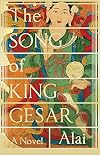
First off, this is a novel, or half novel, and half a prose telling of the Gesar legend.
I gather that Alai in his fiction (Red Poppies, Tibetan Soul) doesn’t romanticise Tibet, new or old. The present-day portions of this work aren’t idyllic, aren’t bitter, but a little of both. Jigmed is a simple shepherd who is seized by the song, in the traditional spiritual way where the song is thrust upon you in dreams – and can be snatched back by the spirits, too, if you serve the song ill. show more So Jigmed, who has become a transient in service to his song, intersects with an aged woman singer who has taken the government’s comfortable deal – singing into tape recorders, to conserve the cultural treasure – yet in result her inspiration has failed her.
Here I am talking about the present-day portions, and in truth I was often more interested in them – than in a prose Gesar, which had its touches, but was unavoidably prosaic. They are interspersed under headings of The Storyteller and The Story. In the latter stages these start to entwine and interact… not only, now, is it Gesar visiting the singer in his dreams, but he dreams too, to start up a two-way conversation, and Gesar wants to know what’s become of his song in Jigmed’s time.
I have a large complaint, not against the novel but the publisher. There’s no introduction to the Gesar legend, or preface/afterword to acquaint you with Alai’s project, and there are no notes whatsoever for the unfamiliar audience whom I think this book was meant to woo. That’s no way to send this book out into the English-language world. It needs notes, and I for one wanted to begin with an idea of what Alai is doing with the old story. My four stars are for Alai’s novel, but the novel is ill-served in this edition. show less
I gather that Alai in his fiction (Red Poppies, Tibetan Soul) doesn’t romanticise Tibet, new or old. The present-day portions of this work aren’t idyllic, aren’t bitter, but a little of both. Jigmed is a simple shepherd who is seized by the song, in the traditional spiritual way where the song is thrust upon you in dreams – and can be snatched back by the spirits, too, if you serve the song ill. show more So Jigmed, who has become a transient in service to his song, intersects with an aged woman singer who has taken the government’s comfortable deal – singing into tape recorders, to conserve the cultural treasure – yet in result her inspiration has failed her.
Here I am talking about the present-day portions, and in truth I was often more interested in them – than in a prose Gesar, which had its touches, but was unavoidably prosaic. They are interspersed under headings of The Storyteller and The Story. In the latter stages these start to entwine and interact… not only, now, is it Gesar visiting the singer in his dreams, but he dreams too, to start up a two-way conversation, and Gesar wants to know what’s become of his song in Jigmed’s time.
I have a large complaint, not against the novel but the publisher. There’s no introduction to the Gesar legend, or preface/afterword to acquaint you with Alai’s project, and there are no notes whatsoever for the unfamiliar audience whom I think this book was meant to woo. That’s no way to send this book out into the English-language world. It needs notes, and I for one wanted to begin with an idea of what Alai is doing with the old story. My four stars are for Alai’s novel, but the novel is ill-served in this edition. show less
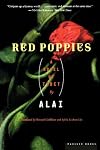
Review: Red Poppies by Alai.
I liked the touch of wittiness, and humor the story translates being narrated by the chieftain’s son who they call the idiot. The novel focuses on the excessive and brutal power of a clan of Tibetan warlords during the rise of Chinese Communism.
It was a magnificent journey to another time and place. In short, simple sentences, mild vocabulary, and clear-cut style suitable for the subject matter, the author concentrates on the history of a Maichi family who only show more adore one of two sons to become the next ruler of their territory. The author reveals a feudal society of tribal chieftains who believe in power. With family and territory rivalries, hands were cut off, tongues were cut out, enemies were beheaded, hungry people were used as pawns and were allowed to starve, and children were beaten for playing, all for the love of power.
I felt like it was an animation story with its shallow, black and white characters, its good guys vs. bad guys action scenes. I thought the novel was intriguing and an exciting impressive adventure. I don’t usually read this type of book but I’m glad I picked this one up. show less
I liked the touch of wittiness, and humor the story translates being narrated by the chieftain’s son who they call the idiot. The novel focuses on the excessive and brutal power of a clan of Tibetan warlords during the rise of Chinese Communism.
It was a magnificent journey to another time and place. In short, simple sentences, mild vocabulary, and clear-cut style suitable for the subject matter, the author concentrates on the history of a Maichi family who only show more adore one of two sons to become the next ruler of their territory. The author reveals a feudal society of tribal chieftains who believe in power. With family and territory rivalries, hands were cut off, tongues were cut out, enemies were beheaded, hungry people were used as pawns and were allowed to starve, and children were beaten for playing, all for the love of power.
I felt like it was an animation story with its shallow, black and white characters, its good guys vs. bad guys action scenes. I thought the novel was intriguing and an exciting impressive adventure. I don’t usually read this type of book but I’m glad I picked this one up. show less
An occasionally interesting, yet strangely unsatisfying read.
The setting is in Eastern Tibet, which has taken on more of China's attributes than the rest of Tibet. It starts just before the last Emperor is deposed.
The POV character is the second son, considered an idiot, of one of the Tibetan Chieftains. His birth circumstances guaranteed that he would be an idiot from birth, to those around him. They treat him like one , so he behaves like one. It gives him an advantage in that he can do show more or say anything in his highly regimented society and get away with it. But he is not considered worth listening to, or worthy of any specific task.
He isn't a bad character, but it gets tiring to follow him around. The story is slice of life, or what I call fly on the wall. You watch what goes on, there is no specific story or event. I enjoy this style if the events and setting are interesting enough. I didn't find that to be the case in this book. There were times when the characters or the settings were interesting, but the events never were (standard life stuff). Sometimes it was fun to see the 'idiot' come out on top or best those who thought they were smarter than he was. But the book was over 400 pages, and that was too long, not to have an actual story or purpose.
It was interesting to see the history of the region unfold with the coming of modernity. The story ends with the triumph of the Red Chinese and their penetration into Eastern Tibet.
The writing isn't bad, being a translation. At times it seems that they are trying to pass on the rustic manner of speaking. I found the story flowed well, it just didn't grab me with the content.
It is supposed to be the first in a trilogy, though I don't think any more have been published. If more are published, I won't be reading them.
It also should be noted that the person who wrote the book is an ethnic Tibetan, who lives in China. You can't be sure that this isn't positive propaganda, approved by the government to show the decadent pre-revolution lifestyle. show less
The setting is in Eastern Tibet, which has taken on more of China's attributes than the rest of Tibet. It starts just before the last Emperor is deposed.
The POV character is the second son, considered an idiot, of one of the Tibetan Chieftains. His birth circumstances guaranteed that he would be an idiot from birth, to those around him. They treat him like one , so he behaves like one. It gives him an advantage in that he can do show more or say anything in his highly regimented society and get away with it. But he is not considered worth listening to, or worthy of any specific task.
He isn't a bad character, but it gets tiring to follow him around. The story is slice of life, or what I call fly on the wall. You watch what goes on, there is no specific story or event. I enjoy this style if the events and setting are interesting enough. I didn't find that to be the case in this book. There were times when the characters or the settings were interesting, but the events never were (standard life stuff). Sometimes it was fun to see the 'idiot' come out on top or best those who thought they were smarter than he was. But the book was over 400 pages, and that was too long, not to have an actual story or purpose.
It was interesting to see the history of the region unfold with the coming of modernity. The story ends with the triumph of the Red Chinese and their penetration into Eastern Tibet.
The writing isn't bad, being a translation. At times it seems that they are trying to pass on the rustic manner of speaking. I found the story flowed well, it just didn't grab me with the content.
It is supposed to be the first in a trilogy, though I don't think any more have been published. If more are published, I won't be reading them.
It also should be noted that the person who wrote the book is an ethnic Tibetan, who lives in China. You can't be sure that this isn't positive propaganda, approved by the government to show the decadent pre-revolution lifestyle. show less
Red Poppies by Alai
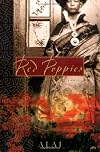
It seems to be a slow pacing personal story of a second chieftan's son that turns to be a personal viewpoint on a period of few decades that changed Tibet and the fate of its people. This is a fascinating reading even if it strikes as too foreign and strange sometimes.
Lists
Awards


You May Also Like
Associated Authors
Statistics
- Works
- 4
- Members
- 260
- Popularity
- #88,385
- Rating
- 3.7
- Reviews
- 14
- ISBNs
- 44
- Languages
- 8