
Takashi Murakami
Author of Stargazing Dog
About the Author
Image credit: Yamashita Yohei
Series
Works by Takashi Murakami
Takashi Murakami: Lineage of Eccentrics: A Collaboration with Nobuo Tsuji and the Museum of Fine Arts, Boston (2018) 10 copies
Murakami Takashi kanzen dokuhon : Bijutsu techō zenkiji, 1992-2012 = Takashi Murakami : the complete BT archives, 1992-2012 (2012) 4 copies
ArtReview / Power 100 November 2003 2 copies
Takashi Murakami: Prints 2 copies
Pino: L'I.A. émotionnelle 1 copy
O Cão que Guarda as Estrelas 1 copy
Making F.R.I.E.N.D.s 1 copy
Kota, do nogi! 1 copy
ぽいぽいさま 1 (グランドジャンプ愛蔵版コミックス) 1 copy
青い鳥~わくらば~ (ビッグコミックススペシャル) 1 copy
O psie, który strzegł gwiazd 1 copy
Earth in My Window 1 copy
Takashi Murakami : 1989-1991 1 copy
Takashi Murakami, in Chinese 1 copy
Піно 1 copy
Associated Works
Tagged
Common Knowledge
- Canonical name
- Takashi Murakami
- Legal name
- 村上 隆
- Birthdate
- 1962-02-01
- Gender
- male
- Education
- Tokyo National University of Fine Arts and Music (BFA | 1986)
Tokyo National University of Fine Arts and Music (MFA | 1988)
Tokyo National University of Fine Arts and Music (PhD | 1993) - Organizations
- KaiKai Kiki, LLC
- Nationality
- Japan
- Birthplace
- Tokyo, Japan
- Places of residence
- Tokyo, Japan
- Map Location
- Japan
Members
Reviews

This catalog accompanied the 2005 exhibition of the same name shown at the Japan Society in New York. This is a very rare instance -- for me anyway -- of finding the art in an exhibition (and in this volume) completely unappealing, but being totally fascinated by the authors' interpretation of the work.
The catalog makes the case that the Japanese fascination with "kawaii," or cuteness (as the Booklist review puts it, "think Hello Kitty") and nerdy, obsessive "otaku" fixation on manga comics show more anime, all spring from an attempt to deal with the horrors of the atomic bombs dropped on Japan and the subsequent submission of that country to the US after the war was over. That may seem a stretch, until you read Little Boy.
Whether you like the work of artist Takashi Murakami or not, and even if you've never heard of Murakami, Little Boy is worth reading for its insights on modern Japanese culture. show less
The catalog makes the case that the Japanese fascination with "kawaii," or cuteness (as the Booklist review puts it, "think Hello Kitty") and nerdy, obsessive "otaku" fixation on manga comics show more anime, all spring from an attempt to deal with the horrors of the atomic bombs dropped on Japan and the subsequent submission of that country to the US after the war was over. That may seem a stretch, until you read Little Boy.
Whether you like the work of artist Takashi Murakami or not, and even if you've never heard of Murakami, Little Boy is worth reading for its insights on modern Japanese culture. show less
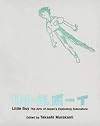
Little Boy: The Arts of Japan's Exploding Subculture is the companion catalogue to the exhibition "Little Boy" curated by artist Takashi Murakami. The book is about the aesthetics of postwar culture in Japan.
Little Boy examines the culture of postwar Japan through its arts and popular visual media. Focusing on the youth-driven phenomenon of otaku (roughly translated as 'geek culture' or 'pop cult fanaticism'), Takashi Murakami and a notable group of contributors explore the complex show more historical influences that shape Japanese contemporary art and its distinct graphic languages. The book's title, Little Boy, is a reference to the atomic bomb dropped on Hiroshima in 1945, thus clearly locating the birth of these new cultural forms in the trauma and generational aftershock of the atomic bomb. This generously illustrated book showcases the work of key otaku artists and designers, many of whom are cult celebrities in Japan, and discusses their feature film and video animations, video games and internet sites, music, toys, fashion and more. In the process, the following questions are posed: What is otaku? How is it related to the pervasive and curious fixation on 'cuteness' evident in Japanese popular culture? What impact did the atomic devastation of World War II have on the development of Japanese art and culture? This brilliantly designed, bilingual (English and Japanese) publication examines these themes to explore how contemporary Japanese art has become inseparable from the subcultural realms of manga and anime (Japanese animation), a world where meticulous technique, apocalyptic imagery and high and low cultures meet show less
Little Boy examines the culture of postwar Japan through its arts and popular visual media. Focusing on the youth-driven phenomenon of otaku (roughly translated as 'geek culture' or 'pop cult fanaticism'), Takashi Murakami and a notable group of contributors explore the complex show more historical influences that shape Japanese contemporary art and its distinct graphic languages. The book's title, Little Boy, is a reference to the atomic bomb dropped on Hiroshima in 1945, thus clearly locating the birth of these new cultural forms in the trauma and generational aftershock of the atomic bomb. This generously illustrated book showcases the work of key otaku artists and designers, many of whom are cult celebrities in Japan, and discusses their feature film and video animations, video games and internet sites, music, toys, fashion and more. In the process, the following questions are posed: What is otaku? How is it related to the pervasive and curious fixation on 'cuteness' evident in Japanese popular culture? What impact did the atomic devastation of World War II have on the development of Japanese art and culture? This brilliantly designed, bilingual (English and Japanese) publication examines these themes to explore how contemporary Japanese art has become inseparable from the subcultural realms of manga and anime (Japanese animation), a world where meticulous technique, apocalyptic imagery and high and low cultures meet show less
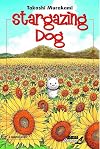
Very beautiful — but extremely ſad. One þiŋ ðat ſtrikes me in ſome Japaneſe works is ðat ðere is no cloſure — ðe protagoniſt dies as conſequence of miſguided choices by him & by oðers, ſome of ðem hardheaded & mean, oðers altruiſtic but abuſed by ðe benefited persons. No one is puniſhed, he is not honoured for ðe benefits he beſtowed, ðe people who abandoned & abuſed him are not expoſed. I gueß ðat is realiſtic from a (non-realiſtic but popular) show more naturaliſtic point of view. show less
WARNING: You WILL cry, so don't read this at work, in a coffee shop, etc., if you don't want people to see you weeping over a "comic book." Two interlinked stories about men and their loyal dogs. The first ends in tragedy and the second softens the blow. Thought-provoking.
Lists
Awards


You May Also Like


Associated Authors
Statistics
- Works
- 63
- Also by
- 1
- Members
- 882
- Popularity
- #29,045
- Rating
- 4.0
- Reviews
- 33
- ISBNs
- 71
- Languages
- 9