
Frederik L. Schodt
Author of Manga! Manga!: The World of Japanese Comics
About the Author
Frederik L. Schodt is a San Francisco-based interpreter, translator, and writer. Fluent in Japanese, he is the author of many works about Japan, including Manga! Manga! The World of Japanese Comics; Inside the Robot Kingdom: Japan, Mechatronics, and the Coming Robotopia; and The Astro Boy Essays: show more Osamu Tezuka, Mighty Atom, and the Manga/Anime Revolution. In 2009 he was granted the Order of the Rising Sun, Gold Rays with Rosette, for contributing to the introduction and promotion of Japanese contemporary popular culture in the United States. show less
Image credit: Translation panel, Otakon 2003, by Lampbane
Works by Frederik L. Schodt
The Astro Boy Essays: Osamu Tezuka, Mighty Atom, and the Manga/Anime Revolution (2007) 78 copies, 3 reviews
Native American in the Land of the Shogun: Ranald MacDonald and the Opening of Japan (2003) 25 copies
Associated Works
Adolf, Volume 1: A Tale of the Twentieth Century (1983) — Introduction, some editions — 226 copies, 5 reviews
Astro Boy, Volume 01 (English Translation) (2002) — Translator, some editions — 221 copies, 4 reviews
The Four Immigrants Manga : A Japanese Experience in San Francisco, 1904-1924 (1998) — Translator, some editions — 143 copies, 4 reviews
Astro Boy, Volume 03 (English Translation) (1999) — Translator, some editions — 141 copies, 2 reviews
Astro Boy Omnibus, Vol. 1 (2015) — Translator, some editions; Introduction, some editions — 102 copies, 3 reviews
Astro Boy, Volumes 1 & 2 (English Translation) (2008) — Translator, some editions — 90 copies, 2 reviews
Mobile Suit Gundam: Awakening, Escalation, Confrontation (2004) — Translator, some editions — 67 copies, 2 reviews
The Rose of Versailles Vol. 1 [Abridged English Edition] — Translator, some editions — 1 copy
The Rose of Versailles Vol. 2 [Abridged English Edition] — Translator, some editions — 1 copy
Tagged
Common Knowledge
- Birthdate
- 1950-01-22
- Gender
- male
- Education
- University of California, Santa Barbara
International Christian University (Japan) - Occupations
- translator
writer
conference
interpreter - Awards and honors
- Asahi Shimbun’s Tezuka Osamu Cultural Prize "Special Prize" (2000)
- Nationality
- USA
- Places of residence
- Tokyo, Japan
Los Angeles, California, USA - Associated Place (for map)
- USA
Members
Reviews

Initially released in 1983 and then again in 1986 in a slightly updated and revised edition, Frederik L. Schodt's groundbreaking Manga! Manga!: The World of Japanese Comics was one of the first, and remains one of the best, surveys of the history of manga and the manga industry available in English. Written and published at a time when manga was virtually unknown to the average comics reader in the West and when only a very few examples of manga had been translated, Schodt was hoping to show more provide an introduction to the art form, garner interest in manga, and share his love and excitement for the medium. Manga! Manga! was received very well both in Japan where it earned special recognition from the Japan Cartoonists Association as well as in markets focused on English-reading audiences. Although Schodt would follow up Manga! Manga! with his work Dreamland Japan: Writings on Modern Manga in 1996, his initial foray is considered a classic in its subject area and is still well worth reading.
Manga! Manga! opens with a forward by Osamu Tezuka, who Schodt personally knew and worked with. From there Schodt takes over with the first chapter "A Thousand Million Manga," providing an overview of manga and its readership in Japan. "A Thousand Years of Manga" addresses the history of manga, tracing its origins and development from 12th-century narrative art traditions through its more contemporary influences. "The Spirit of Japan" looks at the portrayal of the bushidō ethic in manga, ranging from historical fiction to the yakuza and sports genres, while "Flowers and Dreams" reveals the significance of comics created for and by girls and women. Other genres, such as salaryman, specialty career-oriented manga, and mahjong manga are explored in the chapter "The Economic Animal at Work and at Play." Subjects like censorship, violence, and eroticism are the focus of "Regulations versus Fantasy." Schodt closes his research with a chapters specifically devoted "The Comic Industry" and "The Future." (Granted, that future is now in many cases the past, but the chapter is still illuminating.)
The editions of Manga! Manga! printed after 1997 also have a short introduction by Schodt but otherwise are nearly identical content-wise to those that were published earlier. In addition to Schodt's main text, Manga! Manga! also includes an index divided by general subject, creators, and title as well as a bibliography of both English-language and Japanese-language resources. As is appropriate for a work about manga, Schodt incorporates artwork and photographs throughout the volume--rare is the page which isn't accompanied by some sort of visual component. Particularly noteworthy is the inclusion of translated excerpts selected from four manga: Osamu Tezuka's Phoenix, Reiji Matsumoto's Ghost Warrior, Riyoko Ikeda's The Rose of Versailles, and Keiji Nakazawa's Barefoot Gen. These examples are among some of the earliest manga in translation readily available to a general English-language audience. Brief biographies of the four mangaka are provided as well.
Manga! Manga! is a fantastic work. Even decades after it was first published it remains an informative and valuable study. And, as I have come to expect, Schodt's writing is very approachable and easy to read. Manga! Manga! explores the history of manga within the context of Japanese culture and history, ultimately showing that the two cannot be completely separated. Manga and its development reflect, is influenced by, and emphasizes the changing state of Japanese culture, politics, and social mores. It is an art form and a source of entertainment, but it can also be used for educational and informational purposes and even as propaganda. Schodt outlines the importance of manga in Manga! Manga!, both culturally and historically, and what it has to offer to Japan and to the world at large. Manga! Manga! is very highly recommended to anyone interested in learning more about manga, its history, its creators, or the manga industry as a whole.
Experiments in Manga show less
Manga! Manga! opens with a forward by Osamu Tezuka, who Schodt personally knew and worked with. From there Schodt takes over with the first chapter "A Thousand Million Manga," providing an overview of manga and its readership in Japan. "A Thousand Years of Manga" addresses the history of manga, tracing its origins and development from 12th-century narrative art traditions through its more contemporary influences. "The Spirit of Japan" looks at the portrayal of the bushidō ethic in manga, ranging from historical fiction to the yakuza and sports genres, while "Flowers and Dreams" reveals the significance of comics created for and by girls and women. Other genres, such as salaryman, specialty career-oriented manga, and mahjong manga are explored in the chapter "The Economic Animal at Work and at Play." Subjects like censorship, violence, and eroticism are the focus of "Regulations versus Fantasy." Schodt closes his research with a chapters specifically devoted "The Comic Industry" and "The Future." (Granted, that future is now in many cases the past, but the chapter is still illuminating.)
The editions of Manga! Manga! printed after 1997 also have a short introduction by Schodt but otherwise are nearly identical content-wise to those that were published earlier. In addition to Schodt's main text, Manga! Manga! also includes an index divided by general subject, creators, and title as well as a bibliography of both English-language and Japanese-language resources. As is appropriate for a work about manga, Schodt incorporates artwork and photographs throughout the volume--rare is the page which isn't accompanied by some sort of visual component. Particularly noteworthy is the inclusion of translated excerpts selected from four manga: Osamu Tezuka's Phoenix, Reiji Matsumoto's Ghost Warrior, Riyoko Ikeda's The Rose of Versailles, and Keiji Nakazawa's Barefoot Gen. These examples are among some of the earliest manga in translation readily available to a general English-language audience. Brief biographies of the four mangaka are provided as well.
Manga! Manga! is a fantastic work. Even decades after it was first published it remains an informative and valuable study. And, as I have come to expect, Schodt's writing is very approachable and easy to read. Manga! Manga! explores the history of manga within the context of Japanese culture and history, ultimately showing that the two cannot be completely separated. Manga and its development reflect, is influenced by, and emphasizes the changing state of Japanese culture, politics, and social mores. It is an art form and a source of entertainment, but it can also be used for educational and informational purposes and even as propaganda. Schodt outlines the importance of manga in Manga! Manga!, both culturally and historically, and what it has to offer to Japan and to the world at large. Manga! Manga! is very highly recommended to anyone interested in learning more about manga, its history, its creators, or the manga industry as a whole.
Experiments in Manga show less
Professor Risley and the Imperial Japanese Troupe: How an American Acrobat Introduced Circus to Japan, and Japan to the West by Frederik L. Schodt
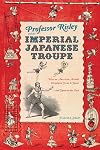
Professor Risley and the Imperial Japanese Troupe: How an American Acrobat Introduced Circus to Japan—and Japan to the West was written by Frederik L. Schodt and published by Stone Bridge Press in 2012. It is Schodt's seventh book dealing with Japanese culture and history. I am primarily familiar with Schodt's work as a manga and anime scholar and translator, but as can be seen with Professor Risley and the Imperial Japanese Troupe and several of his other books, his knowledge and show more interests extend to other subject areas as well. I first learned about Professor Risley and the Imperial Japanese Troupe because I follow Schodt's work in general. I was interested in reading the book for that reason, but also because I happen to have an interest in Japanese history as well as in the performing arts.
After a brief preface explaining how he came to write the book, Schodt launches into the main text of Professor Risley and the Imperial Japanese Troupe. The first chapter, or "act," is appropriately titled "Setting the Stage" and provides the necessary background and historical context for the book. The next three acts--"The Risley Act," "Going for Gold," and "Into Asia"--explore the life of Professor Risley, the stage name of American showman Richard Risley Carlisle. Acts five through nine--"Yokohama, Japan," "Taking America," "At the Exposition," "The Long Way to London," and "The Matter of the Contract"--follow the formation of the Imperial Japanese Troupe and their nearly two-and-a- half-year tour of seven countries: the United States, France, England, the Netherlands, Belgium, Spain, and Portugal. Act ten, "Final Acts" traces the end of Professor Risley and the troupe and their lasting influence. The book is completed with an afterword, notes, select bibliography, and a thorough index.
In 1866, the eighteen men, women, and youths from the Sumidagawa, Matsui, and Hamaikari preforming families who would make up Risley's Imperial Japanese Troupe received the first official passports granted to ordinary Japanese citizens. Since the mid-17th century, the Japanese government had severely limited travel into and out of Japan. The opening of Japan helped to ignite an interest in Japanese art and culture across the world. A large part of the Imperial Japanese Troupe's success was due not only to the members' skill but to the perceived exoticism of their performances. For the first time the world at wide was being introduced to Japanese culture. At the same time, ordinary Japanese were finally allowed and able to see the world beyond their own country. The tour of the Imperial Japanese Troupe was a meeting, meshing, and clashing of cultures. And while the group was away, Japan itself was undergoing a revolution as the Meiji era was ushered in.
Professor Risley and the Imperial Japanese Troupe was absolutely fascinating. Additionally, Schodt's writing is an utter delight to read. Although Professor Risley and the Imperial Japanese Troupe has been thoroughly researched and has an academic bent to it, the book is still easily accessible and approachable even for more casual readers. One of the things that I particularly loved about Professor Risley and the Imperial Japanese Troupe is that it is filled with reproductions of historical photographs, artwork, newspaper clippings, playbills, advertisements, and so on, including sixteen pages in full color. They are a fabulous addition to an already great book. I enjoyed Professor Risley and the Imperial Japanese Troupe immensely. It's an incredibly engaging work on 19th-century popular culture and very easy to recommend.
Experiments in Manga show less
After a brief preface explaining how he came to write the book, Schodt launches into the main text of Professor Risley and the Imperial Japanese Troupe. The first chapter, or "act," is appropriately titled "Setting the Stage" and provides the necessary background and historical context for the book. The next three acts--"The Risley Act," "Going for Gold," and "Into Asia"--explore the life of Professor Risley, the stage name of American showman Richard Risley Carlisle. Acts five through nine--"Yokohama, Japan," "Taking America," "At the Exposition," "The Long Way to London," and "The Matter of the Contract"--follow the formation of the Imperial Japanese Troupe and their nearly two-and-a- half-year tour of seven countries: the United States, France, England, the Netherlands, Belgium, Spain, and Portugal. Act ten, "Final Acts" traces the end of Professor Risley and the troupe and their lasting influence. The book is completed with an afterword, notes, select bibliography, and a thorough index.
In 1866, the eighteen men, women, and youths from the Sumidagawa, Matsui, and Hamaikari preforming families who would make up Risley's Imperial Japanese Troupe received the first official passports granted to ordinary Japanese citizens. Since the mid-17th century, the Japanese government had severely limited travel into and out of Japan. The opening of Japan helped to ignite an interest in Japanese art and culture across the world. A large part of the Imperial Japanese Troupe's success was due not only to the members' skill but to the perceived exoticism of their performances. For the first time the world at wide was being introduced to Japanese culture. At the same time, ordinary Japanese were finally allowed and able to see the world beyond their own country. The tour of the Imperial Japanese Troupe was a meeting, meshing, and clashing of cultures. And while the group was away, Japan itself was undergoing a revolution as the Meiji era was ushered in.
Professor Risley and the Imperial Japanese Troupe was absolutely fascinating. Additionally, Schodt's writing is an utter delight to read. Although Professor Risley and the Imperial Japanese Troupe has been thoroughly researched and has an academic bent to it, the book is still easily accessible and approachable even for more casual readers. One of the things that I particularly loved about Professor Risley and the Imperial Japanese Troupe is that it is filled with reproductions of historical photographs, artwork, newspaper clippings, playbills, advertisements, and so on, including sixteen pages in full color. They are a fabulous addition to an already great book. I enjoyed Professor Risley and the Imperial Japanese Troupe immensely. It's an incredibly engaging work on 19th-century popular culture and very easy to recommend.
Experiments in Manga show less
The Astro Boy Essays: Osamu Tezuka, Mighty Atom, and The Manga/Anime Revolution by Frederik L. Schodt

The Astro Boy Essays: Osamu Tezuka, Mighty Atom, and the Manga/Anime Revolution written by Frederik L. Schodt is one of the few full-length publications available in English devoted to the life and work of Osamu Tezuka. Published by Stone Bridge Press in 2007, it is also one of the first. Although there now exist several more resources, the only other book about Tezuka that I've had the opportunity to read was Helen McCarthy's The Art of Osamu Tezuka. Because Tezuka was such an influential show more creator, it's somewhat surprising that there hasn't been more written. (Granted, I'm hard pressed to name many other mangaka who have had entire books devoted solely to them.) Schodt is in a unique position to write about Tezuka and Astro Boy. He was a friend of Tezuka's who not only personally knew the creator, but who also worked with him. Schodt was also the translator for Dark Horse's English-language release of the Astro Boy manga, so he is quite familiar with the material.
Osamu Tezuka was an instrumental pioneer in the realms of manga and Japanese animation. One of his most iconic and well-loved creations wast Tetsuwan Atomu (Mighty Atom), better known in the United States as Astro Boy. Around the world there are many fans who, although they may not recognize Tezuka's name, know and adore Astro Boy, the cute boy robot who fought for peace. Astro Boy was first introduced as a character in the story "Ambassador Atom" in 1951 before becoming the star in his own manga series in 1952. Tezuka would continue to work on and revisit the Astro Boy manga well into the eighties. In 1963, Astro Boy become Japan's first animated weekly television series and was subsequently exported to the United States. Tezuka would later create a color version of this black and white series in 1980. In addition to successful manga and anime series, Astro Boy also had a strong merchandising line.
The Astro Boy Essays consists of an introduction, eight chapters or essays, an afterword, notes, bibliography, and index. Two appendices are also included which list the Japanese and English titles of the Astro Boy manga stories and the 1963 anime episodes as well as the order of their release. Scattered throughout the book are a few informational sidebars (including a fascinating comparison of the replies that Tezuka and Yukio Mishima gave in response to a literary magazine's survey), plenty of black-and-white illustrations and photographs, and sixteen pages of full-color artwork. Each of the essays are written in such a way that they can be read separately, but read together they provide a comprehensive look at Astro Boy and its importance as a work. Schodt covers many different aspects of Astro Boy: it's place as a national icon, it's creation and evolution, it's influence on Japanese and American markets, its impact on the field of robotics, it's many messages, Tezuka's complicated relationship with the work, and so on.
The Astro Boy Essays is an excellent work and a valuable resource. Schodt has done his research and it shows, but the book has been written with a more casual, general audience in mind rather than a strictly academic one. I like Schodt's approach of focusing on a specific creation, in this case Astro Boy in all of its incarnations, as a way to explore Tezuka's innovations and influence. By tracing the evolution of Astro Boy, Schodt is also able to trace the evolution of Tezuka's work in general while still limiting the scope of the book's subject to something manageable. The Astro Boy Essays may be a slim volume, but it's an accessible, engaging, enlightening, and highly informative one. Schodt covers a wide range of fascinating material quickly and effectively. The Astro Boy Essays are a fantastic introduction to Astro Boy, Osamu Tezuka, and their lasting influence on manga and anime.
Experiments in Manga show less
Osamu Tezuka was an instrumental pioneer in the realms of manga and Japanese animation. One of his most iconic and well-loved creations wast Tetsuwan Atomu (Mighty Atom), better known in the United States as Astro Boy. Around the world there are many fans who, although they may not recognize Tezuka's name, know and adore Astro Boy, the cute boy robot who fought for peace. Astro Boy was first introduced as a character in the story "Ambassador Atom" in 1951 before becoming the star in his own manga series in 1952. Tezuka would continue to work on and revisit the Astro Boy manga well into the eighties. In 1963, Astro Boy become Japan's first animated weekly television series and was subsequently exported to the United States. Tezuka would later create a color version of this black and white series in 1980. In addition to successful manga and anime series, Astro Boy also had a strong merchandising line.
The Astro Boy Essays consists of an introduction, eight chapters or essays, an afterword, notes, bibliography, and index. Two appendices are also included which list the Japanese and English titles of the Astro Boy manga stories and the 1963 anime episodes as well as the order of their release. Scattered throughout the book are a few informational sidebars (including a fascinating comparison of the replies that Tezuka and Yukio Mishima gave in response to a literary magazine's survey), plenty of black-and-white illustrations and photographs, and sixteen pages of full-color artwork. Each of the essays are written in such a way that they can be read separately, but read together they provide a comprehensive look at Astro Boy and its importance as a work. Schodt covers many different aspects of Astro Boy: it's place as a national icon, it's creation and evolution, it's influence on Japanese and American markets, its impact on the field of robotics, it's many messages, Tezuka's complicated relationship with the work, and so on.
The Astro Boy Essays is an excellent work and a valuable resource. Schodt has done his research and it shows, but the book has been written with a more casual, general audience in mind rather than a strictly academic one. I like Schodt's approach of focusing on a specific creation, in this case Astro Boy in all of its incarnations, as a way to explore Tezuka's innovations and influence. By tracing the evolution of Astro Boy, Schodt is also able to trace the evolution of Tezuka's work in general while still limiting the scope of the book's subject to something manageable. The Astro Boy Essays may be a slim volume, but it's an accessible, engaging, enlightening, and highly informative one. Schodt covers a wide range of fascinating material quickly and effectively. The Astro Boy Essays are a fantastic introduction to Astro Boy, Osamu Tezuka, and their lasting influence on manga and anime.
Experiments in Manga show less
The Astro Boy Essays: Osamu Tezuka, Mighty Atom, and the Manga/Anime Revolution by Frederik L. Schodt
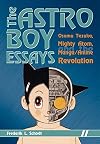
Astro boy made an incredibly impression on me as a young 8 year old boy. I enjoyed this work very much. Schodt did a wonderful job in exploring the person (Osamu Tezuka) behind the great creation of Tetsuwan Atomu (Astro boy), as well as the iconic character himself. This well researched book also contains excellent illustrations with an episode list in the appendix. Highly, highly recommend for fans of Anime, Manga, or the history of cartoons or anyone interested in this popular form of show more culture. show less
Lists
You May Also Like


Associated Authors
Statistics
- Works
- 10
- Also by
- 62
- Members
- 742
- Popularity
- #34,227
- Rating
- 4.1
- Reviews
- 7
- ISBNs
- 25
- Languages
- 1
- Favorited
- 3
