
Paul Gravett
Author of Graphic Novels: Everything You Need to Know
About the Author
Image credit: Photo by Nathalie Boisard-Beudin
Series
Works by Paul Gravett
1001 Comics You Must Read Before You Die: The Ultimate Guide to Comic Books, Graphic Novels and Manga (2011) 195 copies, 3 reviews
Escape : Number 19 2 copies
Escape : Number 11 1 copy
Associated Works
Graphic Details: Jewish Women's Confessional Comics in Essays and Interviews (2014) — Contributor — 11 copies
Tagged
Common Knowledge
- Birthdate
- 20th century
- Gender
- male
- Occupations
- curator
writer
broadcaster - Nationality
- UK
- Associated Place (for map)
- UK
Members
Reviews
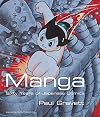
(A Warning To Parents: This book is a serious introduction to Manga and includes a few references to and examples of graphic sexual and violent works. It is almost certainly not suitable for children under the age of 15)
I cannot recommend this book highly enough and on many levels. It explains Manga in almost every conceivable way that might be of interest - its context in Japanese cultural and political history, its social role, its development and growth as a business, its sheer scale and show more its influence overseas.
It does this with a profusion of examples to illustrate almost every major stylistic aspect of Manga's development. It is, in short, an essential basic reference text from an expert author totally confident in his subject matter.
Most of my reviews on GoodReads take seriously the site's injunction to say something of what I have learned from a text. In this case, I am tempted to skip that part and just refer you to the book itself - by the time that you have finished it, you will have a good grounding in the subject and be able to make some sensible choices and aesthetic judgements of your own.
But I cannot resist a few pointers. There is the debt owed by Manga to American comic book art from its inception. The idea that it is a wholly indigenous creation that somehow blossoms late out of pre-Meiji Floating World print-making is just not tenable. It would not exist if General Douglas MacArthur had not turned Japan upside down after its defeat in 1945. Manga is uniquely Japanese but it is also uniquely liberal-capitalist. Its context is the creation of a Japan that was forced to live or die by the market as it tried to preserve the best of its traditional values.
The ruthless corporate creation and management of the Manga market is a constant theme of the book. Most Manga writers and draughtsman operate in a high pressure factory environment that is no different from the rest of Japanese corporate culture. There is little of that free and easy spirit of letting the artist wonder off and ponder his navel while the marketing men wait for the fruits of his genius.
This is a business with a brutally direct relationship with a demanding public, part of whom is so engaged with this world that it will compete to be the next generation of 'auteurs' under conditions that would break the spirit of most Westerners. The fact is that the whole European comic market is only 10% of the size of the Japanese Manga market and it is brutally competitive.
But what of the psychological function of Manga to its readers. Japan is a culture that is both sex-positive and yet concerned to keep its non-Christian world-view operating within bounds that cannot rely on some external force such as God or Kantian flummery. Japan has to appeal to tradition values without encouraging anyone to return to the dark side of Bushido.
This leads to some strange ambiguities in regulation and misunderstandings by Westerners who come into contact with it. The explicit sexual and violent content of Manga is vastly exaggerated in the West. The norm is, in fact, a wide range of more or less intense explorations of human interaction and feeling geared to every age range's innermost drives as they move through life.
Manga socialises but accepts the human condition for what it is - and this will leave some space for the darker shores of sex and violence at the margins of Manga as at the margins of any society. The Japanese simply have the courage not to pretend the dark side is not present or that it can be wished away by appeal to the pulpit, including the pulpit that has been set up inside most Westerners' heads.
Watching Manga's effect on my children, I see the effect as wholly positive. It explores themes and ideas that are difficult to talk about with peers and parents, exploring fears and desires in dreamscapes of considerable sophistication. The Gibli anime series exemplifies the fantasy non-linear side of Japanese culture but the tpical Manga is a tale of people who can be identified with in all their human complexity. Japan may use discipline and ritual to restrain and constrain desire and fear but it does not wish away these feelings and drives or give them negative or positive moral value in themselves.
The leitmotif of the Westerner is 'guilt' at failing to meet the standards of some internal policeman whereas the Japanese will feel 'shame' for failing to meet obligations that are social if equally internalised. This difference between guilt and shame is fundamental and Manga plays a major role in allowing an outlet for feelings that must not be denied but only so that they may be evaluated and appropriate action considered. If my children have constructed independently a high moral code of a rather conservative nature (which they seem to have done) then I am sure that I can put this very much down to their reading of Manga from an early age.
The closing chapters of the book move from the mass market to the almost anarchic artistic fringe of Manga and then to its export overseas, driven and transformed by market considerations on the back of anime exports to children's television. What is most interesting is that the Japanese business community treats export markets in culture much as it does export markets in consumer durables - as a challenge in which the best of foreign technology is to be stripped down, analysed and imported back into Japan to see if it can be systematised.
Westerners, especially the current late teenage generation, have taken to Manga in a big way, in part perhaps because it is unique to their generation, a foreign import that most parents simply cannot understand. Reading Manga is a learned skill, counter-intuitive to a mass popular culture that privileged first the word on the page and then the moving image but was dismissive (until recently) of the comic, now privileged as the 'graphic novel'.
Manga is positively Wagnerian without the music. It merges visuals and language in storyboards that are played out in the mind. The Western separation of text, music and image/sound, of book, of music and of film, means that the mind leaps from the pure internalisation of reading and listening to the passive intake of spectacle without finding space for Manga's half-way house of word and image being internalised as a tale that can immediately relate to social concerns and feelings.
Manga is at its best when it raises serious questions about what it is to be a boy or girl at such-and-such a time of life. It means that one is neither solipsistically engaged in great literature nor lost in the collective will of the movie or the opera. Kids today like this. Their concerns are social and internal, not just internal OR social - and Manga works for them at this level.
Part of this younger generation of Westerners has not only taken Manga to its heart but is beginning to transform it in a direct dialogue with the Japanese publishing houses. What the book brings out is the degree to which, creatively, Japanese-American and Japanese-French ('bandes dessines') influences are creating new themes and new works for the more sophisticated end of the Japanese market, as well as for the American and European markets, alongside the mainstream offers of Tokyo Pop.
Bit by bit, other related Japanese cultural phenomenon, such as Cosplay, are likely to merge with Western fandom into new cultural forms. No doubt, the big Japanese brands and digitalisation will give us new Western-style blockbusters that are as showy as the Marvel-inspired productions that now emerge every year.
This is globalisation driven by the market, but it is not one that creates some standard universal pap. The complexity and intensity of the Manga community's response to the market is not resentful but fertile - a frenetic creativity that matches the inner core of human fears and desires with a very high level of sensitivity and artistic creation.
One can only hope that priests and 'moral guardians' in the West do not get their ignorant, restrictive and grubby paws on this surge of creativity and force it into tramlines that will reduce it to mere brain fodder - as the Hays Code managed to do to the creative glory that was Hollywood from the 1930s to the 1960s and as waves of censors have done in the West since time immemorial.
Worse, I fear that the growth of the importance of the 'three faiths' markets for Manga may come to infect Japan itself with Western neurosis. This would be a tragedy for Japan and for the West. show less
I cannot recommend this book highly enough and on many levels. It explains Manga in almost every conceivable way that might be of interest - its context in Japanese cultural and political history, its social role, its development and growth as a business, its sheer scale and show more its influence overseas.
It does this with a profusion of examples to illustrate almost every major stylistic aspect of Manga's development. It is, in short, an essential basic reference text from an expert author totally confident in his subject matter.
Most of my reviews on GoodReads take seriously the site's injunction to say something of what I have learned from a text. In this case, I am tempted to skip that part and just refer you to the book itself - by the time that you have finished it, you will have a good grounding in the subject and be able to make some sensible choices and aesthetic judgements of your own.
But I cannot resist a few pointers. There is the debt owed by Manga to American comic book art from its inception. The idea that it is a wholly indigenous creation that somehow blossoms late out of pre-Meiji Floating World print-making is just not tenable. It would not exist if General Douglas MacArthur had not turned Japan upside down after its defeat in 1945. Manga is uniquely Japanese but it is also uniquely liberal-capitalist. Its context is the creation of a Japan that was forced to live or die by the market as it tried to preserve the best of its traditional values.
The ruthless corporate creation and management of the Manga market is a constant theme of the book. Most Manga writers and draughtsman operate in a high pressure factory environment that is no different from the rest of Japanese corporate culture. There is little of that free and easy spirit of letting the artist wonder off and ponder his navel while the marketing men wait for the fruits of his genius.
This is a business with a brutally direct relationship with a demanding public, part of whom is so engaged with this world that it will compete to be the next generation of 'auteurs' under conditions that would break the spirit of most Westerners. The fact is that the whole European comic market is only 10% of the size of the Japanese Manga market and it is brutally competitive.
But what of the psychological function of Manga to its readers. Japan is a culture that is both sex-positive and yet concerned to keep its non-Christian world-view operating within bounds that cannot rely on some external force such as God or Kantian flummery. Japan has to appeal to tradition values without encouraging anyone to return to the dark side of Bushido.
This leads to some strange ambiguities in regulation and misunderstandings by Westerners who come into contact with it. The explicit sexual and violent content of Manga is vastly exaggerated in the West. The norm is, in fact, a wide range of more or less intense explorations of human interaction and feeling geared to every age range's innermost drives as they move through life.
Manga socialises but accepts the human condition for what it is - and this will leave some space for the darker shores of sex and violence at the margins of Manga as at the margins of any society. The Japanese simply have the courage not to pretend the dark side is not present or that it can be wished away by appeal to the pulpit, including the pulpit that has been set up inside most Westerners' heads.
Watching Manga's effect on my children, I see the effect as wholly positive. It explores themes and ideas that are difficult to talk about with peers and parents, exploring fears and desires in dreamscapes of considerable sophistication. The Gibli anime series exemplifies the fantasy non-linear side of Japanese culture but the tpical Manga is a tale of people who can be identified with in all their human complexity. Japan may use discipline and ritual to restrain and constrain desire and fear but it does not wish away these feelings and drives or give them negative or positive moral value in themselves.
The leitmotif of the Westerner is 'guilt' at failing to meet the standards of some internal policeman whereas the Japanese will feel 'shame' for failing to meet obligations that are social if equally internalised. This difference between guilt and shame is fundamental and Manga plays a major role in allowing an outlet for feelings that must not be denied but only so that they may be evaluated and appropriate action considered. If my children have constructed independently a high moral code of a rather conservative nature (which they seem to have done) then I am sure that I can put this very much down to their reading of Manga from an early age.
The closing chapters of the book move from the mass market to the almost anarchic artistic fringe of Manga and then to its export overseas, driven and transformed by market considerations on the back of anime exports to children's television. What is most interesting is that the Japanese business community treats export markets in culture much as it does export markets in consumer durables - as a challenge in which the best of foreign technology is to be stripped down, analysed and imported back into Japan to see if it can be systematised.
Westerners, especially the current late teenage generation, have taken to Manga in a big way, in part perhaps because it is unique to their generation, a foreign import that most parents simply cannot understand. Reading Manga is a learned skill, counter-intuitive to a mass popular culture that privileged first the word on the page and then the moving image but was dismissive (until recently) of the comic, now privileged as the 'graphic novel'.
Manga is positively Wagnerian without the music. It merges visuals and language in storyboards that are played out in the mind. The Western separation of text, music and image/sound, of book, of music and of film, means that the mind leaps from the pure internalisation of reading and listening to the passive intake of spectacle without finding space for Manga's half-way house of word and image being internalised as a tale that can immediately relate to social concerns and feelings.
Manga is at its best when it raises serious questions about what it is to be a boy or girl at such-and-such a time of life. It means that one is neither solipsistically engaged in great literature nor lost in the collective will of the movie or the opera. Kids today like this. Their concerns are social and internal, not just internal OR social - and Manga works for them at this level.
Part of this younger generation of Westerners has not only taken Manga to its heart but is beginning to transform it in a direct dialogue with the Japanese publishing houses. What the book brings out is the degree to which, creatively, Japanese-American and Japanese-French ('bandes dessines') influences are creating new themes and new works for the more sophisticated end of the Japanese market, as well as for the American and European markets, alongside the mainstream offers of Tokyo Pop.
Bit by bit, other related Japanese cultural phenomenon, such as Cosplay, are likely to merge with Western fandom into new cultural forms. No doubt, the big Japanese brands and digitalisation will give us new Western-style blockbusters that are as showy as the Marvel-inspired productions that now emerge every year.
This is globalisation driven by the market, but it is not one that creates some standard universal pap. The complexity and intensity of the Manga community's response to the market is not resentful but fertile - a frenetic creativity that matches the inner core of human fears and desires with a very high level of sensitivity and artistic creation.
One can only hope that priests and 'moral guardians' in the West do not get their ignorant, restrictive and grubby paws on this surge of creativity and force it into tramlines that will reduce it to mere brain fodder - as the Hays Code managed to do to the creative glory that was Hollywood from the 1930s to the 1960s and as waves of censors have done in the West since time immemorial.
Worse, I fear that the growth of the importance of the 'three faiths' markets for Manga may come to infect Japan itself with Western neurosis. This would be a tragedy for Japan and for the West. show less
A very well-edited and packaged anniversary book on Jansson. It was luxurious to have the colour pictures right next to the relevant text. Even though I've read a biography of her before, this book was still a pleasure to read.
The selection of anecdotes and fun facts was simultaneously thoughtful and entertaining. My favourite was "Her Gollum towered monstrously large, to the surprise of Tolkien himself, who realized that he had never clarified Gollum's size and so amended the second edition show more to describe him as a 'small slimy creature'."
An elevated coffee table book, for new and old Jansson fans. show less
The selection of anecdotes and fun facts was simultaneously thoughtful and entertaining. My favourite was "Her Gollum towered monstrously large, to the surprise of Tolkien himself, who realized that he had never clarified Gollum's size and so amended the second edition show more to describe him as a 'small slimy creature'."
An elevated coffee table book, for new and old Jansson fans. show less
This book, the accompanying publication to the exhibition by the British Library of the same name, is an ambitious and sprawling overview of comics and graphic arts in the UK. THe focus is cllearly on the historical content (much of which is likely to be unknown or vaguely known by young readers) with the majority of the remainder speaking to the comics "revolution" of the 60s/70s. Little is said of the modern era, but I don't think that this weakens the presentation at all. Most readers are show more well-versed in the modern graphic novel sea already, and the subject has kind of been overdone in recent years with Hollywood's appropriation of the genre. This book serves well as one of few to address in depth the early ages of mail-circulated comics, imported American and French publications (both of the superhero and erotic genres), and the legal battles that were fought over censorship in the UK. It relies heavily on illustrations to keep the reader occupied (though the text isn't too dry, for all its academic slant), which is well-played considering the subject. I only wish that I had been able to see the exhibition at the British Library! I guess the book shall have to do! show less
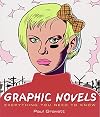
If you're looking for an introduction to the history, depth and breadth of graphic novels, this is a good starting point. In a dozen short chapters that include many illustrations from the stories discussed, Paul Gravett does not presume that his audience knows his subject. Chapter 1, entitled "Things to Hate about Comics" discusses the difficulties and misconceptions surrounding the term "graphic novel" and attempts to dispel the worries of those who have yet to try the format. The meat of show more the book, however, is about the books. Each chapter presents a theme or genre: childhood (fictional or memoir), realistic fiction, superheroes, war, etc. The chapters are short, readable, and include double page spreads with illustration from particular titles as well as analysis from Gravett and suggestions of what to read next.
So why did I not finish it? A few niggling things here and there - chapter titles being a little obtuse, a list of 30 "best of" titles that would have better served me towards the end, the fact that so many great titles have come out in the last five years since the book has been published - little, personal, quirky things that maybe the author couldn't even help but added up in my reading experience. Primarily, however, I had issues with the "in focus" and "Following on from..." pages, the heart and soul of the book itself. I thought the inclusion of illustrations from the titles he was talking about was essential, and he did a great job of selecting titles that gave readers a glimpse of the diversity of styles available in graphic novels. Yet he sometimes includes pages far into a book, for example Maus I, so I would not recommend reading every word unless you're prepared for spoilers. The second issue I had was with the keywords he includes at the bottom of each "in focus" page. Again, great idea but poor execution. Suggesting further reading along thematic lines is great, and helps with bringing together titles that could have fit into more than one chapter, suggesting words such as "family secrets," "mothers," and "Jews," along with a single page number that brings you to the "in focus" page of another title. The order of the page numbers have no apparent rhyme or reason to them, however, so trying to follow a thematic element such as "Jews" will bring you from page 60 (Maus) to page 68 to page 63 to page 166 - and then I just stopped in frustration, as the book is much to large to be flipping back and forth and holding pages.
A decent reference tool, but not a book to read through. show less
So why did I not finish it? A few niggling things here and there - chapter titles being a little obtuse, a list of 30 "best of" titles that would have better served me towards the end, the fact that so many great titles have come out in the last five years since the book has been published - little, personal, quirky things that maybe the author couldn't even help but added up in my reading experience. Primarily, however, I had issues with the "in focus" and "Following on from..." pages, the heart and soul of the book itself. I thought the inclusion of illustrations from the titles he was talking about was essential, and he did a great job of selecting titles that gave readers a glimpse of the diversity of styles available in graphic novels. Yet he sometimes includes pages far into a book, for example Maus I, so I would not recommend reading every word unless you're prepared for spoilers. The second issue I had was with the keywords he includes at the bottom of each "in focus" page. Again, great idea but poor execution. Suggesting further reading along thematic lines is great, and helps with bringing together titles that could have fit into more than one chapter, suggesting words such as "family secrets," "mothers," and "Jews," along with a single page number that brings you to the "in focus" page of another title. The order of the page numbers have no apparent rhyme or reason to them, however, so trying to follow a thematic element such as "Jews" will bring you from page 60 (Maus) to page 68 to page 63 to page 166 - and then I just stopped in frustration, as the book is much to large to be flipping back and forth and holding pages.
A decent reference tool, but not a book to read through. show less
Lists
Awards

You May Also Like


Associated Authors
Statistics
- Works
- 19
- Also by
- 8
- Members
- 1,165
- Popularity
- #22,061
- Rating
- 3.8
- Reviews
- 19
- ISBNs
- 43
- Languages
- 9