
Tomoco Kanemaki
Author of Kingdom Hearts: The Novel
Works by Tomoco Kanemaki
Kingdom Hearts II: The Novel, Vol. 1 (light novel) (Kingdom Hearts II: The Novel, 1) (2017) 23 copies
Kingdom Hearts III: The Novel, Vol. 1 (light novel): Re:Start!! (Kingdom Hearts III (light novel) (1)) (2020) 18 copies
Kingdom Hearts X: Your Keyblade, Your Story The Novel (light novel): Your Keyblade, Your Story (Kingdom Hearts X (light novel)) (2019) 12 copies
Kingdom Hearts III: The Novel, Vol. 3 (light novel): Remind Me Again (Kingdom Hearts III (light novel), 3) (2021) 10 copies
Tagged
Common Knowledge
There is no Common Knowledge data for this author yet. You can help.
Members
Reviews
Improvement on the previous novel
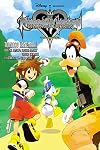
Kingdom Hearts: Chain of Memories (the Novel) is an adaptation of the video game of the same name, written by Tomoco Kanemaki with illustrations by Shiro Amano. In Chain of Memories, Sora and the gang must make their way through Castle Oblivion, a mysterious castle under the control of Organization XIII, in order to find those he's looking for and recover the memories he's lost.
Like the previous Kingdom Hearts novel, Chain of Memories condenses much of the show more game into a format that works better as a novel. The video game itself was always a bit weak; its story was good, but much of it felt like a rehash of the first Kingdom Hearts game. This adaptation suffers a bit from that, especially in the first part of Sora's story. But once the second part of Sora's story starts, and all throughout Riku's story, Chain of Memories starts to find its own story and ends up being more of an engaging story than the first game's adaptation was. Especially in the department of character development.
One of the things I love about Chain of Memories is how character focused it is. I mean, it's hard not to be character focused when your entire premise revolves around the malleability of memories and how they can be manipulated and molded into whatever someone desires. There's a theme throughout the novel of the idea that memory is so unreliable that you can lie to yourself enough that you believe the lie to be a true memory. Naturally, Kingdom Hearts uses this idea in more of a fantasy style than reality, but it's still a relatable concept. Many of us have memories that we aren't 100% sure are real. There are events we think back on that cause us to question if they really happened, or if we just imagined it.
Like the previous adaptation, Kanemaki's writing style still leaves a bit to be desired, though there is some improvement this time around. There's not quite as much "avoiding using 'said'" as there was in the previous book, which is nice. Some of the descriptions are getting a bit more detailed and poetic, which is also nice. It's still written in a very easy to digest way, which isn't necessarily a bad thing. I mean, it's not like the Kingdom Hearts series is high art, after all. They're enjoyable video games with a fun story, and this adaptation does a good job at showcasing the best elements of the series.
I particularly liked when Kanemaki would shift the focus away from Sora and show a bit of the behind the scenes workings of Organization XIII. Some of that is because the members of Organization XIII have always been my favorite characters in the series, and I've always been fascinated by the group, so any extra information on them I can get is a very positive thing. But even aside from that, it opens up the narrative a bit. It gives the story room to breathe, especially as this book begins the journey that takes the series into its more complicated and convoluted installments.
All in all, Chain of Memories: The Novel is an improvement on Kanemaki's previous outing in the Kingdom Hearts universe, and is an enjoyable read for anyone who's a fan of the series and wants to experience the story of the game in a different medium. show less
Kingdom Hearts: Chain of Memories (the Novel) is an adaptation of the video game of the same name, written by Tomoco Kanemaki with illustrations by Shiro Amano. In Chain of Memories, Sora and the gang must make their way through Castle Oblivion, a mysterious castle under the control of Organization XIII, in order to find those he's looking for and recover the memories he's lost.
Like the previous Kingdom Hearts novel, Chain of Memories condenses much of the show more game into a format that works better as a novel. The video game itself was always a bit weak; its story was good, but much of it felt like a rehash of the first Kingdom Hearts game. This adaptation suffers a bit from that, especially in the first part of Sora's story. But once the second part of Sora's story starts, and all throughout Riku's story, Chain of Memories starts to find its own story and ends up being more of an engaging story than the first game's adaptation was. Especially in the department of character development.
One of the things I love about Chain of Memories is how character focused it is. I mean, it's hard not to be character focused when your entire premise revolves around the malleability of memories and how they can be manipulated and molded into whatever someone desires. There's a theme throughout the novel of the idea that memory is so unreliable that you can lie to yourself enough that you believe the lie to be a true memory. Naturally, Kingdom Hearts uses this idea in more of a fantasy style than reality, but it's still a relatable concept. Many of us have memories that we aren't 100% sure are real. There are events we think back on that cause us to question if they really happened, or if we just imagined it.
Like the previous adaptation, Kanemaki's writing style still leaves a bit to be desired, though there is some improvement this time around. There's not quite as much "avoiding using 'said'" as there was in the previous book, which is nice. Some of the descriptions are getting a bit more detailed and poetic, which is also nice. It's still written in a very easy to digest way, which isn't necessarily a bad thing. I mean, it's not like the Kingdom Hearts series is high art, after all. They're enjoyable video games with a fun story, and this adaptation does a good job at showcasing the best elements of the series.
I particularly liked when Kanemaki would shift the focus away from Sora and show a bit of the behind the scenes workings of Organization XIII. Some of that is because the members of Organization XIII have always been my favorite characters in the series, and I've always been fascinated by the group, so any extra information on them I can get is a very positive thing. But even aside from that, it opens up the narrative a bit. It gives the story room to breathe, especially as this book begins the journey that takes the series into its more complicated and convoluted installments.
All in all, Chain of Memories: The Novel is an improvement on Kanemaki's previous outing in the Kingdom Hearts universe, and is an enjoyable read for anyone who's a fan of the series and wants to experience the story of the game in a different medium. show less
Wow, everything sucks about this book.The writing is very fast and it expects you to be familiar with the game, so if you aren't... you'll be left confused. That being said it has be written for kids, BUT the way the story jumps around it's just not good writing. Even for children. Like we found someone, then they are running off and we are running off, then we catch up, then someone appears the disappears. It's just that quick and the boss fights last as almost as long as a summary show more paragraph.Then there's the story...This is very much a damsel in distress story. All the women in the story are just there as objects. In this case their hearts are needed to open and door. You could replace them with a magic gem and the story wouldn't be affected. This extends to Kairi too, who you barely get to hear about before she disappears and then is rendered a lifeless doll for Riku to cart around.After she is saved by Sora, she is then told "IT'S TOO DANGEROUS FOR A GIRL" and left behind. OF COURSE. We save her then ditch her like the magical gem she is.Not only that in the course of the story Sora shows some sympathy for Captain Hook after he is told how hook lost his hand to the crocodile. Donald Duck dismisses his sympathy, because Hook "Took Kairi and Wendy prisoner." I'm sorry the two don't equal one another, and Hook's hand happened in the past.So basically since this book is aimed at boys we are teaching them that women are objects and to be unsympathetic, emotionless monsters. :| show less

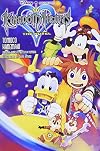
Kingdom Hearts: The Novel is an adaptation of the video game of the same name written by Tomoco Kanemaki with illustrations by Shiro Amano. It tells the story of Sora, a boy yearning for adventure, who has to team up with Donald Duck and Goofy in order to find and save his friends, Riku and Kairi, and prevent all the worlds from succumbing to darkness.
This novel is a fairly good adaptation of the video game. It takes the plot of the game and condenses it into a better-paced story. Gone are show more the worlds which contain little relevance to the overall plot of the story. Instead, Kanemaki chooses to stick to the basic story of the game and let the characters shine through. This, alone, is a smart move on Kanemaki's fault. While exploring countless worlds works well in a video game, it doesn't work so well in a novel. Had Kanemaki adapted the game exactly as was, the book would've felt very repetitive very quickly.
In fact, the characters are the strongest part of this book. Telling this story in the form of a novel allows the characters room to breathe. Kanemaki does this admirably, particularly with Sora. Kanemaki's style allows the audience the opportunity to really explore Sora's thoughts and feelings throughout the story. Routinely, we are granted access to exactly what Sora is thinking about a given event, and it makes the story stronger.
The worlds from the video game that Kanemaki chose to keep are probably the most important worlds to the overall story itself. Wonderland, Tarzan's Jungle, Agrabah, Monstro the Whale, Traverse Town, Neverland, and Hollow Bastion are the worlds kept in this adaptation, and they're the worlds most needed to tell this story in a way that makes sense, is paced well, and keeps from being repetitive.
In terms of Kanemaki's writing style (as well as that of the translator), the book is written fairly simplistically. There aren't a whole lot of detailed descriptions, and he tries a bit too hard with the whole "not using 'said' thing". A character is always retorting or some other action instead of just speaking, and it definitely comes off a bit distracting at times. Oftentimes it's a bit unclear who exactly is speaking as Kanemaki routinely doesn't identify the speakers of sentences; in terms of the pacing of the story, this is okay, but in terms of the clarity, it's a bit confusing. It's a fragile balance, and Kanemaki doesn't always manage to hit that balance as well as he'd like to.
However, Kanemaki is able to bring the theme of friendship and love even further to the surface than it was in the game in the way he writes this book. This is a story of friendship and love defeating even the greatest darkness. It's a story of perseverance and dedication; a story of bravery and camaraderie. It's perfect that the story uses so many characters from the Disney canon because it really feels right at home in the Disney universe.
The video game series has been beloved for over fifteen years now, and it's great that it's finally getting adapted into other mediums. As someone who doesn't have access to video games, I am thrilled that I have the chance to properly experience this story in the form of a beautifully written novel. I can't wait for the subsequent adaptations to be published here in America; Kingdom Hearts is and has always been a good, wholesome, entertaining story appropriate for all ages. It brings out my inner child and fills me with joy. The games always did that, and this adaptation does it, too. show less
This novel is a fairly good adaptation of the video game. It takes the plot of the game and condenses it into a better-paced story. Gone are show more the worlds which contain little relevance to the overall plot of the story. Instead, Kanemaki chooses to stick to the basic story of the game and let the characters shine through. This, alone, is a smart move on Kanemaki's fault. While exploring countless worlds works well in a video game, it doesn't work so well in a novel. Had Kanemaki adapted the game exactly as was, the book would've felt very repetitive very quickly.
In fact, the characters are the strongest part of this book. Telling this story in the form of a novel allows the characters room to breathe. Kanemaki does this admirably, particularly with Sora. Kanemaki's style allows the audience the opportunity to really explore Sora's thoughts and feelings throughout the story. Routinely, we are granted access to exactly what Sora is thinking about a given event, and it makes the story stronger.
The worlds from the video game that Kanemaki chose to keep are probably the most important worlds to the overall story itself. Wonderland, Tarzan's Jungle, Agrabah, Monstro the Whale, Traverse Town, Neverland, and Hollow Bastion are the worlds kept in this adaptation, and they're the worlds most needed to tell this story in a way that makes sense, is paced well, and keeps from being repetitive.
In terms of Kanemaki's writing style (as well as that of the translator), the book is written fairly simplistically. There aren't a whole lot of detailed descriptions, and he tries a bit too hard with the whole "not using 'said' thing". A character is always retorting or some other action instead of just speaking, and it definitely comes off a bit distracting at times. Oftentimes it's a bit unclear who exactly is speaking as Kanemaki routinely doesn't identify the speakers of sentences; in terms of the pacing of the story, this is okay, but in terms of the clarity, it's a bit confusing. It's a fragile balance, and Kanemaki doesn't always manage to hit that balance as well as he'd like to.
However, Kanemaki is able to bring the theme of friendship and love even further to the surface than it was in the game in the way he writes this book. This is a story of friendship and love defeating even the greatest darkness. It's a story of perseverance and dedication; a story of bravery and camaraderie. It's perfect that the story uses so many characters from the Disney canon because it really feels right at home in the Disney universe.
The video game series has been beloved for over fifteen years now, and it's great that it's finally getting adapted into other mediums. As someone who doesn't have access to video games, I am thrilled that I have the chance to properly experience this story in the form of a beautifully written novel. I can't wait for the subsequent adaptations to be published here in America; Kingdom Hearts is and has always been a good, wholesome, entertaining story appropriate for all ages. It brings out my inner child and fills me with joy. The games always did that, and this adaptation does it, too. show less
This kinda reminds me of fanfiction. Not super spectacular, but pretty decent if you're a fan of the game. Sadly, people who haven't played it might not understand some things because it doesn't go into a lot of detail. Still, pretty good. :)
You May Also Like


Associated Authors
Statistics
- Works
- 14
- Members
- 274
- Popularity
- #84,602
- Rating
- 4.0
- Reviews
- 5
- ISBNs
- 19
- Languages
- 1
- Favorited
- 1