

Jordan Fisher Smith
Author of Nature Noir: A Park Ranger's Patrol in the Sierra
About the Author
Jordan Fisher Smith has worked as a park ranger along the north coast and Sierra Nevada of California, Wyoming's Grand Tetons, and the Alaskan Bush
Works by Jordan Fisher Smith
Engineering Eden: The True Story of a Violent Death, a Trial, and the Fight over Controlling Nature (2016) 115 copies, 40 reviews
Engineering Eden: A Violent Death, a Federal Trial, and the Struggle to Restore Nature in Our National Parks (2019) 31 copies, 1 review
Tagged
Common Knowledge
- Gender
- male
- Occupations
- Park Ranger
writer - Nationality
- USA
- Birthplace
- USA
- Places of residence
- California, USA
Sierra Nevada, California, USA
Grand Teton, Wyoming, USA
Alaska, USA - Associated Place (for map)
- USA
Members
Reviews
Engineering Eden: The True Story of a Violent Death, a Trial, and the Fight over Controlling Nature by Jordan Fisher Smith
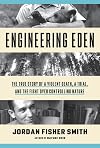
Jordan Fisher Smith doesn't confine himself to recounting the violent bear attack that killed Harry Walker in Yelllowstone National Park, but places his story in historical context, tracing the evolution of the National Parks systems, the men who came to hold sway over its management and the sometimes-fatal mistakes they made. Two women are attacked and killed by a bear earlier, but the Park Service sets in motion the very circumstances that set up Walker's fatal encounter with an aging show more "dump bear.''
A vivid and evocative writer, Smith makes us care about the young man, Harry Walker, at the center of his tale by sharing details of Walker's childhood ad family life, and the new romantic relationship blossoming in the park on the night he was killed. Smith doesn't spend much time in the courtroom but gets the reader outdoors, into the great wide open where the story unfolds.
He ends with a postscript on where the players in the real-life drama are now.
Highly recommended. show less
A vivid and evocative writer, Smith makes us care about the young man, Harry Walker, at the center of his tale by sharing details of Walker's childhood ad family life, and the new romantic relationship blossoming in the park on the night he was killed. Smith doesn't spend much time in the courtroom but gets the reader outdoors, into the great wide open where the story unfolds.
He ends with a postscript on where the players in the real-life drama are now.
Highly recommended. show less
 This review was written for LibraryThing Early Reviewers.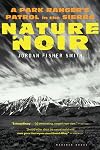
'Nature Noir' is definitely a suitable pandemic lockdown book, as it transports the reader away from their claustrophobic reality to an incredible landscape in the Sierra Nevada. I very much enjoyed the laconic and insightful tone of Elmore Leonard applied to crimes taking place in a spectacular state park. I hadn't realised that in America park rangers carry guns and make arrests. (Oh, America.) Fisher Smith is a thoughtful and deliberate writer, giving equal weight to the landscapes and show more wildlife as the humans that visit them. Each chapter centres upon a particular episode in his career as a park ranger, placed within wider context that informed me about the gold rush and rise of public environmental concern in California, among other things. Recounted incidents include unsolved murders, suicides, drug overdoses, and 20th century gold prospecting. The criminal activity is tragic, squalid, and embedded in poverty. In tone and content this recalled Justified, the excellent TV series adapted from Elmore Leonard's work.
Hanging over the whole narrative and Fisher Smith's job is the fact that his park was for decades slated to be submerged by a massive new dam. Incidentally, I did not previously realise that dams can cause such significant pressure on local geology that they cause earthquakes. Fisher Smith discusses notions of wildness, nature, and human impact on the environment in a considered and nuanced fashion that I really appreciated:
'Nature Noir' is a unique, diverting, and informative read. Although the title suggested that its appeal would be stylistic, I was delighted to find it has a great deal of substance. show less
Hanging over the whole narrative and Fisher Smith's job is the fact that his park was for decades slated to be submerged by a massive new dam. Incidentally, I did not previously realise that dams can cause such significant pressure on local geology that they cause earthquakes. Fisher Smith discusses notions of wildness, nature, and human impact on the environment in a considered and nuanced fashion that I really appreciated:
We rangers have a fair amount of time to read and I'd been aware of these [postmodern] ideas for a while. They are merely a more fashionable version of traditional human-centred technological optimism. But seen from a boat on a regulated river that night, the claims of these postmodernists looked faulty. However poorly managed that day, the job of metering a single river to generate power without killing any whitewater rafters was far simpler than managing the climate that provided the river's water. If dams had many beneficial effects for civilisation - our late summer white water rafting season being one of them - they also had many unintentional outcomes. Coastal beaches were now deprived of their sand, for centuries replenished by rivers wearing down mountains. Some of the beaches would now grow rocky - and that change might have an effect on, say, the economy of a beach town or the nesting of plovers, and that change still another effect. [...] We humans were reductionists, and neither our brains nor our most powerful computers can begin to account for the complex web of interrelationships in a global ecosystem.
In the end much of what is seemingly known and tamed is in fact unknown, and untamed.
'Nature Noir' is a unique, diverting, and informative read. Although the title suggested that its appeal would be stylistic, I was delighted to find it has a great deal of substance. show less
Engineering Eden: The True Story of a Violent Death, a Trial, and the Fight over Controlling Nature by Jordan Fisher Smith
Everyone understands, at least intuitively, that all things are interconnected - ALL things. Ecology is the study of those interconnections. And managing the entire wild ecology of America's national parks is the impossible task that the National Park Service has been chartered to accomplish - to "...conserve the scenery and the national and historic objects and the wild life therein and to provide for the enjoyment of the same in such manner and by such means as will leave them unimpaired show more for the enjoyment of future generations." (The National Park Service Organic Act of 1916)
Also intuitively, no one completely understands what the future ramifications are of the actions of one species on all of the other species and objects, flora, fauna and mineral, within an ecosystem. Yet mankind, just one of the innumerable entities that are part of the ecosystems of the national parks, tries to manage, to control, to conserve and preserve, all without completely understanding what will be the results of its actions. The Service has acted valorously in trying to meet its goals, stumbling at times, picking itself up and trying again - sometimes through trial and error, sometimes on blind faith and unsupported beliefs, sometimes on scientific study and analysis, sometimes just in unquestioning compliance with policies set by commercial interests or political interests or public pressure for individual enjoyment - all ranging from fancy lady's hats festooned with feathers and sometimes entire stuffed birds to heedless orgies of killing of millions of animals - elk, bison, bears, antelope, beaver, ducks, quail, grouse, passenger pigeons, salmon, etc., etc., and the loss or endangerment of sequoia, whitebark pine and so forth.
These conflicting forces are constantly at play in all of the park ecosystems, but the focus in Jordan Fisher Smith's riveting work, Engineering Eden: The True Story of a Violent Death, a Trial, and the Fight over Controlling Nature, is on the Greater Yellowstone Ecosystem. Smith takes an unusual but downright masterful approach to discussing all of the factors at play in the Greater Yellowstone Ecosystem - he hangs all of his history and analysis of the intricate underpinnings on the skeleton of a civil lawsuit over the Park Service's responsibility in the fatal mauling and death of a young man by a grizzly bear in Yellowstone National Park in 1972.
The range of the book's undertakings is extreme - from tracing the geological structure of the park from eighteen million years ago to its present classification as an active volcano; from the role of the native American tribes, the Nez Perce, the Blackfeet, Crow, Sheepeaters, Bannock and other Shoshone groups who were sharing the area, to the US Army campaigning against them and later assuming management of Yellowstone in order to control the depredation of its species from the bloody orgies of hunting that ensued; from that hunting to today's sprawling network of rules and regulations and bureaus and departments and authorities that determine or interpret and enforce the policies for the management of the park's ecology; from the intensive lobbying by the Northern Pacific Railroad for the park's creation because it would be an incentive to the public to buy its railroad bonds, to the present glut of concessionaires; from the desires of prospective hunters of Yellowstone's wildlife to the farmers and ranchers who live in the area to the innumerable people throughout the world who are affected by the success or failure of the strategies tried at Yellowstone to manage nature. It's a tautology - everything's connected - and it's to Jordan Smith's extreme credit that he was able to come up with a structure that would allow him to explore all of these competing and intricately interwoven factors and still maintain a clear and forward progressing discussion of their import.
Smith's work does not present any definitive solutions to the Park Service's quandaries, but it does illuminate the critical need for scientific investigation and for the development of policies based on data rather than unsupported beliefs. His rendition of the policy history and interpretation is particularly relevant because the U. S. Fish and Wildlife Service is, right now, trying to decide if the North American grizzly bear should be taken off the endangered species list, thus allowing it to be hunted and killed. Policy makers and, indeed, all environmental studies students should read and take to heart the material in Engineering Eden if we wish to have the benefit and glory of wild nature in our lives.
I received a free copy of this book from the publisher in exchange for an honest review. show less
Also intuitively, no one completely understands what the future ramifications are of the actions of one species on all of the other species and objects, flora, fauna and mineral, within an ecosystem. Yet mankind, just one of the innumerable entities that are part of the ecosystems of the national parks, tries to manage, to control, to conserve and preserve, all without completely understanding what will be the results of its actions. The Service has acted valorously in trying to meet its goals, stumbling at times, picking itself up and trying again - sometimes through trial and error, sometimes on blind faith and unsupported beliefs, sometimes on scientific study and analysis, sometimes just in unquestioning compliance with policies set by commercial interests or political interests or public pressure for individual enjoyment - all ranging from fancy lady's hats festooned with feathers and sometimes entire stuffed birds to heedless orgies of killing of millions of animals - elk, bison, bears, antelope, beaver, ducks, quail, grouse, passenger pigeons, salmon, etc., etc., and the loss or endangerment of sequoia, whitebark pine and so forth.
These conflicting forces are constantly at play in all of the park ecosystems, but the focus in Jordan Fisher Smith's riveting work, Engineering Eden: The True Story of a Violent Death, a Trial, and the Fight over Controlling Nature, is on the Greater Yellowstone Ecosystem. Smith takes an unusual but downright masterful approach to discussing all of the factors at play in the Greater Yellowstone Ecosystem - he hangs all of his history and analysis of the intricate underpinnings on the skeleton of a civil lawsuit over the Park Service's responsibility in the fatal mauling and death of a young man by a grizzly bear in Yellowstone National Park in 1972.
The range of the book's undertakings is extreme - from tracing the geological structure of the park from eighteen million years ago to its present classification as an active volcano; from the role of the native American tribes, the Nez Perce, the Blackfeet, Crow, Sheepeaters, Bannock and other Shoshone groups who were sharing the area, to the US Army campaigning against them and later assuming management of Yellowstone in order to control the depredation of its species from the bloody orgies of hunting that ensued; from that hunting to today's sprawling network of rules and regulations and bureaus and departments and authorities that determine or interpret and enforce the policies for the management of the park's ecology; from the intensive lobbying by the Northern Pacific Railroad for the park's creation because it would be an incentive to the public to buy its railroad bonds, to the present glut of concessionaires; from the desires of prospective hunters of Yellowstone's wildlife to the farmers and ranchers who live in the area to the innumerable people throughout the world who are affected by the success or failure of the strategies tried at Yellowstone to manage nature. It's a tautology - everything's connected - and it's to Jordan Smith's extreme credit that he was able to come up with a structure that would allow him to explore all of these competing and intricately interwoven factors and still maintain a clear and forward progressing discussion of their import.
Smith's work does not present any definitive solutions to the Park Service's quandaries, but it does illuminate the critical need for scientific investigation and for the development of policies based on data rather than unsupported beliefs. His rendition of the policy history and interpretation is particularly relevant because the U. S. Fish and Wildlife Service is, right now, trying to decide if the North American grizzly bear should be taken off the endangered species list, thus allowing it to be hunted and killed. Policy makers and, indeed, all environmental studies students should read and take to heart the material in Engineering Eden if we wish to have the benefit and glory of wild nature in our lives.
I received a free copy of this book from the publisher in exchange for an honest review. show less
This review was written for LibraryThing Early Reviewers.Well, I gotta say. If there is a better book about Northern California's Gold Country (I lived on Buck's Bar, SE of Diamond Springs for a long summer), I haven't seen it. All the sleazy, self-serving, mineral-poaching, atavistic aspects of the "Hangtown" crowd are well represented here. This is what living in that country was like when I lived there among several alcoholic sociopaths who, it seemed, needed to be threatened with summary eviction by county authorities every so often if one show more wanted them to behave in a relatively "civilized" manner. Gold holds no respect for persons, apparently, and I couldn't get back to San Francisco fast enough when push came to shove. This is very nicely written and entertaining if one likes 'dark' stories. 'Nuff said. show less
Lists
Awards


You May Also Like


Statistics
- Works
- 3
- Members
- 395
- Popularity
- #61,386
- Rating
- 3.7
- Reviews
- 48
- ISBNs
- 12
