
Sarah McCoy
Author of The Baker's Daughter
About the Author
Sarah McCoy is the author of several novel's such as: The Time It Snowed in Puerto Rico and The Mapmaker's Children. The daughter of an army officer, McCoy spent her childhood in Germany. Her title The Baker's Daghter made the best seller list in 2017. (Bowker Author Biography)
Image credit: Author Sarah McCoy at the 2015 Texas Book Festival. By Larry D. Moore, CC BY-SA 4.0, https://commons.wikimedia.org/w/index.php?curid=44609228
Works by Sarah McCoy
Blood Siren 1 copy
Associated Works
Grand Central: Original Stories of Postwar Love and Reunion (2014) — Contributor — 144 copies, 9 reviews
Author in Progress: A No-Holds-Barred Guide to What It Really Takes to Get Published (2016) — Contributor — 72 copies, 1 review
Tagged
Common Knowledge
- Canonical name
- McCoy, Sarah
- Birthdate
- 1980-04-14
- Gender
- female
- Education
- Virginia Tech
Old Dominion University - Occupations
- novelist
- Nationality
- USA
- Birthplace
- Fort Knox, Kentucky, USA
- Places of residence
- Frankfurt, Germany
El Paso, Texas, USA - Associated Place (for map)
- USA
Members
Reviews

The Baker’s Daughter caught my attention initially because of its tie to World War II. But if you are thinking the novel is just another story about a woman who must decide whether or not to shelter a Jewish person during the Holocaust, you’d be mistaken. Beneath the surface is a story about love, about family and about relationships. It’s about facing our demons—our pasts—our fears and our regrets. And about forgiveness—not only of others, but of ourselves.
I loved Elsie Schmidt show more from the beginning, from her innocence as a young woman to her wisdom and positive outlook on life as a much older one. She showed great courage and yet was also very human in terms of her vulnerability and thought processes. I would like to be more like her, truly. She seems to radiate wisdom and love, even despite the darker spots in her past.
Elsie’s sister Hazel’s story particularly interested me. I was not too familiar with the Lebensborn Program before having read the novel. The researcher in me was intrigued, however, and off I went to learn more. In an effort to promote and continue a “pure” race, the Lebensborn Program was designed to encourage "approved" young women and SS officers to procreate. Infants deemed acceptable were then placed in homes of SS officers to be raised. Those found to be unacceptable were disposed of. In Hazel’s case, she volunteered for the program after the father of her son was killed. Through her letters to her sister, the reader gets to know Hazel and her situation. It was heartbreaking to say the least.
I found Josef, friend to Elsie's family, to be a particularly diverse and interesting character. I really appreciated how the author portrayed his character and the way she wove his story into Elsie's. As an SS officer, he provided an interesting viewpoint. He wasn’t guiltless by any stretch in terms of the atrocities committed against the Jewish people during World War II; however, some of the choices he made, some of the doubts and regrets he had, made him seem more sympathetic—more human. It goes to show what a skilled writer Sarah McCoy is.
Of all the characters, I most identified with Reba. I didn’t always like the choices she made. She could be a little cold at times—or so it seemed. But that’s just the way she was. That was part of her defense. It’s easy as a reader to see the whole picture. The characters within the story often only know their own hearts and minds. In some ways, as I read, I felt like Sarah McCoy had gotten into my head and was holding up a mirror to me—“See?” She was saying, “I know you. I understand.” I couldn’t have chosen a more perfect time to read this book as I am coming to terms with my own past and the loss of my father. Reba’s and my lives are entirely different, of course. Still, I could relate to her in a lot of ways. I know what it is like to grow up with a parent who suffers from Depression and alcoholism. I know what it is like to move hundreds of miles to get away. I know what it is like to feel alone, to not trust anyone, and to be afraid to get close to anyone. I know what it is like to want to be someone else, sometimes trying to be someone else. I know what it is like to be depressed too.
Elsie’s story is not much different in some respects, only it is more about her own decisions, including how they impact her relationship with her family. She had such difficult choices to make, as did everyone in her family during a very trying time. In some ways, I could relate to her story as well, particularly in terms of her relationship with her father.
A subject I wasn’t quite expecting to pop up in the novel was the issue of immigration, in particular those crossing over the border from Mexico illegally. It makes sense, really, given Reba’s fiancé Riki’s job as a border patrol agent. Still, I hadn’t expected it to take a somewhat prominent role. I think it provided a good juxtaposition to Reba’s journey through the course of the book as well as with her relationship with Riki.
Sarah McCoy has taken several different elements and adeptly woven them together in The Baker’s Daughter. There are two seemingly very different stories, and yet they come together in such a way that makes it nearly impossible not to see the parallels and common themes. I took much away from this book and continue to think about it days--even weeks--after.
There wasn’t anything I did not like about The Baker’s Daughter, from the well-drawn characters to the various story lines, to the historical and present day aspects. This book offers a lot of food for thought (and recipes at the end!) as well as touched my heart. I had a similar experience reading The Baker’s Daughter as I did reading Ann-Marie MacDonald’s The Way the Crow Flies. Is it any wonder then that Sarah McCoy’s novel, The Baker’s Daughter, is not only my favorite so far this year, but also made my all-time favorite book list? show less
I loved Elsie Schmidt show more from the beginning, from her innocence as a young woman to her wisdom and positive outlook on life as a much older one. She showed great courage and yet was also very human in terms of her vulnerability and thought processes. I would like to be more like her, truly. She seems to radiate wisdom and love, even despite the darker spots in her past.
Elsie’s sister Hazel’s story particularly interested me. I was not too familiar with the Lebensborn Program before having read the novel. The researcher in me was intrigued, however, and off I went to learn more. In an effort to promote and continue a “pure” race, the Lebensborn Program was designed to encourage "approved" young women and SS officers to procreate. Infants deemed acceptable were then placed in homes of SS officers to be raised. Those found to be unacceptable were disposed of. In Hazel’s case, she volunteered for the program after the father of her son was killed. Through her letters to her sister, the reader gets to know Hazel and her situation. It was heartbreaking to say the least.
I found Josef, friend to Elsie's family, to be a particularly diverse and interesting character. I really appreciated how the author portrayed his character and the way she wove his story into Elsie's. As an SS officer, he provided an interesting viewpoint. He wasn’t guiltless by any stretch in terms of the atrocities committed against the Jewish people during World War II; however, some of the choices he made, some of the doubts and regrets he had, made him seem more sympathetic—more human. It goes to show what a skilled writer Sarah McCoy is.
Of all the characters, I most identified with Reba. I didn’t always like the choices she made. She could be a little cold at times—or so it seemed. But that’s just the way she was. That was part of her defense. It’s easy as a reader to see the whole picture. The characters within the story often only know their own hearts and minds. In some ways, as I read, I felt like Sarah McCoy had gotten into my head and was holding up a mirror to me—“See?” She was saying, “I know you. I understand.” I couldn’t have chosen a more perfect time to read this book as I am coming to terms with my own past and the loss of my father. Reba’s and my lives are entirely different, of course. Still, I could relate to her in a lot of ways. I know what it is like to grow up with a parent who suffers from Depression and alcoholism. I know what it is like to move hundreds of miles to get away. I know what it is like to feel alone, to not trust anyone, and to be afraid to get close to anyone. I know what it is like to want to be someone else, sometimes trying to be someone else. I know what it is like to be depressed too.
Elsie’s story is not much different in some respects, only it is more about her own decisions, including how they impact her relationship with her family. She had such difficult choices to make, as did everyone in her family during a very trying time. In some ways, I could relate to her story as well, particularly in terms of her relationship with her father.
A subject I wasn’t quite expecting to pop up in the novel was the issue of immigration, in particular those crossing over the border from Mexico illegally. It makes sense, really, given Reba’s fiancé Riki’s job as a border patrol agent. Still, I hadn’t expected it to take a somewhat prominent role. I think it provided a good juxtaposition to Reba’s journey through the course of the book as well as with her relationship with Riki.
Sarah McCoy has taken several different elements and adeptly woven them together in The Baker’s Daughter. There are two seemingly very different stories, and yet they come together in such a way that makes it nearly impossible not to see the parallels and common themes. I took much away from this book and continue to think about it days--even weeks--after.
There wasn’t anything I did not like about The Baker’s Daughter, from the well-drawn characters to the various story lines, to the historical and present day aspects. This book offers a lot of food for thought (and recipes at the end!) as well as touched my heart. I had a similar experience reading The Baker’s Daughter as I did reading Ann-Marie MacDonald’s The Way the Crow Flies. Is it any wonder then that Sarah McCoy’s novel, The Baker’s Daughter, is not only my favorite so far this year, but also made my all-time favorite book list? show less
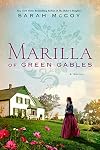
I have a deep love for Anne Shirley as depicted by Lucy Maud Montgomery in the Ann of Green Gables books. When I retired I gave myself a treat of two weeks on Prince Edward Island with full immersion in her world. One question always remained unanswered until now. "John Blythe was a nice boy. We used to be real good friends, he and I. People called him my beau. Anne looked up with swift interest. Oh, Marilla--and what happened?" Sarah McCoy undertook the task of answering that question in show more Marilla of Green Gables. She did a wonderful job of explaining all the nuances of how Marilla, a spinster, and Matthew, her bachelor brother ended up spending their lives together on the family farm. The inclusion of topical storylines concerning what was going on politically in the early 19th century in Canada only enhanced the story. It was well worth the seven month wait to get my LibraryThing Early Reviewer copy! show less
 This review was written for LibraryThing Early Reviewers.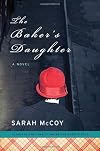
I started this book and felt a bit stony about the story: the writing felt kind of casually journalistic, like an A&E piece in a local paper, and rather snobbily I thought this might be a topical, fluffy read. After picking up the book yesterday morning in bed, I had my nose in it on my walk to the subway, and I settled in once seated on the train. When my commute ended, I was irritated at having to put my book away -- and stunned to see I had raced through more than half the book. What I show more initially wrote off as something simplistic turned out to be an engrossing, engaging, and moving exploration of love, family, obligation, and the terrible grey area we live in.
Modern-day Reba, a reporter with emotional damage and an eating disorder, interviews a German baker on Christmas traditions. The German baker, Elsie, remembers only the Christmas in 1944 when she went to a Nazi party, got engaged to an SS officer, and tried to leverage that power to help a few people she could. Reba is engaged to a by-the-book Border Patrol Agent whose feelings on immigration are shifting and changing as he continues to face the reality of the immigration crisis in the US.
I definitely expected some simplistic acknowledgement of the gray areas in history -- not every German was a Nazi, not every undocumented immigrant is a criminal -- but McCoy's story tackles more than that. Without getting pedantic or uncomfortably political, her characters wade through intense emotional challenges that would best anyone, and as I was reading, I found myself empathizing with just about everyone. There were no handy villains to hate on; the world Elsie and Reba live in is sticky, and I so appreciated McCoy's articulation of that. All the secondary characters were vivid, which made me care so much more, as I was as invested in them as Elsie and Reba were.
The book closes with recipes, the ones featured in the narrative, which is wonderful because ohemgee, the food descriptions made my mouth water. I raided my local Danish bakery at one point because I was, like Reba, absolutely craving the baked goods.
This would make a great book club pick -- so many facets to invite conversation and discussion -- and it would make a good gift for someone who isn't sure they like historical fiction. This is an easy novel to read despite the complicated story and I have to applaud McCoy for presenting these stories in a human way. show less
Modern-day Reba, a reporter with emotional damage and an eating disorder, interviews a German baker on Christmas traditions. The German baker, Elsie, remembers only the Christmas in 1944 when she went to a Nazi party, got engaged to an SS officer, and tried to leverage that power to help a few people she could. Reba is engaged to a by-the-book Border Patrol Agent whose feelings on immigration are shifting and changing as he continues to face the reality of the immigration crisis in the US.
I definitely expected some simplistic acknowledgement of the gray areas in history -- not every German was a Nazi, not every undocumented immigrant is a criminal -- but McCoy's story tackles more than that. Without getting pedantic or uncomfortably political, her characters wade through intense emotional challenges that would best anyone, and as I was reading, I found myself empathizing with just about everyone. There were no handy villains to hate on; the world Elsie and Reba live in is sticky, and I so appreciated McCoy's articulation of that. All the secondary characters were vivid, which made me care so much more, as I was as invested in them as Elsie and Reba were.
The book closes with recipes, the ones featured in the narrative, which is wonderful because ohemgee, the food descriptions made my mouth water. I raided my local Danish bakery at one point because I was, like Reba, absolutely craving the baked goods.
This would make a great book club pick -- so many facets to invite conversation and discussion -- and it would make a good gift for someone who isn't sure they like historical fiction. This is an easy novel to read despite the complicated story and I have to applaud McCoy for presenting these stories in a human way. show less
Let me start off by saying that I love Anne Shirley. When I first read Anne of Green Gables as a child, I was certain that Anne and I were kindred spirits. I loved her flights of fancy, her spunkiness, her intelligence, and her loyalty. I loved her so much, in fact, that I shelved my Anne books very carefully in amongst my grown-up books rather than on the kid bookshelves that my children frequently plundered. I didn't want anyone to inadvertently harm the books. So I might have actually show more squealed out loud when I saw that Sarah McCoy was writing a prequel to Anne's story called Marilla of Green Gables and focused on the strict, crusty, but ultimately loving Marilla. And maybe McCoy's young Marilla wasn't exactly as I would have imagined her but she was still delightful to spend time with and to watch as she evolved into the woman we come to know and love in Lucy Maud Montgomery's enduring novels.
Marilla Cuthbert is thirteen years old. She helps her mother around the newly expanded farmhouse, especially since her mother is pregnant with a much anticipated third child. Matthew Cuthbert is twenty-one and a farmer down to his bones, working side by side with his father in the fields and barn. The siblings love each other and their parents very much, forming a tight knit family. When Clara Cuthbert's twin sister Izzy arrives to help her sister through the last few months of her pregnancy, Marilla is at first jealous of the bond between her mother and aunt but she quickly comes to love this unconventional spinster aunt, a talented seamstress who owns her own business off the island. Aunt Izzy's presence also allows her to relinquish some of the care of her mother and gives her the freedom to just be a young teenager, spending time with her best friend Rachel and courting with John Blythe. But the tranquility and contentedness of the farm will be shattered when Clara dies in childbirth and Marilla must cope with her grief, her confused feelings about John and the future, a growing awareness of the fraught Canadian political situation and the volatile American situation, and step into the role of the family caretaker almost in one fell swoop.
The novel expands Marilla's character beyond the practical, stern woman first introduced in Anne of Green Gables. In fact, in McCoy's version of her girlhood and adulthood pre-Anne, Marilla has a few of Anne's characteristics, even if they are toned down. She is smart and loyal and determined. She is also uncompromising in the things that really matter to her, even if standing by her principles will lose her something she doesn't even know she wants. And she has an imagination. In fact, she is the one who names Green Gables. Matthew is portrayed just as he is in the original books, constant, deeply loving, quiet, and painfully shy. McCoy has not just captured the characters though, she has drawn Avonlea and all the people in it lovingly and as completely recognizable. She includes small details that Anne readers will enjoy, like Marilla's amethyst brooch, the infamous currant wine, the cherry tree outside the bedroom window, and more. But she also moves the novel beyond just a tribute to the Anne books. She gives a complete political grounding, not only giving Marilla opinions on the topics of the day but also allows her to act on an issue about which she feels very deeply. The relationship between Marilla and John Blythe harkens back to a line in the Anne books but it is handled very deftly here, aside from one anachronistic kiss scene, and the ups and downs of the relationship between these two are satisfying, even if Anne readers know what the eventual outcome will be. There are some big jumps in time here. The novel starts with Marilla at 13 and ends with her at 40ish. These gaps in time are truly missing because the reader (at least this reader) would have liked to have seen more of Marilla's becoming who she is in Anne's life and also perhaps how she continues to navigate life in the small town of Avonlea as she ages, having chosen the exact opposite of her Aunt. Izzy fled the Island but Marilla, even in disappointment, is too rooted in the community to even consider leaving.
Although this is clearly a delight for Anne fans wanting a little more insight into Marilla and Matthew, it is also a well-researched and interesting look at life in a small town in the Maritimes during a time of great foment. It takes readers through a whole array of emotions in a short span of pages and might just kindle a desire to reread, or read for the first time, the Anne books. Marilla of Green Gables is very obviously McCoy's love letter to Lucy Maud Montgomery and a well done, satisfying prequel to the beloved series. show less
Marilla Cuthbert is thirteen years old. She helps her mother around the newly expanded farmhouse, especially since her mother is pregnant with a much anticipated third child. Matthew Cuthbert is twenty-one and a farmer down to his bones, working side by side with his father in the fields and barn. The siblings love each other and their parents very much, forming a tight knit family. When Clara Cuthbert's twin sister Izzy arrives to help her sister through the last few months of her pregnancy, Marilla is at first jealous of the bond between her mother and aunt but she quickly comes to love this unconventional spinster aunt, a talented seamstress who owns her own business off the island. Aunt Izzy's presence also allows her to relinquish some of the care of her mother and gives her the freedom to just be a young teenager, spending time with her best friend Rachel and courting with John Blythe. But the tranquility and contentedness of the farm will be shattered when Clara dies in childbirth and Marilla must cope with her grief, her confused feelings about John and the future, a growing awareness of the fraught Canadian political situation and the volatile American situation, and step into the role of the family caretaker almost in one fell swoop.
The novel expands Marilla's character beyond the practical, stern woman first introduced in Anne of Green Gables. In fact, in McCoy's version of her girlhood and adulthood pre-Anne, Marilla has a few of Anne's characteristics, even if they are toned down. She is smart and loyal and determined. She is also uncompromising in the things that really matter to her, even if standing by her principles will lose her something she doesn't even know she wants. And she has an imagination. In fact, she is the one who names Green Gables. Matthew is portrayed just as he is in the original books, constant, deeply loving, quiet, and painfully shy. McCoy has not just captured the characters though, she has drawn Avonlea and all the people in it lovingly and as completely recognizable. She includes small details that Anne readers will enjoy, like Marilla's amethyst brooch, the infamous currant wine, the cherry tree outside the bedroom window, and more. But she also moves the novel beyond just a tribute to the Anne books. She gives a complete political grounding, not only giving Marilla opinions on the topics of the day but also allows her to act on an issue about which she feels very deeply. The relationship between Marilla and John Blythe harkens back to a line in the Anne books but it is handled very deftly here, aside from one anachronistic kiss scene, and the ups and downs of the relationship between these two are satisfying, even if Anne readers know what the eventual outcome will be. There are some big jumps in time here. The novel starts with Marilla at 13 and ends with her at 40ish. These gaps in time are truly missing because the reader (at least this reader) would have liked to have seen more of Marilla's becoming who she is in Anne's life and also perhaps how she continues to navigate life in the small town of Avonlea as she ages, having chosen the exact opposite of her Aunt. Izzy fled the Island but Marilla, even in disappointment, is too rooted in the community to even consider leaving.
Although this is clearly a delight for Anne fans wanting a little more insight into Marilla and Matthew, it is also a well-researched and interesting look at life in a small town in the Maritimes during a time of great foment. It takes readers through a whole array of emotions in a short span of pages and might just kindle a desire to reread, or read for the first time, the Anne books. Marilla of Green Gables is very obviously McCoy's love letter to Lucy Maud Montgomery and a well done, satisfying prequel to the beloved series. show less
This review was written for LibraryThing Early Reviewers.Lists
Awards

You May Also Like


Associated Authors
Statistics
- Works
- 10
- Also by
- 2
- Members
- 1,908
- Popularity
- #13,492
- Rating
- 3.9
- Reviews
- 171
- ISBNs
- 78
- Languages
- 6
- Favorited
- 2


