
W.J.K. Davies
Author of German Army handbook, 1939-1945
About the Author
Works by W.J.K. Davies
Light railways of the First World War: a history of tactical rail communications on the British fronts, 1914-18 (1967) 9 copies
100 years of the Belgian Vicinal SNCV/NMVB 1885-1985 : a century of secondary rail transport in Belgium (1985) 6 copies
Tagged
Common Knowledge
- Canonical name
- Davies, W.J.K.
- Legal name
- Davies, William James Keith
- Birthdate
- 1935
- Gender
- male
- Nationality
- UK
- Associated Place (for map)
- UK
Members
Reviews

For roughly the first half of the twentieth century, Belgium was probably one of the best-served countries in Europe, if not the world, for rural rail transport. The nation was criss-crossed by a dense network of roadside tramways, linking villages, centres of industry and major population centres, in addition to the existing national railway network. What is more, a large proportion of these tramways were electrified. They had been built from the 1880s onwards as part of a programme to link show more the nation together to promote economic development. A national company, the Societé Nationale des Chemins de Fer Vicinaux / Nationale Maatschappij van Buurtspoorwegen (here referred to as the SNCV, or just the 'Vicinal') promoted the construction of (mainly) narrow-gauge tramways, set broad standards for construction and operation, and managed the process by which concessions to construct and operate these tramways were allocated. In addition, there were a number of places where SNCV lines had cross-border operations in connection with other light railways in the Netherlands, France or the Grand Duchy of Luxembourg (not to be confused with the Belgian province of Luxembourg, which adjoins it). And during the inter-war years, the SNCV acquired a section of the tramway system of Aachen, in Germany, when a portion of Germany was ceded to Belgium under the Treaty of Versailles.
(These rural tramways were operated in addition to municipal tramway systems, although in some cases urban tramways were little more than a set of lines linking the termini of the various Vicinal lines entering town from the hinterland. Often, where there were nominally separate municipal systems, these might be operated under concessions granted to companies who also held concessions to run SNCV lines in the rural areas. There were more than sixty concessionary companies over the period of the SNCV operations.)
It was highly successful. At its maximum extent, in 1940, the Vicinal operated some 4812 route kilometres of track. However, Belgium's situation in Europe meant that the SNCV became the victim of war twice in its lifetime. In the First World War, much of the system was smashed; other parts were taken over on both sides to provide military supply lines to the front line, or pulled up to provide material for use elsewhere. After the war, the SNCV called in most of the concessions and took over the work of reconstruction and operation themselves. Much of the network was put back into operating order within five years, though some lines were not re-opened until the early 1930s, and some never re-opened at all. In the Second World War, the system was initially not so badly affected, but the occupying forces took their toll, and the liberation of Europe saw the system briefly directly affected by military action once again.
Reconstruction during the 1950s followed, but the increasing economies offered by motor buses and the growth of private automobile transport meant that SNCV traffic went into decline and throughout the 1950s most lines closed; a handful lasted into the early 1960s. Today, only the coastal section from De Panne in the west, through Oostende to Zeebrugge and Knokke in the east survives in regular service under the title De Lijn ("the Line"). A short line, some 5 km long, operates to Grottes -de-Han, in Namur province; this is a cave system, popular with tourists, and the line taking visitors to the cave entrance was one of the few concessions that survived into the post-war era. There are also a couple of preserved sections of line, but the vast majority of the system has disappeared.
W.J.K. (Keith) Davies specialised in the study of light railways around the world. This history of the Vicinal is based on one he wrote in 1985 for the Light Railway Transport League in the UK for the centenary of the Vicinal in 1985. This book is much expanded and takes the story up to 1991, when the remains of the SNCV - now mainly a bus operator - were split between three new regional bodies which, together with municipalities, were to take over regional public transport.
This is a comprehensive and highly detailed work, listing each of the 204 SNCV lines. As a consequence, the book also becomes a compendium of Belgian place names; many will be familiar to the connoisseur of Belgian beers, such as Leuven or Chimay; others may surprise for their familiarity from other contexts, such as Duffel (as in coat) or Heist. Davies provides considerable detail of the authorisation, opening and closing dates of every line, the names of the concessionaries and the lines' disposition during the world wars, with dates of temporary closure and re-opening. To make matters more precise, Davies refers to each line according to its "Capital" - the number allocated to each construction authorisation document, which also served as a call for concessionaries to apply to build and operate. This makes for a rational way of dealing with such a detailed history, but it is of little use outside this book, as in practice trams were identified by route numbers or letters that were only of local significance. Indeed, trams in different cities might well carry the same route letters - "A", "B" and so on - according to their destination, which is fine if you are a local inhabitant on a trip to the market looking for the right tram back to your village, but not so good if you're trying to identify a photograph of a tram in a Belgian street.
Organising this plethora of information would have demanded some sort of organisation like this. Unfortunately, this meant that the text is very dense and the proof-reading suffers from time to time. In particular, there are instances where the maps - very highly detailed to begin with - carry over text errors, or get the identifying Capital numbers incorrect. Still, with so much information, this can to some extent be excused - especially when we also have to contend with variant French and Flemish spellings of place and company names. Davies warns us in advance that consistency isn't always easy to maintain in such a complex story, though the maps sometimes compound this by using variant spellings of one or the other languages' version of a place name. Still, it is unlikely that there will be casual readers of this book; and the book's audience will have come to expect this level of complexity fairly early on.
I was not so keen on a number of the maps being provided in colour, and therefore bound into a separate section within the book, separated from their associated text. There were times when I was reading this book with three fingers inserted into different pages for maps I needed to consult!
Still, these drawbacks count for little when you consider that this is likely to be the only detailed history of the Vicinal in English that we are likely to see. It has a fair selection of contemporary photographs from both the author's own collection and from other sources he had access to. (For more photographs of the Vicinal in its heyday, the reader is advised to seek out the Belgian part work Aux trams, citoyens! / Allemaal de tram op, burgers! to see good colour pictures of the Vicinal in the 1950s and 60s.)
Otherwise, anyone with an interest in Belgium, rural transport, or how trams served rural communities at their height should take any opportunity to acquire a copy of this book. show less
(These rural tramways were operated in addition to municipal tramway systems, although in some cases urban tramways were little more than a set of lines linking the termini of the various Vicinal lines entering town from the hinterland. Often, where there were nominally separate municipal systems, these might be operated under concessions granted to companies who also held concessions to run SNCV lines in the rural areas. There were more than sixty concessionary companies over the period of the SNCV operations.)
It was highly successful. At its maximum extent, in 1940, the Vicinal operated some 4812 route kilometres of track. However, Belgium's situation in Europe meant that the SNCV became the victim of war twice in its lifetime. In the First World War, much of the system was smashed; other parts were taken over on both sides to provide military supply lines to the front line, or pulled up to provide material for use elsewhere. After the war, the SNCV called in most of the concessions and took over the work of reconstruction and operation themselves. Much of the network was put back into operating order within five years, though some lines were not re-opened until the early 1930s, and some never re-opened at all. In the Second World War, the system was initially not so badly affected, but the occupying forces took their toll, and the liberation of Europe saw the system briefly directly affected by military action once again.
Reconstruction during the 1950s followed, but the increasing economies offered by motor buses and the growth of private automobile transport meant that SNCV traffic went into decline and throughout the 1950s most lines closed; a handful lasted into the early 1960s. Today, only the coastal section from De Panne in the west, through Oostende to Zeebrugge and Knokke in the east survives in regular service under the title De Lijn ("the Line"). A short line, some 5 km long, operates to Grottes -de-Han, in Namur province; this is a cave system, popular with tourists, and the line taking visitors to the cave entrance was one of the few concessions that survived into the post-war era. There are also a couple of preserved sections of line, but the vast majority of the system has disappeared.
W.J.K. (Keith) Davies specialised in the study of light railways around the world. This history of the Vicinal is based on one he wrote in 1985 for the Light Railway Transport League in the UK for the centenary of the Vicinal in 1985. This book is much expanded and takes the story up to 1991, when the remains of the SNCV - now mainly a bus operator - were split between three new regional bodies which, together with municipalities, were to take over regional public transport.
This is a comprehensive and highly detailed work, listing each of the 204 SNCV lines. As a consequence, the book also becomes a compendium of Belgian place names; many will be familiar to the connoisseur of Belgian beers, such as Leuven or Chimay; others may surprise for their familiarity from other contexts, such as Duffel (as in coat) or Heist. Davies provides considerable detail of the authorisation, opening and closing dates of every line, the names of the concessionaries and the lines' disposition during the world wars, with dates of temporary closure and re-opening. To make matters more precise, Davies refers to each line according to its "Capital" - the number allocated to each construction authorisation document, which also served as a call for concessionaries to apply to build and operate. This makes for a rational way of dealing with such a detailed history, but it is of little use outside this book, as in practice trams were identified by route numbers or letters that were only of local significance. Indeed, trams in different cities might well carry the same route letters - "A", "B" and so on - according to their destination, which is fine if you are a local inhabitant on a trip to the market looking for the right tram back to your village, but not so good if you're trying to identify a photograph of a tram in a Belgian street.
Organising this plethora of information would have demanded some sort of organisation like this. Unfortunately, this meant that the text is very dense and the proof-reading suffers from time to time. In particular, there are instances where the maps - very highly detailed to begin with - carry over text errors, or get the identifying Capital numbers incorrect. Still, with so much information, this can to some extent be excused - especially when we also have to contend with variant French and Flemish spellings of place and company names. Davies warns us in advance that consistency isn't always easy to maintain in such a complex story, though the maps sometimes compound this by using variant spellings of one or the other languages' version of a place name. Still, it is unlikely that there will be casual readers of this book; and the book's audience will have come to expect this level of complexity fairly early on.
I was not so keen on a number of the maps being provided in colour, and therefore bound into a separate section within the book, separated from their associated text. There were times when I was reading this book with three fingers inserted into different pages for maps I needed to consult!
Still, these drawbacks count for little when you consider that this is likely to be the only detailed history of the Vicinal in English that we are likely to see. It has a fair selection of contemporary photographs from both the author's own collection and from other sources he had access to. (For more photographs of the Vicinal in its heyday, the reader is advised to seek out the Belgian part work Aux trams, citoyens! / Allemaal de tram op, burgers! to see good colour pictures of the Vicinal in the 1950s and 60s.)
Otherwise, anyone with an interest in Belgium, rural transport, or how trams served rural communities at their height should take any opportunity to acquire a copy of this book. show less
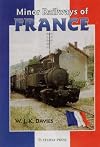
A massive expansion of his 1965 book 'French minor railways', Keith Davies has produced a magisterial work on the extensive French 'lignes secondaires'. Any lover of the narrow gauge should have a copy of this and absorb it, to see what we have missed.
This is a well written,well produced masterpiece.Not to be thought to be an update of the previous '60s title this is completely new copiously illustrated with plenty of maps.Plateway and Davies have issued a gem,buy it now!

Great Newlands cartoon on the front cover. Takes some time to understand that it is about the. Ravenglass and Eskdale Railway.
You May Also Like


Associated Authors
Statistics
- Works
- 30
- Members
- 267
- Popularity
- #86,453
- Rating
- 4.0
- Reviews
- 7
- ISBNs
- 33