
Hunter Davies
Author of The Beatles: The Authorized Biography
About the Author
Hunter Davies is the author of more than forty books, including the international bestseller The John Lennon Letters, and he has written for The Guardian, the New Statesman, and the Sunday Times. He lives with his wife, the novelist and biographer Margaret Forster, in London.
Works by Hunter Davies
The Beatles Lyrics: The Stories Behind the Music, Including the Handwritten Drafts of More Than 100 Classic Beatles Songs (2014) 216 copies, 3 reviews
Behind the Scenes at the Museum of Baked Beans: My Search for Britain's Maddest Museums (2010) 27 copies, 1 review
Cold Meat and How to Disguise It: A History of Advice on How to Survive Hard Times: A Hundred Years of Belt Tightening (2009) 17 copies
London to Loweswater : a journey through England at the end of the twentieth century (1999) 2 copies
Iron Runes (The Taggarts Book 1) 2 copies
Harmony 1 copy
Torn 1 copy
PERIODICAL: Life, September 13, 1968, Vol. 65, No. 11, pages 86–112, Beatles cover: The Beatles 1 copy
Stars of the Sixth: "Fit for the Sixth", "Rapping with Raffy" and "She's Leaving Home" (1990) 1 copy
Associated Works
Tagged
Common Knowledge
- Canonical name
- Davies, Hunter
- Legal name
- Davies, Edward Hunter
- Birthdate
- 1936-01-07
- Gender
- male
- Education
- University College, Durham University (BA)
- Occupations
- author
journalist
broadcaster - Awards and honors
- Order of the British Empire (Officer, 2014)
- Relationships
- Forster, Margaret (wife)
Davies, Caitlin (daughter) - Nationality
- UK
- Birthplace
- Johnstone, Renfrewshire, Scotland, UK
- Places of residence
- Carlisle, England, UK
London, England, UK - Map Location
- Scotland, UK
- Associated Place (for map)
- England, UK
Members
Reviews
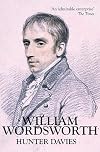
This is a magnificently written and deeply absorbing biography of the great poet, for the general reader (i.e. not one too full of deep literary analysis). The author's approach is mostly chronological. This gives a great feeling for the ebb and flow of the poet's literary and personal life, his relationships with others including his wife Mary, sister Dorothy, and the other Lakeland poets Coleridge and Southey, in addition to the evolution of his own political and social views in response show more to changing external events, his own changing life circumstances, and his reactions to those changes. Combined with the author's obvious love and feeling for the Lake District, which he has apparently visited every summer for 50 years, this made for a wonderful read in the last few days of my holiday there last week and the first few days of my first week back home.
Our understanding of Wordsworth's life and relationships has been enriched by two 20th century literary revelations, that in the 1920s revealing his liaison in 1792 in France with Annette Vallon which produced a daughter Caroline; and that in the 1970s revealing that his marriage with Mary was closer and more passionate as they grew older than we had hitherto believed, Mary's role having been eclipsed in all previous accounts of their lives by the greater influence exerted by his sister Dorothy. His life traces a journey across Cumbria, being born in Cockermouth, partly raised in Penrith and schooled in Hawkshead. After a less than stellar academic career at Cambridge, he basically loafed around for a number of years, including his sojourn in Orleans where he met Annette and was sympathetic to the early French Revolution before the bloody excesses of the Reign of Terror tarnished its original high ideals. He toured in Germany later that decade before eventually settling down back in the Lakes after a brief period in Somerset, with 1798 marking the true beginning of his poetic career with publication of Lyrical Ballads, a collection of his and Coleridge's poems (including the latter's Rime of the Ancient Mariner). This marked the beginning of the Romantic movement in English poetry; in the author's words "The Romantic movement changed the culture of the civilized world, and in the English-speaking countries, Wordsworth is looked upon as its poetic leader". His reputation as such largely survived even as he went through three stages of life, "the radical youth, the solid reactionary middle-aged citizen ..[and] the liberal and mellow old man"; partly, due to the tragically young deaths of the young Romantic pretenders Keats, Shelley and Byron - "In a matter of only three years, the three brightest flames of their generation had perished. For over twenty years, Wordsworth had been virtually on his own, the first and also the last of the Romantic poets." He died in 1850 respected as a national institution, having been Poet Laureate for the previous seven years, and the image of him as a stern, humourless Victorian figure held sway for many years; but there was so much more to him and his life and work than this. An excellent read. show less
Our understanding of Wordsworth's life and relationships has been enriched by two 20th century literary revelations, that in the 1920s revealing his liaison in 1792 in France with Annette Vallon which produced a daughter Caroline; and that in the 1970s revealing that his marriage with Mary was closer and more passionate as they grew older than we had hitherto believed, Mary's role having been eclipsed in all previous accounts of their lives by the greater influence exerted by his sister Dorothy. His life traces a journey across Cumbria, being born in Cockermouth, partly raised in Penrith and schooled in Hawkshead. After a less than stellar academic career at Cambridge, he basically loafed around for a number of years, including his sojourn in Orleans where he met Annette and was sympathetic to the early French Revolution before the bloody excesses of the Reign of Terror tarnished its original high ideals. He toured in Germany later that decade before eventually settling down back in the Lakes after a brief period in Somerset, with 1798 marking the true beginning of his poetic career with publication of Lyrical Ballads, a collection of his and Coleridge's poems (including the latter's Rime of the Ancient Mariner). This marked the beginning of the Romantic movement in English poetry; in the author's words "The Romantic movement changed the culture of the civilized world, and in the English-speaking countries, Wordsworth is looked upon as its poetic leader". His reputation as such largely survived even as he went through three stages of life, "the radical youth, the solid reactionary middle-aged citizen ..[and] the liberal and mellow old man"; partly, due to the tragically young deaths of the young Romantic pretenders Keats, Shelley and Byron - "In a matter of only three years, the three brightest flames of their generation had perished. For over twenty years, Wordsworth had been virtually on his own, the first and also the last of the Romantic poets." He died in 1850 respected as a national institution, having been Poet Laureate for the previous seven years, and the image of him as a stern, humourless Victorian figure held sway for many years; but there was so much more to him and his life and work than this. An excellent read. show less
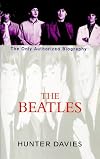
John Lennon famously once described this authorised biography, first published in 1968, as a whitewash (except he used rather stronger language), and his view has been echoed by many others down the decades. The general consensus seems to be that it’s a sanitised portrait of the Beatles. It was amusing to read, in Davies’ introduction to the 1985 edition, that when he delivered the manuscript back in 1968, Lennon was at the front of the queue of those primed with buckets of whitewash (he show more claimed that Aunt Mimi was upset). In retrospect the book actually seems more remarkable for its candour than the odd white lie Davies was made to tell: the Beatles no longer take drugs, he informs us with a straight face, following a detailed account of their drug-taking. He wasn’t allowed to say that Brian Epstein was gay but found ways of making it perfectly clear anyway. The full story of the Beatles is here even if you have to read between the lines occasionally.
Davies was certainly granted a now unimaginable degree of access to the then most famous group in the world. He just seems to have breezed into Brian Epstein’s office, after meeting Paul a couple of times, and next thing he was virtually a fifth Beatle. He spent a lot of time with them and this gives the book some unique insights. There is a fly on the wall account of Lennon and McCartney writing A Little Help From My Friends, and the Beatles recording It’s Getting Better and Magical Mystery Tour. He interviewed all the surviving parents, and of course the inimitable Aunt Mimi, in the posh houses bought for them by their sons. He also interviewed Pete Best who, at the time, was slicing bread in a bakery in Liverpool for the princely sum of £18 a week. This is all evocative and poignant stuff.
This wasn’t the first book about the Beatles, but it was the first attempt to chronicle the band’s early history and family backgrounds, and Davies did a huge amount of primary research. The classic tropes of the Beatles saga (the Quarrymen, John meeting Paul at the Woolton fete, Hamburg, the Cavern, Brian Epstein, the sacking of Pete Best) are marshalled into place for the first time. If it now seems a tad over-familiar that’s mainly because its basic structure, and many of the stories, have been repeated in countless subsequent books. This is the foundation stone of Beatles scholarship or, if you prefer, mythmaking. Even Albert Goldman’s iconoclastic biography of Lennon was essentially an attempt to explode a myth first set in train by Davies.
The book ends with profiles of the individual Beatles as they were in 1968: the working-class heroes from Liverpool self-immured in their mansions in the South of England, increasingly isolated from the outside world and each other. They talk about themselves with striking openness, each of them a curious mixture of the naive and the knowing, the exceptional and the ordinary. The seeds of the breakup are evident in hindsight - Lennon and Harrison were clearly bored to death with the Beatles - but Davies is honest enough to admit that he didn’t see this at the time. Early ‘68 is not a bad point to end the story of the greatest group in the history of pop music: the Beatles in their post-Pepper pomp, just before it all fell apart.
By the way, John Lennon eventually apologised to Davies for his outburst. Quite right too. This is a warm and informative Beatles biography: a groundbreaking survey of their early history and frontline reports from history as it happened. show less
Davies was certainly granted a now unimaginable degree of access to the then most famous group in the world. He just seems to have breezed into Brian Epstein’s office, after meeting Paul a couple of times, and next thing he was virtually a fifth Beatle. He spent a lot of time with them and this gives the book some unique insights. There is a fly on the wall account of Lennon and McCartney writing A Little Help From My Friends, and the Beatles recording It’s Getting Better and Magical Mystery Tour. He interviewed all the surviving parents, and of course the inimitable Aunt Mimi, in the posh houses bought for them by their sons. He also interviewed Pete Best who, at the time, was slicing bread in a bakery in Liverpool for the princely sum of £18 a week. This is all evocative and poignant stuff.
This wasn’t the first book about the Beatles, but it was the first attempt to chronicle the band’s early history and family backgrounds, and Davies did a huge amount of primary research. The classic tropes of the Beatles saga (the Quarrymen, John meeting Paul at the Woolton fete, Hamburg, the Cavern, Brian Epstein, the sacking of Pete Best) are marshalled into place for the first time. If it now seems a tad over-familiar that’s mainly because its basic structure, and many of the stories, have been repeated in countless subsequent books. This is the foundation stone of Beatles scholarship or, if you prefer, mythmaking. Even Albert Goldman’s iconoclastic biography of Lennon was essentially an attempt to explode a myth first set in train by Davies.
The book ends with profiles of the individual Beatles as they were in 1968: the working-class heroes from Liverpool self-immured in their mansions in the South of England, increasingly isolated from the outside world and each other. They talk about themselves with striking openness, each of them a curious mixture of the naive and the knowing, the exceptional and the ordinary. The seeds of the breakup are evident in hindsight - Lennon and Harrison were clearly bored to death with the Beatles - but Davies is honest enough to admit that he didn’t see this at the time. Early ‘68 is not a bad point to end the story of the greatest group in the history of pop music: the Beatles in their post-Pepper pomp, just before it all fell apart.
By the way, John Lennon eventually apologised to Davies for his outburst. Quite right too. This is a warm and informative Beatles biography: a groundbreaking survey of their early history and frontline reports from history as it happened. show less
Love in Old Age: My Year in the Wight House (Love in Old Age: A Year On the Isle of Wight) by Hunter Davies
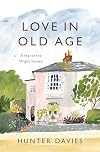
Very entertaining story of the author's first year living in Ryde on the Isle of Wight with new partner Claire. Aside from describing the domestic travails of moving into a new house, the author goes out of his way to meet locals and hear their back stories.
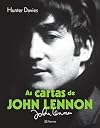
As cartas apresentadas nesta obra procuram mostrar tudo o que John Lennon tinha a dizer à família, aos amigos, às namoradas, a jornais e até a estranhos, falando não só de assuntos importantes de sua vida pessoal e profissional, mas também de trivialidades, mostrando ao público suas típicas ideias e revelando como ele podia ser, ao mesmo tempo, delicado e irônico, agressivo e carente. O jornalista Hunter Davies comenta e contextualiza cada carta, proporcionando também uma show more biografia do músico. show less
Lists
Awards


You May Also Like


Associated Authors
Statistics
- Works
- 109
- Also by
- 4
- Members
- 2,295
- Popularity
- #11,185
- Rating
- 3.8
- Reviews
- 38
- ISBNs
- 302
- Languages
- 11
- Favorited
- 1