
Eugene Yelchin
Author of Breaking Stalin's Nose
About the Author
Series
Works by Eugene Yelchin
Won Ton and Chopstick: A Cat and Dog Tale Told in Haiku (2015) — Illustrator — 102 copies, 10 reviews
Seeds, Bees, Butterflies, and More!: Poems for Two Voices (2013) — Illustrator — 93 copies, 19 reviews
Associated Works
Tagged
Common Knowledge
- Other names
- Yevgeny Arkadievich Yelchin
Евгений Аркадьевич Ельчин - Birthdate
- 1956-10-18
- Gender
- male
- Education
- Leningrad Institute of Theater Arts
University of Southern California - Occupations
- illustrator
writer
conceptual artist
painter - Awards and honors
- Tomie de Paola Illustration Award (2006)
- Relationships
- Yelchin, Anton (nephew)
Kuryla, Mary (spouse) - Nationality
- USA
- Birthplace
- Leningrad, Russia, USSR
- Places of residence
- Saint Petersburg, Russia
Los Angeles, California, USA
Members
Reviews

A shelter cat considers the world around him in this innovative picture-book, told entirely in senryu - a form of haiku that, according to the brief author's foreword, deals with human (or feline) foibles, rather than (as is customary with haiku) the beauties of nature. Each brief entry in his poetic account reveals the cat's distinctive personality, as well as his efforts to hold himself aloof in a world that can often prove dangerous or hurtful, for unwary felines. The process whereby he show more gradually opens up to his new life and family, after being adopted from the shelter, is documented in a sparse but poignant way.
Wardlaw obviously understands cats, and Won-Ton (or Haiku) comes across as a lovable feline indeed! I think my favorite, of the senryu presented here was the one in which our feline hero attempts to make himself understood - "I explained it loud / and clear. What part of 'meow' / don't you understand?" - as this reminded me strongly of many cats I have known and loved, who clearly had opinions on the denseness of their human beings. The artwork, done in graphite and gouache, is colorful and engaging, with plenty of slinky charm that suits its subject. All in all, a sweet little picture-book, one I recommend to young cat lovers, and to fans of the haiku form. show less
Wardlaw obviously understands cats, and Won-Ton (or Haiku) comes across as a lovable feline indeed! I think my favorite, of the senryu presented here was the one in which our feline hero attempts to make himself understood - "I explained it loud / and clear. What part of 'meow' / don't you understand?" - as this reminded me strongly of many cats I have known and loved, who clearly had opinions on the denseness of their human beings. The artwork, done in graphite and gouache, is colorful and engaging, with plenty of slinky charm that suits its subject. All in all, a sweet little picture-book, one I recommend to young cat lovers, and to fans of the haiku form. show less

Two academics, an elf and a goblin, meet as representatives of their eternally-warring kingdoms to learn more about each other. At least, that's what they think. But really, the elf Brangwain Spurge is disliked by his peers and was sent to the Kingdom of Goblins to get rid of him. The elves are using the "research" about goblins that Brangwain transmits back home as intel to plan an invasion. In the Kingdom of Goblins, Brangwain is such a bigoted jerk to all the goblins that he and his host, show more Werfel the Archivist, goblin historian, have to go on the run together or face execution. But they'll be fine, because the other elves will totally come rescue Brangwain, right?
This story is told in three forms. Some scenes are beautiful, black and white, wordless illustrations by Eugene Yelchin which represent the images that Brangwain transmits back to Elfland, other sections are letters from Brangwain's boss to the King of Elfland, and the remaining scenes are straightforward prose narrative from Werfel's point of view. While a fascinating premise, which made the pages fly by, the result felt a little lop-sided. The story is about two educated men realizing that they have been fed propaganda their whole lives, and learning who their "enemy" really is as a person. But that message is a little undercut by having two-thirds of the book from elf POV and one from goblin POV. Brangwain is presented as having a lot more growing to do than Werfel. Also, the goblins are led by a giant octopus that came from another planet specifically to be king of the goblins and this is just never examined??
Overall, a very enjoyable read with a great message, though not as poignant as it could be. I'm not sure what age it's exactly written for, but adults will definitely appreciate it. show less
This story is told in three forms. Some scenes are beautiful, black and white, wordless illustrations by Eugene Yelchin which represent the images that Brangwain transmits back to Elfland, other sections are letters from Brangwain's boss to the King of Elfland, and the remaining scenes are straightforward prose narrative from Werfel's point of view. While a fascinating premise, which made the pages fly by, the result felt a little lop-sided. The story is about two educated men realizing that they have been fed propaganda their whole lives, and learning who their "enemy" really is as a person. But that message is a little undercut by having two-thirds of the book from elf POV and one from goblin POV. Brangwain is presented as having a lot more growing to do than Werfel. Also, the goblins are led by a giant octopus that came from another planet specifically to be king of the goblins and this is just never examined??
Overall, a very enjoyable read with a great message, though not as poignant as it could be. I'm not sure what age it's exactly written for, but adults will definitely appreciate it. show less
 This review was written for LibraryThing Early Reviewers.
So. Damn. Good.
The first thing that grabbed me was the art. The illustrations are…well, they’re like Albrecht Dürer and Edward Gorey had a baby but then tragically died so the child had to be raised by Hieronymus Bosch. The people who say, “don’t judge a book by its cover” and, “the pictures aren’t the most important part, you know,” are the same cheap-asses who don’t want to pay to hire a decent designer. People haven’t been gawping over the Book of Kells for 1,200 show more years because it was so well-written. The artwork is freaking great and deserves to be noticed. Besides, what makes the illustrations especially especial this time around is that they’re not just embellishments to the story, they’re an essential part of it, being another point of view.
Not that the story isn’t good too! Brief synopsis: The elf and goblin kingdoms have been at war for centuries. A pair of well-meaning academics (historians; Brangwain the elf, Werfel the goblin) believe they are trying to make peace and foster an era of cultural exchange and understanding. But the politicians have a completely different agenda in mind. Don’t they always. Seriously, there are the official party lines, then there’s what they tell their operatives is the ‘real’ agenda, and then there’s what they tell themselves about what they told the operatives to cover up what the REAL ‘real’ agenda is. It's not all deliberate deception, either. Our two protagonists, being from vastly different cultures, give very different accounts of the same events (the elf via the illustrations, the goblin through the text). Eventually our heroes reach an understanding, but it’s handled with subtlety and realism, there’s nothing preachy, sanctimonious, or “Oh, look how woke we are!” about it.
This story is basically an object lesson in double-speak, deception, and well-meant good intentions being completely misinterpreted. A great deal of cultural exchange is insulting, and two-thirds of diplomacy is trying not to be offended long enough to realize that you have nothing to be offended by. And to think this book was intended for mere 10 to teen-year-olds! These are highly useful social skills being laid out that many adults I could mention could use a refresher course in. Particularly in these irritating times when even people who are on the same side of the fence, politically speaking, are ready to bite each other’s heads off over the least little thing. Forget Call of the Wild and crap like that, THIS should be required reading in schools.
All in all, it's an especially great book for kids because it’s never too early to start teaching one’s children about the duplicity of those in power: “You were useful,” said Werfel. “But just because you’re useful to the wealthy doesn’t mean they’ll reward you. It just means they’ll use you.” show less
The first thing that grabbed me was the art. The illustrations are…well, they’re like Albrecht Dürer and Edward Gorey had a baby but then tragically died so the child had to be raised by Hieronymus Bosch. The people who say, “don’t judge a book by its cover” and, “the pictures aren’t the most important part, you know,” are the same cheap-asses who don’t want to pay to hire a decent designer. People haven’t been gawping over the Book of Kells for 1,200 show more years because it was so well-written. The artwork is freaking great and deserves to be noticed. Besides, what makes the illustrations especially especial this time around is that they’re not just embellishments to the story, they’re an essential part of it, being another point of view.
Not that the story isn’t good too! Brief synopsis: The elf and goblin kingdoms have been at war for centuries. A pair of well-meaning academics (historians; Brangwain the elf, Werfel the goblin) believe they are trying to make peace and foster an era of cultural exchange and understanding. But the politicians have a completely different agenda in mind. Don’t they always. Seriously, there are the official party lines, then there’s what they tell their operatives is the ‘real’ agenda, and then there’s what they tell themselves about what they told the operatives to cover up what the REAL ‘real’ agenda is. It's not all deliberate deception, either. Our two protagonists, being from vastly different cultures, give very different accounts of the same events (the elf via the illustrations, the goblin through the text). Eventually our heroes reach an understanding, but it’s handled with subtlety and realism, there’s nothing preachy, sanctimonious, or “Oh, look how woke we are!” about it.
This story is basically an object lesson in double-speak, deception, and well-meant good intentions being completely misinterpreted. A great deal of cultural exchange is insulting, and two-thirds of diplomacy is trying not to be offended long enough to realize that you have nothing to be offended by. And to think this book was intended for mere 10 to teen-year-olds! These are highly useful social skills being laid out that many adults I could mention could use a refresher course in. Particularly in these irritating times when even people who are on the same side of the fence, politically speaking, are ready to bite each other’s heads off over the least little thing. Forget Call of the Wild and crap like that, THIS should be required reading in schools.
All in all, it's an especially great book for kids because it’s never too early to start teaching one’s children about the duplicity of those in power: “You were useful,” said Werfel. “But just because you’re useful to the wealthy doesn’t mean they’ll reward you. It just means they’ll use you.” show less
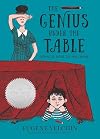
I really felt like I entered 1980s USSR while reading this book. Yelchin uses illustrations to help tell the story, but the words are vivid enough without the images. This is the story of Yevgeny, a Jewish boy growing up in the USSR. His parents know that Yevgeny and his brother will have better lives if they excel in athletics or the arts. His brother is a talented skater, but Yevgeny hasn't found his talent...yet. This book would make a fantastic middle-grade read-aloud. I was reading show more aloud parts to the adults around me. It's funny and deep. show less
This review was written for LibraryThing Early Reviewers.Lists
Awards


You May Also Like


Associated Authors
Statistics
- Works
- 23
- Also by
- 1
- Members
- 4,285
- Popularity
- #5,865
- Rating
- 4.0
- Reviews
- 288
- ISBNs
- 132
- Languages
- 4
