
Marthe Le Van
Author of 1000 Rings: Inspiring Adornments for the Hand (500 Series)
About the Author
Works by Marthe Le Van
Fabulous Jewelry from Found Objects: Creative Projects, Simple Techniques (Lark Jewelry Books) (2005) 67 copies
500 Pendants & Lockets: Contemporary Interpretations of Classic Adornments (500 Series) (2008) — Editor — 41 copies
Hardware Style: 100 Creative Decorating Ideas Using Materials from Every Aisle of the Home Center Store (2003) 31 copies
The Art of Jewelry: Paper Jewelry: 35 Creative Projects (Lark Jewelry Book) (2006) 25 copies, 3 reviews
500 Metal Vessels: Contemporary Explorations of Containment (500 Series) (2007) — Editor — 21 copies
Modern Jewelry from Modular Parts: Easy Projects Using Readymade Components (Lark Jewelry Book) (2007) 18 copies
500 Silver Jewelry Designs: The Powerful Allure of a Precious Metal (500 Series) (2011) 14 copies, 1 review
500 Pendants & Lockets 1 copy
Tagged
Common Knowledge
- Gender
- female
Members
Reviews
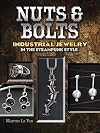
Industrial? Maybe. Steampunk? No.
I suspect that the title of this book was chosen by someone at Dover, not by Ms Le Van herself. The original title "Modern Jewelry from Modular Parts" is much more accurate.
Ms Le Van is a well known book editor who guided over 60 manuscripts to publication as Senior Editor at Lark. This book was first published by Lark in 2007 and features metal jewelry made from prefab parts. In my mind the designs are more punk chic than industrial and they are certainly show more not cyberpunk.
The first third or so of the book is background info on the tools and equipment you need to make metal jewelry. Ms Le Van interlaces photos of pieces she likes from various artists. The next 70 pages are instructions on how to make individual pieces. The end of the book is technical information on working with metal, bios of the contributing artists, and an index.
I find very few of these designs interesting. If you see this book on a shelf, flip through it, but I think that a competent jewelry maker would find more inspiration out in the world.
I received a review copy of "Nuts & Bolts: Industrial Jewelry in the Steampunk Style" by Marthe Le Van (Dover) through NetGalley.com. It was originally published by Lark Books in 2007 as "Modern Jewelry from Modular Parts: Easy Projects Using Readymade Components." show less
I suspect that the title of this book was chosen by someone at Dover, not by Ms Le Van herself. The original title "Modern Jewelry from Modular Parts" is much more accurate.
Ms Le Van is a well known book editor who guided over 60 manuscripts to publication as Senior Editor at Lark. This book was first published by Lark in 2007 and features metal jewelry made from prefab parts. In my mind the designs are more punk chic than industrial and they are certainly show more not cyberpunk.
The first third or so of the book is background info on the tools and equipment you need to make metal jewelry. Ms Le Van interlaces photos of pieces she likes from various artists. The next 70 pages are instructions on how to make individual pieces. The end of the book is technical information on working with metal, bios of the contributing artists, and an index.
I find very few of these designs interesting. If you see this book on a shelf, flip through it, but I think that a competent jewelry maker would find more inspiration out in the world.
I received a review copy of "Nuts & Bolts: Industrial Jewelry in the Steampunk Style" by Marthe Le Van (Dover) through NetGalley.com. It was originally published by Lark Books in 2007 as "Modern Jewelry from Modular Parts: Easy Projects Using Readymade Components." show less
Ugly is the new pretty, I see.
While there are some innovative and striking designs contained within, for the most part I was dismayed at the bleak ugliness of this jewelry. Many of the pieces struck me as far too arch, far too self-conscious, but mostly just not aesthetically pleasing. Maybe I'm too old for art jewelry now.
The lovely pieces were exquisite. They were just, to my eye, so terribly few and far between.
While there are some innovative and striking designs contained within, for the most part I was dismayed at the bleak ugliness of this jewelry. Many of the pieces struck me as far too arch, far too self-conscious, but mostly just not aesthetically pleasing. Maybe I'm too old for art jewelry now.
The lovely pieces were exquisite. They were just, to my eye, so terribly few and far between.
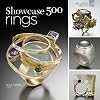
This is another book I received from Lark Crafts. Thanks, Lark! This particular book is a gem from the Lark 500 series. I love this series, because it is pure eye candy - no patterns, no basics, just fabulous photos of amazing pieces.
As I have mentioned many times, I am not a jeweler, however, I love the opportunity to review shapes and motifs in a different format. I think it can inform my quiltmaking.
As the title advertises there are photos of 500 rings. I should say 'rings' because some show more of these pieces are more sculpture than wearable ring. I believe that artists in this medium are not making wearable art; they are making sculpture just as quilt artists are not making bed quilts. As I paged through the book, I was immediately struck by different shapes and motifs on the pieces: circles, drops, leaves, shells, confections and many others.
I also noticed the variety of materials. I see felted wool (??), knitted fibers, broderie perse type fabric pieces, a clothespin, along with the normal metals and stones.
The contents page sports a photo of a ring that looks like a series of cross sections of colored pencils, which drew me in right away.
One of my favorites is Links Ring by Uranit Bar-Nes (pg.220). Of course the color (a sea blue) is one of my favorites, but I also like the color's combination with silver and blue zircons. I also like Garden Pond Ring by Aurelio Castano, which is a purely beaded piece with a huge stone in the middle. Another duo was Tangle Rings by Bridget Catchpole. They are my aqua (tending towards turquoise), light green and white pieces where the shapes look like something that would be on top of a cake.
If you need some inspiration, regardless of your primary medium, this book will provide you with some shapes, motifs and textures that will reinvigorate your artwork. show less
As I have mentioned many times, I am not a jeweler, however, I love the opportunity to review shapes and motifs in a different format. I think it can inform my quiltmaking.
As the title advertises there are photos of 500 rings. I should say 'rings' because some show more of these pieces are more sculpture than wearable ring. I believe that artists in this medium are not making wearable art; they are making sculpture just as quilt artists are not making bed quilts. As I paged through the book, I was immediately struck by different shapes and motifs on the pieces: circles, drops, leaves, shells, confections and many others.
I also noticed the variety of materials. I see felted wool (??), knitted fibers, broderie perse type fabric pieces, a clothespin, along with the normal metals and stones.
The contents page sports a photo of a ring that looks like a series of cross sections of colored pencils, which drew me in right away.
One of my favorites is Links Ring by Uranit Bar-Nes (pg.220). Of course the color (a sea blue) is one of my favorites, but I also like the color's combination with silver and blue zircons. I also like Garden Pond Ring by Aurelio Castano, which is a purely beaded piece with a huge stone in the middle. Another duo was Tangle Rings by Bridget Catchpole. They are my aqua (tending towards turquoise), light green and white pieces where the shapes look like something that would be on top of a cake.
If you need some inspiration, regardless of your primary medium, this book will provide you with some shapes, motifs and textures that will reinvigorate your artwork. show less
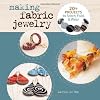
Thanks to Lark for sending me this book to review! Since the holidays are coming, and birthdays seem to pile up on me constantly, I thought this would be a good book to review.
As with many of Lark's books, this is primarily a project book. There are about 23 projects included, which run the gamut from bracelets and earrings to wristlets, brooches and chokers. The book includes the basics, project templates, bios of the designers and (YAY!!!) and index.
In the book's introduction, the author show more contends that there is a revolution in jewelry going on in the world and that "personal adornment is getting a makeover..." (pg.6). Part of this revolution has to do with recycling and reuse that is so popular now, but the cost of extracting and transporting precious metals and gems cannot be ignored either (pg.6). The introduction reminds the reader that there are techniques in the book that help veer away from the patterns and the muse speaks. I always like it when books are tools in a journey rather than just a pattern book to be accomplished.
A variety of techniques and skill levels are represented from no-sew to machine stitching, stuffing and quilting. Something for everyone!
The 'Basics' section gives some details on the qualities and characteristics of different kinds of fabrics including canvas, corduroy, silk, tulle and organza. There is some helpful information that might inspire quiltmakers to put some of these fabrics into quilts when they are done with their jewelry.
I liked the few paragraphs on needles. They were helpful and I learned a thing or two. Hand and machine stitching are covered. The basic hand stitches have illustrations showing the reader how to create them. As with many "basics" sections, not everything can be covered. Whole books on almost every topic in this section have been written. Still, this 'Basics' section has a good overview and will definitely get a person started.
You will need some metal for these projects. Clasps, earring findings, jump rings, etc are all covered: what they are, where to find them and whether you can make your own each have a place. After a few pages about tools, some fundamentals on metal, a list of supplies and two pages on beads, the projects start.
The book is well illustrated with color photos on nearly every page. the photos illustrate the text or give examples of jewelry by the artist-designers. The font is easy to read and the writing is clear.
Each project has instructions with illustrations. At the end of each project are a few photos of similar or related projects by which the reader can be inspired.
Tulle is used in an interesting way in the Floating Tulle Earrings project (pg.46-49). I like the pods in the Chrysalis Neckpiece (pg.54-57), but I imagine a mobile in brighter colors made from the pods. The flower int he Lotus Choker & Earrings project (pg.66-71) could easily be reimagined as a brooch, a hat pin, embellishments on a quilt or bag. change the color of the petals and the center and you have a completely new flower. Sun-Kissed Lemons (pg.112-117) is a lovely machine embroidered and satin stitched piece.
The materials are interesting, too. One project (Jennifer Halvorson's Laced Up, 2005, pg.87, an example) uses shoelaces. Tweeds and plaid wool, recycled from men's clothing is also used (pg.88-91)
I think there is an underlying sense of inspiration in this book that encourages, by implication, readers to move on quickly from the projects and only using them as a jumping off point. show less
As with many of Lark's books, this is primarily a project book. There are about 23 projects included, which run the gamut from bracelets and earrings to wristlets, brooches and chokers. The book includes the basics, project templates, bios of the designers and (YAY!!!) and index.
In the book's introduction, the author show more contends that there is a revolution in jewelry going on in the world and that "personal adornment is getting a makeover..." (pg.6). Part of this revolution has to do with recycling and reuse that is so popular now, but the cost of extracting and transporting precious metals and gems cannot be ignored either (pg.6). The introduction reminds the reader that there are techniques in the book that help veer away from the patterns and the muse speaks. I always like it when books are tools in a journey rather than just a pattern book to be accomplished.
A variety of techniques and skill levels are represented from no-sew to machine stitching, stuffing and quilting. Something for everyone!
The 'Basics' section gives some details on the qualities and characteristics of different kinds of fabrics including canvas, corduroy, silk, tulle and organza. There is some helpful information that might inspire quiltmakers to put some of these fabrics into quilts when they are done with their jewelry.
I liked the few paragraphs on needles. They were helpful and I learned a thing or two. Hand and machine stitching are covered. The basic hand stitches have illustrations showing the reader how to create them. As with many "basics" sections, not everything can be covered. Whole books on almost every topic in this section have been written. Still, this 'Basics' section has a good overview and will definitely get a person started.
You will need some metal for these projects. Clasps, earring findings, jump rings, etc are all covered: what they are, where to find them and whether you can make your own each have a place. After a few pages about tools, some fundamentals on metal, a list of supplies and two pages on beads, the projects start.
The book is well illustrated with color photos on nearly every page. the photos illustrate the text or give examples of jewelry by the artist-designers. The font is easy to read and the writing is clear.
Each project has instructions with illustrations. At the end of each project are a few photos of similar or related projects by which the reader can be inspired.
Tulle is used in an interesting way in the Floating Tulle Earrings project (pg.46-49). I like the pods in the Chrysalis Neckpiece (pg.54-57), but I imagine a mobile in brighter colors made from the pods. The flower int he Lotus Choker & Earrings project (pg.66-71) could easily be reimagined as a brooch, a hat pin, embellishments on a quilt or bag. change the color of the petals and the center and you have a completely new flower. Sun-Kissed Lemons (pg.112-117) is a lovely machine embroidered and satin stitched piece.
The materials are interesting, too. One project (Jennifer Halvorson's Laced Up, 2005, pg.87, an example) uses shoelaces. Tweeds and plaid wool, recycled from men's clothing is also used (pg.88-91)
I think there is an underlying sense of inspiration in this book that encourages, by implication, readers to move on quickly from the projects and only using them as a jumping off point. show less
You May Also Like


Statistics
- Works
- 39
- Members
- 825
- Popularity
- #30,924
- Rating
- 3.7
- Reviews
- 13
- ISBNs
- 43