
Ada Palmer (1) (1981–)
Author of Too Like the Lightning
For other authors named Ada Palmer, see the disambiguation page.
Series
Works by Ada Palmer
Trace Elements: Conversations on the Project of Science Fiction and Fantasy (2026) 45 copies, 1 review
Associated Works
Shadow & Claw: The First Half of The Book of the New Sun (1980) — Introduction, some editions — 4,591 copies, 66 reviews
Sword & Citadel: The Second Half of The Book of the New Sun (1982) — Introduction, some editions — 2,959 copies, 36 reviews
Pythagorean knowledge from the ancient to the modern world : askesis, religion, science (2016) — Contributor — 7 copies
Lucretius Poet and Philosopher: Background and Fortunes of De Rerum Natura (Trends in Classics - Supplementary Volumes, 90) (2020) — Contributor — 3 copies
Tagged
Common Knowledge
- Birthdate
- 1981-06-09
- Gender
- female
- Education
- Bryn Mawr College (BA|2001)
Harvard University (MA|2003|Ph.D|2009) - Occupations
- professor
historian
novelist - Organizations
- University of Chicago
Texas A&M University - Awards and honors
- John W. Campbell Award (2017)
- Agent
- Amy Boggs
- Nationality
- USA
- Birthplace
- Washington, D.C., USA
- Places of residence
- Annapolis, Maryland, USA
Chicago, Illinois, USA - Associated Place (for map)
- USA
Members
Reviews
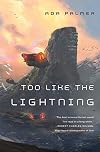
Ambitious, provocative, challenging science fiction political thriller, complete with unreliable narrator who favours 18th century styles and philosophical digressions and a weird habit of going out of his way to justify misgendering other characters in a society where gendered langage is almost taboo. Mycroft Canner is a servitor, a criminal on lifelong parole as a sort of public slave. For such a lowly person he moves in circles with the most powerful people on the planet who treat him show more with trust and familiarity. He also spends time at the household of the family unit that controls and oversees the vital global transport network, the speeding flying cars that have made nation states redundant. It's a household full of secrets, but the the most terrible secret is the little boy who can perform miracles, and his potential impact in a society that has banished all religion and religious talk, instead providing sensayers to give sessions of spiritual and philosophical therapy.
You couldn't call it a perfect utopia, but it's got a lot going for it, and is worth protecting when a theft and a break-in threaten to be the pebbles that start a catastrophic avalanche
It took me longer than I liked to get into this, the archaic language and Mycroft's sometimes dense narration proving tough for my lazy brain, but when I did finally break through, a revelation here, a twist there, I couldn't put it down. Next volume, please. show less
You couldn't call it a perfect utopia, but it's got a lot going for it, and is worth protecting when a theft and a break-in threaten to be the pebbles that start a catastrophic avalanche
It took me longer than I liked to get into this, the archaic language and Mycroft's sometimes dense narration proving tough for my lazy brain, but when I did finally break through, a revelation here, a twist there, I couldn't put it down. Next volume, please. show less
I have been staring at the blank white box on the screen because I don't quite know how to review this book. It was less a reading experience and more an ensorcellment. This inventive, disturbing novel set in an ambiguous utopia is so very, very well-crafted, offering the dual pleasures of enjoying an ambitious science fiction story and enjoying the narrator tell that story.
Mycroft Canner is a convicted criminal in a world that has done away with incarceration (and organized religion, and show more nation-states). Also, there's possibly magic? And political conspiracies are afoot? Palmer drops us in this inventive and immersive future, but she tells it slant. We soon realize that Mycroft is not just an unreliable narrator with a mysterious past, he is totally bonkers. As a reader I was increasingly unsettled by the layers of creepy, gossamer subtext (its webs surely spider-infested) yet totally charmed by Canner's manic, sententious prose, complete with back-and-forth arguments with the imagined reader and supercharged similes that would be at home in a SF retelling of Paradise Lost.
I also feel that for a trippy, literary SF novel, Too Like the Lightning delivers good storytelling. Every scene advances the story, and there's a convoluted mystery story that's resolved with some surprising but fairly satisfying reveals. I found it to be a page-turner, although tastes may vary.
Most of all, I think this novel is brave, and charts a way forward for writing socially-conscious fiction that isn't overly earnest or stylistically conservative. Mycroft Canner is an uncomfortable mind to inhabit, and plenty in this book tends toward the lurid and salacious - but this book doesn't feel like a prurient read; we never get the sense that Palmer is leering at her own characters or glorying in her book's most shocking moments. She writes too well for that, skillfully juxtaposing utopia and horror, dark and light. She's getting something right in a genre that plenty of authors before her have failed at, becoming too enamored with their own monsters.
My favorite book so far this year - highly recommended. show less
Mycroft Canner is a convicted criminal in a world that has done away with incarceration (and organized religion, and show more nation-states). Also, there's possibly magic? And political conspiracies are afoot? Palmer drops us in this inventive and immersive future, but she tells it slant. We soon realize that Mycroft is not just an unreliable narrator with a mysterious past, he is totally bonkers. As a reader I was increasingly unsettled by the layers of creepy, gossamer subtext (its webs surely spider-infested) yet totally charmed by Canner's manic, sententious prose, complete with back-and-forth arguments with the imagined reader and supercharged similes that would be at home in a SF retelling of Paradise Lost.
I also feel that for a trippy, literary SF novel, Too Like the Lightning delivers good storytelling. Every scene advances the story, and there's a convoluted mystery story that's resolved with some surprising but fairly satisfying reveals. I found it to be a page-turner, although tastes may vary.
Most of all, I think this novel is brave, and charts a way forward for writing socially-conscious fiction that isn't overly earnest or stylistically conservative. Mycroft Canner is an uncomfortable mind to inhabit, and plenty in this book tends toward the lurid and salacious - but this book doesn't feel like a prurient read; we never get the sense that Palmer is leering at her own characters or glorying in her book's most shocking moments. She writes too well for that, skillfully juxtaposing utopia and horror, dark and light. She's getting something right in a genre that plenty of authors before her have failed at, becoming too enamored with their own monsters.
My favorite book so far this year - highly recommended. show less
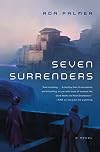
Seven Surrenders does something rare as a sequel to a very promising book: exceed and build on that which came before. Tons of spoilers to follow.
Set as the second half of the week that shook the world, Palmer continues to dive into the mystery of the Hives and 'bashes, but this time the gloves are off. Every major character reveals a second, deeper layer. Mycroft Canner reveals the true reason for his murders. They were not just a senseless act to show the world that humans could choose show more evil: rather his targets were a cadre of Utopian military historians working to trigger a cataclysmic war sooner rather than later. The Mardi 'bash believed that in an echo of the First World War, the long and technologically fruitful peace would lead to a utter slaughter. They planned a small, vaccinating war, to stave off an absolute future catastrophe of the Utopian Hive against everyone else. Mycroft disagreed. Whether or not he was right is for the next book.
Carlyle Foster is no simple sensayer, rather she's the right hand of Julia Doria-Pamphili, helping to recruit elites into the web of blackmail and gendered sex centered around Madame's brothel. She's also looking for her own opportunity to strike out. Sniper lives up to his name, and the true calling of the Saneer-Weeksbooth 'bash in peace through assassination.
The plot centers on the escalating tensions of war between the hives, the efforts of European leader Casimir Perry to carry out a scheme of terrible revenge, and the coming revelation of J.E.D.D Mason and Bridger. Two possibly divine beings, appearing on Earth at one time, what could it possibly mean?
Palmer teases disaster as Sniper assassinates J.E.D.D Mason, only to have Mason resurrected by Bridger. Madame is revealed to be behind the past half-century of politics, decades of sexual and psychological manipulation to prove her power, which somehow intersects with the strange being of her son, J.ED.D. Mason. And the world shifts out into sides, on the fundamental philosophical question of "is it right to kill one to save many?" and "would you destroy this world to save a better one?"
I'm not sure where the series is going, and I have two more books, but for all the density introduced in Too Like the Lightning, Palmer knows what to push for the sequel.
UPDATE: Dec 2021
I re-read the first two Terra Ignota books together, and knowing the core details of the setting instead of having to puzzle out the mystery box just make this better. The two books work wonderfully together, an intense chronicle of a world changing week. show less
Set as the second half of the week that shook the world, Palmer continues to dive into the mystery of the Hives and 'bashes, but this time the gloves are off. Every major character reveals a second, deeper layer. Mycroft Canner reveals the true reason for his murders. They were not just a senseless act to show the world that humans could choose show more evil: rather his targets were a cadre of Utopian military historians working to trigger a cataclysmic war sooner rather than later. The Mardi 'bash believed that in an echo of the First World War, the long and technologically fruitful peace would lead to a utter slaughter. They planned a small, vaccinating war, to stave off an absolute future catastrophe of the Utopian Hive against everyone else. Mycroft disagreed. Whether or not he was right is for the next book.
Carlyle Foster is no simple sensayer, rather she's the right hand of Julia Doria-Pamphili, helping to recruit elites into the web of blackmail and gendered sex centered around Madame's brothel. She's also looking for her own opportunity to strike out. Sniper lives up to his name, and the true calling of the Saneer-Weeksbooth 'bash in peace through assassination.
The plot centers on the escalating tensions of war between the hives, the efforts of European leader Casimir Perry to carry out a scheme of terrible revenge, and the coming revelation of J.E.D.D Mason and Bridger. Two possibly divine beings, appearing on Earth at one time, what could it possibly mean?
Palmer teases disaster as Sniper assassinates J.E.D.D Mason, only to have Mason resurrected by Bridger. Madame is revealed to be behind the past half-century of politics, decades of sexual and psychological manipulation to prove her power, which somehow intersects with the strange being of her son, J.ED.D. Mason. And the world shifts out into sides, on the fundamental philosophical question of "is it right to kill one to save many?" and "would you destroy this world to save a better one?"
I'm not sure where the series is going, and I have two more books, but for all the density introduced in Too Like the Lightning, Palmer knows what to push for the sequel.
UPDATE: Dec 2021
I re-read the first two Terra Ignota books together, and knowing the core details of the setting instead of having to puzzle out the mystery box just make this better. The two books work wonderfully together, an intense chronicle of a world changing week. show less
Update 1/5/17:
Re-read complete! And one thing I can definitely say without hesitation? : Definitely better the second time around.
It's still mightily dense with ideas and worldbuilding and truly fascinating characters that always manage to surprise, surprise again, tease me to death with hints and portents, and then managing to slam me up against the wall in a very civilized fashion before disemboweling me. It's just that kind of novel.
I'm loving the Marquis De Sade commentary as much this show more time as before, the extra commentaries on how to rule effectively, right down to the philosophical underpinnings of morals and Apollo's aphorisms, and yet this novel still manages to be both firmly 18th century and 25th century to the hilt. :)
What was slow in the beginning becomes absolutely necessary for the later blowout special effects of Ada Palmer's writing later in the novel. I firmly believe that now. It was just a glimmer before, but now on the second read, I'm a firm believer that this novel is just about perfect as it is.
I'm going to be recommending it for this year's Hugo nominations. It's wilding entertaining and strange and very intelligent, and beyond that, it shakes me nearly to the core.
I will also admit that it isn't an easy novel to read or enjoy superficially. It requires plenty of effort at all times and it's even more rewarding if you get all the classical and rather specialized Enlightenment references, but if you're on the same page, it's well beyond most novels out there. I'm talking about intellectual scope and the sheer depth and breadth of worldbuilding and ideas.
But I would be extremely remiss not to mention that Mycroft has got to be one of the most fascinating characters that I've ever read. And most surprising.
This mild-mannered squib did WHAT???? Oh my lordy... :) And the reasons for it? Oh my god... :)
I'm quickly wanting to ramp this one up to one of my all time favorite novels. Fantastic!
And now that I've got the sequel in my hands, I'm gonna enjoy the living hell out of a crumbling social system. :) Seven Surrenders, indeed. :) Seven-Ten list, anyone? lol And just who are they surrendering to? :)
Update 1/4/17:
This deserves a nice long re-read in preparation for the SEQUEL. :) Of which I just got and will be reviewing soon after. :) :) :)
Original Review:
Beautiful, Beautiful, Beautiful, Beautiful.
First impressions are very deceiving, with this one, and assumptions can get you into a huge mess of problems, but fortunately for us, this writer has some serious chops, can lead us into a world that never quite changes, from the first page to the last, but instead invites and sometimes pushes us over the edge and CHANGES US.
What is this world, where are we headed? Is this truly a futuristic high-tech utopia that stylizes itself off the Enlightenment period including Voltaire, Sade, and Rousseau? Ha! You'd like to think so as you begin your read.
Is the tale revolving around a handful of seemingly mild mysteries, that while interesting in themselves, seem more like a vehicle for unfolding one of the most gorgeous societal world-building tableaus I've ever had the privilege to read? Ha! ... Again, I was fooled, lulled into complacency even as I was overwhelmed with sheer walls of world-data, only to be saved, regularly, by the sure hand of a truly wonderful and insightful narrator who would steer us through the dense currents and land us safely upon solid ground. Could I have wished for a more perfect or more gentlemanly Victorian Guide in a strange land? Nope!
And then there were the conversations. This novel has a lot to say about gender roles, and it is tackled delightfully, maybe even better than [b:Ancillary Justice|17333324|Ancillary Justice (Imperial Radch, #1)|Ann Leckie|https://images.gr-assets.com/books/1397215917s/17333324.jpg|24064628] for sheer oddity. Social and societal quirks surrounding religion, was a big part of the novel, too, but it was the Conversation that made this novel become something Really Special.
And I really mean the Conversation; the ongoing discussion within whole fields of study and art and literature, or in this case, philosophy and science fiction. Ada Palmer deserves to be right up there with some of the best I've read, having so much to say about the Enlightenment period, made into a deep part of the story, aspects of the world-building, discussions both light and powerful between characters and even within our narrator's mind.
Some of the most awesome aspects of this novel are direct-line continuations of philosophy made into Art.
But do not let that dissuade you from this Oh So Excellent and Fascinating read, for even as I was fooled in the beginning, and as new and otherwise unforgivable glossed facts are slowly revealed to us, we are caught in a web much more complicated, dangerous, harrowing, bloody, and frankly more awe-inducing than I would have guessed in the first 150 pages.
It's a book worth reading several times over if only to pick up on all the clues that I had registered in passing, but not understood until much later.
And I will, because here's the real beauty... it's only part one of a two book cycle that belongs to one another. You know the symptoms. This is a fantastic larger tale that, by requirements out of the author's control, needed to be split unnaturally into two. It's only something truly miraculous and fantastic that the author still managed to make this single book feel complete and satisfying, even as it points to the second half of it's soul.
I feel truly blessed to be reading this. Ada Palmer has just earned herself a lifelong fanboy after a single wonderful read. This is what true Idea SF is all about, and it deserves to be up there with the very best. Remember [b:Anathem|2845024|Anathem|Neal Stephenson|https://images.gr-assets.com/books/1442903535s/2845024.jpg|6163095]? Sit yourself down for some real brilliance and some truly great set-sets.
I'm sure I won't be the only one who thinks the premise of the political setup is one I'd love to have now, even with its mature problems. I think this novel is going to be prompting an absolute TON of discussion among its soon-to-be legion fans. :) If there's any justice in the world, mind you. :) show less
Re-read complete! And one thing I can definitely say without hesitation? : Definitely better the second time around.
It's still mightily dense with ideas and worldbuilding and truly fascinating characters that always manage to surprise, surprise again, tease me to death with hints and portents, and then managing to slam me up against the wall in a very civilized fashion before disemboweling me. It's just that kind of novel.
I'm loving the Marquis De Sade commentary as much this show more time as before, the extra commentaries on how to rule effectively, right down to the philosophical underpinnings of morals and Apollo's aphorisms, and yet this novel still manages to be both firmly 18th century and 25th century to the hilt. :)
What was slow in the beginning becomes absolutely necessary for the later blowout special effects of Ada Palmer's writing later in the novel. I firmly believe that now. It was just a glimmer before, but now on the second read, I'm a firm believer that this novel is just about perfect as it is.
I'm going to be recommending it for this year's Hugo nominations. It's wilding entertaining and strange and very intelligent, and beyond that, it shakes me nearly to the core.
I will also admit that it isn't an easy novel to read or enjoy superficially. It requires plenty of effort at all times and it's even more rewarding if you get all the classical and rather specialized Enlightenment references, but if you're on the same page, it's well beyond most novels out there. I'm talking about intellectual scope and the sheer depth and breadth of worldbuilding and ideas.
But I would be extremely remiss not to mention that Mycroft has got to be one of the most fascinating characters that I've ever read. And most surprising.
This mild-mannered squib did WHAT???? Oh my lordy... :) And the reasons for it? Oh my god... :)
I'm quickly wanting to ramp this one up to one of my all time favorite novels. Fantastic!
And now that I've got the sequel in my hands, I'm gonna enjoy the living hell out of a crumbling social system. :) Seven Surrenders, indeed. :) Seven-Ten list, anyone? lol And just who are they surrendering to? :)
Update 1/4/17:
This deserves a nice long re-read in preparation for the SEQUEL. :) Of which I just got and will be reviewing soon after. :) :) :)
Original Review:
Beautiful, Beautiful, Beautiful, Beautiful.
First impressions are very deceiving, with this one, and assumptions can get you into a huge mess of problems, but fortunately for us, this writer has some serious chops, can lead us into a world that never quite changes, from the first page to the last, but instead invites and sometimes pushes us over the edge and CHANGES US.
What is this world, where are we headed? Is this truly a futuristic high-tech utopia that stylizes itself off the Enlightenment period including Voltaire, Sade, and Rousseau? Ha! You'd like to think so as you begin your read.
Is the tale revolving around a handful of seemingly mild mysteries, that while interesting in themselves, seem more like a vehicle for unfolding one of the most gorgeous societal world-building tableaus I've ever had the privilege to read? Ha! ... Again, I was fooled, lulled into complacency even as I was overwhelmed with sheer walls of world-data, only to be saved, regularly, by the sure hand of a truly wonderful and insightful narrator who would steer us through the dense currents and land us safely upon solid ground. Could I have wished for a more perfect or more gentlemanly Victorian Guide in a strange land? Nope!
And then there were the conversations. This novel has a lot to say about gender roles, and it is tackled delightfully, maybe even better than [b:Ancillary Justice|17333324|Ancillary Justice (Imperial Radch, #1)|Ann Leckie|https://images.gr-assets.com/books/1397215917s/17333324.jpg|24064628] for sheer oddity. Social and societal quirks surrounding religion, was a big part of the novel, too, but it was the Conversation that made this novel become something Really Special.
And I really mean the Conversation; the ongoing discussion within whole fields of study and art and literature, or in this case, philosophy and science fiction. Ada Palmer deserves to be right up there with some of the best I've read, having so much to say about the Enlightenment period, made into a deep part of the story, aspects of the world-building, discussions both light and powerful between characters and even within our narrator's mind.
Some of the most awesome aspects of this novel are direct-line continuations of philosophy made into Art.
But do not let that dissuade you from this Oh So Excellent and Fascinating read, for even as I was fooled in the beginning, and as new and otherwise unforgivable glossed facts are slowly revealed to us, we are caught in a web much more complicated, dangerous, harrowing, bloody, and frankly more awe-inducing than I would have guessed in the first 150 pages.
It's a book worth reading several times over if only to pick up on all the clues that I had registered in passing, but not understood until much later.
And I will, because here's the real beauty... it's only part one of a two book cycle that belongs to one another. You know the symptoms. This is a fantastic larger tale that, by requirements out of the author's control, needed to be split unnaturally into two. It's only something truly miraculous and fantastic that the author still managed to make this single book feel complete and satisfying, even as it points to the second half of it's soul.
I feel truly blessed to be reading this. Ada Palmer has just earned herself a lifelong fanboy after a single wonderful read. This is what true Idea SF is all about, and it deserves to be up there with the very best. Remember [b:Anathem|2845024|Anathem|Neal Stephenson|https://images.gr-assets.com/books/1442903535s/2845024.jpg|6163095]? Sit yourself down for some real brilliance and some truly great set-sets.
I'm sure I won't be the only one who thinks the premise of the political setup is one I'd love to have now, even with its mature problems. I think this novel is going to be prompting an absolute TON of discussion among its soon-to-be legion fans. :) If there's any justice in the world, mind you. :) show less
Lists
Female Author (1)
Overdue Podcast (1)
Awards


You May Also Like
Associated Authors
Statistics
- Works
- 11
- Also by
- 6
- Members
- 4,299
- Popularity
- #5,843
- Rating
- 4.1
- Reviews
- 197
- ISBNs
- 79
- Languages
- 4
- Favorited
- 3