
Joseph Blotner (1923–2012)
Author of Faulkner: a biography
About the Author
Image credit: Robert Penn Warren Library
Works by Joseph Blotner
Faulkner in the university : class conferences at the University of Virginia, 1957-1958 (1959) — Editor — 86 copies, 1 review
Associated Works
Novels 1930-1935 : As I Lay Dying, Sanctuary, Light in August, Pylon (1985) — Editor — 779 copies, 9 reviews
Literary Genius: 25 Classic Writers Who Define English & American Literature (2007) — Contributor — 95 copies, 2 reviews
Tagged
Common Knowledge
- Legal name
- Blotner, Joseph Leo
- Other names
- Blotner, Joseph L.
- Birthdate
- 1923-06-21
- Date of death
- 2012-11-16
- Gender
- male
- Education
- Drew University (BA|English)
Northwestern University (MA ∙ English)
University of Pennsylvania (PhD ∙ English) - Occupations
- professor
biographer
scholar
editor - Organizations
- Fellowship of Southern Writers
University of Idaho
University of Virginia
University of North Carolina
University of Michigan - Awards and honors
- Joseph Blotner Archives, Western Kentucky University
- Nationality
- USA
- Birthplace
- Scotch Plains, New Jersey, USA
- Places of residence
- Scotch Plains, New Jersey, USA
- Place of death
- Oakland, California, USA
- Associated Place (for map)
- New Jersey, USA
Members
Reviews
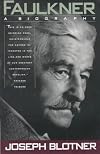
Review of [Faulkner: A Biography] by [[Joseph Blotner]] 5*
Blotner begins his Foreword to the one-volume edition of what was first published in two volumes with the explanation that he wanted to make it more accessible and suited to a more general audience. He also wanted “to bring that account (the two-volume edition) up to date by incorporating material from the enormous outpouring since then of scholarship, criticism, and other writings, including posthumously published Faulkner show more works.” The outpouring of Faulkneriana has continued in the years following Blotner’s latest revision of this edition in 1991. But to me, the fact that Blotner knew William Faulkner personally is important. They met at the University of Virginia, when Faulkner became Writer in Residence there and Blotner was an assistant professor in the English Department, and very quickly became good friends. Blotner knew Faulkner’s family as well and was one of very few outside the family to be invited to his funeral. He was the only “outsider” (not part of the family) to serve as pallbearer. His firsthand knowledge of his subject matter gives the biography that “ring of truth” that makes me feel that I now know this great writer, his world, and his vision in much greater depth.
Blotner organizes the biography by year, Chapter 1 being entitled “September 1897-September 1902,” Chapter 71 being “May-July 1962. The portrait of Faulkner’s life emerges in meticulous detail, all backed by extensive research and/or personal experience. The writing style is clear, easy to read, and congenial. Blotner does not spare the reader any of the intensity of the most destructive elements in Faulkner’s life: not his unhappy marriage or his preference for young women; not his tremendous need for alcohol and horrific bouts of drinking that ended in passing out, sickness, sometimes physical injury; not the depths of his periods of depression in the ‘30’s and ‘40’s when financial constraints forced him to endure long stays in Hollywood, working as a scriptwriter for MGM and later for Warner Bros.; not the extent of his physical misery as he aged and suffered the consequences of numerous falls sustained during bouts of drinking and, when he took up foxhunting on horseback late in life, falls from horses. In later years he was never free of the severe back pain which he treated with seconal as well as alcohol.
I find most of Faulkner’s novels a mixture of the tragic, the uplifting, and the humorous, and Blotner makes clear that all these were elements of the novelist’s own life. Some highlights of the book for me were:
**Faulkner’s sense of responsibiliy toward his family and toward his literary vision. In order to feed and care for the extended family that totally depended on him, he had to spend months at a time over a period of two decades in Hollywood, working at a job he loathed. Through all of this, he worked on his novels, arising at 4 am to work on the current novel or short story, then leaving at 9 for the studio. Over these years his best fiction was written. I’ve wondered how much more he might have produced if from the first, his novels had sold in the U.S. as well as they did abroad.
**I loved the parts about Faulkner’s response to the works of others: Hemingway, Wolfe, Fitzgerald, Dickens, Dostoevsky, to name a few. And the description of how he himself loved to read: “On some evenings after dinner, he would take down a volume from the shelf—perhaps Dickens or Cervantes—and read aloud to Tommy and Estelle and Dot, like a Victorian paterfamilias. The books were always old favorites. ‘I suppose I have about fifty that I read,’ he said. ‘I go in and out like you go into a room to meet old friends, to open the book in the middle and read for awhile…’” (p. 672)
**I enjoyed Blotner’s thorough description of the writing process for each novel and his obvious care about making his (Blotner’s) readers familiar with Yoknapatawpha County, its history, and its inhabitants and their relationships to each other, the land, and the county seat town of Jefferson. (Faulkner’s “own little postage stamp of native land.”) I’d really like to read the novels now in the order of their writing.
**I loved the numerous anecdotes showing Faulkner’s wit; his sense of humor and his irony made him great at one-liners.
Faulkner came from a time and place where storytelling was a much appreciated art, and he told stories from his early youth to appreciative audiences of all ages. I think the most valuable thing I learned from this biography was found in Faulkner’s answers to questions about his work. He felt that what was most important was the story he was telling. He would not or could not answer questions about symbols, style, stream of consciousness narration or other matters of technique.
This is definitely one of the best biographies I’ve read, and one that I would highly recommend. show less
Blotner begins his Foreword to the one-volume edition of what was first published in two volumes with the explanation that he wanted to make it more accessible and suited to a more general audience. He also wanted “to bring that account (the two-volume edition) up to date by incorporating material from the enormous outpouring since then of scholarship, criticism, and other writings, including posthumously published Faulkner show more works.” The outpouring of Faulkneriana has continued in the years following Blotner’s latest revision of this edition in 1991. But to me, the fact that Blotner knew William Faulkner personally is important. They met at the University of Virginia, when Faulkner became Writer in Residence there and Blotner was an assistant professor in the English Department, and very quickly became good friends. Blotner knew Faulkner’s family as well and was one of very few outside the family to be invited to his funeral. He was the only “outsider” (not part of the family) to serve as pallbearer. His firsthand knowledge of his subject matter gives the biography that “ring of truth” that makes me feel that I now know this great writer, his world, and his vision in much greater depth.
Blotner organizes the biography by year, Chapter 1 being entitled “September 1897-September 1902,” Chapter 71 being “May-July 1962. The portrait of Faulkner’s life emerges in meticulous detail, all backed by extensive research and/or personal experience. The writing style is clear, easy to read, and congenial. Blotner does not spare the reader any of the intensity of the most destructive elements in Faulkner’s life: not his unhappy marriage or his preference for young women; not his tremendous need for alcohol and horrific bouts of drinking that ended in passing out, sickness, sometimes physical injury; not the depths of his periods of depression in the ‘30’s and ‘40’s when financial constraints forced him to endure long stays in Hollywood, working as a scriptwriter for MGM and later for Warner Bros.; not the extent of his physical misery as he aged and suffered the consequences of numerous falls sustained during bouts of drinking and, when he took up foxhunting on horseback late in life, falls from horses. In later years he was never free of the severe back pain which he treated with seconal as well as alcohol.
I find most of Faulkner’s novels a mixture of the tragic, the uplifting, and the humorous, and Blotner makes clear that all these were elements of the novelist’s own life. Some highlights of the book for me were:
**Faulkner’s sense of responsibiliy toward his family and toward his literary vision. In order to feed and care for the extended family that totally depended on him, he had to spend months at a time over a period of two decades in Hollywood, working at a job he loathed. Through all of this, he worked on his novels, arising at 4 am to work on the current novel or short story, then leaving at 9 for the studio. Over these years his best fiction was written. I’ve wondered how much more he might have produced if from the first, his novels had sold in the U.S. as well as they did abroad.
**I loved the parts about Faulkner’s response to the works of others: Hemingway, Wolfe, Fitzgerald, Dickens, Dostoevsky, to name a few. And the description of how he himself loved to read: “On some evenings after dinner, he would take down a volume from the shelf—perhaps Dickens or Cervantes—and read aloud to Tommy and Estelle and Dot, like a Victorian paterfamilias. The books were always old favorites. ‘I suppose I have about fifty that I read,’ he said. ‘I go in and out like you go into a room to meet old friends, to open the book in the middle and read for awhile…’” (p. 672)
**I enjoyed Blotner’s thorough description of the writing process for each novel and his obvious care about making his (Blotner’s) readers familiar with Yoknapatawpha County, its history, and its inhabitants and their relationships to each other, the land, and the county seat town of Jefferson. (Faulkner’s “own little postage stamp of native land.”) I’d really like to read the novels now in the order of their writing.
**I loved the numerous anecdotes showing Faulkner’s wit; his sense of humor and his irony made him great at one-liners.
Faulkner came from a time and place where storytelling was a much appreciated art, and he told stories from his early youth to appreciative audiences of all ages. I think the most valuable thing I learned from this biography was found in Faulkner’s answers to questions about his work. He felt that what was most important was the story he was telling. He would not or could not answer questions about symbols, style, stream of consciousness narration or other matters of technique.
This is definitely one of the best biographies I’ve read, and one that I would highly recommend. show less
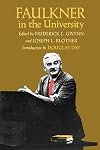
Faulkner is a genious. There is so much advice in this book, not just on literary craft and writing, but on life in general. I bought this on a whim and just ate it up. Anyone who wants to be a writer should read this.
You May Also Like


Associated Authors
Statistics
- Works
- 9
- Also by
- 8
- Members
- 422
- Popularity
- #57,803
- Rating
- 3.7
- Reviews
- 2
- ISBNs
- 17
- Languages
- 1