
Joel Williamson (1929–2019)
Author of William Faulkner and Southern History
About the Author
Joel Williamson is Lineberger Professor in the Humanities at the University of North Carolina, Chapel Hill
Works by Joel Williamson
Associated Works
Forgotten Heroes: Inspiring American Portraits from Our Leading Historians (1999) — Contributor — 123 copies, 1 review
Tagged
Common Knowledge
- Birthdate
- 1929-10-27
- Date of death
- 2019-11-09
- Gender
- male
- Education
- University of California, Berkeley (1964)
- Occupations
- historian
- Awards and honors
- Guggenheim Fellowship (Humanities, US & Canada)
- Birthplace
- Anderson County, South Carolina, USA
- Associated Place (for map)
- South Carolina, USA
Members
Reviews
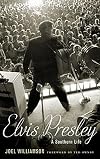
Overall this was a very good biography, and it was also a book on race, class and gender issues in the South and in the US in General after WW2. Elvis Presley's stage character and his career were heavily shaped by his environment, and it was interesting reading about the way women responded to Elvis, and the author's ideas as to why they acted the way they did towards him. I did not, however, see the need to have all his many affairs told in detail. I suppose for those using this book for show more research those details might be useful, but otherwise, especially when it comes to all the women it only took a page of text to cover, those stories might have simply been unneeded gossip.
My other major criticism is the author's simplification of girls' excitement over Elvis as being 'sex'. It sure sounds edgier this way, but it also sounds a bit overstated, contrived, or at least superficial. I liked that he starts to consider why the teenage girls in his audiences went nuts during the shows, and certainly some element of sexuality was there, but I'd also not discount Elvis' own statement that his stage movements and the girls' reactions were innocent. It is, after all, possible for men and women to move their bodies and act wildly excited because it is fun or because it is a silliness they know is not permissable outside the stage context, without sex being the only or even the primary or dominant motive. Girls can enjoy being uninhibited and wild without having to be motivated sexually, and I thought Elvis' understanding of what the girls were doing, from the quotes and scenes the author provided, was far more complex than what the author offered. But, that is a criticism that would be a great college paper for a gender studies class.
For the general reader the litany of Elvis' women gets a bit tedious, but there is still a lot here to enjoy and some interesting perspectives offered on what life was like in the South during the era when Elvis was emerging.
(I received my copy of this book free in exchange for a fair review.) show less
My other major criticism is the author's simplification of girls' excitement over Elvis as being 'sex'. It sure sounds edgier this way, but it also sounds a bit overstated, contrived, or at least superficial. I liked that he starts to consider why the teenage girls in his audiences went nuts during the shows, and certainly some element of sexuality was there, but I'd also not discount Elvis' own statement that his stage movements and the girls' reactions were innocent. It is, after all, possible for men and women to move their bodies and act wildly excited because it is fun or because it is a silliness they know is not permissable outside the stage context, without sex being the only or even the primary or dominant motive. Girls can enjoy being uninhibited and wild without having to be motivated sexually, and I thought Elvis' understanding of what the girls were doing, from the quotes and scenes the author provided, was far more complex than what the author offered. But, that is a criticism that would be a great college paper for a gender studies class.
For the general reader the litany of Elvis' women gets a bit tedious, but there is still a lot here to enjoy and some interesting perspectives offered on what life was like in the South during the era when Elvis was emerging.
(I received my copy of this book free in exchange for a fair review.) show less
Lost in the thicket of love
Joel Williamson is a southern historian of some note and author of a respected biography of Falkner. His take on Elvis is that Elvis was a southerner at a particular point in US history and that he must be understood that way. OK. That's fine, and when Mr. Williamson is talking about Elvis's upbringing and his southern family the story is well written and interesting.
But, Mr. Williamson made two decisions that affect the book's overall tone and content and I think show more that he did himself a disservice.
Mr. Williamson decided to write this biography in a popular style, rather than an academic one and Oxford University Press for some reason went along with it. Some negative reviewers contend that the popular tone is intended to hide Mr. Williamson's over-reliance on secondary sources. I am not an Elvis expert and will have to leave it to others to map that. I wonder, though, how much tolerance Elvis fans have for scholarly writing with lots of footnotes and whether Mr. Williamson's eye was more on the book's potential sales.
The second choice was to place women and their relationships with Elvis at the center of the book. Putting women at the center of the book works for the first part, which is roughly chronological (although the rest of the book is not, which is quite confusing). We learn about the influence of his mother Gladys and of teachers who encouraged his talent and provided opportunities for him to perform.
Mr. Williamson contends that teenage girls created Elvis, painting a picture of repressed teenagers seizing the opportunity to act out their sexual feelings in public and that this was revolutionary. Well I don't believe that for two reasons. First, Mr. Williamson reports that after the concert the girls reverted to their sweet innocent selves. I don't think female sexuality works that way. Sexual awakening is sexual awakening and the door of a concert venue is not a light switch. Years ago I attended a French dance performance presented to a couple of thousand high school students in Vientiane, Laos in the middle of the afternoon. The kids screamed the whole time as if they were at a rock concert. No one had explained (probably no one knew) that audiences at dance performances are silent. These kids had learned how to behave from movies and had a great time.
Which brings me to my mother's teen story of climbing over a fence to see Frank Sinatra perform in Philly a decade before Elvis. Teens went wild for Frankie and his blue eyes, and acted crazy too, screaming and yelling and becoming "aroused". Perhaps the southern teens Mr. Williamson writes about decided that if they could not see Frank Sinatra they could at least scream at Elvis. Who knows? Elvis's charisma, animal magnetism, and ability to connect with his audiences were legendary, and it is fun, and harmless, to be temporarily enthralled.
As the book goes on Mr. Williamson loses his way in the thicket of Elvis's sexual life and his relationships with the trashy men of his entourage.
Several other reviewers on this site claim to have family connections with Elvis and claim never to have heard of the constant stream of women in and out of Elvis's bedroom that Mr. Williamson describes in such excruciating detail. I found it all very tedious and skipped page after page of discussion of this affair or that one. A timeline would have helped, if, that is, we think these liaisons are important. Again, I am not sure. Elvis was a man of his time and culture. Fewer women offered unfettered sex in those days before reliable birth control, and if sex were offered, a manly man was obliged to accept. Those are the years during which famous men routinely reported sleeping with hundreds and nearly thousands of women. Similarly Elvis's supposed obsession with virginity might only be an artifact of the "good girl" "bad girl" dichotomy of the era, or a echo of the perennial notion that only an experienced man can treat a virgin properly. (Yawn here.)
I would have liked to hear a more scholarly analysis of Elvis's purported unwillingness to sleep alone and his ?preference? for cuddling instead of intercourse.
In the true southern way, if good women are to be the center of the book then bad men must be on the periphery. Elvis's father Vernon is presented as a ne'er-do-well and leech who, if we prefer to see Elvis as a closet homosexual ,is presented as the absent father to Gladys' ever present mother. Elvis' coterie of obnoxious male friends are his beard. Mr. Williamson only mentions homosexuality once in the context of Elvis. We can wonder whether Mr. Williamson thinks of Elvis's women as cover too. If so, Mr. Williamson lacks the courage to say so, perhaps again looking at sales projections.
I did not particularly enjoy this book and skipped over page after page in the later sections. Too much detail and too little evidence of a red pencil at Oxford University Press. One astonishing gap in the text is that after devoting page after page to the preparations for Elvis's Comeback Special of 1968, there was no discussion at all of the response to the show, which was supposed to be somewhat radical in mixing black and white artists. I found this passing strange.
I received a review copy of "Elvis Presley: A Southern Life" by Joel Williamson (Oxford University Press) through NetGalley.com. show less
Joel Williamson is a southern historian of some note and author of a respected biography of Falkner. His take on Elvis is that Elvis was a southerner at a particular point in US history and that he must be understood that way. OK. That's fine, and when Mr. Williamson is talking about Elvis's upbringing and his southern family the story is well written and interesting.
But, Mr. Williamson made two decisions that affect the book's overall tone and content and I think show more that he did himself a disservice.
Mr. Williamson decided to write this biography in a popular style, rather than an academic one and Oxford University Press for some reason went along with it. Some negative reviewers contend that the popular tone is intended to hide Mr. Williamson's over-reliance on secondary sources. I am not an Elvis expert and will have to leave it to others to map that. I wonder, though, how much tolerance Elvis fans have for scholarly writing with lots of footnotes and whether Mr. Williamson's eye was more on the book's potential sales.
The second choice was to place women and their relationships with Elvis at the center of the book. Putting women at the center of the book works for the first part, which is roughly chronological (although the rest of the book is not, which is quite confusing). We learn about the influence of his mother Gladys and of teachers who encouraged his talent and provided opportunities for him to perform.
Mr. Williamson contends that teenage girls created Elvis, painting a picture of repressed teenagers seizing the opportunity to act out their sexual feelings in public and that this was revolutionary. Well I don't believe that for two reasons. First, Mr. Williamson reports that after the concert the girls reverted to their sweet innocent selves. I don't think female sexuality works that way. Sexual awakening is sexual awakening and the door of a concert venue is not a light switch. Years ago I attended a French dance performance presented to a couple of thousand high school students in Vientiane, Laos in the middle of the afternoon. The kids screamed the whole time as if they were at a rock concert. No one had explained (probably no one knew) that audiences at dance performances are silent. These kids had learned how to behave from movies and had a great time.
Which brings me to my mother's teen story of climbing over a fence to see Frank Sinatra perform in Philly a decade before Elvis. Teens went wild for Frankie and his blue eyes, and acted crazy too, screaming and yelling and becoming "aroused". Perhaps the southern teens Mr. Williamson writes about decided that if they could not see Frank Sinatra they could at least scream at Elvis. Who knows? Elvis's charisma, animal magnetism, and ability to connect with his audiences were legendary, and it is fun, and harmless, to be temporarily enthralled.
As the book goes on Mr. Williamson loses his way in the thicket of Elvis's sexual life and his relationships with the trashy men of his entourage.
Several other reviewers on this site claim to have family connections with Elvis and claim never to have heard of the constant stream of women in and out of Elvis's bedroom that Mr. Williamson describes in such excruciating detail. I found it all very tedious and skipped page after page of discussion of this affair or that one. A timeline would have helped, if, that is, we think these liaisons are important. Again, I am not sure. Elvis was a man of his time and culture. Fewer women offered unfettered sex in those days before reliable birth control, and if sex were offered, a manly man was obliged to accept. Those are the years during which famous men routinely reported sleeping with hundreds and nearly thousands of women. Similarly Elvis's supposed obsession with virginity might only be an artifact of the "good girl" "bad girl" dichotomy of the era, or a echo of the perennial notion that only an experienced man can treat a virgin properly. (Yawn here.)
I would have liked to hear a more scholarly analysis of Elvis's purported unwillingness to sleep alone and his ?preference? for cuddling instead of intercourse.
In the true southern way, if good women are to be the center of the book then bad men must be on the periphery. Elvis's father Vernon is presented as a ne'er-do-well and leech who, if we prefer to see Elvis as a closet homosexual ,is presented as the absent father to Gladys' ever present mother. Elvis' coterie of obnoxious male friends are his beard. Mr. Williamson only mentions homosexuality once in the context of Elvis. We can wonder whether Mr. Williamson thinks of Elvis's women as cover too. If so, Mr. Williamson lacks the courage to say so, perhaps again looking at sales projections.
I did not particularly enjoy this book and skipped over page after page in the later sections. Too much detail and too little evidence of a red pencil at Oxford University Press. One astonishing gap in the text is that after devoting page after page to the preparations for Elvis's Comeback Special of 1968, there was no discussion at all of the response to the show, which was supposed to be somewhat radical in mixing black and white artists. I found this passing strange.
I received a review copy of "Elvis Presley: A Southern Life" by Joel Williamson (Oxford University Press) through NetGalley.com. show less
Still shaking things up
Elvis Presley: A Southern Life by Joel Williamson (Oxford University Press, $34.95).
The King is most certainly not dead, at least not in the cultural sense. In Elvis Presley: A Southern Life, Joel Williamson—a professor at the University of North Carolina who has also written a well-respected biography of William Faulkner—proves that another biography of the man who made rock’n’roll mainstream is necessary.
Like Bobbie Ann Mason’s brief 2002 biography, show more Williamson delves into Elvis as representative of Southern culture and history, with nods to Faulkner and Tennessee Williams. The changing standards of race, class and gender in the post-WWII South had a great deal to do with the changing styles Elvis embraced, but at heart, his urge to please—and to be polite about it—reflect the deeply-ingrained Southern attitudes about public and private, etiquette and acceptance.
While it’s not on a par for depth with Peter Guralnick’s seminal two-volume biography, Elvis Presley: A Southern Life is a nice addition to what is now known—no joke—as “Elvis studies.”
Reviewed on Lit/Rant: www.litrant.tumblr.com show less
Elvis Presley: A Southern Life by Joel Williamson (Oxford University Press, $34.95).
The King is most certainly not dead, at least not in the cultural sense. In Elvis Presley: A Southern Life, Joel Williamson—a professor at the University of North Carolina who has also written a well-respected biography of William Faulkner—proves that another biography of the man who made rock’n’roll mainstream is necessary.
Like Bobbie Ann Mason’s brief 2002 biography, show more Williamson delves into Elvis as representative of Southern culture and history, with nods to Faulkner and Tennessee Williams. The changing standards of race, class and gender in the post-WWII South had a great deal to do with the changing styles Elvis embraced, but at heart, his urge to please—and to be polite about it—reflect the deeply-ingrained Southern attitudes about public and private, etiquette and acceptance.
While it’s not on a par for depth with Peter Guralnick’s seminal two-volume biography, Elvis Presley: A Southern Life is a nice addition to what is now known—no joke—as “Elvis studies.”
Reviewed on Lit/Rant: www.litrant.tumblr.com show less

2589 William Faulkner and Southern History, by Jack Williamson (read 9 Mar 1994) This is a 1993 book by a University of North Carolina professor and is a really great book. The first 140 pages deal with Faulkner's ancestry and are extremely interesting, appealing mightily to the genealogist in me. Faulkner's great-grandfather, William C. Falkner (1824-1889) is a larger than life figure, and I would like to go to the cemetery in Oxford, Mississippi, and see his statue there. This whole show more section of the book is sheerly fascinating. The nest 214 pages are a biography and are well done. Faulkner was an alcoholic, and one gets irritated over his never failing drunkenness, despite "cure" after "cure." The third section of he book is 80 pages, and is boring. It assumes more memory than I have as to his work .I read twelve books by Faulkner, but ten of them were read in the 1950's. show less
Awards


You May Also Like


Associated Authors
Statistics
- Works
- 7
- Also by
- 2
- Members
- 367
- Popularity
- #65,578
- Rating
- 4.0
- Reviews
- 6
- ISBNs
- 23
- Languages
- 1
- Favorited
- 1