
Tony Bradman
Author of Daddy's Lullaby
About the Author
Image credit: via HarperCollins
Series
Works by Tony Bradman
Jason And The Voyage To The Edge Of The World (The Greatest Adventures in the World) (2004) 31 copies
Spartacus: The Story of the Rebellious Thracian Gladiator (Lives in Action) (2010) 7 copies, 1 review
Project X Origins: Grey Book Band, Oxford Level 12: Dilemmas and Decisions: Making a Stand (2014) 5 copies
Project X Origins: Brown Book Band, Oxford Level 11: Heroes and Villains: Heroine in Hiding (Heroes & Villains) (2014) 4 copies
Merlin gille an dràgoin 2 copies
No Hay Nadie Como Yo 2 copies
The King Who Thought He Was Clever: A Folk Tale from Russia: Band 14/Ruby (Collins Big Cat) (2017) 2 copies
Project X Origins: White Book Band, Oxford Level 10: Inventors and Inventions: Underwater Adventure (2014) 2 copies
Project X Origins: Gold Book Band, Oxford Level 9: Communication: Message in an X-Bot (2014) 2 copies
Project X Alien Adventures: Dark Blue Book Band, Oxford Level 15: The Hidden Fortress (2015) 2 copies
Project X Origins: Grey Book Band, Oxford Level 12: Myths and Legends: Ragnar: the legend of the hairy trousers (2014) 1 copy
The Essential father 1 copy
Oxford Reading Tree: Stages 10-11: True Stories: Pack 2 (6 books, 1 of each title): the Story of Pele (2003) 1 copy
Battle with the Be 1 copy
Playtime, Rhymes with me 1 copy
Tom & the siege 1 copy
Calum is Calum 1 copy
Project X CODE Extra: Orange Book Band, Oxford Level 6: Fiendish Falls: A Rapid Rescue (2016) 1 copy
An gille is an globe 1 copy
Viikinkien peikkopulma 1 copy
An Gillie is an Globe 1 copy
Help! I'm a hamster! : a swoppers story / by Tony Bradman ; [pictures by Clive Scruton] (1996) 1 copy
Project X: Alien Adventures: Orange: An Amazing Find : Alien Adventures: Orange: An Amazing Find(Paperback) - 2013 Edition (2013) 1 copy
The Talent Contest 1 copy
Na Ròmanaich 1 copy
Het koningskind 1 copy
Project X Origins: White Book Band, Oxford Level 10: Inventors and Inventions: Cuckoo Trouble (2014) 1 copy
TEN BOOK PACK - 5 Copies Each of 'Me' and 'After a Bath' - Houghton Mifflin, Invitations to Literacy, Early Success Books (1996) 1 copy
That's not a Fish! 1 copy
Tagged
Common Knowledge
- Birthdate
- 1954-01-22
- Gender
- male
- Education
- University of Cambridge (Queens' College)
- Relationships
- Bradman, Tom (son)
- Nationality
- England
UK - Places of residence
- Beckenham, Kent, England, UK
- Associated Place (for map)
- England, UK
Members
Reviews
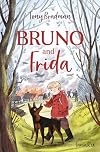
In a Nutshell: A poignant story that is relevant historically as well as contemporarily. But it might be too dark for younger children. (Official target age group is 8 )
**Please note that this review contains spoilers. I don’t like to reveal plot spoilers any time but in this case, parents/teachers need to know certain information before they can take a call about the book. If you are reading this on the Goodreads app, please note that the spoilers don’t get hidden. I have marked the show more spoilers section.**
Story:
The book begins with a poignant quote by Heinrich Bôll:
Just as this quote makes one think, the entire book will provide many situations where one feels the need to pause and ponder. This isn’t an easy story to read as it is much darker than a typical children’s book. A part of me feels that children need to be aware of historical mistakes. That’s how we all improve as a unified global race and hopefully won’t repeat the same mistakes in future. But, how soon is too soon to learn of such atrocities? There’s no right answer to this.
Mentioning some points from the book that might help you decide if you want your children to go for this.
***********SPOILERS BEGIN HERE*************
• Bruno’s mom dies in an attack when a Russian fighter plane shoots at German civilians. Another old man who is helping Bruno after his mother’s death gets caught in a bomb explosion and the book says: “he just seemed to vanish”.
• I hadn’t heard of the Russians using dogs as suicide bombers, so that was a big shocker. I don’t know how children will feel reading about dogs being used as weapons. The scene where Frida the dog is strapped with explosives could be scary. (Nothing happens to her, so there’s no gruesome animal death thankfully. She dies of old age towards the end of the book.)
• Towards the second half, the story goes much into detail about German refugees and their troubles. No one talks of German refugees from Eastern Germany. Hardly anyone is even aware of their struggles. So this part was eye-opening and hard-hitting. Could be emotionally intense.
• There are many war-related atrocities mentioned. Some are just hinted at but some are quite forthright. (eg."Millions of men, women and children had been brutally murdered and their bodies burned in ovens.")
• Bruno’s dad is a soldier with the German army and Bruno frequently suffers from guilt pangs over what cruelties his father might have committed under Hitler’s dominion. As his father never returns home, this angle isn’t resolved.
• Bruno does find his grandparents so it’s not exactly a sad ending. But the difficulties he faced while locating them are a bit traumatic.
• At the end, the story moves into the contemporary time period and links the experiences of the German refugees with that of Syrian refugees today. While I love how the link was established in such a logical way, I feel that the book imposes its opinion on readers rather than allowing them to make an educated call. This is a gray topic that will generate varied responses depending on how you feel about your country opening its borders to refugees.
*************END OF SPOILERS***************
The impact of the story is enhanced by the black-and-white illustrations peppered throughout the book. No illustration depicts any horrifying scene.
The historical note at the end is insightful and provides even more brain fodder to ruminate upon.
I must say this. Regardless of what I feel about the dark nature of this book, my respect to Barrington Stoke continues to increase. They don't shy away from emotionally-intense topics in children's fiction. Their books are thought-provoking and discussion-worthy. Furthermore, their content is always hi-lo (high interest, low ability), meaning the text is edited to suit a lower reading age though the content might be for a higher age group.
I still recommend this book because it contains a story that deserves to be told from an angle that deserves to be known. I would just disagree with the official reading age. As a parent, I would advocate it to teens and above, not middle graders.
4.25 stars.
My thanks to Barrington Stoke and NetGalley for the ARC of “Bruno and Frida”. This review is voluntary and contains my honest opinion about the book.
***********************
Join me on the Facebook group, Readers Forever!, for more reviews, book-related discussions and fun. show less
**Please note that this review contains spoilers. I don’t like to reveal plot spoilers any time but in this case, parents/teachers need to know certain information before they can take a call about the book. If you are reading this on the Goodreads app, please note that the spoilers don’t get hidden. I have marked the show more spoilers section.**
Story:
1945, East Prussia. At the final stages of WWII, Russian soldiers are making their way from the East through German villages and ruthlessly killing locals as a kind of retaliation. Eleven year old Bruno and his mother realise that the only way to survive is to flee their village. They decide to walk towards Kiel (near the Northern border with Denmark) where his grandparents reside. But after some gruesome attacks, Bruno finds himself alone. While moping, he comes across a dog, who is strapped with explosives and sent into battle as a suicide bomber. But Bruno realises that rather than being a weapon, she is just as scared as him. Will their new friendship help them survive the travails of war?
The book begins with a poignant quote by Heinrich Bôll:
“If the dead could speak, there would be no more war.”
Just as this quote makes one think, the entire book will provide many situations where one feels the need to pause and ponder. This isn’t an easy story to read as it is much darker than a typical children’s book. A part of me feels that children need to be aware of historical mistakes. That’s how we all improve as a unified global race and hopefully won’t repeat the same mistakes in future. But, how soon is too soon to learn of such atrocities? There’s no right answer to this.
Mentioning some points from the book that might help you decide if you want your children to go for this.
***********SPOILERS BEGIN HERE*************
• Bruno’s mom dies in an attack when a Russian fighter plane shoots at German civilians. Another old man who is helping Bruno after his mother’s death gets caught in a bomb explosion and the book says: “he just seemed to vanish”.
• I hadn’t heard of the Russians using dogs as suicide bombers, so that was a big shocker. I don’t know how children will feel reading about dogs being used as weapons. The scene where Frida the dog is strapped with explosives could be scary. (Nothing happens to her, so there’s no gruesome animal death thankfully. She dies of old age towards the end of the book.)
• Towards the second half, the story goes much into detail about German refugees and their troubles. No one talks of German refugees from Eastern Germany. Hardly anyone is even aware of their struggles. So this part was eye-opening and hard-hitting. Could be emotionally intense.
• There are many war-related atrocities mentioned. Some are just hinted at but some are quite forthright. (eg."Millions of men, women and children had been brutally murdered and their bodies burned in ovens.")
• Bruno’s dad is a soldier with the German army and Bruno frequently suffers from guilt pangs over what cruelties his father might have committed under Hitler’s dominion. As his father never returns home, this angle isn’t resolved.
• Bruno does find his grandparents so it’s not exactly a sad ending. But the difficulties he faced while locating them are a bit traumatic.
• At the end, the story moves into the contemporary time period and links the experiences of the German refugees with that of Syrian refugees today. While I love how the link was established in such a logical way, I feel that the book imposes its opinion on readers rather than allowing them to make an educated call. This is a gray topic that will generate varied responses depending on how you feel about your country opening its borders to refugees.
*************END OF SPOILERS***************
The impact of the story is enhanced by the black-and-white illustrations peppered throughout the book. No illustration depicts any horrifying scene.
The historical note at the end is insightful and provides even more brain fodder to ruminate upon.
I must say this. Regardless of what I feel about the dark nature of this book, my respect to Barrington Stoke continues to increase. They don't shy away from emotionally-intense topics in children's fiction. Their books are thought-provoking and discussion-worthy. Furthermore, their content is always hi-lo (high interest, low ability), meaning the text is edited to suit a lower reading age though the content might be for a higher age group.
I still recommend this book because it contains a story that deserves to be told from an angle that deserves to be known. I would just disagree with the official reading age. As a parent, I would advocate it to teens and above, not middle graders.
4.25 stars.
My thanks to Barrington Stoke and NetGalley for the ARC of “Bruno and Frida”. This review is voluntary and contains my honest opinion about the book.
***********************
Join me on the Facebook group, Readers Forever!, for more reviews, book-related discussions and fun. show less
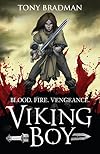
'I hate you! I am Gunnar, son of Bjorn Sigurdsson, and I swear on the blood of my ancestors I will take vengeance on you for the murder of my father.'
And so start an epic journey for Gunnar, young Viking boy who will not only seek to avenge the death of his dad by 'wolfmen' (the berserkers of legend, I guess) but also try and reunite with him in Valhalla. What's there not to like? It's pure kickass adventure for boys, and, Tony Bradman not taking his young audience for imbeciles, there's a show more lot to learn about Vikings too! Ironically enough, that might be its weakest point. If you are not sitting down with your child to help them go through it, it will indeed be difficult for them to make sense of what's really going on (e.g. Odin, the Valkyries, Valhalla, Iceland...). Plus, some chapters, especially towards the end, are indeed poorly structured, and, so, confusing -my boy, 8 at the time of reading, actually complained of them being 'difficult to understand'.
Never mind! Overall, my son loved it (and so did I). He gave it a four star rating, so... So did I! show less
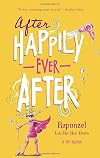
I have princess-crazy daughters. I am a big big BIG fan fairytale adaptation genre so I was thrilled to see this series, written at an easily accessible level for my 3 and 6 year old--we read it aloud together, but I could also definitely see these as a hit with older independent readers. The stories were cute and light, but also all managed to have a gentle nudge towards a more balanced picture of life, love, and romance than just riding off into the sunset.
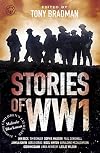
Short stories of WW1 from bestselling authors and compiled by Tony Bradman. This collection of short stories chronicles the events of World War One - imagining the conflicts and emotions of those people caught up in the war and its aftermath. I personally found only 3 stories that I could follow and keep me reading. These were 'The men who wouldn't sleep', 'Granny Measham's girl', and 'The unknown soldier'. These stories were quite poignant as they left me feeling that they had impacted on show more me in one way or another. Here is the first story that sent shivers down my spine.
'The men who wouldn't sleep' was about the men who were so shell shocked they wouldn't sleep and as a result ending up wasting away in convalescence homes. It follows the story of a young boy whose father is away at war and his mother (a nurse) has received word that her husband is missing. She takes her son to the hospital with her as she does not wish to let him out of her sight and it is there that the young boy sits with a soldier who does not talk and refuses to eat and sleep. The young boy opens up to the soldier and confides that he is scared that his dad might be dead and the soldier takes the young boy's hand and squeezes it. This being the only recognition the soldier has made since arriving at the hospital. He goes on to die still holding the young boys hand. show less
'The men who wouldn't sleep' was about the men who were so shell shocked they wouldn't sleep and as a result ending up wasting away in convalescence homes. It follows the story of a young boy whose father is away at war and his mother (a nurse) has received word that her husband is missing. She takes her son to the hospital with her as she does not wish to let him out of her sight and it is there that the young boy sits with a soldier who does not talk and refuses to eat and sleep. The young boy opens up to the soldier and confides that he is scared that his dad might be dead and the soldier takes the young boy's hand and squeezes it. This being the only recognition the soldier has made since arriving at the hospital. He goes on to die still holding the young boys hand. show less
Lists
Awards


You May Also Like


Associated Authors
Statistics
- Works
- 412
- Members
- 4,088
- Popularity
- #6,154
- Rating
- 3.7
- Reviews
- 31
- ISBNs
- 893
- Languages
- 12