
Louise Fatio (1904–1993)
Author of The Happy Lion
About the Author
Image credit: via Verlag Herder
Series
Works by Louise Fatio
Associated Works
Tagged
Common Knowledge
- Birthdate
- 1904-08-18
- Date of death
- 1993-07-26
- Gender
- female
- Occupations
- children's book author
- Relationships
- Duvoisin, Roger (Spouse)
- Nationality
- Switzerland
USA - Birthplace
- Lausanne, Waadt, Switzerland
- Places of residence
- New Jersey, USA
- Place of death
- New Jersey, USA
- Associated Place (for map)
- New Jersey, USA
Members
Reviews
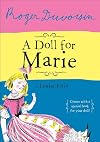
First sentence: In the city of Paris, there lived a doll who sighed from morning to night. She was born long ago, when our great-grandmothers lived. She wore a handsome dress of faded red silk, with long lace pantalets that came down to her pretty shoes, and a plumed hat on her blond curls. She was indeed a precious antique doll. But, alas, she was also a very lonely doll.
Premise/plot: A [nameless] doll lives at an antique shop. She longs to belong to a girl--to be loved, cherished, show more treasured, played with. There is one such girl in the neighborhood, Marie, but both doll and girl know this isn't to be. She's much too "valuable" to be purchased by a poor girl. She's purchased--by someone to be an antique showpiece...but it is thanks to some mischievous pets that this doll finds her forever home with Marie.
My thoughts: I thought the story was charming and delightful in an old-fashioned, vintage way. This one was first published in the 1950s. It is a bit on the text heavy side. But as an adult, of course, I don't mind a bit. I don't know if today's generation is much interested in porcelain dolls. But I enjoyed this one very much. show less
Premise/plot: A [nameless] doll lives at an antique shop. She longs to belong to a girl--to be loved, cherished, show more treasured, played with. There is one such girl in the neighborhood, Marie, but both doll and girl know this isn't to be. She's much too "valuable" to be purchased by a poor girl. She's purchased--by someone to be an antique showpiece...but it is thanks to some mischievous pets that this doll finds her forever home with Marie.
My thoughts: I thought the story was charming and delightful in an old-fashioned, vintage way. This one was first published in the 1950s. It is a bit on the text heavy side. But as an adult, of course, I don't mind a bit. I don't know if today's generation is much interested in porcelain dolls. But I enjoyed this one very much. show less

At first I had mixed feelings about this book, but after reading it a second time I understood the deeper meaning behind this story. One part of this book that I really enjoyed is that it is set in France. I have not read many other books that have France as the setting. The author used some French words such as "bonjour" and "au revoir" which I thought made this book unique. I also really liked the illustrations in this book. The illustrator switched back and forth between colored pages and show more black and white pages. I thought this was a very interesting contrast and it helped keep my attention. At first I thought this story was slow and anticlimactic. However upon further thought, this story has a much deeper meaning than it appears to have. The main character in this story is a Lion that is taken from his home and put into a zoo that is much different from is home. The lion is happy, and views himself as a gentle and well liked animal. When he is at the zoo people are very kind to him, making him think it will be the same when he happens to leave the zoo one day. Immediately the people are scared and alarmed, thinking that the lion will be dangerous. The lion has no idea why they are scared, and does not understand why the people are acting this way towards him. He is not aware of the "stereotypes" that are placed on lions. This sends the message of how powerful human judgements can be on how someone behaves. show less
What a simple harmless lion story. I really liked that while every adult completely misunderstood the situation, Francois, the child knew just what to do and didn't overreact at all. How delightful!

Cute old series. The human character is named Francois, and the text does 'vibe' French, but there's no translation note in my thrift store copy. I think the right child would be entranced, but I'm too cynical to be charmed now, unfortunately.
Lists
Awards


You May Also Like


Associated Authors
Statistics
- Works
- 26
- Also by
- 1
- Members
- 1,283
- Popularity
- #19,989
- Rating
- 3.8
- Reviews
- 13
- ISBNs
- 101
- Languages
- 5
- Favorited
- 1