
Ina R. Friedman
Author of How My Parents Learned to Eat
About the Author
Works by Ina R. Friedman
The Other Victims: First-Person Stories of Non-Jews Persecuted by the Nazis (1990) 141 copies, 1 review
Tagged
Common Knowledge
- Birthdate
- 1926-01-06
- Gender
- female
- Nationality
- USA
- Places of residence
- Brookline, Massachusetts, USA
- Associated Place (for map)
- Massachusetts, USA
Members
Discussions
childrens - american sailor father, asian mother's first date - fork vs. chopsticks in Name that Book (November 2015)
Reviews
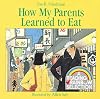
I loved this book! I though it was a great love story of the parents that turned into them having a kid who used both chopsticks and their hands. I loved how there was a twist on the outcome of the story and I can see a lot of children really enjoying this story.
Summary:
How My Parents Learned to Eat, is told from the perspective of a little girl, as she tells us how her parents met. She explains that in her house they often eat with a knife and fork, but also with chopsticks, because her dad was an American naval officer, and her mom was a Japanese school girl. Her parents started talking and meeting regularly, until one day her dad wanted to ask her mother to marry him. The only thing holding him back, was that they had never shared a meal show more together. Her dad was to ashamed, because he didn’t know how to eat with chopsticks, and her mother was ashamed because she didn’t know how to eat like an American. Eventually, her parents agreed to learn the customs of each other’s cultures, and were later married. The girl is diverse in both the customs of Japanese cuisine, as well as American, and she lets the reader into both worlds.
Personal Reaction:
When I was younger, I always loved watching Reading Rainbow in the classroom, and I remembered seeing and reading this book when I was younger. I thought the love story that the little girl was sharing about her parents, was a quirky and beautiful story, and a great representation of not only a relationship, but of multiculturism in literature. The hand drawn illustrations, pop on the white pages, and I think add a great tone to the story. Also, I love learning through food, because experiencing different cuisines from around the world, is a great way to learn about different cultures. I liked how the story brought two different worlds together, and entwined them for the reader to experience them together. This book appeals to the romantic and family girl in me, and is an overall great story.
Extension Ideas:
This book is a great book to use as a social studies lesson on either America or Japan. After reading the story to my class, one thing I would do, is to have the children explore eating their snacks using chop sticks, and then with a fork. The hands on experiment with the different tools, will help to develop their fine motor skills, but more importantly will help in the understanding of differences in the two cultures. Another fun activity that I would want to do with my class, is to create their own compare and contrast chart. On one side of a construction paper the children can illustrate how they eat in their home (the utensils, and food), then on the other side as a class we will illustrate the customs we learned from the book about Japan. show less
How My Parents Learned to Eat, is told from the perspective of a little girl, as she tells us how her parents met. She explains that in her house they often eat with a knife and fork, but also with chopsticks, because her dad was an American naval officer, and her mom was a Japanese school girl. Her parents started talking and meeting regularly, until one day her dad wanted to ask her mother to marry him. The only thing holding him back, was that they had never shared a meal show more together. Her dad was to ashamed, because he didn’t know how to eat with chopsticks, and her mother was ashamed because she didn’t know how to eat like an American. Eventually, her parents agreed to learn the customs of each other’s cultures, and were later married. The girl is diverse in both the customs of Japanese cuisine, as well as American, and she lets the reader into both worlds.
Personal Reaction:
When I was younger, I always loved watching Reading Rainbow in the classroom, and I remembered seeing and reading this book when I was younger. I thought the love story that the little girl was sharing about her parents, was a quirky and beautiful story, and a great representation of not only a relationship, but of multiculturism in literature. The hand drawn illustrations, pop on the white pages, and I think add a great tone to the story. Also, I love learning through food, because experiencing different cuisines from around the world, is a great way to learn about different cultures. I liked how the story brought two different worlds together, and entwined them for the reader to experience them together. This book appeals to the romantic and family girl in me, and is an overall great story.
Extension Ideas:
This book is a great book to use as a social studies lesson on either America or Japan. After reading the story to my class, one thing I would do, is to have the children explore eating their snacks using chop sticks, and then with a fork. The hands on experiment with the different tools, will help to develop their fine motor skills, but more importantly will help in the understanding of differences in the two cultures. Another fun activity that I would want to do with my class, is to create their own compare and contrast chart. On one side of a construction paper the children can illustrate how they eat in their home (the utensils, and food), then on the other side as a class we will illustrate the customs we learned from the book about Japan. show less
This is cute, sweet, story. John and Aiko love each other but are worried about embarrassing the other, because John doesn't know how to use chopsticks and Aiko doesn't know how to use a fork and knife. To see them attempt to learn to other person's ways is endearing and fun. I love the mix of culture and romance. Allen Say does an excellent job of illustrating the story - soft colors and lovely detail. I highly recommend this book for kids - with it's humor and good lesson, I think most show more kids will enjoy it. show less
In my opinion this book is an excellent multicultural text. The book is about a Japanese-American girl who tells the story of how her mother Aiko, Japanese, and her father John, American, met in Japan to explain why on some nights for dinner they eat with chopsticks and other with a fork and knife. Both of her parents are concerned that they will not know how to eat like the other's culture, so both try to learn how. Aiko tried to learn how to eat with fork and knife and John tried to learn show more how to eat with chopsticks. I really enjoyed this story, I thought it was a very cute how both of her parents knew how different each of their cultures were but they still wanted to learn and embrace each other's cultures. The writing includes a lot of dialogue, which i thought could be a little difficult for younger readers to follow but overall the language and writing used in this book was simple and easy for young readers to understand. The plot was very organized and flowed very well,first starts with the little girl explaining that in her house they use chopsticks and forks and knives when eating and then she tells the story of how her parents learned how to eat the way the other's culture did and finally going back to the little girl, bringing the whole story together by her saying, "That's why at our house some days we eat with chopsticks and some days we eat with knives and forks." Overall this book teaches children that sometimes people are multicultural and they practice more than one culture in their daily lives. show less
Lists
Awards


You May Also Like


Associated Authors
Statistics
- Works
- 7
- Members
- 1,389
- Popularity
- #18,509
- Rating
- 4.1
- Reviews
- 41
- ISBNs
- 22