
Anne Frank (1) (1929–1945)
Author of The Diary of a Young Girl
For other authors named Anne Frank, see the disambiguation page.
About the Author
Anne Frank, June 1929 - March 1945 Anneliesse Marie Frank was born on June 12, 1929 in Frankfurt-am-Main, Germany. She was the second daughter of Otto and Edith Frank. Anne's father was a factory worker, who moved his family to Amsterdam in 1933 to escape the Nazi's. There he opened up a branch of show more his uncle's company and Anne and her sister Margot resumed a normal life, attending a Montessori School in Amsterdam. The Germans attacked the Netherlands in 1940 and took control, issuing anti-Jewish decrees, and forcing the Frank sisters into a Jewish Lyceum instead of their old school. Their father Otto decided to find a place for the family to hide should the time come that the Nazi's came to take them to a concentration camp. He chose the annex above his offices and found some trustworthy friends among his fellow workers to supply the family with food and news. On July 5, 1942, Margot received a "call up" to serve in the Nazi "work camp." The next day, the family escaped to the annex, welcoming another family, the van Pels, which consisted of Hermann and Auguste van Pels and their son Peter. Fritz Pfeffer also came to stay with them, causing the count to come to eight people hiding in the annex. Anne, Margot and Peter continued their studies under the tutelage of Otto, and all of the captives found ways to entertain themselves for the long years they remained hidden. On August 4, 1944, four Dutch Nazis came to arrest the eight, having discovered their hiding place through an informant. Anne's diary was left behind and found later by one of the family's friends. The eight were taken to prison in Amsterdam and then deported to Westerbork before being shipped to Auschwitz. At Auschwitz, the men were separated from the women and Hermann van Pels was immediately gassed. Fritz Pfeffer died at Neuenganme in 1944. Anne, Margot and Mrs. van Pels were taken to Bergen-Belson, leaving behind Anne's mother, Edith, who died at Auschwitz of starvation and exhaustion in 1945. At Bergen-Belson, Anne and Margot contracted typhus and died of the disease in March of 1945. Anne was 15 and Margot was 17. The exact date and the place they were buried is unknown. Otto Frank was the only one of the original group of eight who were hidden in the annex to survive. He was left for dead at Auschwitz when the Russian Army came to liberate the camp. It is due to him that Anne's diary was published and became the success it is. (Bowker Author Biography) show less
Works by Anne Frank
The Diary of Anne Frank and Related Readings (Literature Connections) (McDougal Littell Literature Connections) (1996) 173 copies, 11 reviews
Gesamtausgabe: Tagebücher - Geschichten und Ereignisse aus dem Hinterhaus - Erzählungen - Briefe - Fotos und Dokumente (2013) 32 copies
Reader's Companion To Anne Frank: The Diary of a Young Girl, the Definitive Edition (1995) 11 copies
Diary of a Young Girl 7 copies
Weet je nog? 3 copies
The Diary of Anne Frank 3 copies
Soñar, pensar, escribir 2 copies
4: Anna Frank 2 copies
℗La ℗storia di Anne Frank 1 copy
Las habitaciones de atrás 1 copy
A MEMÓRIA DO HOLOCAUSTO 1 copy
Anne Franks Tales 1 copy
DITARI I ANNE FRANK 1 copy
DITARI 1 copy
La Spiga Readers - Easy Readers (A2/B1): The Story of Anne Frank It's the Second World War. Anne and her family are hiding from the Germans. Anne is writing everything in her… (2011) 1 copy, 1 review
Anne's World 1 copy
Berättelser 1 copy
The Diary of Anne Frank 1 copy
En ung piges dagbog 1 copy
Contos 1 copy
Querida Kitty 1 copy
Þ ʺ ơ æ đ £ ʺ ư ư ł Œ ł ư ð 1 copy
Il diario di Anna Frank: "l'alloggio segreto": la sua storia dalla nascita ai campi di sterminio (2018) 1 copy
Diary Of A Young Girl 1 copy
The Diary of a Young Girl 1 copy
Tagebuch von Anne Frank. Textanalyse und Interpretation mit ausführlicher Inhaltsangabe und Abituraufgaben mit Lösungen (2012) 1 copy
Diary of a Young Girl Term 2 1 copy
Diary of a Young Girl Term 1 1 copy
Anne Frank napla 1 copy
Frank, Anne Archive 1 copy
এন ফ্ৰাংকৰ ডায়েৰি 1 copy
Associated Works
Anne Frank: Beyond the Diary: A Photographic Remembrance (1992) — Contributor — 1,607 copies, 26 reviews
The Graphic Canon of Children's Literature: The World's Greatest Kids' Lit as Comics and Visuals (2014) — Contributor — 100 copies, 1 review
Tagged
Common Knowledge
- Legal name
- Frank, Annelies Marie
- Birthdate
- 1929-06-12
- Date of death
- 1945-02
1945-03 - Gender
- female
- Occupations
- diarist
- Relationships
- Frank, Otto (father)
Gies, Miep (friend) - Cause of death
- typhus
genocide - Nationality
- Netherlands
- Birthplace
- Frankfurt am Main, Germany
- Places of residence
- Amsterdam, Netherlands
Frankfurt, Germany - Place of death
- Bergen-Belsen concentration camp, Lower Saxony, Germany
- Burial location
- cremated
- Map Location
- Netherlands
Members
Discussions
Anne Frank in Legacy Libraries (March 2016)
Diary of a Young Girl in Combiners! (March 2013)
WP:List of posthumous publications of Holocaust victims in Collaborative work (April 2012)
Reviews
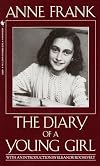
This was a hard book to read. It started out light and easy, as you'd expect from a 13-year-old's diary. As the situation gets harder, so do the topics in the diary, though it's not until the end when it gets really hard to read. This is history; the ending is not a surprise. What did surprise me was how much I dreaded reading the final 50 or so pages of the book, because the war starts going well and hopes in the Secret Annex start rising... and yet I know how the story ends for them.
I do show more not know why I didn't read this in school. In some ways, I wish I had because it is an important book and I would have liked to have read it when I was closer to Anne's age. On the other hand, I'm glad I didn't read it until I was an adult and could better connect with the entire situation, and not just Anne's. This is an important book, and one everyone needs to read. It's heartbreaking and uplifting all at once, and it's themes are as relevant now as they were when it was written. show less
I do show more not know why I didn't read this in school. In some ways, I wish I had because it is an important book and I would have liked to have read it when I was closer to Anne's age. On the other hand, I'm glad I didn't read it until I was an adult and could better connect with the entire situation, and not just Anne's. This is an important book, and one everyone needs to read. It's heartbreaking and uplifting all at once, and it's themes are as relevant now as they were when it was written. show less

What's there to say that hasn’t been said already?
Written by a young Jewish girl in hiding with her family and four other people this is, obviously, first and foremost, the harrowing story of a persecuted family and their life under the duress of a raging war. The rationing, the fear-terror of being discovered and arrested, the small daily gestures that could have terrible consequences in here if ever found out or not performed (e.g. listening to foreign radio broadcast, not bolting a door show more or turning a light off…)… Such daily life was more than suffocating; it was also dull, and it’s a dullness which at times translates into the narrative -many entries, in fact, are quite mundane, about silly details reflecting a boring life in close quarters. (It’s not Anne’s fault; nevertheless, it affects how as a reader we have to sail through, and so it has to be pointed out...).
Being the story of eight people kept crammed for years in a small space, we also witness a glimpse at human nature in all its various shades -disputes arise and silly differences bring tempers to the fore, as much as love and gratitude are expressed. It ends terribly for all involved, but I personally was struck by the background story of these amazing individuals who, despite facing sure deportation and probably death if arrested (many will, in the end) will nevertheless take enormous risk to hide them. Indeed, it’s not only the people in ‘the Secret Annexe’ that matter in here, but, also, the whole network of brave souls still having a moral compass and surrounding them in the outside. When thinking of Anne Frank’s diary, we tend to forget them all too easily. In fact, let’s celebrate their courage and ethics by at least naming them again: Victor Kugler, Johannes Kleiman, Miep Gies, Elisabeth Voskuijl.
Now, given the circumstances, it could have been a dark, suffocating, and claustrophobic narrative of a sadness which could have choked you. It’s not. Anne Frank’s account is indeed more than about the war and the deprivation and the persecutions, it’s also ‘the diary of a young girl’, and so what we also see here is a child coming out of age -discovering and questioning her sexuality, having her first kiss, talking about her faith in God… As such, and it has to be pointed out too for it affects how it all reads too, it can be quite clichés, if not annoying at times (she was a teenager, so be prepared for the usual bickering with her older sister, her frustration and anger at her parents, and the whole ‘I’m rebel and misunderstood’ whinge so typical of a teen!). This, after all, is a personal diary, of which not everything was intended to be published (it went through two editing processes, one by Anne herself). Beyond a child in hiding, then, there are many layers to this book. Anne wasn’t solely a Jew living in fear, she was a whole person with an emotional and inner life going way beyond ‘the Secret Annexe’. Here too, we tend to forget this when thinking about her, too often reduced to a personal witness about war and that only.
All in all, this book surely has its flaws; both because of the extreme situation in which it was written and the young age of its author. Yet, its flaws are precisely what, also, makes it so compelling. It’s about war and how war impacts childhood, of course, but it’s also about a child coming to term with herself. Her inner thoughts and growing up will therefore echo with many an adolescence; and that’s probably why this diary has been resonating and keep resonating so loud with people from across the world, creeds, and races and generations. Most people reading this indeed will probably be children living safe lives in peaceful countries, like most adults reading this would have, well, made it into adulthood! Anne Frank, sadly, as we all know, didn’t. Her fate, then, takes a tragic and poignant turn; and, in the end, we therefore have to reckon that it’s not merely about a diary and all its childish flaws, but a whole symbol. In fact, Anne’s short life might have been unique to Anne and her family and the people hiding in that Annexe, but, somehow, by her words she transcended that to become the face of evil’s innocent victims -the victims of racism, of antisemitism, of violent and murderous intolerance and of the evil of fascism.
At this point, in conclusion, I would love to say ‘no more’, and that lightning candles, and setting up memorials, and celebrating days of remembrance, and being clued on enough to have a sense of history (or so we should) taught us better. But that would be nailing a false clichés. Wars and persecutions and hatred and prejudice are still going on. As such, we, as human beings, may have learnt absolutely nothing from the horror of Nazism, let alone war. It’s a bleak statement to make, but, optimistically, we still have our own choices to face, our own personal responsibilities to take, and, if there’s one thing we can all do on an individual level is to remember the people involved in this book and what they all came to represent -Anne and her family and companions in hiding, of course, but also the heroes who hide them at the peril of their lives. What we can do, in other words, is, whatever our creed or ethnic background, holding on to a moral compass which doesn’t see in the ‘other’ an enemy to be despised. Here’s an ethos which must hold as true today as it was back in the 1930s and 1940s. After all, Anne Frank and several millions of others have been murdered, but racism is still alive. show less
Written by a young Jewish girl in hiding with her family and four other people this is, obviously, first and foremost, the harrowing story of a persecuted family and their life under the duress of a raging war. The rationing, the fear-terror of being discovered and arrested, the small daily gestures that could have terrible consequences in here if ever found out or not performed (e.g. listening to foreign radio broadcast, not bolting a door show more or turning a light off…)… Such daily life was more than suffocating; it was also dull, and it’s a dullness which at times translates into the narrative -many entries, in fact, are quite mundane, about silly details reflecting a boring life in close quarters. (It’s not Anne’s fault; nevertheless, it affects how as a reader we have to sail through, and so it has to be pointed out...).
Being the story of eight people kept crammed for years in a small space, we also witness a glimpse at human nature in all its various shades -disputes arise and silly differences bring tempers to the fore, as much as love and gratitude are expressed. It ends terribly for all involved, but I personally was struck by the background story of these amazing individuals who, despite facing sure deportation and probably death if arrested (many will, in the end) will nevertheless take enormous risk to hide them. Indeed, it’s not only the people in ‘the Secret Annexe’ that matter in here, but, also, the whole network of brave souls still having a moral compass and surrounding them in the outside. When thinking of Anne Frank’s diary, we tend to forget them all too easily. In fact, let’s celebrate their courage and ethics by at least naming them again: Victor Kugler, Johannes Kleiman, Miep Gies, Elisabeth Voskuijl.
Now, given the circumstances, it could have been a dark, suffocating, and claustrophobic narrative of a sadness which could have choked you. It’s not. Anne Frank’s account is indeed more than about the war and the deprivation and the persecutions, it’s also ‘the diary of a young girl’, and so what we also see here is a child coming out of age -discovering and questioning her sexuality, having her first kiss, talking about her faith in God… As such, and it has to be pointed out too for it affects how it all reads too, it can be quite clichés, if not annoying at times (she was a teenager, so be prepared for the usual bickering with her older sister, her frustration and anger at her parents, and the whole ‘I’m rebel and misunderstood’ whinge so typical of a teen!). This, after all, is a personal diary, of which not everything was intended to be published (it went through two editing processes, one by Anne herself). Beyond a child in hiding, then, there are many layers to this book. Anne wasn’t solely a Jew living in fear, she was a whole person with an emotional and inner life going way beyond ‘the Secret Annexe’. Here too, we tend to forget this when thinking about her, too often reduced to a personal witness about war and that only.
All in all, this book surely has its flaws; both because of the extreme situation in which it was written and the young age of its author. Yet, its flaws are precisely what, also, makes it so compelling. It’s about war and how war impacts childhood, of course, but it’s also about a child coming to term with herself. Her inner thoughts and growing up will therefore echo with many an adolescence; and that’s probably why this diary has been resonating and keep resonating so loud with people from across the world, creeds, and races and generations. Most people reading this indeed will probably be children living safe lives in peaceful countries, like most adults reading this would have, well, made it into adulthood! Anne Frank, sadly, as we all know, didn’t. Her fate, then, takes a tragic and poignant turn; and, in the end, we therefore have to reckon that it’s not merely about a diary and all its childish flaws, but a whole symbol. In fact, Anne’s short life might have been unique to Anne and her family and the people hiding in that Annexe, but, somehow, by her words she transcended that to become the face of evil’s innocent victims -the victims of racism, of antisemitism, of violent and murderous intolerance and of the evil of fascism.
At this point, in conclusion, I would love to say ‘no more’, and that lightning candles, and setting up memorials, and celebrating days of remembrance, and being clued on enough to have a sense of history (or so we should) taught us better. But that would be nailing a false clichés. Wars and persecutions and hatred and prejudice are still going on. As such, we, as human beings, may have learnt absolutely nothing from the horror of Nazism, let alone war. It’s a bleak statement to make, but, optimistically, we still have our own choices to face, our own personal responsibilities to take, and, if there’s one thing we can all do on an individual level is to remember the people involved in this book and what they all came to represent -Anne and her family and companions in hiding, of course, but also the heroes who hide them at the peril of their lives. What we can do, in other words, is, whatever our creed or ethnic background, holding on to a moral compass which doesn’t see in the ‘other’ an enemy to be despised. Here’s an ethos which must hold as true today as it was back in the 1930s and 1940s. After all, Anne Frank and several millions of others have been murdered, but racism is still alive. show less
Anne Frank: The Diary of a Young Girl's greatest strength is unsurprisingly how intimate and personal it is. It is incredibly challenging to find another book that so beautifully and thoroughly represents the experiences of a teenager who struggles with ordinary issues, like love and finding their place in the world, and is also subjected to something as terrifying as the Holocaust. The bravery and resilience that Anne exhibits through her diary is equally inspiring and heartbreaking when show more one considers that she was just one of millions of innocent people to be murdered despite her efforts. Anne Frank: The Diary of a Young Girl is poignant, inspiring, and a must-read autobiography for all interested in World War II. show less
I had no idea of what to expect when I bought this book on Kindle. I was expecting something childish, and lots of cribbing and crying. What I got instead, is the writings of a young girl who seemed to be intelligent and mature beyond her years. There were times, I must confess, when I found the book a little trying, but on the whole, what a rush. This book is full of LIFE. Anne Frank certainly seemed to be so aware not only of external events, but even of herself. The writing style is so show more clear and uninhibited, and the words just seem to flow from her pen. She had a great eye, great clarity of thought, and managed to keep up her optimism despite being holed up in the Secret Annexe for so many years. It is a tragedy that her life was cut off, and that her body was dumped in a mass grave. Who betrayed them? He killed her body yes, but the girl lives on.
What she teaches us really, is to value LIFE, and to take joy in it. I live in a country where there is much strife. I hope my country men can read this book and learn from it. show less
What she teaches us really, is to value LIFE, and to take joy in it. I live in a country where there is much strife. I hope my country men can read this book and learn from it. show less
Lists
Ambleside Books (1)
. (1)
THE WAR ROOM (1)
Writers at Risk (1)
Favourite Books (1)
1970s (1)
Jewish Books (1)
Elevenses (1)
top 100 (1)
Folio Society (1)
Europe (1)
1940s (1)
READ in 2024 (1)
Books I've read (1)
Best War Stories (1)
. (1)
Big tags (1)
Overdue Podcast (1)
Five star books (1)
Ryan's Books (1)
BitLife (1)
Holocaust (2)
Female Author (2)
Banned Books (1)
6th Grade (1)
Epistolary Books (1)
Unread books (1)
. (1)
Women in War (1)
Awards


You May Also Like


Associated Authors
Statistics
- Works
- 128
- Also by
- 16
- Members
- 44,940
- Popularity
- #364
- Rating
- 4.1
- Reviews
- 749
- ISBNs
- 811
- Languages
- 42
- Favorited
- 8


