
William C. Jordan
Author of Europe in the High Middle Ages
About the Author
William Chester Jordan is Dayton-Stockton Professor of History and Chairman of the History Department of Princeton University. He was Director of the Shelby Cullom Davis Center for Historical Studies (1994 to 1999). His most recent book is A Tale of Two Monasteries: Westminster and Saint-Denis in show more the Tbirteenth Century (2009). show less
Works by William C. Jordan
The Apple of His Eye: Converts from Islam in the Reign of Louis IX (Jews, Christians, and Muslims from the Ancient to the Modern World) (2019) 15 copies, 1 review
Unceasing Strife, Unending Fear: Jacques de Thérines and the Freedom of the Church in the Age of the Last Capetians (2005) 12 copies
From Servitude to Freedom: Manumission in the Senonais in the Thirteenth Century (Middle Ages Series) (1986) 8 copies
Practicing Christian psychology 4 copies
Ideology and Royal Power in Medieval France: Kingship, Crusades and the Jews (Variorum Collected Studies) (2001) 3 copies
Associated Works
Power, Violence and Mass Death in Pre-Modern and Modern Times (2004) — Contributor, some editions — 4 copies
Thirteenth Century England XIII: Proceedings of the Paris Conference, 2009 (2011) — Contributor — 3 copies
Tagged
Common Knowledge
- Canonical name
- Jordan, William C.
- Legal name
- Jordan, William Chester
- Other names
- JORDAN, William Chester
JORDAN, William C. - Birthdate
- 1948-04-07
- Gender
- male
- Education
- Princeton University (Ph.D|1973)
Ripon College (BA) - Occupations
- historian
professor
medievalist - Organizations
- Princeton University
- Awards and honors
- American Academy of Arts & Sciences (2009)
American Philosophical Society (2000)
Medieval Academy of America (Fellow, 1997)
Barry Prize (2024)
Haskins Medal (2000) - Short biography
- William Chester Jordan (born 1948) is an American medievalist, in which field he is a Haskins Medal winner. He is currently the Dayton-Stockton Professor of History and Chairman of the History Department at Princeton University. He is also a former Director of the Program in Medieval Studies at Princeton. Jordan has studied and published on the Crusades, English constitutional history, gender, economics, Judaism, and, most recently, church-state relations in the thirteenth and fourteenth centuries.
Biography
Jordan earned his PhD at Princeton, where he was a student of Joseph R. Strayer, in 1973. He was Director of the Shelby Cullom Davis Center for Historical Studies from 1994 to 1999. In 1996, he won the annual Charles Homer Haskins Medal from the Medieval Academy of America for his outstanding work on the Great Famine, published in The Great Famine: Northern Europe in the Early Fourteenth Century. He was elected the Second Vice-President of the Medieval Academy of America in 2012.
Jordan has shown a marked interest in pedagogy and edited single-volume and four-volume encyclopaedias on the Middle Ages, aimed at the elementary and middle-school audiences respectively. He is the editor-in-chief of the first supplemental volume of the Dictionary of the Middle Ages.
Besides being an expert on the Great Famine, Jordan has made a name in the study of the reign of Louis IX of France, especially with respect to his Crusades. His Louis IX and the Challenge of the Crusade is "the most comprehensive secondary source account of the seventh crusade currently available" and has been cited by Frances Gies, Malcolm Barber, and Robert Chazan.
https://alchetron.com/William-Chester-... - Nationality
- USA
- Birthplace
- Chicago, Illinois, USA
- Places of residence
- Princeton, New Jersey, USA
- Associated Place (for map)
- USA
Members
Reviews

"There were four principal categories of less desirable English sojourners in France...": those with alleged association with criminal activity, political exile, demobilized troops and pariahs. Utilizing both ordinary and extraordinary examples from the court rolls, Jordan guides the reader through the various circumstances that often led to abjuration. This meant one was forced to "quit the realm" through court conviction, royal decree or intimidation. These men and women were not typical show more outlaws, although claiming sanctuary in general offered a serious criminal the possibility for abjuration instead of death. However, Jordan makes it very clear that abjuration was hardly a mercy. Their property and "chattels" were confiscated and they were obliged to walk barefoot for 4-6 days in pauper's clothes while bearing a cross, announcing their guilt on the way to Dover - the port of exile. If they managed to survive vigilantes, starvation, disease, packed ships, and tumultuous seas, felons arrived in the bay of Wissant, France to begin life anew. Indeed, before the American colonies or Australia, there was Wissant. Boundaries moved like the waves and contested continental territory became a dumping ground for both kingdoms; consequently establishing a unique, multilingual border society. However it became unsustainable once the Hundred Years War began.
Jordan leaves no stone unturned to provide an uncommonly clear picture of the life of an abjurant. With a bit of dark humor and wit, Jordan describes the seemingly rootless life of an abjurant - from the court room to unruly taverns, desperate pleas for pardons and perpetual financial burden. Even if you know absolutely nothing about the "long 13th century," Jordan is excellent and I guarantee that you will be able to follow along and enjoy. show less
Jordan leaves no stone unturned to provide an uncommonly clear picture of the life of an abjurant. With a bit of dark humor and wit, Jordan describes the seemingly rootless life of an abjurant - from the court room to unruly taverns, desperate pleas for pardons and perpetual financial burden. Even if you know absolutely nothing about the "long 13th century," Jordan is excellent and I guarantee that you will be able to follow along and enjoy. show less
The Apple of His Eye: Converts from Islam in the Reign of Louis IX (Jews, Christians, and Muslims from the Ancient to the Modern World) by William C. Jordan
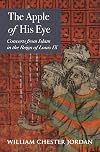
In this slim book, William Chester Jordan examines Louis IX's attempts at conversion of Muslims from North Africa and Acre during the Seventh Crusade and their subsequent resettling in France. On the basis of a careful reading of the records for Louis' reign, Jordan estimates that perhaps a thousand such individuals were settled primarily in northern France where they were in receipt of royal pensions. This is a masterclass in how to work with an extremely fragmentary source base, though at show more times he strays more extensively into the realm of imaginative inference/question asking than I was wholly comfortable with. (Also frankly at points it felt a bit like padding—should this have been a book or an extended journal article?) Still, it would allow for great conversation in the classroom about methodologies and the possibilities of historical recovery. show less
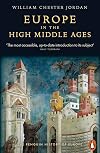
I'm surprised by the low ratings this book has been given- it's nothing jaw-dropping, but, on the other hand, it's short, well written and doesn't pretend to be something it's not. It's a selective survey of European history in the later middle ages. It's not trying to convince you that micro-history is more important than the history of high politics; it's not trying to sell you on the idea that the center or the periphery is more important; it's not out to convert you to ethical ideals you show more already hold. It just tells you, more or less, what you need to know to start reading more deeply about the time period.
That said, it has some flaws: Jordan pays very little attention to the Byzantines or Russia, while giving lots of space to the Crusader kingdoms. He seems to have chosen 'the Jews' as his marginalized people of choice (compare Chris Wickham's preference for 'the women' in his 'Inheritance of Rome'), which is more about us than about the middle ages, and doesn't seem to do much other than signpost the fact that he's not an imperialist or whatever. Luckily he's happy to do the other things that 'imperialists' do: discuss high culture, discuss political change, actually say things. And he leavens it a bit with social history, economic history and generally acknowledging that ideas don't rise in a vacuum.
Also, the cover of the hard-back edition is gorgeous. Why they didn't keep it for the paperback is more mysterious than anything that happened between 900 and 1350. show less
That said, it has some flaws: Jordan pays very little attention to the Byzantines or Russia, while giving lots of space to the Crusader kingdoms. He seems to have chosen 'the Jews' as his marginalized people of choice (compare Chris Wickham's preference for 'the women' in his 'Inheritance of Rome'), which is more about us than about the middle ages, and doesn't seem to do much other than signpost the fact that he's not an imperialist or whatever. Luckily he's happy to do the other things that 'imperialists' do: discuss high culture, discuss political change, actually say things. And he leavens it a bit with social history, economic history and generally acknowledging that ideas don't rise in a vacuum.
Also, the cover of the hard-back edition is gorgeous. Why they didn't keep it for the paperback is more mysterious than anything that happened between 900 and 1350. show less
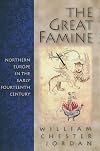
The fourteenth century sucked in a lot of ways, not just because of the Black Death. In its early decades, several years of terrible weather combined with varied socio-economic circumstances to result in a devastating famine in northwestern Europe. William Chester Jordan brings together an impressively broad array of sources—from chronicles and annals to legal and financial records, letters, and literature—to explore the impact which the bad years of 1315-22 had. There's much here for show more anyone working on social history to mine, though for a more up-to-date synthesis of the information on the scientific/climate-data side of things, see Bruce Campbell's The Great Transition: Climate, Disease and Society in the Late-Medieval World. show less
Lists
Awards


You May Also Like


Associated Authors
Statistics
- Works
- 25
- Also by
- 6
- Members
- 1,011
- Popularity
- #25,499
- Rating
- 3.8
- Reviews
- 13
- ISBNs
- 58
- Languages
- 2
- Favorited
- 1