
Rika Lesser
Author of Hansel and Gretel
About the Author
Image credit: photo by Perry Cohen
Works by Rika Lesser
Associated Works
Mozart's Third Brain (The Margellos World Republic of Letters) (1996) — Translator, some editions — 30 copies
Tagged
Common Knowledge
- Gender
- female
- Awards and honors
- Amy Lowell Travelling Fellowship in Poetry (1974-1975)
- Short biography
- [excerpted from author's website]
Educated at Yale and Columbia, Lesser has been the recipient of many grants and awards originating here or in Scandinavia—among them the Amy Lowell Poetry Traveling Scholarship, a poetry grant from the Ingram Merrill Foundation, and the George Bogin Memorial Award from the Poetry Society of America. In 1995 the Swedish Authors Foundation gave her an award in recognition of her work translating and promoting Swedish literature abroad and in 2000 a grant to go on with some of that work. In 1996 she was awarded the Poetry Translation Prize of the Swedish Academy. In 1999 she was the recipient of a Fulbright Senior Scholar Fellowship to Sweden. In 2001 she was awarded a National Endowment for the Arts Literature Fellowship for Poetry Translation, which she received once again for Fiction in 2013. In 2001 she also was a guest at Yaddo. In 2002, for her work translating Sonnevi's Mozart's Third Brain, she received the American-Scandinavian Foundation Translation Prize for the second time.
Co-chair of its Translation Committee from 1989-1995, Rika Lesser served on the Executive Board of PEN American Center from 1991-1996. She has taught poetry writing and literary translation at the Atlantic Center for the Arts, Columbia University School of the Arts, the George Washington University, the New School, the Poetry Center of the 92nd Street Y, Yale University and as a guest lecturer at many other places. She was the Spring 2011 Thornton Writer-in-Residence at Lynchburg College in Virginia. - Birthplace
- Brooklyn, New York, USA
- Associated Place (for map)
- New York, USA
Members
Reviews
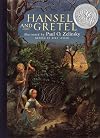
This classic retelling of the Grimm's fairy tale is pretty dark for children. A woodsman and his wife live on the edge of the woods with their two children, Hansel and Gretel. Unfortunately, there is not enough food to go around, so the mother convinces the woodsman to take the children out into the woods and leave them there. While he is reluctant to do so, the woodsman agrees. The children overhear the plan and are frightened, but Hansel has a plan. He sneaks out and gathers white pebbles, show more slipping them into his pocket, and sneaks back to bed. The next day, the woodsman leads the children into the woods and abandons them. But clever Hansel has left a trail of white pebbles, and they find their way home. None too please, the wife again convinces her husband to abandon their children in the wilderness, but this time, she locks the door. The woodsmen gives the children bread for the journey, so Hansel leaves a trail of breadcrumbs, but of course, the birds and animals eat them, destroying the trail. Alone and hungry, the children wander through the woods until they happen across a house made of bread, candy, and sweets. Famished, Hansel and Gretel begin gnawing at the house, when an old woman comes out and bids them to come in, where she will feed and take care of them. Well, she throws Hansel in a cage so that she can fatten him up, and makes Gretel her slave. Luckily, the old witch can't see that well, so whenever she goes to check on how juicy and fat Hansel is becoming, he sticks a bone out of the cage door, and in this way, keeps himself and his sister alive for a long time. But finally, the witch gets tired of waiting, so she tells Gretel to prepare the oven. Clever Gretel however, claims she can't do it, and asks the witch to show her how. As soon as the witch climbes in the oven, Gretel slams the door shut, roasting the old witch alive. She frees Hansel, and in the house, they find chests full of gold and jewels. They take what they can and head for home. Their father meets them on the walk and explains that their mother has conveniently dies, and the three of them live happily ever after, presumably after lots and lots of therapy.
This is one of the darkest fairy tales ever written, and that is a crowded field. Between the murderous mother, wet blanket accomplice father, and the cannibalistic witch, this story exemplifies why children should be wary of grownups. This version certainly doesn't shy away from the horror of the original story, although the illustrations, while beautiful, could have been darker and scarier, heightening the tale's essential creepiness. Because of the content, I would steer younger readers away from this story, but older children will enjoy the scariness of what happens to Hansel and Gretel.
For ages 8 - 10. show less
This is one of the darkest fairy tales ever written, and that is a crowded field. Between the murderous mother, wet blanket accomplice father, and the cannibalistic witch, this story exemplifies why children should be wary of grownups. This version certainly doesn't shy away from the horror of the original story, although the illustrations, while beautiful, could have been darker and scarier, heightening the tale's essential creepiness. Because of the content, I would steer younger readers away from this story, but older children will enjoy the scariness of what happens to Hansel and Gretel.
For ages 8 - 10. show less
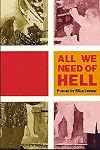
This book, and Lesser as well, has always been compared to Plath, with the occasional mention of Sexton thrown in, but I got more out, and was more impacted by, this book and all it does than I ever did out of Plath (or Sexton for that matter). If you're a fan of the latter two, I invited you to search this book out and read it, because I think you'll be very pleasantly surprised. Recommended.
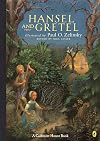
Hansel and Gretel are a brother and sister who wander in the woods to find strawberries to eat. They eat too many and fall asleep, finally waking to the smell of delicious food cooking in a house where a witch resides. The witch eats children. The children overcome the witch and cook her, and they rescue the other children who are being help captive.
I loved this story. The illustrations are colorful yet not distracting. I enjoyed there is a happy ending to it. The lesson is simple, but still show more important: Do not wander off into the woods and fall asleep in an unfamiliar territory because you never know what can happen. show less
I loved this story. The illustrations are colorful yet not distracting. I enjoyed there is a happy ending to it. The lesson is simple, but still show more important: Do not wander off into the woods and fall asleep in an unfamiliar territory because you never know what can happen. show less
The story of Hansel and Gretel was always scary to me as a child for obvious reasons. It is a cleverly written story and I like how Rika Lesser changed it up a little bit. The illustrations are absolutely beautiful and accompany the text well. For a child it is hard to think about issues of abandonment, starvation, and cannibalism. These issues can spark conversation between you and your young one and it is a good way to keep the conversation flowing.
This book can be used in class when show more learning about classic fairy tales. Every child should be exposed to the classics as they are listed as classics for a reason. show less
This book can be used in class when show more learning about classic fairy tales. Every child should be exposed to the classics as they are listed as classics for a reason. show less
Lists
Awards


You May Also Like


Associated Authors
Statistics
- Works
- 5
- Also by
- 10
- Members
- 1,239
- Popularity
- #20,719
- Rating
- 4.0
- Reviews
- 77
- ISBNs
- 47
- Languages
- 3
- Favorited
- 1