
Jon Ronson
Author of The Psychopath Test: A Journey Through the Madness Industry
About the Author
Jon Ronson is a writer and documentary film maker. His books include Them: Adventures with Extremists, Out of the Ordinary: True Tales of Everyday Craziness, What I Do: More True Tales, The Psychopath Test: A Journey Through the Madness Industry, and So You've Been Publicly Shamed. The Men Who show more Stare at Goats was made into a motion picture starring George Clooney in 2009. He will be delivering the opening address at the Brisbane Writers Festival in September 2015. (Bowker Author Biography) show less
Image credit: Photo by Barney Poole
Works by Jon Ronson
Associated Works
Tagged
Common Knowledge
- Canonical name
- Ronson, Jon
- Birthdate
- 1967-05-10
- Gender
- male
- Education
- University of Westminster
- Occupations
- journalist
documentary filmmaker
columnist
author - Organizations
- British Humanist Association
Time Out London
The Guardian - Relationships
- Patterson, Elaine (wife)
- Nationality
- UK
- Birthplace
- Cardiff, Wales, UK
- Places of residence
- Cardiff, Wales, UK
- Map Location
- Wales, UK
Members
Reviews
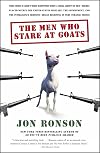
The Black recesses of the military industrial complex are full of strange ideas and projects, but few are stranger than the programs in psychic warfare chronicled in The Men Who Stare At Goats. Taking as his starting point a General in Military Intelligence, Ronson follows the trail of the First Earth Battalion Operations Manual, a hippy-dippy plan to create an army of "Warrior Monks" and "Jedi Soldiers" with uncanny powers including invisibility, thought projection, and the ability to kill show more with a thought or touch. Like a bad penny, every time the Army runs into trouble (Vietnam, Iraq...) it goes towards mystical mind control as a solution. Former officers, martial arts gurus, and Coast to Coast AM conspiracy nuts are all part of the picture. A second, less amusing thread, follows the covert history of sonic torture, including subliminal messages and repetitive aggressive noises, as used at GITMO and Abu Ghraib. MK-Ultra enters the picture as the grandaddy of the whole project, with Sidney Gottlieb as the mastermind and Frank Olsen as the first victim, killed because he was going to talk.
I'm deeply conflicted about this book. Ronson believes that he's stumbled onto a big secret, but it's not clear what this secret is. It could be that America has a secret army of psychic spies, or that we have sophisticated psychological torture, or just that the Brass believes in this nonsense. Either way I feel like, 'real' secret programs are better secured or just common knowledge. But what really rubs me the wrong way is that Ronson makes the claim that these programs are deliberately depicted as absurd to hide the unsavory truths about torture and the like. If that's so, why participate in the charade by writing a book as weird and conspiratorial as The Men Who Stare At Goats? show less
I'm deeply conflicted about this book. Ronson believes that he's stumbled onto a big secret, but it's not clear what this secret is. It could be that America has a secret army of psychic spies, or that we have sophisticated psychological torture, or just that the Brass believes in this nonsense. Either way I feel like, 'real' secret programs are better secured or just common knowledge. But what really rubs me the wrong way is that Ronson makes the claim that these programs are deliberately depicted as absurd to hide the unsavory truths about torture and the like. If that's so, why participate in the charade by writing a book as weird and conspiratorial as The Men Who Stare At Goats? show less
This is a collection of articles previously published in different places. It's so good that after listening to the audiobook I decided to buy a physical copy. I might return to some of the articles here.
I've found that "a collection of (stories, articles, essays, poems etc)" books are usually mixed bags. Some of them will be great, others terrible with quite a few in-between. That's why I rate them at 3 stars - not great, not terrible. Or, rather both great and terrible.
To my surprise, show more every article in this collection is great.
The topics and styles are varied, but Ronson manages to capture that glimpse of humanity in all the subjects of his articles. Every article is interesting in its own way. Sometimes the interviewee is an extraordinary person. Other times it's a normal person in extraordinary times.
When the subject doesn't offer much, Ronson will start digging and asking the right questions, leading to some of the best moments in the book. One such example is one article about scientists trying to create human-like robots. After a couple of unintentionally funny moments and lots of sarcasm, Ronson's attention turns towards one of the people funding such a program. There he strikes gold. Asking about the reasons for funding such an endeavor, he uncovers an inspirational and human story. show less
I've found that "a collection of (stories, articles, essays, poems etc)" books are usually mixed bags. Some of them will be great, others terrible with quite a few in-between. That's why I rate them at 3 stars - not great, not terrible. Or, rather both great and terrible.
To my surprise, show more every article in this collection is great.
The topics and styles are varied, but Ronson manages to capture that glimpse of humanity in all the subjects of his articles. Every article is interesting in its own way. Sometimes the interviewee is an extraordinary person. Other times it's a normal person in extraordinary times.
When the subject doesn't offer much, Ronson will start digging and asking the right questions, leading to some of the best moments in the book. One such example is one article about scientists trying to create human-like robots. After a couple of unintentionally funny moments and lots of sarcasm, Ronson's attention turns towards one of the people funding such a program. There he strikes gold. Asking about the reasons for funding such an endeavor, he uncovers an inspirational and human story. show less

Summary: Explores the use of social media for public shaming of individuals, the dark side of ourselves this reveals, and the ways those shamed deal with this experience.
If you have any kind of presence on social media, this book should give you pause. In fact, even if you are not on social media, it might make you think. Any kind of transgression, whether an offensive statement, or an impulsive act can become the object of a public shaming campaign on social media. It often can be vicious, show more pervasive, you can even lose your job, and it stays there--on the internet.
Jon Ronson begins by describing how he used shaming to free himself from a form of identity theft cloaked in academic jargon, as a group of researchers created a spambot identity on Twitter of Ronson. Ronson's only recourse after a film interview of the spambot creators being cute was to upload a video (yes, they were arrogant enough to allow themselves to be filmed) to expose what they were doing. A vicious series of comments wishing all sorts of unspeakable fates followed. The spambot came down. One more victorious shaming campaign!
Then along comes the case of Jonah Lehrer, a one-time promising science writer exposed by journeyman journalist Michael Moynihan. Moynihan became suspicious of quotes of Bob Dylan in Lehrer's book on creativity. They just didn't sound like Dylan to him, and it turns out they were fabricated. Other material was plagiarized from press-releases, and from earlier pieces he'd written (self plagiarism, a little more controversial, but the rule is still to cite yourself rather than use the material uncited). When Moynihan published an article it effectively spelled the end of his journalism career. Ronson recounts the eerie scene in St. Louis, where Lehrer attempts a poorly constructed apology, with a live Twitter stream of comments being shown on a screen behind him. Posts like this were typical:
"Rantings of a Delusional, Unrepentant Narcissist." (p. 43)
Lehrer, as far as I can tell is still trying to reconstruct a writing career with a blog focusing on social science writing and recently released A Book About Love which makes a more forthright apology than the St. Louis speech, but has received mixed reviews. Fabrication and plagiarism tend to be career-enders for writers. In Lehrer's case, social media and the internet make it far worse. A Google search still readily turns up the articles about his transgressions.
Ronson moves on to other lesser-knowns. There is the case of Justine Sacco, working in a New York public relations firm (of all things),who foolishly hit "send" on this tweet:
"Going to Africa. Hope I don't get AIDS. Just kidding. I'm white!" (p. 64)
She became world number one trending topic on Twitter, before her plane landed, and no efforts to scrub Twitter, or issue an apology could save her job. He recounts the case of "Hank", who at a software developers conference made a sexually innuendo-ed joke while sitting behind a woman developer, Adria. She turned, photographed him, and tweeted the incident. He came home to find he was out of a job. Eventually he posted something about this to find much of the developer community rally to his cause and shame Adria. Consequently the shamer became not only the shamed, but also lost her job.
As Ronson goes into these accounts, he begins to wonder what they reveal about the shamers, including himself, and their glee, and verbal violence in taking down their targets. Does the anonymity of the internet feed the phenomenon, the social distance between shamer and shamed. He contrasts social media shaming with Judge Ted Poe, who uses public shaming in sentencing. Far from being the "theater of the absurd," as one blogger called it, Poe maintained, supported by testimony of those he sentenced, that it was the "theater of the effective." Often, in this kind of public shaming, the defendant ends up being encouraged by people. It is face to face and not anonymous. And it works in turning around lives, maintained Poe.
The latter part of the book explores how people come through shame and explores the interesting idea that those the least apologetic about their shameful activity may cope better. There is the case of Max Mosley, exposed for some rather unusual S & M activities that were alleged to be Nazi scenarios. He turns around and sues the outlet that published this for defamation and wins, on the fact that the Nazi portion of this could not be supported by the facts. He freely admitted his unusual sexual tastes. Ronson also visits shame eradication groups that de-sensitize one to shame. Not exactly his cup of tea.
He explores the case of Lindsey Stone whose friend snapped and posted a picture of her flipping off and shouting at a sign at Arlington National Cemetery that said "Silence and Respect." The kind of snarky thing lots of kids do, right? Well, the picture went viral, and once again, the comments were vicious, and the result was a lost job. Eventually, Ronson works out a deal with a company that works with online reputations and describes the strategy to bury the damning material way down in search engine results by creating a positive web presence for a person. The goal is to move the damaging stuff to page 2 where nobody ever looks. Their work helps the Lindsey Stone, and others who share her name, mostly by displacing the unsavory image with a host of other photos and web presence under her name.
Ronson's book raises the question of what much of our "outrage" on social media really reveals, not about the objects of the outrage, but about us. His candor and self-reflectiveness about his own participation in shaming rites on social media invite us to ask, "when have I done this, and what does this say about me?" What I think he doesn't explore and could be considered is the temptation to be provocative, to push the envelope in order to get more views, comments, follows--the definition of social media success. The closest he gets are the corners Jonah Lehrer cut under the pressures of a burgeoning writing career.
Ronson also reminds us that the consequences of our words on social media have impacts not in virtual reality but in the lives of real people. And his tale reminds us to reflect carefully before hitting the "send", "post", or "publish" buttons. Carelessness here could change one's life, and not in ways one would like. Better re-read this before posting!
*Content and language advisory. Includes descriptions of various forms of sexual expression and profanity. show less
If you have any kind of presence on social media, this book should give you pause. In fact, even if you are not on social media, it might make you think. Any kind of transgression, whether an offensive statement, or an impulsive act can become the object of a public shaming campaign on social media. It often can be vicious, show more pervasive, you can even lose your job, and it stays there--on the internet.
Jon Ronson begins by describing how he used shaming to free himself from a form of identity theft cloaked in academic jargon, as a group of researchers created a spambot identity on Twitter of Ronson. Ronson's only recourse after a film interview of the spambot creators being cute was to upload a video (yes, they were arrogant enough to allow themselves to be filmed) to expose what they were doing. A vicious series of comments wishing all sorts of unspeakable fates followed. The spambot came down. One more victorious shaming campaign!
Then along comes the case of Jonah Lehrer, a one-time promising science writer exposed by journeyman journalist Michael Moynihan. Moynihan became suspicious of quotes of Bob Dylan in Lehrer's book on creativity. They just didn't sound like Dylan to him, and it turns out they were fabricated. Other material was plagiarized from press-releases, and from earlier pieces he'd written (self plagiarism, a little more controversial, but the rule is still to cite yourself rather than use the material uncited). When Moynihan published an article it effectively spelled the end of his journalism career. Ronson recounts the eerie scene in St. Louis, where Lehrer attempts a poorly constructed apology, with a live Twitter stream of comments being shown on a screen behind him. Posts like this were typical:
"Rantings of a Delusional, Unrepentant Narcissist." (p. 43)
Lehrer, as far as I can tell is still trying to reconstruct a writing career with a blog focusing on social science writing and recently released A Book About Love which makes a more forthright apology than the St. Louis speech, but has received mixed reviews. Fabrication and plagiarism tend to be career-enders for writers. In Lehrer's case, social media and the internet make it far worse. A Google search still readily turns up the articles about his transgressions.
Ronson moves on to other lesser-knowns. There is the case of Justine Sacco, working in a New York public relations firm (of all things),who foolishly hit "send" on this tweet:
"Going to Africa. Hope I don't get AIDS. Just kidding. I'm white!" (p. 64)
She became world number one trending topic on Twitter, before her plane landed, and no efforts to scrub Twitter, or issue an apology could save her job. He recounts the case of "Hank", who at a software developers conference made a sexually innuendo-ed joke while sitting behind a woman developer, Adria. She turned, photographed him, and tweeted the incident. He came home to find he was out of a job. Eventually he posted something about this to find much of the developer community rally to his cause and shame Adria. Consequently the shamer became not only the shamed, but also lost her job.
As Ronson goes into these accounts, he begins to wonder what they reveal about the shamers, including himself, and their glee, and verbal violence in taking down their targets. Does the anonymity of the internet feed the phenomenon, the social distance between shamer and shamed. He contrasts social media shaming with Judge Ted Poe, who uses public shaming in sentencing. Far from being the "theater of the absurd," as one blogger called it, Poe maintained, supported by testimony of those he sentenced, that it was the "theater of the effective." Often, in this kind of public shaming, the defendant ends up being encouraged by people. It is face to face and not anonymous. And it works in turning around lives, maintained Poe.
The latter part of the book explores how people come through shame and explores the interesting idea that those the least apologetic about their shameful activity may cope better. There is the case of Max Mosley, exposed for some rather unusual S & M activities that were alleged to be Nazi scenarios. He turns around and sues the outlet that published this for defamation and wins, on the fact that the Nazi portion of this could not be supported by the facts. He freely admitted his unusual sexual tastes. Ronson also visits shame eradication groups that de-sensitize one to shame. Not exactly his cup of tea.
He explores the case of Lindsey Stone whose friend snapped and posted a picture of her flipping off and shouting at a sign at Arlington National Cemetery that said "Silence and Respect." The kind of snarky thing lots of kids do, right? Well, the picture went viral, and once again, the comments were vicious, and the result was a lost job. Eventually, Ronson works out a deal with a company that works with online reputations and describes the strategy to bury the damning material way down in search engine results by creating a positive web presence for a person. The goal is to move the damaging stuff to page 2 where nobody ever looks. Their work helps the Lindsey Stone, and others who share her name, mostly by displacing the unsavory image with a host of other photos and web presence under her name.
Ronson's book raises the question of what much of our "outrage" on social media really reveals, not about the objects of the outrage, but about us. His candor and self-reflectiveness about his own participation in shaming rites on social media invite us to ask, "when have I done this, and what does this say about me?" What I think he doesn't explore and could be considered is the temptation to be provocative, to push the envelope in order to get more views, comments, follows--the definition of social media success. The closest he gets are the corners Jonah Lehrer cut under the pressures of a burgeoning writing career.
Ronson also reminds us that the consequences of our words on social media have impacts not in virtual reality but in the lives of real people. And his tale reminds us to reflect carefully before hitting the "send", "post", or "publish" buttons. Carelessness here could change one's life, and not in ways one would like. Better re-read this before posting!
*Content and language advisory. Includes descriptions of various forms of sexual expression and profanity. show less
In The Psychopath Test, journalist and filmmaker Jon Ronson delves into the definition of insanity, eventually coming to question the methods that are currently utilized for diagnosing psychopaths –- methods which, in many cases, require nothing more than a score of 30 or more on a 20-point checklist of characteristics common to psychopaths: things like glib and superficial charm, grandiosity, manipulative behavior, and lack of remorse. When Ronson is interviewing a psychopathy researcher, show more as she expounds on psychopathic characteristics he asks her if there is anything she wants to be sure is shared with his readers. “Tell them,” she says, “if now you are sitting there worried that maybe you are a psychopath, that means you aren’t.” I had been worried!
Ronson’s investigative journey is fascinating. The psychopaths he encounters and the scientists bent on identifying them lead him to wonder whether there is a danger in defining people exclusively by their most extreme characteristics and whether, by ignoring the rest of the person, rampant mistaken diagnoses are occurring.
Read Jon Ronson’s interview on NPR (http://www.npr.org/2011/05/21/136462824/a-psychopath-walks-into-a-room-can-you-tell). Other titles by Jon Ronson are Them: Adventures with Extremists and The Men Who Stare at Goats. show less
Ronson’s investigative journey is fascinating. The psychopaths he encounters and the scientists bent on identifying them lead him to wonder whether there is a danger in defining people exclusively by their most extreme characteristics and whether, by ignoring the rest of the person, rampant mistaken diagnoses are occurring.
Read Jon Ronson’s interview on NPR (http://www.npr.org/2011/05/21/136462824/a-psychopath-walks-into-a-room-can-you-tell). Other titles by Jon Ronson are Them: Adventures with Extremists and The Men Who Stare at Goats. show less
Lists
Non-Fiction (2)
to get (1)
Awards


You May Also Like


Associated Authors
Statistics
- Works
- 28
- Also by
- 1
- Members
- 12,870
- Popularity
- #1,818
- Rating
- 3.7
- Reviews
- 542
- ISBNs
- 188
- Languages
- 16
- Favorited
- 20

