

Frank McGuinness
Author of Observe the Sons of Ulster Marching Towards the Somme: A Play
About the Author
Frank McGuinness lectures in English at University College, Dublin.
Image credit: Oliver Lim
Works by Frank McGuinness
Frank McGuinness: Plays One: The Factory Girls, Observe the Sons of Ulster, Marching Towards the Somme, Innocence, Carth (1996) 32 copies
Plays Two: Mary and Lizzie / Someone Who'll Watch Over Me / Dolly West's Kitchen / The Bird Sanctuary (2002) 15 copies
The sea with no ships 1 copy
Dinner With Groucho 1 copy
Associated Works
New Dubliners: Original Stories Celebrating 100 Years of Joyce's Dubliners (2005) — Contributor — 27 copies, 2 reviews
Weill : The seven deadly sins + Alabama song + The ballad of sexual dependency + Bilbao song + Pirate Jenny [sound recording] (1998) — Translator, some editions — 9 copies
Tagged
Common Knowledge
- Birthdate
- 1953-07-29
- Gender
- male
- Education
- University College Dublin
- Occupations
- playwright
poet
translator - Organizations
- University College Dublin
- Nationality
- Ireland
- Birthplace
- Buncrana, County Donegal, Ireland
- Places of residence
- Dublin, Ireland
- Associated Place (for map)
- Ireland
Members
Reviews
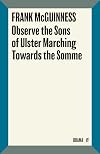
https://fromtheheartofeurope.eu/observe-the-sons-of-ulster-marching-towards-the-...
This play won the Christopher Ewart-Biggs Prize in 1986, and I was lucky enough to see it thirty years later, at the Abbey Theatre for the 2016 production commemorating the centenary of the Battle of the Somme. Reading the script now can’t really do justice to the memory of the theatre production, which starred Donal Gallery as Pyper, and crucially used the space of the stage to make the story come show more alive.
It’s a reflection on eight soldiers recruited to the Ulster Division during the First World War, exploring their understanding of the universe, life, love and loyalty. The narrative is bookended by Pyper in old age reflecting on how he survived and his friends did not (so the fact that seven of the eight die is signalled early on).
I find the third act the most effective, the eight characters back home on leave and split into four pairs, two on Boa island, two at a church, two at the Carrick-a-Rede rope bridge, and two at the Field where Orange marches finish (which historically was at Finaghy, close to where I grew up, though I do not know if that was the case in 1915 or 1916). It gives the men a chance to explain themselves to each other, a sympathetic but informed audience.
By the lakeside in Fermanagh, Pyper and Craig make love, which must have been rather shocking in 1985 and was still a bit unexpected in 2016. (Also the weather must have been very good that day.) All of the characters reflect on the place of Ulster in Ireland, in Britainm in Europe and in the empire. There are some very good lines:
Old Pyper: Those I belonged to, those I have not forgotten, the irreplaceable ones, they kept their nerve, and they died. I survived. No, survival was not my lot. Darkness, for eternity, is not survival.
McIlwaine: The whole of Ulster will be lost. We’re not making a sacrifice. Jesus, you’ve seen this war. We are the sacrifice.
Younger Pyper: I have seen horror
Elder Pyper: Ulster
Younger Pyper: They kept their nerve and they died.
Elder Pyper: Ulster
Younger Pyper: There would be and there will be, no surrender.
Elder Pyper: Ulster
Younger Pyper: The house has grown cold, the province has grown lonely.
Elder Pyper: Ulster
Younger Pyper: You’ll always guard Ulster.
Elder Pyper: Ulster.
Younger Pyper: Save it
Elder Pyper: Ulster
Younger Pyper: The temple of the Lord is ransacked.
Elder Pyper: Ulster.
(Pyper reaches toward himself)
Younger Pyper: Dance in this deserted temple of the Lord.
Elder Pyper: Dance
(Darkness) show less
This play won the Christopher Ewart-Biggs Prize in 1986, and I was lucky enough to see it thirty years later, at the Abbey Theatre for the 2016 production commemorating the centenary of the Battle of the Somme. Reading the script now can’t really do justice to the memory of the theatre production, which starred Donal Gallery as Pyper, and crucially used the space of the stage to make the story come show more alive.
It’s a reflection on eight soldiers recruited to the Ulster Division during the First World War, exploring their understanding of the universe, life, love and loyalty. The narrative is bookended by Pyper in old age reflecting on how he survived and his friends did not (so the fact that seven of the eight die is signalled early on).
I find the third act the most effective, the eight characters back home on leave and split into four pairs, two on Boa island, two at a church, two at the Carrick-a-Rede rope bridge, and two at the Field where Orange marches finish (which historically was at Finaghy, close to where I grew up, though I do not know if that was the case in 1915 or 1916). It gives the men a chance to explain themselves to each other, a sympathetic but informed audience.
By the lakeside in Fermanagh, Pyper and Craig make love, which must have been rather shocking in 1985 and was still a bit unexpected in 2016. (Also the weather must have been very good that day.) All of the characters reflect on the place of Ulster in Ireland, in Britainm in Europe and in the empire. There are some very good lines:
Old Pyper: Those I belonged to, those I have not forgotten, the irreplaceable ones, they kept their nerve, and they died. I survived. No, survival was not my lot. Darkness, for eternity, is not survival.
McIlwaine: The whole of Ulster will be lost. We’re not making a sacrifice. Jesus, you’ve seen this war. We are the sacrifice.
Younger Pyper: I have seen horror
Elder Pyper: Ulster
Younger Pyper: They kept their nerve and they died.
Elder Pyper: Ulster
Younger Pyper: There would be and there will be, no surrender.
Elder Pyper: Ulster
Younger Pyper: The house has grown cold, the province has grown lonely.
Elder Pyper: Ulster
Younger Pyper: You’ll always guard Ulster.
Elder Pyper: Ulster.
Younger Pyper: Save it
Elder Pyper: Ulster
Younger Pyper: The temple of the Lord is ransacked.
Elder Pyper: Ulster.
(Pyper reaches toward himself)
Younger Pyper: Dance in this deserted temple of the Lord.
Elder Pyper: Dance
(Darkness) show less
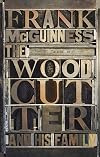
A fictional biography in four voice: son, mother, daughter, himself with a short story at the end. This was nothing I'd recommend to anyone but a diehard Joyce aficionado. Not well done. The voices are indistinct from one another: the content of each varies but is not well integrated into the whole. The conception is an interesting one--but never fully realized. Too many unexplored possibilities. The short but rave review in the TLS was just nonsense.

Substance: Five single sisters, one demented older brother, one love-child, one errant baby-father, and assorted extras. Ireland between the wars.
Style: Literature on film. Beautifully re-created "realism" with very un-realistic action. Emotional lines delivered without much emotion (deliberately flat?).
Style: Literature on film. Beautifully re-created "realism" with very un-realistic action. Emotional lines delivered without much emotion (deliberately flat?).
Lists
Awards


You May Also Like


Associated Authors
Statistics
- Works
- 36
- Also by
- 3
- Members
- 439
- Popularity
- #55,771
- Rating
- 3.6
- Reviews
- 5
- ISBNs
- 65
- Languages
- 1