

Brian Friel (1929–2015)
Author of Translations
About the Author
Brian Friel was born Bernard Patrick Friel on January 9, 1929 in Killyclogher, Northern Ireland. He graduated from St. Patrick's College. He spent a decade teaching mathematics in Londonderry after deciding that he did not want to become a priest. He gained confidence as a writer when his short show more stories began to be published in The New Yorker. He has published several volumes of short stories including A Saucer of Larks, The Gold in the Sea, and Give Me Your Answer, Do! However, he was better known for writing plays. His plays include Philadelphia, Here I Come!, The Freedom of the City, Faith Healer, Molly Sweeney, The Home Place, Translations, and Wonderful Tennessee. Aristocrats won Best Foreign Play Award from the New York Drama Critics Circle and Dancing at Lughnasa won a Tony Award for best play in 1992. He also translated several plays written by Anton Chekhov and Ivan Sergeyevich Turgenev. He died on October 2, 2015 at the age of 86. (Bowker Author Biography) show less
Image credit: Courtesy of the NYPL Digital Gallery (image use requires permission from the New York Public Library)
Works by Brian Friel
Stories of Ireland: A collection of short stories from one of Ireland's greatest ever writers (Penguin European Writers) (2025) 16 copies, 1 review
Karusell 1 copy
Associated Works
Argosy: December 1964 — Contributor — 1 copy
Tagged
Common Knowledge
- Legal name
- Friel, Bernard Patrick
- Birthdate
- 1929-01-09
- Date of death
- 2015-10-02
- Gender
- male
- Education
- St Columb's College
- Occupations
- playwright
teacher
politician - Organizations
- Seanad Éireann
- Awards and honors
- Aosdána (Saoi)
American Academy of Arts and Letters (1996)
Irish Academy of Letters - Nationality
- Ireland
- Birthplace
- Omagh, County Tyrone, Ireland
- Places of residence
- Omagh, County Tyrone, Ireland
Donegal, Ireland - Place of death
- County Donegal, Ireland
- Burial location
- Glenties, Ireland
- Associated Place (for map)
- Ireland
Members
Reviews
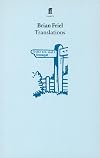
A real treat! I liked the way that the play works on different levels. The surface story, the historical, the social commentary about colonialism and the arrogance of renaming all of a country's landmarks, the idea of words as signposts, the way characters do & don't communicate even without words.
I have also listened to the BBC Radio adaptation which was marvelous. Perhaps I wouldn't have loved the written play as much if I didn't have those voices in my mind...
I have also listened to the BBC Radio adaptation which was marvelous. Perhaps I wouldn't have loved the written play as much if I didn't have those voices in my mind...
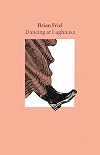
This is a play I would have to see on stage to really figure out; on the page, I read it too quickly and felt like I was missing something. I liked the characters of the five sisters, but I didn’t like how Michael was considered the “main character” of the piece because he is narrating the events. I also found it a bit weird and spoilery for Michael to deliver the monologue stating what happened to all the sisters at like 4/5 of the way through—what even was the point of that last show more little bit? Perhaps I am more used to the American Graffiti sort of end credits. even though the actor playing him is to the side of the action and not really in the action. I suppose it is interesting as a theatrical technique, but on the page it didn’t work for me.
The play is based on the lives of Friel’s mother and sisters, so I do feel a bit churlish giving it the rating I am, but I am not ruling out seeing a production of it if I can. If only I’d had a chance to see the broadcast of the Siobhán McSweeney production at the National Theatre... show less
The play is based on the lives of Friel’s mother and sisters, so I do feel a bit churlish giving it the rating I am, but I am not ruling out seeing a production of it if I can. If only I’d had a chance to see the broadcast of the Siobhán McSweeney production at the National Theatre... show less
Dancing at Lughnasa is one of my favorite pieces of dramatic text from one of my favortie authors.
It is the story of the Mundy sisters, who live in County Donegal in the mid-1930s. It is told through the recollections of Michael, the illegitimate child of the youngest sister. These women work hard to survive but are trapped by every aspect of life - finances, social status, sexism, natural ability, duty, the past, and even religion.
Friel's writing is beautiful and rich, and the characters show more are tragically lovely. In such a short time, Friel succeeds in taking the reader from pure joy and relief to heartbreaking sadness. This is a work you'll remember. show less
It is the story of the Mundy sisters, who live in County Donegal in the mid-1930s. It is told through the recollections of Michael, the illegitimate child of the youngest sister. These women work hard to survive but are trapped by every aspect of life - finances, social status, sexism, natural ability, duty, the past, and even religion.
Friel's writing is beautiful and rich, and the characters show more are tragically lovely. In such a short time, Friel succeeds in taking the reader from pure joy and relief to heartbreaking sadness. This is a work you'll remember. show less

Its a short three act play set in Ireland in 1833. English soldiers from the Royal Engineers have set up camp near a small catholic community in order to check the maps of the area and to Anglicise the place names. All three acts take place in the local hedge school and centre on the worsening relations between the soldiers and the locals. It is however so much more than that. During its short duration the play covers issues such as : the importance of language, failure of communications, show more cultural differences, community, colonialism, development and change, difficulties of making a living, and terrorism. I forgot to mention love, there are even star crossed lovers to tear at the heart strings.
The writing is superb, hardly a word wasted and after its hour and a half duration the characters will live long in the memory. The 60 year old "infant prodigy" who is fluent in Gaelic, Greek and Latin but does not speak any English. Hugh the drunken master of the school who is convinced that he is going to be master of the new proper school. Sarah who has a severe speech impediment and so has no language and doesn't count for anything. George Yolland a reluctant soldier who falls in love with the countryside and wants to be accepted by the community, but of course cannot understand anything they say.
Together with the tragedy there is much wit and humour and I found myself identifying with the Yolland character and his attempts to integrate into a different culture. There are some memorable lines (the sign of a good play):
George Yolland "Even if I did speak Irish I would always be an outsider here, wouldn't I? I may learn the password but the language of the tribe will always elude me.
Hugh "English succeeds in making it sound .....plebeian
Hugh "I'm afraid we are not familiar with your literature, Lieutenant. We feel closer to the warm mediterranean. We tend to overlook your island.
Of course to really appreciate a play it needs to be seen in performance in a theatre with a live audience, so that you can be caught up in the emotions and can laugh along with the jokes. What a performance it must have been at its first presentation at the Guildhall in Derry, with Liam Neeson, Ray McAnally and Stephen Rae in the cast show less
The writing is superb, hardly a word wasted and after its hour and a half duration the characters will live long in the memory. The 60 year old "infant prodigy" who is fluent in Gaelic, Greek and Latin but does not speak any English. Hugh the drunken master of the school who is convinced that he is going to be master of the new proper school. Sarah who has a severe speech impediment and so has no language and doesn't count for anything. George Yolland a reluctant soldier who falls in love with the countryside and wants to be accepted by the community, but of course cannot understand anything they say.
Together with the tragedy there is much wit and humour and I found myself identifying with the Yolland character and his attempts to integrate into a different culture. There are some memorable lines (the sign of a good play):
George Yolland "Even if I did speak Irish I would always be an outsider here, wouldn't I? I may learn the password but the language of the tribe will always elude me.
Hugh "English succeeds in making it sound .....plebeian
Hugh "I'm afraid we are not familiar with your literature, Lieutenant. We feel closer to the warm mediterranean. We tend to overlook your island.
Of course to really appreciate a play it needs to be seen in performance in a theatre with a live audience, so that you can be caught up in the emotions and can laugh along with the jokes. What a performance it must have been at its first presentation at the Guildhall in Derry, with Liam Neeson, Ray McAnally and Stephen Rae in the cast show less
Lists
Awards


You May Also Like


Associated Authors
Statistics
- Works
- 56
- Also by
- 11
- Members
- 2,810
- Popularity
- #9,137
- Rating
- 3.8
- Reviews
- 34
- ISBNs
- 152
- Languages
- 4
- Favorited
- 8