
Alejandro Bahamon
Author of Mini House
About the Author
Alejandro Bahamon is a Colombian architect who has been working in Spain for the last 4 years. After working as a photographer, architect, and architectural editor in his home country he developed a Ph.D. program in Barcelona about new architectural instruments. At the moment he has his own show more architectural firm. He has collaborated as a writer and co-editor in publications for G.G., Axxis magazine, Arquitecturas magazine, Barcelona School of Architecture and Loft Publications show less
Works by Alejandro Bahamon
Inspired by Nature: Animals: The Building/Biology Connection (Inspired by Nature) (2009) 12 copies, 1 review
Hedendaagse architectuur van schets tot gebouw : wereldberoemde architecten tonen hun ontwerpen aan de hand van schetsen en plattegronden (2005) 5 copies
Architecture minérale : Analogies entre le monde minéral et l'architecture contemporaine (2008) 3 copies
Designer hotels 2 copies
Houses 1 copy
Houses on the Edge 1 copy
New Loftspace Design 1 copy
Tagged
Common Knowledge
- Canonical name
- Bahamón, Alejandro
- Birthdate
- unknown
- Gender
- male
Members
Reviews
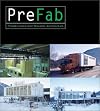
Well, the pictures are pretty…
As a consumer and soon-to-be first-time homeowner, I borrowed PREFAB: ADAPTABLE, MODULAR, DISMOUNTABLE, LIGHT, MOBILE ARCHITECTURE, by Alejandro Bahamon, from my local library, in hopes of learning more about prefabricated/modular homes.
Although the book's Amazon listing implies that PREFAB is a useful guide for individuals looking to build a prefabricated home ("PreFab will prove to become the definitive reference for architects, contractors, homeowners, and show more anyone else interested in creating a prefabricated structure"), the author doesn't really offer any practical advice for consumers who are considering building a modular home. Rather, PREFAB seems as if it's geared more towards art or architecture students - it features a number of unusual and/or experimental prefab projects, many of which are NOT single-family dwellings. Some of the modular buildings profiled in PREFAB include bus dwellings, small office buildings, studios, visitor centers, apartment buildings, and pedestrian bridges. Those buildings that are meant as single-family dwellings are highly customized, with little general appeal: cliff houses, tree houses, tiny, 200-square-foot homes, even a "floating island"! Thus, I definitely would NOT recommend this book to the average consumer, who's just looking for practical, real-world information on modular construction.
Although I picked up PREFAB expecting something totally different, it would be unfair to give the book a negative review just because it was not what I anticipated. Yet, even as an art/architecture book, PREFAB is fraught with a number of problems. The book was originally written in Spanish (I assume, given the author's name), and translated into English by Bill Bain. Consequently, the text is absolutely atrocious. I don't know if this is the author's, translator's, editor's, or publisher's fault (or some combination thereof), but the book is almost unreadable! There are a number of grammatical, punctuation, and even spelling errors. Sentences run on and on, and many don't even make any sense at all!
Some examples, taken word-for-word, typos left as-is:
"The Yardbird prototype was constructed in Charlottesville, Virginia, USA, where the client and the architect shared common go a is with regerd to the region's landscape, which to a part of the neoclassical architectural legacy of Thomas Jefferson and the developmental center of modern architecture during the first decades of the twentieth century."
"The Studio couldn't be simpler in its desingn. It is a room some 64.5 by 37.5 square feet elevated by raw steel columns a small building is based on standard dimensions and prefabricated building materials."
Huh!?
As if the writing isn't hard enough to read, most of the text is white, printed on a black background. It literally jumps out at the reader in a migraine-inducing optical illusion!
This design issue is particularly puzzling, as the rest of the book is aesthetically pleasing. PREFAB is filled to the brim with color pictures, floor plans, and elevations of the various projects featured within its covers. Many of the buildings are simply breathtaking; even the ones that are bare and minimalist have unique and unusual qualities that make them interesting to the senses, if nothing else.
Unfortunately, the text that accompanies the pictures is sub par (and that's putting it nicely!). I suspect that this is mainly due to the English translation and editing as opposed to sloppiness on the author's part. If you're an architecture student or aficionado who speaks fluent Spanish, try to find a copy of PREFAB in its native language. On the other hand, if you don't speak Spanish or are a consumer looking for practical advice on prefab/modular home construction, steer clear of this book - it will offend both your wallet and your senses!
http://www.easyvegan.info/2005/11/29/prefab-by-alejandro-bahamon/ show less
As a consumer and soon-to-be first-time homeowner, I borrowed PREFAB: ADAPTABLE, MODULAR, DISMOUNTABLE, LIGHT, MOBILE ARCHITECTURE, by Alejandro Bahamon, from my local library, in hopes of learning more about prefabricated/modular homes.
Although the book's Amazon listing implies that PREFAB is a useful guide for individuals looking to build a prefabricated home ("PreFab will prove to become the definitive reference for architects, contractors, homeowners, and show more anyone else interested in creating a prefabricated structure"), the author doesn't really offer any practical advice for consumers who are considering building a modular home. Rather, PREFAB seems as if it's geared more towards art or architecture students - it features a number of unusual and/or experimental prefab projects, many of which are NOT single-family dwellings. Some of the modular buildings profiled in PREFAB include bus dwellings, small office buildings, studios, visitor centers, apartment buildings, and pedestrian bridges. Those buildings that are meant as single-family dwellings are highly customized, with little general appeal: cliff houses, tree houses, tiny, 200-square-foot homes, even a "floating island"! Thus, I definitely would NOT recommend this book to the average consumer, who's just looking for practical, real-world information on modular construction.
Although I picked up PREFAB expecting something totally different, it would be unfair to give the book a negative review just because it was not what I anticipated. Yet, even as an art/architecture book, PREFAB is fraught with a number of problems. The book was originally written in Spanish (I assume, given the author's name), and translated into English by Bill Bain. Consequently, the text is absolutely atrocious. I don't know if this is the author's, translator's, editor's, or publisher's fault (or some combination thereof), but the book is almost unreadable! There are a number of grammatical, punctuation, and even spelling errors. Sentences run on and on, and many don't even make any sense at all!
Some examples, taken word-for-word, typos left as-is:
"The Yardbird prototype was constructed in Charlottesville, Virginia, USA, where the client and the architect shared common go a is with regerd to the region's landscape, which to a part of the neoclassical architectural legacy of Thomas Jefferson and the developmental center of modern architecture during the first decades of the twentieth century."
"The Studio couldn't be simpler in its desingn. It is a room some 64.5 by 37.5 square feet elevated by raw steel columns a small building is based on standard dimensions and prefabricated building materials."
Huh!?
As if the writing isn't hard enough to read, most of the text is white, printed on a black background. It literally jumps out at the reader in a migraine-inducing optical illusion!
This design issue is particularly puzzling, as the rest of the book is aesthetically pleasing. PREFAB is filled to the brim with color pictures, floor plans, and elevations of the various projects featured within its covers. Many of the buildings are simply breathtaking; even the ones that are bare and minimalist have unique and unusual qualities that make them interesting to the senses, if nothing else.
Unfortunately, the text that accompanies the pictures is sub par (and that's putting it nicely!). I suspect that this is mainly due to the English translation and editing as opposed to sloppiness on the author's part. If you're an architecture student or aficionado who speaks fluent Spanish, try to find a copy of PREFAB in its native language. On the other hand, if you don't speak Spanish or are a consumer looking for practical advice on prefab/modular home construction, steer clear of this book - it will offend both your wallet and your senses!
http://www.easyvegan.info/2005/11/29/prefab-by-alejandro-bahamon/ show less
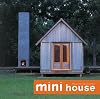
This is a little gem of a book. Some of the houses are so small that they are like grown-up Wendy houses and we all liked those when we were small. You don't have to be interested in architecture to enjoy this book - its got the ahhhh factor.
Not really a review - but notes for my own use - I was quite disappointed by this book. Although the houses went down as small as 355 square feet, there was not very much in the way of practical ideas I could glean for my own home-building exploits of a (hopefully) tiny house. Although the houses are full of architectural interest, the focus seemed to be on design for design's sake, and not on designing a comfortable, livable space that understands and accommodates the fact that people have show more a certain amount of "stuff" that they want to have with them. It's appropriate that the book was called "Mini House" and not "Mini Home" - there was very little that felt home-like to me. show less
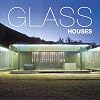
I grew up in a glass house in a tiny village in Wales. It was great architecture, as I see from this book, but the wrong building for the location. Imagine a split-level glass house across the road from a row of miner's cottages!
You May Also Like


Statistics
- Works
- 59
- Members
- 561
- Popularity
- #44,551
- Rating
- 3.5
- Reviews
- 9
- ISBNs
- 77
- Languages
- 5