
Jenna Black
Author of Glimmerglass
About the Author
Image credit: The Bookshelf Sophisticate
Series
Works by Jenna Black
A Sweet, Bitter Poison 6 copies
Nine-Tenths of the Law 4 copies
Embraced in Darkness 3 copies
The Matchmaker's Curse 2 copies
The Faeriewalker Trilogy 2 copies
Associated Works
Tagged
Common Knowledge
- Legal name
- Barlow, Jennifer Bellak
- Other names
- Barlow, Jennifer
Glass, Jenna
Bellak, Jennifer W. - Birthdate
- 1965
- Gender
- female
- Education
- Duke University (BA|Physical Anthropology / French)
- Occupations
- dog groomer
technical documentation writer
novelist - Organizations
- Heart of Carolina Romance Writers
- Agent
- Miriam Kriss
- Nationality
- USA
- Places of residence
- North Carolina, USA
- Associated Place (for map)
- North Carolina, USA
Members
Reviews
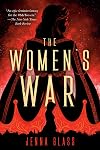
I received this book from the publisher via Netgalley.
The description defined this a "high fantasy feminist epic," and that is dead-on. This is a secondary world setting where women are marginalized, abused, and maligned, and they finally start to fight back. That also means this is a difficult read at times, as it doesn't shy away from incidents of rape and abuse. That said, this IS a book from a mostly feminist perspective, and it doesn't let those horrors become the defining moment for show more those characters.
The book follows a largely female cast in various parts of "the Wells." This is a world where people can focus on their Mind's Eye and see elemental orbs that can then be combined to different magical effects. I found this very easy to picture because it seemed video game-like to me, and I loved that. Women, of course, are almost entirely forbidden from tapping this power. The very sight of a women using magic, her eyes going to all-white, is regarded as obscene. The only place where women are permitted to use limited magic is if they are exiled to abbeys--rather like government-run bordellos, where unclean women are forced to give out sexual favors or otherwise peddle wares in lowly ways.
A matrimonial line decided, in ages past, to break the very way magic functions in the world in order to give women a way to fight back. They essentially bred themselves to cultivate this ability. They carry this out near the beginning of the book, to immediate physical and magical results. I am keeping the particulars vague to avoid spoilers, but I will say this: the consequences are myriad and truly make you think about women and the power they carry over their own bodies. I enjoyed seeing this analyzed through the lens of magic.
A few criticisms. I was surprised that there wasn't more queer representation, especially within the confines of abbeys. I also wish the villain had more nuance, because yeesh, is he a nasty villain. He's almost too easy to hate. I felt like bathing in bleach after scenes in his perspective.
This is the first book in a series and it ends on something of a cliffhanger. The one peril of getting an early reviewer edition of the book is that I have an even longer wait until I find out what happens next! show less
The description defined this a "high fantasy feminist epic," and that is dead-on. This is a secondary world setting where women are marginalized, abused, and maligned, and they finally start to fight back. That also means this is a difficult read at times, as it doesn't shy away from incidents of rape and abuse. That said, this IS a book from a mostly feminist perspective, and it doesn't let those horrors become the defining moment for show more those characters.
The book follows a largely female cast in various parts of "the Wells." This is a world where people can focus on their Mind's Eye and see elemental orbs that can then be combined to different magical effects. I found this very easy to picture because it seemed video game-like to me, and I loved that. Women, of course, are almost entirely forbidden from tapping this power. The very sight of a women using magic, her eyes going to all-white, is regarded as obscene. The only place where women are permitted to use limited magic is if they are exiled to abbeys--rather like government-run bordellos, where unclean women are forced to give out sexual favors or otherwise peddle wares in lowly ways.
A matrimonial line decided, in ages past, to break the very way magic functions in the world in order to give women a way to fight back. They essentially bred themselves to cultivate this ability. They carry this out near the beginning of the book, to immediate physical and magical results. I am keeping the particulars vague to avoid spoilers, but I will say this: the consequences are myriad and truly make you think about women and the power they carry over their own bodies. I enjoyed seeing this analyzed through the lens of magic.
A few criticisms. I was surprised that there wasn't more queer representation, especially within the confines of abbeys. I also wish the villain had more nuance, because yeesh, is he a nasty villain. He's almost too easy to hate. I felt like bathing in bleach after scenes in his perspective.
This is the first book in a series and it ends on something of a cliffhanger. The one peril of getting an early reviewer edition of the book is that I have an even longer wait until I find out what happens next! show less

I have a secret weakness for young adult dystopian novels; although the worldbuilding is often much too simplistic and the lead characters tend to be a grating mix of far too powerful and really angsty. They make great fun reads when I'm not in the mood for a serious book, though, like on really long planes where I'm half dead by the end of it. So REPLICA was one of the first books I packed for my 19 hour flight to India. My hopes for a quick, dumb read were squashed, though, because REPLICA show more is actually pretty good.
The worldbuilding is still somewhat hokey - the United States has become the Corporate States. Each state is a corporation ruled by Executives, and power is hereditary. (It really gets me when authors capitalise common words and make that a pivotal thing in their world, but I digress.) This didn't really make sense to me because to me, capitalism implies a meritocracy, even if people who are already rich have a headstart - the idea of high level employees of a company grooming their "heirs" to take over their jobs is confusing. I mean, maybe it would work if every Executive owned their own company, but each state is its own corporation. (Also the idea of named classes of people is hilarious, although this is certainly not unique to this book.)
I know, I said the book was good and immediately started nitpicking, but trust me, this is a good sign. I wouldn't be so interested in how the book's world worked unless I cared enough to keep thinking about it.
So, what is the book about? Nadia, a high ranking Executive is engaged to Nate, the Chairman Heir of the state formerly known as New York. Although she hates all the pressures on her as a female Executive, she's pretty happy with her life. But then, Nate ends up murdered and although a Replica of him is created from his last memory backup, his family wants answers... and she was the last person to see him alive.
The main characters were pretty good - Nadia is definitely flawed and is confused and out of her depth through most of the book, but once she gets decisive, she's great. Nate is very exasperating, he is very reactionary and self-centered and continues to be so even when other characters point this out to him. He has good intentions though, so he ends up being pretty likeable. The other characters are not as well fleshed out as I'd like, but there's a nice set of them.
I loved that the usual romance is subverted; instead of Nate and Nadia barely knowing each other but being infatuated with each other, they're best friends but very much not in love. Although, the book ends up more towards familiar romance-y territory by the end.
The thing that got me most about this book was the characters' reactions to things. People communicate to each other way too much - there isn't enough interpersonal conflict. I never thought I'd complain about this (I often get very frustrated with characters who don't just talk to each other - Wheel of Time, I'm looking at you). And although there's a lot of outrage going around, the characters get over it pretty quickly.
The plot was well paced and pretty well resolved, although I wish the "evil secret" had been fleshed out a little more. There's definitely going to be a sequel, but the book should stand pretty well on its own.
I wasn't expecting much from this one, but it surprised me. I'll be keeping an eye out for sequels. show less
The worldbuilding is still somewhat hokey - the United States has become the Corporate States. Each state is a corporation ruled by Executives, and power is hereditary. (It really gets me when authors capitalise common words and make that a pivotal thing in their world, but I digress.) This didn't really make sense to me because to me, capitalism implies a meritocracy, even if people who are already rich have a headstart - the idea of high level employees of a company grooming their "heirs" to take over their jobs is confusing. I mean, maybe it would work if every Executive owned their own company, but each state is its own corporation. (Also the idea of named classes of people is hilarious, although this is certainly not unique to this book.)
I know, I said the book was good and immediately started nitpicking, but trust me, this is a good sign. I wouldn't be so interested in how the book's world worked unless I cared enough to keep thinking about it.
So, what is the book about? Nadia, a high ranking Executive is engaged to Nate, the Chairman Heir of the state formerly known as New York. Although she hates all the pressures on her as a female Executive, she's pretty happy with her life. But then, Nate ends up murdered and although a Replica of him is created from his last memory backup, his family wants answers... and she was the last person to see him alive.
The main characters were pretty good - Nadia is definitely flawed and is confused and out of her depth through most of the book, but once she gets decisive, she's great. Nate is very exasperating, he is very reactionary and self-centered and continues to be so even when other characters point this out to him. He has good intentions though, so he ends up being pretty likeable. The other characters are not as well fleshed out as I'd like, but there's a nice set of them.
I loved that the usual romance is subverted; instead of Nate and Nadia barely knowing each other but being infatuated with each other, they're best friends but very much not in love. Although, the book ends up more towards familiar romance-y territory by the end.
The thing that got me most about this book was the characters' reactions to things. People communicate to each other way too much - there isn't enough interpersonal conflict. I never thought I'd complain about this (I often get very frustrated with characters who don't just talk to each other - Wheel of Time, I'm looking at you). And although there's a lot of outrage going around, the characters get over it pretty quickly.
The plot was well paced and pretty well resolved, although I wish the "evil secret" had been fleshed out a little more. There's definitely going to be a sequel, but the book should stand pretty well on its own.
I wasn't expecting much from this one, but it surprised me. I'll be keeping an eye out for sequels. show less

I thoroughly enjoyed The Women's War by Jenna Glass, but the same cannot be said about its sequel, Queen of the Unwanted. In fact, I did not enjoy the reading of the sequel so much that I did contemplate marking it as a DNF. The only reason I did not do so was the fact that I wanted to give the author a chance to redeem herself and the story. Plus, I skimmed the last seventy-five percent of the novel to minimize the pain. When all else fails, skimming is your friend.
Unlike that first novel, show more there is so much to dislike in Queen of the Unwanted. First off, Ms. Glass provides no recap or reminder of what happened in the first book. There is nothing to refresh your memory on the numerous characters, the complex politics, and the magic that exists. You have to use context clues for most of it, but clues for how the magic works are few. While I appreciate the fact that the author tried to eliminate what can be a tedious part of any sequel, with the number of characters that narrate and the relative complexity of the world and its magic, to do nothing is a frustrating experience.
Secondly, there is no action throughout the entirety of its 592 pages. The story is literally one political maneuver after another. There is more worry about trade agreements and alliances than anything else in the novel. If I wanted a story about economics and government negotiations, there are plenty of other books that exist that tackle that topic. I do not expect a feminist saga about magic and power to include such mundane topics for so long.
Thirdly, there is absolutely no character development among any of its numerous characters. When I say numerous, I mean it too. If I remember correctly, there are at least seven different narrators around whom the story revolves. Yet, none of them show growth or maturity. All of them are jockeying for power in some fashion, but no one seems to be learning anything.
Lastly, as the narrators are solely in the upper echelons of their respective cultures, we never see how their decisions impact their citizens. We get hints that some of their policy decisions are not popular or have devastating effects for the lower classes, but we only see this world through its leaders. I am not a fan.
While the first novel was a fantastic example of feminist literature, there again is another area in which Queen of the Unwanted leaves me wanting. The only truly feminist idea in the novel is that it shows that women can lead a country as well as, or better, than men. Unfortunately, we don't really see these female leaders do much of anything except negotiating political marriages for themselves or for others. Plus, we see the two other female leaders fight amongst themselves for power, showing the very same dangerous female relationships that any working woman will understand. The use of marriage as a political gambit does not feel very feminist to me, and no one wants to see yet another example of toxic female coworker relationships. So, the very thing which made The Women's War so impressive is practically nonexistent in the sequel.
Sequels tend to get a bad reputation for not being as strong or good as its predecessor, but rarely have I come across a sequel that is almost its predecessor's opposite, as is the case with Queen of the Unwanted. I remain shocked that a sequel could turn its back on everything which made the original story so good. The lack of action, the absence of character development, the missing recaps to tie the two stories together - they call combine to create a reading experience best avoided. After all, there are plenty of good books out there more worthy of your attention. show less
Unlike that first novel, show more there is so much to dislike in Queen of the Unwanted. First off, Ms. Glass provides no recap or reminder of what happened in the first book. There is nothing to refresh your memory on the numerous characters, the complex politics, and the magic that exists. You have to use context clues for most of it, but clues for how the magic works are few. While I appreciate the fact that the author tried to eliminate what can be a tedious part of any sequel, with the number of characters that narrate and the relative complexity of the world and its magic, to do nothing is a frustrating experience.
Secondly, there is no action throughout the entirety of its 592 pages. The story is literally one political maneuver after another. There is more worry about trade agreements and alliances than anything else in the novel. If I wanted a story about economics and government negotiations, there are plenty of other books that exist that tackle that topic. I do not expect a feminist saga about magic and power to include such mundane topics for so long.
Thirdly, there is absolutely no character development among any of its numerous characters. When I say numerous, I mean it too. If I remember correctly, there are at least seven different narrators around whom the story revolves. Yet, none of them show growth or maturity. All of them are jockeying for power in some fashion, but no one seems to be learning anything.
Lastly, as the narrators are solely in the upper echelons of their respective cultures, we never see how their decisions impact their citizens. We get hints that some of their policy decisions are not popular or have devastating effects for the lower classes, but we only see this world through its leaders. I am not a fan.
While the first novel was a fantastic example of feminist literature, there again is another area in which Queen of the Unwanted leaves me wanting. The only truly feminist idea in the novel is that it shows that women can lead a country as well as, or better, than men. Unfortunately, we don't really see these female leaders do much of anything except negotiating political marriages for themselves or for others. Plus, we see the two other female leaders fight amongst themselves for power, showing the very same dangerous female relationships that any working woman will understand. The use of marriage as a political gambit does not feel very feminist to me, and no one wants to see yet another example of toxic female coworker relationships. So, the very thing which made The Women's War so impressive is practically nonexistent in the sequel.
Sequels tend to get a bad reputation for not being as strong or good as its predecessor, but rarely have I come across a sequel that is almost its predecessor's opposite, as is the case with Queen of the Unwanted. I remain shocked that a sequel could turn its back on everything which made the original story so good. The lack of action, the absence of character development, the missing recaps to tie the two stories together - they call combine to create a reading experience best avoided. After all, there are plenty of good books out there more worthy of your attention. show less
A society in which women have no power and no rights is not so far in our past that the idea of such an environment still strikes fear into our hearts. After all, we are still fighting for birth control and abortion rights, and the #metoo movement shined a spotlight on the frequency of sexual assault and a society that blames victims more than it helps them. Now imagine what would happen if women had the ability to change such a society through one magic spell. How would men react? Jenna show more Glass explores this idea in The Women’s War.
While Crown of Feathers is much like the mythical beast on its cover – fiery and mesmerizing – The Women’s War is a much subtler story of female empowerment. In this world, women never had power, so they have no history to compel them to act. In truth, most women, and almost all men do not understand the ramifications of the spell until much later in the story, and it is the dawning awakening of the women and increasing indignation of the men which propels the story. The women in this story may not be fighters, but they manage to grasp the politics of the situation and maneuver themselves into positions of power – all while fighting male disdain, anger, and violence. Jenna Glass does not draw upon a primal instinct but rather uses everyday experiences to capture the impotence women feel when men argue away their rights, treat them as objects, and ignore their ideas. The end provides a completely different sense of satisfaction – quiet, less obvious, but there nonetheless. show less
While Crown of Feathers is much like the mythical beast on its cover – fiery and mesmerizing – The Women’s War is a much subtler story of female empowerment. In this world, women never had power, so they have no history to compel them to act. In truth, most women, and almost all men do not understand the ramifications of the spell until much later in the story, and it is the dawning awakening of the women and increasing indignation of the men which propels the story. The women in this story may not be fighters, but they manage to grasp the politics of the situation and maneuver themselves into positions of power – all while fighting male disdain, anger, and violence. Jenna Glass does not draw upon a primal instinct but rather uses everyday experiences to capture the impotence women feel when men argue away their rights, treat them as objects, and ignore their ideas. The end provides a completely different sense of satisfaction – quiet, less obvious, but there nonetheless. show less
Lists
Awards


You May Also Like


Associated Authors
Statistics
- Works
- 40
- Also by
- 4
- Members
- 6,634
- Popularity
- #3,689
- Rating
- 3.6
- Reviews
- 287
- ISBNs
- 122
- Languages
- 5
- Favorited
- 18
