
Juliet Dymoke (1919–2001)
Author of A Pride of Kings
About the Author
Series
Works by Juliet Dymoke
Associated Works
The Collected Classical Stories and Classic Who Dunnits/boxed Set (2 volume set) (1996) — Contributor — 27 copies
Tagged
Common Knowledge
- Legal name
- Dymoke, Juliet (birth)
de Schanschieff, Juliet Dymoke (marriage) - Birthdate
- 1919-06-28
- Date of death
- 2001
- Gender
- female
- Relationships
- FitzRoy, Trish (daughter)
FitzRoy, Ken (son-in-law) - Nationality
- UK
- Birthplace
- Enfield, Middlesex, England, UK
- Places of residence
- Forest Row, East Sussex, England, UK
- Map Location
- England
Members
Reviews
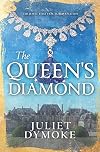
I'm back into that phase where I will read anything to do with The Scarlet Pimpernel/the French Revolution, so when this popped up on Amazon, the price and the pretty cover convinced me to download a copy, even though I had never heard of the author. (I thought Juliet Dymoke was a new, self-published author, but she was actually an old school historical romance writer who died in 2001.)
The Queen's Diamond is an old-fashioned novel, like the author, but then I love Baroness Orczy's Pimpernel show more series, so that worked for me. Any F-Rev fiction readers who prefer the hero/heroine to be 100% red, white and blue cockade-wearing, Robespierre-quoting, guillotine-wielding republicans will not be amused, however, because the central characters are all royalist aristos. What bothered me more was the sudden launch into an almost constant stream of dialogue with little action, like I'd missed the first few chapters. Once I caught onto what was happening, and who was who, I grew more involved in the story, but lost interest again towards the end - when the Queen's Blue Diamond, a necklace stolen along with the crown jewels from the Royal Treasury in 1792, finally entered the story.
A dry novel in the style, though lacking the same drive or romance, of Baroness Orczy and Jean Plaidy. show less
The Queen's Diamond is an old-fashioned novel, like the author, but then I love Baroness Orczy's Pimpernel show more series, so that worked for me. Any F-Rev fiction readers who prefer the hero/heroine to be 100% red, white and blue cockade-wearing, Robespierre-quoting, guillotine-wielding republicans will not be amused, however, because the central characters are all royalist aristos. What bothered me more was the sudden launch into an almost constant stream of dialogue with little action, like I'd missed the first few chapters. Once I caught onto what was happening, and who was who, I grew more involved in the story, but lost interest again towards the end - when the Queen's Blue Diamond, a necklace stolen along with the crown jewels from the Royal Treasury in 1792, finally entered the story.
A dry novel in the style, though lacking the same drive or romance, of Baroness Orczy and Jean Plaidy. show less

I first heard about Juliet Dymoke’s books through Elizabeth Chadwick, who listed Henry of the High Rock as one of her favorite historical fiction books. Henry is actually the second in a loosely-connected trilogy of books that can be read separately (the first is Of the Ring of Earls). Henry of the High Rock is about Henry Beauclerc, a younger son of William the Conqueror who, despite the odds, became King of England. This novel is about his struggle to get there and his love, along the show more way, for Eadgyth of Scotland.
Dymoke has a habit of portraying her male characters in a more or less rosy light; her Henry is very much romanticized. But I liked the portrait she painted of him. Her treatment of the struggles between Henry and his brothers is well done. Dymoke gives her readers a great feeling for the time and place in which her novels are set, and I felt that I came to know Henry, his brothers, and Eadgyth very well through this book. The book takes place over the course of about ten years, and Dymoke develops her characters in a very believable way. Because of the large time span, however, the narrative jumps from one place to another, and I felt that the plot never really focused on one thing before moving on to another. But I loved reading about these characters and getting to know them. The books in this series are much better than those in Dymoke’s Plantagenet Pride of Kings series, so be sure to read this one first… if you can get your hands on a copy, since her books are out of print. show less
Dymoke has a habit of portraying her male characters in a more or less rosy light; her Henry is very much romanticized. But I liked the portrait she painted of him. Her treatment of the struggles between Henry and his brothers is well done. Dymoke gives her readers a great feeling for the time and place in which her novels are set, and I felt that I came to know Henry, his brothers, and Eadgyth very well through this book. The book takes place over the course of about ten years, and Dymoke develops her characters in a very believable way. Because of the large time span, however, the narrative jumps from one place to another, and I felt that the plot never really focused on one thing before moving on to another. But I loved reading about these characters and getting to know them. The books in this series are much better than those in Dymoke’s Plantagenet Pride of Kings series, so be sure to read this one first… if you can get your hands on a copy, since her books are out of print. show less

If you’ve read Elizabeth Chadwick’s The Winter Mantle, you’ll know what this novel is about: Waltheof of Huntingdon, the English Earl who nonetheless managed to keep his lands after the invasion of the Normans in 1066. He led a rebellion against the King, who nevertheless managed to forgive him; and later, Waltheof married Judith, William’s niece.
It’s a very, very good, story, one that I suspect not many people know about. Comparisons with Elizabeth Chadwick’s very good novel are show more inevitable. They obviously tell the same story, but in completely different ways. Waltheof here is a bit more romanticized, and Judith doesn’t have quite the amount of presence that she does in Chadwick’s book. Dymoke just doesn’t give her reader enough time to understand Judith’s motives for betraying her husband in the major way she does. So Judith comes across in this novel as an angry, bitter, wronged wife, whereas in real life I feel she was a lot more complicated than that.
Other than Judith, however, I felt that there was good character development overall in this novel, taking place as it does between the years of 1055-1076. Waltheof made a lot of major mistakes in his life, none the more so at the end, when he made the mistake that cost him his life. The story of Waltheof’s life is a very touching one, especially since Dymoke tells his story very sympathetically; so that at the end, you really feel badly about our hero’s fate. Those of you who have read The Winter Mantle will be interested to note that the famous mantle makes an appearance here, though Juliet Dymoke doesn’t attach the same kind of significance to it that Elizabeth Chadwick does.
I’ve only recently discovered the lost novels of Juliet Dymoke, and I’ve made it a point to hunt many of them down. Henry of the High Rock and Lion’s Legacy are loosely connected to this one, and cover the stories of Henry I and the wars between Steven and Matilda, respectively. show less
It’s a very, very good, story, one that I suspect not many people know about. Comparisons with Elizabeth Chadwick’s very good novel are show more inevitable. They obviously tell the same story, but in completely different ways. Waltheof here is a bit more romanticized, and Judith doesn’t have quite the amount of presence that she does in Chadwick’s book. Dymoke just doesn’t give her reader enough time to understand Judith’s motives for betraying her husband in the major way she does. So Judith comes across in this novel as an angry, bitter, wronged wife, whereas in real life I feel she was a lot more complicated than that.
Other than Judith, however, I felt that there was good character development overall in this novel, taking place as it does between the years of 1055-1076. Waltheof made a lot of major mistakes in his life, none the more so at the end, when he made the mistake that cost him his life. The story of Waltheof’s life is a very touching one, especially since Dymoke tells his story very sympathetically; so that at the end, you really feel badly about our hero’s fate. Those of you who have read The Winter Mantle will be interested to note that the famous mantle makes an appearance here, though Juliet Dymoke doesn’t attach the same kind of significance to it that Elizabeth Chadwick does.
I’ve only recently discovered the lost novels of Juliet Dymoke, and I’ve made it a point to hunt many of them down. Henry of the High Rock and Lion’s Legacy are loosely connected to this one, and cover the stories of Henry I and the wars between Steven and Matilda, respectively. show less

The Royal Griffin is the story of Eleanor of England (youngest daughter of King John and sister of Henry III) and her second husband, Simon de Montfort, the baron who helped shape the parliamentarian history of England. The story covers the life of Eleanor from her first marriage in 1224 to William Marshal, eldest son of the famous William Marshal, goes up through Simon de Montfort’s attempt to take the throne, ending nearly at the end of Eleanor’s life, when she became a nun.
It’s a show more huge period of time to cover, and Dymoke does jump over periods of time in order to cover the major action of Eleanor and Simon’s lives. For example, at one moment Eleanor is giving birth to their eldest son, Henry; next thing you know he and his siblings are teenagers! In some ways this harms the novel, because there’s not a lot of room for character development; Eleanor hardly seems to change at all from being a teenager to being middle-aged.
Nonetheless, the novel is well-researched, and pretty much jives with what’s known about the people involved in this story, or what was written about them (the author seems to have borrowed a lot from Matthew Paris’s accounts of the Plantagenet family, which although contemporary were not always, shall we say, objective). Dymoke doesn’t take too many liberties with history, which is in many ways good, because it’s a fascinating story. The author recreates mid-13th century England and its various political struggles in great detail at times, though would have liked a more in-depth description of the scene at the battle of Evesham. Still, this novel is a good introductory, fictional account of this era, though for historical fiction on the period, Sharon Kay Penman’s novels are much meatier. show less
It’s a show more huge period of time to cover, and Dymoke does jump over periods of time in order to cover the major action of Eleanor and Simon’s lives. For example, at one moment Eleanor is giving birth to their eldest son, Henry; next thing you know he and his siblings are teenagers! In some ways this harms the novel, because there’s not a lot of room for character development; Eleanor hardly seems to change at all from being a teenager to being middle-aged.
Nonetheless, the novel is well-researched, and pretty much jives with what’s known about the people involved in this story, or what was written about them (the author seems to have borrowed a lot from Matthew Paris’s accounts of the Plantagenet family, which although contemporary were not always, shall we say, objective). Dymoke doesn’t take too many liberties with history, which is in many ways good, because it’s a fascinating story. The author recreates mid-13th century England and its various political struggles in great detail at times, though would have liked a more in-depth description of the scene at the battle of Evesham. Still, this novel is a good introductory, fictional account of this era, though for historical fiction on the period, Sharon Kay Penman’s novels are much meatier. show less
You May Also Like


Associated Authors
Statistics
- Works
- 31
- Also by
- 2
- Members
- 279
- Popularity
- #83,280
- Rating
- 3.7
- Reviews
- 11
- ISBNs
- 57
- Favorited
- 1