
Roger J. Lederer
Author of Beaks, Bones and Bird Songs: How the Struggle for Survival Has Shaped Birds and Their Behavior
About the Author
Works by Roger J. Lederer
Beaks, Bones and Bird Songs: How the Struggle for Survival Has Shaped Birds and Their Behavior (2016) 93 copies, 4 reviews
Pacific Coast Bird Finder: A Pocket Guide to Some Frequently Seen Birds (Nature Study Guides) (1977) 74 copies, 1 review
The Art of the Bird: The History of Ornithological Art through Forty Artists (2019) 29 copies, 2 reviews
Tagged
Common Knowledge
- Canonical name
- Lederer, Roger J.
- Gender
- male
- Occupations
- professor of biological sciences
- Organizations
- California State University, Chico
- Short biography
- [from California State University, Chico website]
Dr. Roger Lederer has traveled to more than 80 countries and you can be sure he knows the native birds in each one of them. He's spent more than 40 years studying and writing about birds.
The emeritus professor of biological sciences has been a department chair, associate dean of the Graduate Council, and dean of the College of Biological Sciences. His teaching has been on ornithology and ecology.
He received a Professional Achievement Award in 1981 and has written more than 30 research papers, a textbook "Ecology and Field Biology," and many books about birds. He contributed a column on bird watching for the Chico Enterprise-Record.
Dr. Lederer directed the Bidwell Environmental Institute, has managed the Big Chico Creek Ecological Reserve, and chaired the local science fair board. He has been a naturalist for cruise Jines describing ecology, natural history, and geology for passengers and has been a consultant for the BBC, National Geographic, National Public Radio and other organizations and publications. - Nationality
- USA
- Places of residence
- Chico, California, USA
- Associated Place (for map)
- California, USA
Members
Reviews
Beaks, Bones, and Bird Songs: How the Struggle for Survival Has Shaped Birds and Their Behavior by Roger Lederer
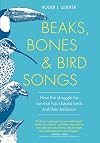
Birds are amazing, and not just because of Roger Lederer’s (or my) bias. His new “Beaks, Bones, and Bird Songs” is a comprehensive book about birds, not limited to the elements mentioned in its title. In particular, he explains the evolved physical and behavioral characteristics of these animals and why they’re important in the face of threats ranging from the immediate to long-term. There is always a trade-off, a disadvantage for every advantage. However, it’s not a totally bleak show more picture: how adaptable birds can be comes up many times in many ways. Plus, there are many unknowns, meaning more areas for future research, which can help inform conservation.
Lederer tells you why there is not one perfect, universal bird, but thousands of species. His examples come from all across the ornithological spectrum, with the extreme ends often helping illustrate their incredible diversity. The Kiwi is often at one of these ends, as are hummingbirds, and penguins. The species are from all over the world, not just the familiar ones in North America, and he chooses to mention them in context of certain adaptations. Photos are included in case you have never seen (or maybe never even heard of!) a certain species, and some figures complement the writing, such as the physical forces involved in flight, though these are better seen on paper rather than in an ebook.
While it took me a while to finish, this is the kind of book you can pick up at any point and continue from where you left off. Very well organized throughout, the author’s academic background guides the scientific layout. It is crammed full of information, but in concise, digestible sentences, never excessive or boring. It builds on what was previously discussed, and the author provides a summary at the end of each chapter. There’s always more to learn about birds. After you read this book, you can observe them and have a better idea of why they are doing what they are doing.
Note: this e-book was provided through Net Galley. For more reviews, follow my blog at http://matt-stats.blogspot.com/ show less
Lederer tells you why there is not one perfect, universal bird, but thousands of species. His examples come from all across the ornithological spectrum, with the extreme ends often helping illustrate their incredible diversity. The Kiwi is often at one of these ends, as are hummingbirds, and penguins. The species are from all over the world, not just the familiar ones in North America, and he chooses to mention them in context of certain adaptations. Photos are included in case you have never seen (or maybe never even heard of!) a certain species, and some figures complement the writing, such as the physical forces involved in flight, though these are better seen on paper rather than in an ebook.
While it took me a while to finish, this is the kind of book you can pick up at any point and continue from where you left off. Very well organized throughout, the author’s academic background guides the scientific layout. It is crammed full of information, but in concise, digestible sentences, never excessive or boring. It builds on what was previously discussed, and the author provides a summary at the end of each chapter. There’s always more to learn about birds. After you read this book, you can observe them and have a better idea of why they are doing what they are doing.
Note: this e-book was provided through Net Galley. For more reviews, follow my blog at http://matt-stats.blogspot.com/ show less
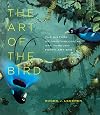
A mixed bag - closer to 2 stars for the text, but the wealth of color illustrations of some truly splendid paintings pulls it up a star.
The author, Roger Lederer, an ornithologist by training, has collected a rich array of bird illustrations and bird art, ranging from old woodcuts to modern paintings. I often deplore the lack of good images found in art books these days, but while occasionally uneven in quality, this is overall a very handsome book to page through. Lederer follows a roughly show more chronological order, placing the artists and their work in the context of the times and the intent of the work: documentary, scientific illustration, field guides, and purely aesthetic. Lederer seems to have selected primarily works in which you would be able to identify the species, depicted realistically (if not always entirely accurately), so folk art or more "symbolic" images are not here, and all the artists are European or American (there are a couple of women). You will have to get past several quite horrible tables full of dead, gutted animals and a nasty hunting scene by Rubens (I never did like Rubens...). But Fabritius's transcendent goldfinch gets a whole page to himself, there are some farmyards of histrionic poultry, and LOTS of parrots and peacocks, by artists famous (Audubon) and unfamous. My favorite part was discovering that the English poet Edward Lear ("There once was a man with a beard..." and The Owl and the Pussycat) was an absolutely brilliant painter of birds as a young man. His red and yellow macaw on p. 105 is nothing short of spectacular; his snowy owls are dramatically better than Audubon's. (I'm ordering a reproduction of his barn owl portrait for my own wall... wish I could afford even a plate from the original book it appeared in!) The book closes with a tribute to David Sibley, the current star of bird field guide illustrations - what a pleasure to see his paintings closer to their actual size as painted, and appreciate the delicate and sure-handed subtleties we can't see in the books we carry in our backpacks.
The editing of the text is odd, and I would have expected better from the U of Chicago Press. Passages of description are repeated verbatim in both illustration captions and the text. There are descriptions in the text of paintings not illustrated, and illustrations that are not discussed in the text. One discussion of a Malcom Cradock painting refers explicitly to birds that don't appear in the illustration... is the image a detail? I am still puzzling over the charming little painting of a blue-faced malkoha: Lederer remarks we can see it must have been a captive bird because of the damage to the tail feathers. At first glance, yes, the edges of the feathers look tattered, but a closer look shows the artist has sketched the fine edges that actually show that the feathers are edged in white - not damage, just white patches, but hard to see against the white background of the image. Did he really just miss that? As I Googled up some more information about various artists and birds, I also discovered passages that suggest Lederer did much the same in compiling his text - and the bibliography includes a fair number of citations to Wikipedia.
This is an attractive, enjoyable collection of lovely pictures and some interesting stories about birds and bird artists in Europe and American in the last four centuries or so. The blend of ornithological and art historical scholarship is not so successful. show less
The author, Roger Lederer, an ornithologist by training, has collected a rich array of bird illustrations and bird art, ranging from old woodcuts to modern paintings. I often deplore the lack of good images found in art books these days, but while occasionally uneven in quality, this is overall a very handsome book to page through. Lederer follows a roughly show more chronological order, placing the artists and their work in the context of the times and the intent of the work: documentary, scientific illustration, field guides, and purely aesthetic. Lederer seems to have selected primarily works in which you would be able to identify the species, depicted realistically (if not always entirely accurately), so folk art or more "symbolic" images are not here, and all the artists are European or American (there are a couple of women). You will have to get past several quite horrible tables full of dead, gutted animals and a nasty hunting scene by Rubens (I never did like Rubens...). But Fabritius's transcendent goldfinch gets a whole page to himself, there are some farmyards of histrionic poultry, and LOTS of parrots and peacocks, by artists famous (Audubon) and unfamous. My favorite part was discovering that the English poet Edward Lear ("There once was a man with a beard..." and The Owl and the Pussycat) was an absolutely brilliant painter of birds as a young man. His red and yellow macaw on p. 105 is nothing short of spectacular; his snowy owls are dramatically better than Audubon's. (I'm ordering a reproduction of his barn owl portrait for my own wall... wish I could afford even a plate from the original book it appeared in!) The book closes with a tribute to David Sibley, the current star of bird field guide illustrations - what a pleasure to see his paintings closer to their actual size as painted, and appreciate the delicate and sure-handed subtleties we can't see in the books we carry in our backpacks.
The editing of the text is odd, and I would have expected better from the U of Chicago Press. Passages of description are repeated verbatim in both illustration captions and the text. There are descriptions in the text of paintings not illustrated, and illustrations that are not discussed in the text. One discussion of a Malcom Cradock painting refers explicitly to birds that don't appear in the illustration... is the image a detail? I am still puzzling over the charming little painting of a blue-faced malkoha: Lederer remarks we can see it must have been a captive bird because of the damage to the tail feathers. At first glance, yes, the edges of the feathers look tattered, but a closer look shows the artist has sketched the fine edges that actually show that the feathers are edged in white - not damage, just white patches, but hard to see against the white background of the image. Did he really just miss that? As I Googled up some more information about various artists and birds, I also discovered passages that suggest Lederer did much the same in compiling his text - and the bibliography includes a fair number of citations to Wikipedia.
This is an attractive, enjoyable collection of lovely pictures and some interesting stories about birds and bird artists in Europe and American in the last four centuries or so. The blend of ornithological and art historical scholarship is not so successful. show less
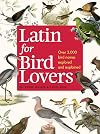
Now that I want to learn all of my local birds not only by their common names but also their Genus species, I have been a little frustrated that the bird books and field guides from my youth don’t match up - and I'm not that old! Thus I have to turn to up-to-date sources, this being one.
This book is not meant for a black-and-white e-reader; the beautiful color illustrations by various artists add so much. Without the pictures, the names of unfamiliar birds mean little, despite the show more comprehensive descriptions. Most of the text is not in the traditional sense, just a short blurb that reads like a dictionary. It should be noted that each entry is listed like a proper noun, both genera and species. The more interesting of these are from the names of people or places, or a specific behavior of a bird, rather than just outward physical appearance.
Sprinkled throughout the book are longer and quite readable boxes detailing specific genera or bird biology factoids, as well as brief biographies of ornithologists. Among these are John Gould, a contemporary of Darwin, and David Lambert Lack, who further brought the evolution of “Darwin’s Finches” to light. Or Phoebe Snetsinger, one of only eight birdwatchers ever to see more than 8,000 of the ~10,000 birds worldwide (~8,400 for her), who started late in life and endured much more than strenuous travel. Many were illustrators (Louis Agassiz Fuertes) and museum curators (an instance where use of that word is acceptable), or both (Phillip Clancey). Between the individuals included, they covered most of the earth's territory in bird study. Alexander Wilson was pre-Audubon, but an interesting encounter of the two is told here. Wilson was from Scotland but pioneered American ornithology and literally wrote the book on it. Though not a quantitative scientist, Alexander F. Skutch focused on Cental America, and could recognize individual birds, studying them that way. Each added to the collective understanding of birds, whether through population studies (Margaret Morse Nice) or conservation (Christian Jouanin); even the original James Bond! Not without controversy, Konrad Lorenz appears, the Nobel laureate who studied imprinting and other animal behavior, and who was also a Nazi.
This is a reference book, so it is easier to skip over the Latin and read the descriptions. It can be fun to guess the meaning first, and check how you did. Many of the pronunciations are not what I expected, but a lot of the words are just tricky, yet can be facilitated with practice. You can even make up your own memory device: “an ostrich (Struthio camelus) is like a sparrow the size of a camel,” for example. Many misleading names are out there, and this book helps to clear things up. The title of the book is itself a little inaccurate; many of the roots are Greek or ‘Latinized’ Greek. However, the scientific names given to taxonomic groups are all kind of Latinized, to be more universal. For example, adding –ii to the end of a word implies possession by said word. The authors admit that this isn’t complete, and some names will likely be disputed forever, but this is a great book to check out. Perhaps there is a niche out there for “Latin for Fish (or Reptile, Amphibian, Mammal, etc.) Lovers,” too?
Note: this book was provided through Net Galley, and my review also appears on my blog (http://matt-stats.blogspot.com/). show less
This book is not meant for a black-and-white e-reader; the beautiful color illustrations by various artists add so much. Without the pictures, the names of unfamiliar birds mean little, despite the show more comprehensive descriptions. Most of the text is not in the traditional sense, just a short blurb that reads like a dictionary. It should be noted that each entry is listed like a proper noun, both genera and species. The more interesting of these are from the names of people or places, or a specific behavior of a bird, rather than just outward physical appearance.
Sprinkled throughout the book are longer and quite readable boxes detailing specific genera or bird biology factoids, as well as brief biographies of ornithologists. Among these are John Gould, a contemporary of Darwin, and David Lambert Lack, who further brought the evolution of “Darwin’s Finches” to light. Or Phoebe Snetsinger, one of only eight birdwatchers ever to see more than 8,000 of the ~10,000 birds worldwide (~8,400 for her), who started late in life and endured much more than strenuous travel. Many were illustrators (Louis Agassiz Fuertes) and museum curators (an instance where use of that word is acceptable), or both (Phillip Clancey). Between the individuals included, they covered most of the earth's territory in bird study. Alexander Wilson was pre-Audubon, but an interesting encounter of the two is told here. Wilson was from Scotland but pioneered American ornithology and literally wrote the book on it. Though not a quantitative scientist, Alexander F. Skutch focused on Cental America, and could recognize individual birds, studying them that way. Each added to the collective understanding of birds, whether through population studies (Margaret Morse Nice) or conservation (Christian Jouanin); even the original James Bond! Not without controversy, Konrad Lorenz appears, the Nobel laureate who studied imprinting and other animal behavior, and who was also a Nazi.
This is a reference book, so it is easier to skip over the Latin and read the descriptions. It can be fun to guess the meaning first, and check how you did. Many of the pronunciations are not what I expected, but a lot of the words are just tricky, yet can be facilitated with practice. You can even make up your own memory device: “an ostrich (Struthio camelus) is like a sparrow the size of a camel,” for example. Many misleading names are out there, and this book helps to clear things up. The title of the book is itself a little inaccurate; many of the roots are Greek or ‘Latinized’ Greek. However, the scientific names given to taxonomic groups are all kind of Latinized, to be more universal. For example, adding –ii to the end of a word implies possession by said word. The authors admit that this isn’t complete, and some names will likely be disputed forever, but this is a great book to check out. Perhaps there is a niche out there for “Latin for Fish (or Reptile, Amphibian, Mammal, etc.) Lovers,” too?
Note: this book was provided through Net Galley, and my review also appears on my blog (http://matt-stats.blogspot.com/). show less
Beaks, Bones, and Bird Songs: How the Struggle for Survival Has Shaped Birds and Their Behavior by Roger Lederer
(Note: I listened to this on audiobook and found the narrator to be subpar, this might have effected my experience)
"Beaks Bones and Bird Songs" is a book about avian survival that zooms in on what many people overlook: the extreme situations birds go through regularly just to live. We view birds as living carefree lives of freedom and grace, when in reality they are constantly on alert against the thousand things that could kill them.
This book was interesting for sure, and there are certain show more parts that will stick with me. But the further along I got, the harder it got to pay attention and keep myself invested. I'm somebody who's pretty obsessed with birds, and even I reached a point of "ok, we get it, they're really strong!"
The tone of writing is a bit dry, and the fresh perspective on this topic only lasts for a couple chapters. For me, the beginning of the book was the most interesting (there's one great passage in which the author describes the kind of athleticism required by birds that fly over a mountain range every year as they migrate, and spoiler alert, it's pretty darn athletic).
For somebody with an academic interest, this book helps add on to a foundation of knowledge on behavioral ornithology. For anybody else, it's not the kind of non-fiction book that can keep a casual reader entertained. show less
"Beaks Bones and Bird Songs" is a book about avian survival that zooms in on what many people overlook: the extreme situations birds go through regularly just to live. We view birds as living carefree lives of freedom and grace, when in reality they are constantly on alert against the thousand things that could kill them.
This book was interesting for sure, and there are certain show more parts that will stick with me. But the further along I got, the harder it got to pay attention and keep myself invested. I'm somebody who's pretty obsessed with birds, and even I reached a point of "ok, we get it, they're really strong!"
The tone of writing is a bit dry, and the fresh perspective on this topic only lasts for a couple chapters. For me, the beginning of the book was the most interesting (there's one great passage in which the author describes the kind of athleticism required by birds that fly over a mountain range every year as they migrate, and spoiler alert, it's pretty darn athletic).
For somebody with an academic interest, this book helps add on to a foundation of knowledge on behavioral ornithology. For anybody else, it's not the kind of non-fiction book that can keep a casual reader entertained. show less
You May Also Like


Associated Authors
Statistics
- Works
- 16
- Members
- 374
- Popularity
- #64,495
- Rating
- 3.4
- Reviews
- 8
- ISBNs
- 31
- Languages
- 6