
About the Author
Robert Weintraub has written about sports for The New York Times, Slate, Play, ESPN.com, The Guardian, Dead-spin, and many more. He is the author of four books, including the New York Times bestseller No Better Friend. Weintraub lives in Decatur, Georgia.
Image credit: Amazon
Works by Robert Weintraub
No Better Friend: Young Readers Edition: A Man, a Dog, and Their Incredible True Story of Friendship and Survival in World War II (2016) 191 copies, 2 reviews
No Better Friend: One Man, One Dog, and Their Extraordinary Story of Courage and Survival in WWII (2015) 182 copies, 6 reviews
The Victory Season: The End of World War II and the Birth of Baseball's Golden Age (2013) 106 copies, 3 reviews
The House That Ruth Built: A New Stadium, the First Yankees Championship, and the Redemption of 1923 (2011) 77 copies, 1 review
Associated Works
Tagged
Common Knowledge
- Other names
- Weintraub, Robert Samuel
- Birthdate
- 1958
- Gender
- male
- Occupations
- sportswriter
- Nationality
- USA
- Associated Place (for map)
- USA
Members
Reviews
No Better Friend: One Man, One Dog, and Their Extraordinary Story of Courage and Survival in WWII by Robert Weintraub
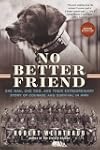
No Better Friend by Robert Weintraub is a well-documented story of English pointer named Judy and her life as a war dog and the service men she took care of, especially, Frank Williams. A purebred born in Shanghai and adopted as a mascot of a Royal Navy Gunboat.
Before war had started, Judy had already amazed her shipmates by moving her sleeping box with blanket near the current group of people that she wanted to sleep near. She pushed, pulled and even pulled it down a ladder. She was show more friends with the whole crew with the exception of the Chinese cooks who probably thought she would make a good meal.
To me there were two books, the one about Judy and Frank Williams and the other one about World War II in the Pacific Asian Theatre. The stories of this amazing dog kept me reading and amazed me with stranger than fiction adventures that Judy had. The tales of the Pacific Asian theatre were where I got bogged down with details. I would have preferred that the author focused alone on Judy and Frank experiences only. The most memorable part have to do with the individuals. I will not remember all the details of what happened but I have vivid memories of when Judy went overboard for the first time, of the long trek through the unforgiving jungle, what it was like being held as a prisoner of war by the Japanese.
Judy was an amazing heroine. When the men were hungry, she searched for food like snakes and frogs, when life in the prison camp was so horrible that many wanted to die rather face another day, Judy knew how to encourage endurance. When the men were thirsty, Judy dug for water. When crocodiles added to the many hazards of the jungle trek, Judy learned how to scare them away. In short, Judy kept the men going. There are places where you had to laugh and other times when you joined Frank in despair.
I would highly recommend this book for the incredible story of Judy, the only dog Prisoner of War in the WWII and the amazing bond between Judy and Frank. Do let the mass of other details about that theatre deter you from reading this book.
I received a finished copy of No Better Friend from the publisher by a win from FirstReads. My thoughts and feelings in this review are totally my own. show less
Before war had started, Judy had already amazed her shipmates by moving her sleeping box with blanket near the current group of people that she wanted to sleep near. She pushed, pulled and even pulled it down a ladder. She was show more friends with the whole crew with the exception of the Chinese cooks who probably thought she would make a good meal.
To me there were two books, the one about Judy and Frank Williams and the other one about World War II in the Pacific Asian Theatre. The stories of this amazing dog kept me reading and amazed me with stranger than fiction adventures that Judy had. The tales of the Pacific Asian theatre were where I got bogged down with details. I would have preferred that the author focused alone on Judy and Frank experiences only. The most memorable part have to do with the individuals. I will not remember all the details of what happened but I have vivid memories of when Judy went overboard for the first time, of the long trek through the unforgiving jungle, what it was like being held as a prisoner of war by the Japanese.
Judy was an amazing heroine. When the men were hungry, she searched for food like snakes and frogs, when life in the prison camp was so horrible that many wanted to die rather face another day, Judy knew how to encourage endurance. When the men were thirsty, Judy dug for water. When crocodiles added to the many hazards of the jungle trek, Judy learned how to scare them away. In short, Judy kept the men going. There are places where you had to laugh and other times when you joined Frank in despair.
I would highly recommend this book for the incredible story of Judy, the only dog Prisoner of War in the WWII and the amazing bond between Judy and Frank. Do let the mass of other details about that theatre deter you from reading this book.
I received a finished copy of No Better Friend from the publisher by a win from FirstReads. My thoughts and feelings in this review are totally my own. show less
No Better Friend: One Man, One Dog, and Their Extraordinary Story of Courage and Survival in WWII by Robert Weintraub
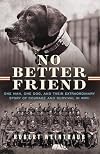
The story of Judy in WWII is the greatest story of a dog in all of history. I would be interested in hearing from anyone who has a different opinion. I read of the story in the book, Judy: A Dog In A Million by Damien Lewis. It became in the top 5 favorite of my 200 or so books on dogs I have read so far. Then I heard about another book on the same dog, No Better Friend: One Man, One Dog, and Their Extraordinary Story of Courage and Survival in WWII, by Robert Weintraub.
At first I accidently show more got the youth version of No Better Friend, so I held out reading until I got the normal version.
Because I LOVED Damien Lewis's book, I chose to read both books at the same time, one chapter or part of the story in one, and then a chapter in the other. So now I have my answers on which I liked better.
First, the story of Judy is amazing no matter which version you read. And overall, they don't contradict each other except for some minor details. There is differences in the order of when some details are told, like when discussing details on how POW's would sabotage the railway with one book telling it early in the story and the other telling it later. So there is some difference in timing, and details added to one or the other, but overall, the books follow each other tit for tat.
The major difference is that No Better Friend has more. The book has more pages and in my versions of the books, smaller print. While in the main story of Judy that are very close in the level of detail until the end, in No Better Friend there is a lot more history told of the stories of those who intersect with Judy. There is more background of what was happening in the greater theater of war in the Pacific. In Judy, I didn't feel the two year gap from when she was a mascot on a gunboat in China when Japan attacked the Chinese, to when Frank and Judy had to flee Singapore when the Japanese attacked there. The additional details really opened up the story to a larger scale and a greater understanding.
The one area that No Better Friend especially had over on the story of Judy was at the end. No Better friend captured a lot more of the amazing days when the POW's were rescued. Then a lot more of the why and what when Frank and Judy moved to Africa. Then finished up the story of Frank until the end of his life.
There are some who prefer less details on the history. I saw one reader downgrade this book because they didn't like the expanse of historical details. That same person mentioned they didn't like the anthropomorphism attributed to Judy. First, I would say there was more of that in Judy then in No Better Friend. Second, for those of us around dogs, you get a feeling of what they are thinking from their behavior, and dogs behavior can be pretty darn noble as demonstrated where Judy found ways to save people from being beaten to death in the book.
In short, both Judy and No Better Friend are great books. If you want less overall historical details read Judy or probably the youth version of No Better friend. If you have read Judy, you will still enjoy reading the other. If you really want the full dose of a great story, I would recommend reading both of them side by side as I did. I did not find it repetitive but found it just doubled my enjoyment of a amazing, fantastic story, which as I have said before is the story of the most amazing dog that ever lived. show less
At first I accidently show more got the youth version of No Better Friend, so I held out reading until I got the normal version.
Because I LOVED Damien Lewis's book, I chose to read both books at the same time, one chapter or part of the story in one, and then a chapter in the other. So now I have my answers on which I liked better.
First, the story of Judy is amazing no matter which version you read. And overall, they don't contradict each other except for some minor details. There is differences in the order of when some details are told, like when discussing details on how POW's would sabotage the railway with one book telling it early in the story and the other telling it later. So there is some difference in timing, and details added to one or the other, but overall, the books follow each other tit for tat.
The major difference is that No Better Friend has more. The book has more pages and in my versions of the books, smaller print. While in the main story of Judy that are very close in the level of detail until the end, in No Better Friend there is a lot more history told of the stories of those who intersect with Judy. There is more background of what was happening in the greater theater of war in the Pacific. In Judy, I didn't feel the two year gap from when she was a mascot on a gunboat in China when Japan attacked the Chinese, to when Frank and Judy had to flee Singapore when the Japanese attacked there. The additional details really opened up the story to a larger scale and a greater understanding.
The one area that No Better Friend especially had over on the story of Judy was at the end. No Better friend captured a lot more of the amazing days when the POW's were rescued. Then a lot more of the why and what when Frank and Judy moved to Africa. Then finished up the story of Frank until the end of his life.
There are some who prefer less details on the history. I saw one reader downgrade this book because they didn't like the expanse of historical details. That same person mentioned they didn't like the anthropomorphism attributed to Judy. First, I would say there was more of that in Judy then in No Better Friend. Second, for those of us around dogs, you get a feeling of what they are thinking from their behavior, and dogs behavior can be pretty darn noble as demonstrated where Judy found ways to save people from being beaten to death in the book.
In short, both Judy and No Better Friend are great books. If you want less overall historical details read Judy or probably the youth version of No Better friend. If you have read Judy, you will still enjoy reading the other. If you really want the full dose of a great story, I would recommend reading both of them side by side as I did. I did not find it repetitive but found it just doubled my enjoyment of a amazing, fantastic story, which as I have said before is the story of the most amazing dog that ever lived. show less
No Better Friend: One Man, One Dog, and Their Extraordinary Story of Courage and Survival in WWII by Robert Weintraub
Dog lovers rejoice -- here is an impeccably researched and wonderfully written account of an amazing dog who endured the worst of World War II POW camps in the Pacific along with her devoted soldier. Many of the atrocities endured by both man and dog bring to mind the accounts in Unbroken. What makes this book stand apart is the amazing bond between the pointer Judy and the soldier she befriends, Frank Williams. From escaping torpedoed prison ships, to evading poisonous snakes and equally show more venomous prison guards, and enduring brutal living conditions, it is obvious that the special bond between Judy and Frank gave them the extra edge that allowed them both to survive the conflict. The author takes some tangents to explore and explain various people and events that are related to the main narrative of Judy and Frank Williams, but these are interesting and add to the overall understanding of what was going on in this part of the world during the war. For any history buff who is also sensitive to the unspoken bond that exists between people and dogs, this book is deeply satisfying. show less
No Better Friend: One Man, One Dog, and Their Extraordinary Story of Courage and Survival in WWII by Robert Weintraub
The story of Judy in WWII is the greatest story of a dog in all of history. I would be interested in hearing from anyone who has a different opinion. I read of the story in the book, Judy: A Dog In A Million by Damien Lewis. It became in the top 5 favorite of my 200 or so books on dogs I have read so far. Then I heard about another book on the same dog, No Better Friend: One Man, One Dog, and Their Extraordinary Story of Courage and Survival in WWII, by Robert Weintraub.
At first I accidently show more got the youth version of No Better Friend, so I held out reading until I got the normal version.
Because I LOVED Damien Lewis's book, I chose to read both books at the same time, one chapter or part of the story in one, and then a chapter in the other. So now I have my answers on which I liked better.
First, the story of Judy is amazing no matter which version you read. And overall, they don't contradict each other except for some minor details. There is differences in the order of when some details are told, like when discussing details on how POW's would sabotage the railway with one book telling it early in the story and the other telling it later. So there is some difference in timing, and details added to one or the other, but overall, the books follow each other tit for tat.
The major difference is that No Better Friend has more. The book has more pages and in my versions of the books, smaller print. While in the main story of Judy that are very close in the level of detail until the end, in No Better Friend there is a lot more history told of the stories of those who intersect with Judy. There is more background of what was happening in the greater theater of war in the Pacific. In Judy, I didn't feel the two year gap from when she was a mascot on a gunboat in China when Japan attacked the Chinese, to when Frank and Judy had to flee Singapore when the Japanese attacked there. The additional details really opened up the story to a larger scale and a greater understanding.
The one area that No Better Friend especially had over on the story of Judy was at the end. No Better friend captured a lot more of the amazing days when the POW's were rescued. Then a lot more of the why and what when Frank and Judy moved to Africa. Then finished up the story of Frank until the end of his life.
There are some who prefer less details on the history. I saw one reader downgrade this book because they didn't like the expanse of historical details. That same person mentioned they didn't like the anthropomorphism attributed to Judy. First, I would say there was more of that in Judy then in No Better Friend. Second, for those of us around dogs, you get a feeling of what they are thinking from their behavior, and dogs behavior can be pretty darn noble as demonstrated where Judy found ways to save people from being beaten to death in the book.
In short, both Judy and No Better Friend are great books. If you want less overall historical details read Judy or probably the youth version of No Better friend. If you have read Judy, you will still enjoy reading the other. If you really want the full dose of a great story, I would recommend reading both of them side by side as I did. I did not find it repetitive but found it just doubled my enjoyment of a amazing, fantastic story, which as I have said before is the story of the most amazing dog that ever lived. show less
At first I accidently show more got the youth version of No Better Friend, so I held out reading until I got the normal version.
Because I LOVED Damien Lewis's book, I chose to read both books at the same time, one chapter or part of the story in one, and then a chapter in the other. So now I have my answers on which I liked better.
First, the story of Judy is amazing no matter which version you read. And overall, they don't contradict each other except for some minor details. There is differences in the order of when some details are told, like when discussing details on how POW's would sabotage the railway with one book telling it early in the story and the other telling it later. So there is some difference in timing, and details added to one or the other, but overall, the books follow each other tit for tat.
The major difference is that No Better Friend has more. The book has more pages and in my versions of the books, smaller print. While in the main story of Judy that are very close in the level of detail until the end, in No Better Friend there is a lot more history told of the stories of those who intersect with Judy. There is more background of what was happening in the greater theater of war in the Pacific. In Judy, I didn't feel the two year gap from when she was a mascot on a gunboat in China when Japan attacked the Chinese, to when Frank and Judy had to flee Singapore when the Japanese attacked there. The additional details really opened up the story to a larger scale and a greater understanding.
The one area that No Better Friend especially had over on the story of Judy was at the end. No Better friend captured a lot more of the amazing days when the POW's were rescued. Then a lot more of the why and what when Frank and Judy moved to Africa. Then finished up the story of Frank until the end of his life.
There are some who prefer less details on the history. I saw one reader downgrade this book because they didn't like the expanse of historical details. That same person mentioned they didn't like the anthropomorphism attributed to Judy. First, I would say there was more of that in Judy then in No Better Friend. Second, for those of us around dogs, you get a feeling of what they are thinking from their behavior, and dogs behavior can be pretty darn noble as demonstrated where Judy found ways to save people from being beaten to death in the book.
In short, both Judy and No Better Friend are great books. If you want less overall historical details read Judy or probably the youth version of No Better friend. If you have read Judy, you will still enjoy reading the other. If you really want the full dose of a great story, I would recommend reading both of them side by side as I did. I did not find it repetitive but found it just doubled my enjoyment of a amazing, fantastic story, which as I have said before is the story of the most amazing dog that ever lived. show less
Lists
Awards


You May Also Like


Associated Authors
Statistics
- Works
- 5
- Also by
- 1
- Members
- 582
- Popularity
- #43,089
- Rating
- 4.0
- Reviews
- 12
- ISBNs
- 34