

About the Author
Glenn Stout has been the series editor of "The Best American Sports Writing" since its inception & has written three illustrated biographies with Richard A. Johnson: "Ted Williams," "Joe DiMaggio," & "Jackie Robinson." He lives in Uxbridge, Massachusetts. (Bowker Author Biography)
Image credit: Glenn Stout
Series
Works by Glenn Stout
Fenway 1912: The Birth of a Ballpark, a Championship Season, and Fenway's Remarkable First Year (2011) 116 copies, 4 reviews
Young Woman and the Sea: How Trudy Ederle Conquered the English Channel and Inspired the World (2009) 74 copies, 4 reviews
The Best American Sports Writing 2018 (The Best American Series ®) (2018) — Series Editor — 25 copies
Nine Months at Ground Zero: The Story of the Brotherhood of Workers Who Took on a Job Like No Other (2006) 23 copies, 1 review
Associated Works
Tagged
Common Knowledge
- Birthdate
- 1958
- Gender
- male
- Education
- Bard College
- Nationality
- USA
- Birthplace
- Ohio, USA
- Associated Place (for map)
- Ohio, USA
Members
Reviews
Fenway 1912: The Birth of a Ballpark, a Championship Season, and Fenway's Remarkable First Year by Glenn Stout
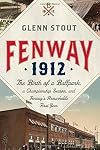
Lively, meticulously researched, and engaging story of Fenway Park's first season and the team that called it home. Stout spins a good tale, ranging from the specific details of stadium construction to the overarching economics of the game (both in player-owner relations and the overwhelming importance of gambling). What I most enjoyed, though, was finding about the 1912 Red Sox, who from the front office to the field were a fractious, talented, infuriating bunch who managed to pull it show more together long enough to win a championship. It's inevitable that the book dispels some of the nostalgia for the "lyric little bandbox," which in reality underwent numerous changes even during its first year, and it does make me a little sad. But I still appreciate having a clearer and truer picture of how things really were -- and in any case, as Stout says, nothing can take away from the first glimpse of that infield green. show less
I await each year's addition to this series with a passion I rarely extend to sports itself. This particular volume is transcendant, if only for two of the most Baroque stories connecting team sports with the rest of popular culture, specifically movies. I leave it to the reader to guess -- better to read -- all that may be involved in Derek Zumsteg's droll "Bugs Bunny, greatest banned player ever", though it does analyze the immortal hare's efforts in a 1946 contest between the Gas House show more Gorillas and the New York Teatotallers. The other gem is John Klima's "Deal of the century", which profiles Paul Pettit, the first of baseball's bonus babies. In it we find that one of the middle-men in his signing was Frederick Stephani, none other than the German-born director of the original FLASH GORDON films (of fond memory). Pull that one out when your stuck next to a dullard at a dinner-party! Wait, do LT people go to dinner-parties? Well, the facts remain, and you can read them in this fine collection. show less
Fenway 1912: The Birth of a Ballpark, a Championship Season, and Fenway's Remarkable First Year by Glenn Stout

Although those old enough to remember the 1986 World Series may feel differently, many deem the September collapse of the 2011 Boston Red Sox as the worst flop in the history of Major League Baseball. As recently as August of 2011, smart money in Las Vegas put the chances of the Red Sox making the post-season at 99.4%. The Red Sox proved Vegas wrong by utterly blowing the nine game lead the team enjoyed in the American League Wild Card race in early September. Tony Francona fell on his sword show more and stepped down as Red Sox manager a couple days after the season's disastrous end, emphasizing among other ailments that derailed the team's seemingly assured playoff appearance a locker room teeming with strife and dissension among the players. But author Glenn Stout's excellent new book, "Fenway 1912," gives the lie to the notion that locker room ego clashes preclude championship play on the diamond.
As intimated by its subtitle, Stout's book covers far more than player discord during the 1912 season. Fenway's inaugural season was marked by virtually incessant tumult -- terrible weather; greedy baseball executives; labor unrest; professional gamblers; Boston politics; architectural slapdash; ornery fans and religious intolerance. Each and all of these demanded heavy tolls from the team during a baseball season book-ended by the Titanic's sinking and an attempted assassination of Progressive Party presidential candidate (and former president) Theodore Roosevelt. Given that virtually anyone who personally witnessed Fenway's erection and its first World Series isn't alive anymore, Stout does a superb job sifting through masses of contemporaneous historical records to unveil not only the intricacies of building the park and the team that played in it, but also to imbue the book with a sense of the turbulent social, cultural, political and economic forces roiling America 100 years ago. In that way, "Fenway 1912" appeals more broadly than to only fans of the Boston Red Sox, or of professional baseball. Stout conveys very well a small slice of Americana at a time when the country was undergoing fundamental sociopolitical changes culminated by Woodrow Wilson's winning a ferocious four-party presidential election while the tinder of World War I caught fire in the Balkans.
Before spring training's first pitch the 2011 Red Sox were widely considered a lock to make the post-season, if not win the World Series. Presumably the October 11, 2011 release date for "Fenway 1912" was intended to coincide with the team's predicted march to championship glory. It would be a shame if the team's premature demise dowsed interest in Stout's outstanding new book. The 1912 Boston Red Sox were a team ridden with religious and other schisms so intractable bloody fistfights broke out in their locker room during the World Series they won. Against this backdrop, Stout's book is instructive in making abundantly (though unintentionally) clear that pinning the 2011 team's failure on a vastly pettier brand of interpersonal friction than what rocked Fenway throughout 1912 rings hollow. Good history is illuminative that way. show less
As intimated by its subtitle, Stout's book covers far more than player discord during the 1912 season. Fenway's inaugural season was marked by virtually incessant tumult -- terrible weather; greedy baseball executives; labor unrest; professional gamblers; Boston politics; architectural slapdash; ornery fans and religious intolerance. Each and all of these demanded heavy tolls from the team during a baseball season book-ended by the Titanic's sinking and an attempted assassination of Progressive Party presidential candidate (and former president) Theodore Roosevelt. Given that virtually anyone who personally witnessed Fenway's erection and its first World Series isn't alive anymore, Stout does a superb job sifting through masses of contemporaneous historical records to unveil not only the intricacies of building the park and the team that played in it, but also to imbue the book with a sense of the turbulent social, cultural, political and economic forces roiling America 100 years ago. In that way, "Fenway 1912" appeals more broadly than to only fans of the Boston Red Sox, or of professional baseball. Stout conveys very well a small slice of Americana at a time when the country was undergoing fundamental sociopolitical changes culminated by Woodrow Wilson's winning a ferocious four-party presidential election while the tinder of World War I caught fire in the Balkans.
Before spring training's first pitch the 2011 Red Sox were widely considered a lock to make the post-season, if not win the World Series. Presumably the October 11, 2011 release date for "Fenway 1912" was intended to coincide with the team's predicted march to championship glory. It would be a shame if the team's premature demise dowsed interest in Stout's outstanding new book. The 1912 Boston Red Sox were a team ridden with religious and other schisms so intractable bloody fistfights broke out in their locker room during the World Series they won. Against this backdrop, Stout's book is instructive in making abundantly (though unintentionally) clear that pinning the 2011 team's failure on a vastly pettier brand of interpersonal friction than what rocked Fenway throughout 1912 rings hollow. Good history is illuminative that way. show less

Career criminal Richard Whittemore, the prime mover of a gang of professional diamond thieves, was addicted to the high life and not above using murder to reach his goals. His glamorous flapper wife Margaret stood by his side and played a role in his crimes as well. The press dubbed the two "The Candy Kid" (for his penchant for gems and drugs, as well as his personal charm) and "Tiger Girl" (for her ferocity and devotion to her mate). The duo were 1920s celebrities and drew adoring crowds show more during Richard's murder trials, yet their story ended abruptly when Richard had to pay the price for his crimes. Surprisingly, Margaret, who wound up with no criminal record, went on to a new life as a working class wife and mother.
Greg Stout's true crime account Tiger Girl and the Candy Kid has an intriguing story to tell. I found that I was less interested in the details of the Whittemore gang's meticulously planned crime sprees than I was in the aftermath of all the carnage, but Stout delivers on both counts. Recommended. show less
Greg Stout's true crime account Tiger Girl and the Candy Kid has an intriguing story to tell. I found that I was less interested in the details of the Whittemore gang's meticulously planned crime sprees than I was in the aftermath of all the carnage, but Stout delivers on both counts. Recommended. show less
Awards


You May Also Like


Associated Authors
Statistics
- Works
- 40
- Also by
- 4
- Members
- 1,575
- Popularity
- #16,391
- Rating
- 3.9
- Reviews
- 28
- ISBNs
- 126
- Favorited
- 2