
Pamela Aidan
Author of An Assembly Such as This
About the Author
Series
Works by Pamela Aidan
3 in 1: Fitzwilliam Darcy, Gentleman (An Asssembly Such as This / Duty and Desire / These Three Remain) (2009) 36 copies, 1 review
Associated Works
Jane Austen Made Me Do It: Original Stories Inspired by Literature's Most Astute Observer of the Human Heart (2011) — Contributor — 288 copies, 31 reviews
Tagged
Common Knowledge
- Birthdate
- 1953-10-18
- Gender
- female
- Education
- University of Illinois, Urbana-Champaign
- Occupations
- librarian
novelist - Short biography
- Pamela Aidan was born on 18 October 1953 in Phoenixville, Pennsylvania, USA. She grew up in small towns outside of Philadelphia. She graduated from high school with the desire to be a history teacher, but changed her major to Library Science after her first year at college. Later, she earned a Masters in Library and Information Science from the University of Illinois at Urbana-Champaign. She has been a librarian for over 30 years.
While Jane Austen's Pride and Prejudice has been her favorite novel since high school, she credits the BBC mini-series of the story for inspiring her to write her first regency novel. An Assembly Such as This became the start of her Fitzwilliam Darcy, Gentleman trilogy (former title was The Chronicles of Pemberley). Besides writing and operating Wytherngate Press, she is also the director of Liberty Lake Municipal Library in eastern Washington, a short distance from her home in Idaho.
Pamela and her husband Michael live in Coeur d'Alene, Idaho; they each have three grown children from previous marriages. - Nationality
- USA
- Birthplace
- Phoenixville, Pennsylvania, USA
- Places of residence
- Coeur d'Alene, Idaho, USA
- Associated Place (for map)
- USA
Members
Reviews
Duty and Desire: A Novel of Fitzwilliam Darcy, Gentleman (Fitzwilliam Darcy Gentleman) by Pamela Aidan
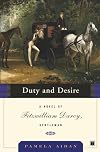
Picking up her re-imagining of Pride and Prejudice where An Assembly Such as This left off, Pamela Aidan has crafted another winner in the category of Austen inspired fiction. Duty and Desire finds the indefatigable Mr Darcy stubborn as ever, and convinced that if he could only find a woman "of his own station as beautiful and blessed with wit as Elizabeth Bennet, whose charms would banish her from his mind and displace her in his heart."
Despite knowing where the story will eventually lead, show more it is a very pleasant and diverting journey watching Darcy's attempts to forget Elizabeth by immersing himself in Society (again people, that's society with a capital "S".) I fell easily back into the world of Regency Era England, and was immediately engrossed in the story. I find that I truly love peeking behind the curtains to see what was happening with Darcy when he was away in Town (that's town with a capital "T".)
It has been suggested by some reviewers that Pamela Aidan added some out-of-character-elements to Duty and Desire, that made it a less enjoyable read. Without giving away plot details, let me just say that there is an added focus on religion, which some readers seem to find questionable. Also, the author has included some Gothic details that Austen lovers take exception to. Being a bit of an Austen neophyte myself, I didn't have a problem with any liberties the author may have taken.
Easily as well-written and readable as An Assembly Such as This, Duty and Desire has only served to further ignite my interest - I must finish this series immediately to see where Pamela Aidan will take us next! show less
Despite knowing where the story will eventually lead, show more it is a very pleasant and diverting journey watching Darcy's attempts to forget Elizabeth by immersing himself in Society (again people, that's society with a capital "S".) I fell easily back into the world of Regency Era England, and was immediately engrossed in the story. I find that I truly love peeking behind the curtains to see what was happening with Darcy when he was away in Town (that's town with a capital "T".)
It has been suggested by some reviewers that Pamela Aidan added some out-of-character-elements to Duty and Desire, that made it a less enjoyable read. Without giving away plot details, let me just say that there is an added focus on religion, which some readers seem to find questionable. Also, the author has included some Gothic details that Austen lovers take exception to. Being a bit of an Austen neophyte myself, I didn't have a problem with any liberties the author may have taken.
Easily as well-written and readable as An Assembly Such as This, Duty and Desire has only served to further ignite my interest - I must finish this series immediately to see where Pamela Aidan will take us next! show less
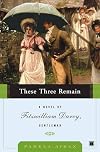
These Three Remain is the final novel in Pamela Aidan's retelling of Pride & Prejudice from Darcy's perspective, and probably the most enjoyable. Most of it has to do with the fact that we get to see Elizabeth again and everything that has been building finally reaches its conclusion.
To tell this story, Aidan had several obstacles to overcome, the foremost of which was how Darcy could have so misread Elizabeth's responses to actually think she was eager to receive his addresses and would show more reply in the affirmative when asked for her hand at Hunsford. Despite some overly dramatic moments in the writing style (throughout), I think she manages it rather well, staying within the confines of Austen's story.
It's also pleasing to see Darcy truly start to change. Some adaptations present him as perfectly virtuous from the start, just misunderstood, but in Austen's novel he really does have to examine his life and work to remove his faults. Despite his many good qualities, his pride was improper and his outlook on the world selfish. Through Elizabeth's reproofs he comes to realize these unpleasant facts and sets about changing them.
The most telling thing in favor of this novel is that it made me want more. Come on, this was published back in 2005 and the author said she wanted to write more books focusing on the Darcys and especially Georgiana — where are they? Why didn't Aidan continue writing?
I said this in my review of An Assembly Such as This as well: I feel like I've experienced Darcy's transformation in microcosm, going from an unwilling participant to avowed fan. Aidan's contribution to the Austenian world can never approach the level of the original works, but neither can any other retelling, reimagining, or fan fiction piece. That doesn't mean I can't enjoy it and recommend it to other Austen readers who yearn for just a little more about these beloved characters. show less
To tell this story, Aidan had several obstacles to overcome, the foremost of which was how Darcy could have so misread Elizabeth's responses to actually think she was eager to receive his addresses and would show more reply in the affirmative when asked for her hand at Hunsford. Despite some overly dramatic moments in the writing style (throughout), I think she manages it rather well, staying within the confines of Austen's story.
It's also pleasing to see Darcy truly start to change. Some adaptations present him as perfectly virtuous from the start, just misunderstood, but in Austen's novel he really does have to examine his life and work to remove his faults. Despite his many good qualities, his pride was improper and his outlook on the world selfish. Through Elizabeth's reproofs he comes to realize these unpleasant facts and sets about changing them.
The most telling thing in favor of this novel is that it made me want more. Come on, this was published back in 2005 and the author said she wanted to write more books focusing on the Darcys and especially Georgiana — where are they? Why didn't Aidan continue writing?
I said this in my review of An Assembly Such as This as well: I feel like I've experienced Darcy's transformation in microcosm, going from an unwilling participant to avowed fan. Aidan's contribution to the Austenian world can never approach the level of the original works, but neither can any other retelling, reimagining, or fan fiction piece. That doesn't mean I can't enjoy it and recommend it to other Austen readers who yearn for just a little more about these beloved characters. show less
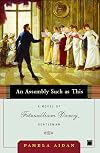
I have a cautiously modest collection of Austen continuations that have remained untouched for many years. Of this collection, Pamela Aidan's An Assembly Such as This looked tolerable, but not diverting enough to tempt me. After venturing into another Austen continuation (Hodge's Mansfield Revisited) without my inner purist completely rebelling, I decided to give this one a try.
I'll be honest, early on I almost put it down. Fitzwilliam Darcy, from whose perspective this is told, overthinks show more everything to the point of the reader's exhaustion. So much is overdone. Occasionally the descriptions of his thoughts are just.... well, lame. Consider this example when Sir William is talking to Darcy about dancing:
Darcy's years of training enabled him to remain still while every nerve in his body screamed to be removed from participation in one of the most inane conversations of his experience. (69)
"Years of training," "remaining still," and "every nerve in his body" seem to imply that Darcy (Darcy!) was about to physically lose control and run yelling from the room, just because someone was boring him — at least, that's the picture this awkward sentence gives me. Aidan is clearly still finding her way in both writing and characterization. But then, as Miss Bingley observes to Darcy in the 1995 miniseries, "she seemed to grow on you." Indeed she did. Somehow I picked the book back up the next evening and found myself, like Darcy toward Elizabeth, a rather unwilling fan.
Aidan does a creditable job exploring the inner life of one of literature's most enigmatic heroes. I never considered it much, but there must have been quite a bit going on in Darcy's head as he interacted (and tried not to interact) with Elizabeth. This is no attempt at imitating Austen's literary style or her razor-sharp wit, which was probably a wise choice. Aidan, while never jarringly modern, has a pleasing way with descriptive phrases and her characters are compelling.
How unpleasant to near the end of this volume and discover that it was only the first of three novels that take Darcy through the events of Pride & Prejudice. How galling to request the next two at my library only to find that my library didn't have them and I would have to ILL them. How long the intervening ten days seemed before they arrived! Yes, I found myself certainly in Darcy's situation, an unwilling fan who nevertheless could not stay away from the desired object.
An Assembly Such as This is fan fiction, of course, but of the more elevated type. Do you know, despite the rocky start I think I would reread? I suppose the shades of Pemberley will have to lump it. show less
I'll be honest, early on I almost put it down. Fitzwilliam Darcy, from whose perspective this is told, overthinks show more everything to the point of the reader's exhaustion. So much is overdone. Occasionally the descriptions of his thoughts are just.... well, lame. Consider this example when Sir William is talking to Darcy about dancing:
Darcy's years of training enabled him to remain still while every nerve in his body screamed to be removed from participation in one of the most inane conversations of his experience. (69)
"Years of training," "remaining still," and "every nerve in his body" seem to imply that Darcy (Darcy!) was about to physically lose control and run yelling from the room, just because someone was boring him — at least, that's the picture this awkward sentence gives me. Aidan is clearly still finding her way in both writing and characterization. But then, as Miss Bingley observes to Darcy in the 1995 miniseries, "she seemed to grow on you." Indeed she did. Somehow I picked the book back up the next evening and found myself, like Darcy toward Elizabeth, a rather unwilling fan.
Aidan does a creditable job exploring the inner life of one of literature's most enigmatic heroes. I never considered it much, but there must have been quite a bit going on in Darcy's head as he interacted (and tried not to interact) with Elizabeth. This is no attempt at imitating Austen's literary style or her razor-sharp wit, which was probably a wise choice. Aidan, while never jarringly modern, has a pleasing way with descriptive phrases and her characters are compelling.
How unpleasant to near the end of this volume and discover that it was only the first of three novels that take Darcy through the events of Pride & Prejudice. How galling to request the next two at my library only to find that my library didn't have them and I would have to ILL them. How long the intervening ten days seemed before they arrived! Yes, I found myself certainly in Darcy's situation, an unwilling fan who nevertheless could not stay away from the desired object.
An Assembly Such as This is fan fiction, of course, but of the more elevated type. Do you know, despite the rocky start I think I would reread? I suppose the shades of Pemberley will have to lump it. show less
El primer libro de una triología de la historia de Orgullo y prejuicio visto desde el punto de vista de Darcy, mucho mas completo de lo que hubiera leído hasta ahora, me gusto mucho, me parece que la escritora retrata muy bien la época y a Darcy.
Conocer el Punto de vista de Darcy ha sido una genialidad, además la autora logra excelentemente bien proyectar la historia y a los personajes de Austen.
Este, el primer tomo, es básicamente el punto de vista de Darcy en la primera parte de show more Orgullo y Prejuicio y podemos ver como Darcy se empieza a sentir atraido a la vez que lucha contra eso.
Me encanto! show less
Conocer el Punto de vista de Darcy ha sido una genialidad, además la autora logra excelentemente bien proyectar la historia y a los personajes de Austen.
Este, el primer tomo, es básicamente el punto de vista de Darcy en la primera parte de show more Orgullo y Prejuicio y podemos ver como Darcy se empieza a sentir atraido a la vez que lucha contra eso.
Me encanto! show less
Lists
You May Also Like


Associated Authors
Statistics
- Works
- 6
- Also by
- 1
- Members
- 3,789
- Popularity
- #6,690
- Rating
- 3.7
- Reviews
- 140
- ISBNs
- 33
- Languages
- 3
- Favorited
- 10