
Amanda Grange
Author of Mr. Darcy's Diary
About the Author
Amanda Grange lives in Cheshire. Robert Hale previously published many of her novels, including Lord Deverill¿s Secret, Stormcrow Castle, Darcy¿s Diary, Mr Knightley¿s Diary and Captain Wentworth¿s Diary. Visit her website at www.amandagrange.com.
Series
Works by Amanda Grange
Waterloo Wedding 2 copies
Il diario di Mr. Knightley 1 copy
Associated Works
The Mammoth Book of Regency Romance [Anthology 23-in-1] (2010) — Contributor — 108 copies, 7 reviews
Tagged
Common Knowledge
- Legal name
- Grange, Amanda
- Birthdate
- 20th Century
- Gender
- female
- Occupations
- historical novelist
- Nationality
- UK
- Associated Place (for map)
- UK
Members
Reviews

A delightful addition to Jane Austen's 'Emma'! Amanda Grange writes Austen's style and characters very well, remaining true to both, and her 'diary' series can either be enjoyed as introductions to the original novels, which Knightley's diary was for me, or as indulgent vignettes of favourite suitors! Whereas I read 'Colonel Brandon's Diary' purely to fill in the blanks about Austen's overlooked and underwritten 'second attachment' in 'Sense and Sensibility', 'Mr Knightley's Diary' has had show more quite the reverse effect - now I must find out more about Grange's reluctant romantic from Emma's point of view! (I have been shamefully slow to warm to Austen.)
'To a good man, yes, one who knows her in all her moods, who can laugh at her follies and rejoice in her virtues; who will not allow her to give in to her worst instincts; one who knows her, and who, knowing her, will still love her, and love her as she should be loved.'
That Brandon and Knightley share the same qualities - goodness, patience, maturity - is probably why I admire Knightley so much without having read 'Emma', and can even overlook Austen's propensity for 'recycling' her novels! Amanda Grange's narrative reversal has also helped to prepare me for grating characters like Mr Woodhouse (manipulative hypochondriac) and Miss Bates (Emma's remark might have been 'badly done', but you see her point). Still, Emma and Knightley's playful teasing, and that moment when the penny finally drops for both of them, will be worth waiting for.
Thank you for the introduction, Miss Grange; pleased to meet you, Mr Knightley! show less
'To a good man, yes, one who knows her in all her moods, who can laugh at her follies and rejoice in her virtues; who will not allow her to give in to her worst instincts; one who knows her, and who, knowing her, will still love her, and love her as she should be loved.'
That Brandon and Knightley share the same qualities - goodness, patience, maturity - is probably why I admire Knightley so much without having read 'Emma', and can even overlook Austen's propensity for 'recycling' her novels! Amanda Grange's narrative reversal has also helped to prepare me for grating characters like Mr Woodhouse (manipulative hypochondriac) and Miss Bates (Emma's remark might have been 'badly done', but you see her point). Still, Emma and Knightley's playful teasing, and that moment when the penny finally drops for both of them, will be worth waiting for.
Thank you for the introduction, Miss Grange; pleased to meet you, Mr Knightley! show less
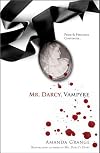
Wow. This book is just bad. The plot is non-existent, riddled with holes, and ultimately pointless. The characters, so vibrant and complex in the original novel, are here rendered as unconvincing cardboard cutouts. Elizabeth is a total doormat, accepting Darcy's odd moods, evasions and outright lies. Darcy does nothing but stump around offering obligatory niceties and being occasionally mysterious.
We are introduced to a spate of ephemeral characters who appear, info dump their life story and show more then vanish never to return. Several places in this novel I felt that the author was trying to pad the story. Overlooking all these flaws, the idea of Darcy and his sister as vampires kind of destroys the whole plot of Pride and Prejudice. That novel's plot turned on the idea of Wickham as a cad who seduced a fifteen year old girl. If that girl was, in fact, a hundred year old undead creature... well, that's a horse of a different color. Whatever, this book is totally mediocre. Skip it and reread P&P instead. show less
We are introduced to a spate of ephemeral characters who appear, info dump their life story and show more then vanish never to return. Several places in this novel I felt that the author was trying to pad the story. Overlooking all these flaws, the idea of Darcy and his sister as vampires kind of destroys the whole plot of Pride and Prejudice. That novel's plot turned on the idea of Wickham as a cad who seduced a fifteen year old girl. If that girl was, in fact, a hundred year old undead creature... well, that's a horse of a different color. Whatever, this book is totally mediocre. Skip it and reread P&P instead. show less
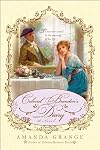
Thank you, Amanda Grange, for realising the heroic and romantic potential of Colonel Brandon, which is merely suggested in Austen’s ‘Sense and Sensibility’. Also, thank you for the first ‘parallel novel’, or ‘missing scenes’ tribute to a classic story, which not only works, but is beautifully written and well researched.
Forgive my gushing praise of this delightful book, but every word is well deserved!
Though not a fan of Austen’s books, the patient, caring and devoted Colonel show more Brandon instantly won me over, despite the fact that he is absent for a good part of the story! Modern, younger readers of ‘Sense and Sensibility’ - if there are any teenagers who discover Austen for themselves, without having her ‘genius’ thrust upon them at school – will no doubt appreciate Willoughby more and wish that Marianne could have married her first love, but on second thoughts, I think that Austen made the right match for her more passionate heroine in the end. Yes, Willoughby is young and exciting and charming, but he is also shallow and selfish. Colonel Brandon is older – not elderly, at thirty-five, just older than Marianne’s seventeen years – but he is deeper, wiser and his love for Marianne far more constant than the pretty playboy. So what if he will be a father figure as well as a lover to her – a calmer, more mature Marianne will need both companion and suitor to keep her happy.
‘Willoughby was nothing but a tawdry tale bound in gilt and leather, whereas you, dear Colonel, have in you the poetry of Shakespeare, though your cover is not so fine.’
Colonel James Brandon – he doesn’t even merit a first name in Austen’s story! – is worth waiting for. For the many other readers who, like me, fell for him in ‘Sense and Sensibility’, but felt cheated out of his company, ‘Colonel Brandon’s Diary’ is the perfect complement to the original novel. Tempted by the recounting Brandon gives to Elinor of his tragic love affair, and the contrast of a once lively and loving youth with the older, heartbroken man he becomes, Amanda Grange obviously had to bring this ‘good man’ to life. And such is the author’s familiarity and expertise with Austen’s characters, in her dialogue and descriptions, that she can employ them expertly in her own version. Mrs Jennings is just as funny, but Miss Grange also adds her own wit in the form of Brandon’s Wodehousian aunt and Eliza’s landlady (‘And then she said, “Maybe he’s got the smallpox,” but as I said to her, “I hope it’s not the smallpox. Just think of my sheets,” so then she said he probably dropped off his horse, as gentlemen have a habit of doing.’)
Whereas Austen also makes me laugh, however, only Amanda Grange’s take on the story really touched my heart, or made me *sigh* with feeling. Reading this novel, which I absorbed in one day and will no doubt return to soon, I was struck with the realisation that Austen left the best scenes out of her book! Brandon’s angry confrontation with his dissolute brother, his beloved Eliza’s death and the tender love he has for her daughter, only to find that Willoughby has broken her heart and ruined her. The duel they fight, which is passed over in a line in ‘Sense and Sensibility’, is all the more dramatic when experienced from the Colonel’s point of view. His judgement sharpened by concern for Marianne – and perhaps a touch of jealousy – Brandon is able to see through the young pretender from the start: ‘he is all surface, with nothing underneath’. Willoughby’s heartless treatment of both young Eliza and Marianne leaves him seething with rage, and the reader can only sympathise (and wish him good aim!)
The story starts in 1778, with Brandon studying at Oxford and returning to Delaford only to learn that his father has promised Eliza to his elder brother, and opens his diary and his heart to the reader through disappointment, travel abroad, a change of fortune, grief, and hope, to his marriage with Marianne in 1798. Grange captures his voice and inner thoughts so well, growing older and darker with experience, but also makes Marianne an appealing and (more importantly) willing match. The Colonel sees and admires in her the same qualities that make her my favourite Dashwood sister, who is ‘as honest and open as the day’ with her opinion. And whereas Austen’s last word on their union is rather depressing, almost forcing Marianne to marry him for his money, Grange gives Marianne a rousing speech bidding ‘adieu’, once and for all, to Willoughby (‘And for whom did I almost die? A man who did not deserve my love’) and shows her growing love and admiration, long overdue, for Colonel Brandon. The final scenes are so intimate and touching that I have now officially substituted Austen’s hurried summary for Amanda Grange’s thoughtful and lingering courtship:
‘You have loved and suffered, and yet it has not made you bitter, for you have the courage to love again. It is you who are the figure out of romance.’
Colonel Brandon and Marianne have both loved and lost, which is ironic for her – who proclaimed that she did not believe in second attachments – but makes them right for each other. Bringing them together slowly and with patience, instead of pushing them together in the last paragraph, is the difference between a May to December arranged marriage and one of the sweetest literary romances I have ever read. And the difference between Jane Austen and Amanda Grange. show less
Forgive my gushing praise of this delightful book, but every word is well deserved!
Though not a fan of Austen’s books, the patient, caring and devoted Colonel show more Brandon instantly won me over, despite the fact that he is absent for a good part of the story! Modern, younger readers of ‘Sense and Sensibility’ - if there are any teenagers who discover Austen for themselves, without having her ‘genius’ thrust upon them at school – will no doubt appreciate Willoughby more and wish that Marianne could have married her first love, but on second thoughts, I think that Austen made the right match for her more passionate heroine in the end. Yes, Willoughby is young and exciting and charming, but he is also shallow and selfish. Colonel Brandon is older – not elderly, at thirty-five, just older than Marianne’s seventeen years – but he is deeper, wiser and his love for Marianne far more constant than the pretty playboy. So what if he will be a father figure as well as a lover to her – a calmer, more mature Marianne will need both companion and suitor to keep her happy.
‘Willoughby was nothing but a tawdry tale bound in gilt and leather, whereas you, dear Colonel, have in you the poetry of Shakespeare, though your cover is not so fine.’
Colonel James Brandon – he doesn’t even merit a first name in Austen’s story! – is worth waiting for. For the many other readers who, like me, fell for him in ‘Sense and Sensibility’, but felt cheated out of his company, ‘Colonel Brandon’s Diary’ is the perfect complement to the original novel. Tempted by the recounting Brandon gives to Elinor of his tragic love affair, and the contrast of a once lively and loving youth with the older, heartbroken man he becomes, Amanda Grange obviously had to bring this ‘good man’ to life. And such is the author’s familiarity and expertise with Austen’s characters, in her dialogue and descriptions, that she can employ them expertly in her own version. Mrs Jennings is just as funny, but Miss Grange also adds her own wit in the form of Brandon’s Wodehousian aunt and Eliza’s landlady (‘And then she said, “Maybe he’s got the smallpox,” but as I said to her, “I hope it’s not the smallpox. Just think of my sheets,” so then she said he probably dropped off his horse, as gentlemen have a habit of doing.’)
Whereas Austen also makes me laugh, however, only Amanda Grange’s take on the story really touched my heart, or made me *sigh* with feeling. Reading this novel, which I absorbed in one day and will no doubt return to soon, I was struck with the realisation that Austen left the best scenes out of her book! Brandon’s angry confrontation with his dissolute brother, his beloved Eliza’s death and the tender love he has for her daughter, only to find that Willoughby has broken her heart and ruined her. The duel they fight, which is passed over in a line in ‘Sense and Sensibility’, is all the more dramatic when experienced from the Colonel’s point of view. His judgement sharpened by concern for Marianne – and perhaps a touch of jealousy – Brandon is able to see through the young pretender from the start: ‘he is all surface, with nothing underneath’. Willoughby’s heartless treatment of both young Eliza and Marianne leaves him seething with rage, and the reader can only sympathise (and wish him good aim!)
The story starts in 1778, with Brandon studying at Oxford and returning to Delaford only to learn that his father has promised Eliza to his elder brother, and opens his diary and his heart to the reader through disappointment, travel abroad, a change of fortune, grief, and hope, to his marriage with Marianne in 1798. Grange captures his voice and inner thoughts so well, growing older and darker with experience, but also makes Marianne an appealing and (more importantly) willing match. The Colonel sees and admires in her the same qualities that make her my favourite Dashwood sister, who is ‘as honest and open as the day’ with her opinion. And whereas Austen’s last word on their union is rather depressing, almost forcing Marianne to marry him for his money, Grange gives Marianne a rousing speech bidding ‘adieu’, once and for all, to Willoughby (‘And for whom did I almost die? A man who did not deserve my love’) and shows her growing love and admiration, long overdue, for Colonel Brandon. The final scenes are so intimate and touching that I have now officially substituted Austen’s hurried summary for Amanda Grange’s thoughtful and lingering courtship:
‘You have loved and suffered, and yet it has not made you bitter, for you have the courage to love again. It is you who are the figure out of romance.’
Colonel Brandon and Marianne have both loved and lost, which is ironic for her – who proclaimed that she did not believe in second attachments – but makes them right for each other. Bringing them together slowly and with patience, instead of pushing them together in the last paragraph, is the difference between a May to December arranged marriage and one of the sweetest literary romances I have ever read. And the difference between Jane Austen and Amanda Grange. show less
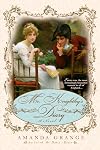
Knightley is pretty much a condescending prick for the first half of the book. He constantly mentally demeans and belittles Emma - how silly she is, how spoiled, how everyone flatters her without reason. Then he spends a little bit of time being completely obvious about how much he obsesses about her but is still surprised when someone mentions that she would be his perfect wife.
I actually almost stopped reading several times during the first half because Knightley was such an ass. Nothing show more really that he acted on (he didn't treat Emma poorly) but I was annoyed at how he constantly thought poorly of her. But the second half was much nicer to read. How he angsted about loving her and that her affections were engaged elsewhere (so he thought). The second half was good. Up until Knightley and Emma became engaged. Then I got annoyed again.
This time, though, I was annoyed with Emma's father. Well, more how everyone allowed him to whine about Emma's engagement to the point where Emma was ready to not marry Knightley to keep her father happy. It seemed that Mr. Woodhouse's negativity progressed from a hypochondriac to an emotional manipulator. And everyone allowed it. Very annoying to me.
Anyway, overall a bit of a mixed bag for me. I liked Mr. Darcy's Diary more so I'm thinking my frustration with this book is not the author (as I have no complaints about the writing - unusual for me when reading a fluff book lately!) but rather the characters themselves. But really, I suppose that isn't surprising since Emma is a bit more of a Miss Caroline Bingley than a Miss Jane (or Elizabeth) Bennett. show less
I actually almost stopped reading several times during the first half because Knightley was such an ass. Nothing show more really that he acted on (he didn't treat Emma poorly) but I was annoyed at how he constantly thought poorly of her. But the second half was much nicer to read. How he angsted about loving her and that her affections were engaged elsewhere (so he thought). The second half was good. Up until Knightley and Emma became engaged. Then I got annoyed again.
This time, though, I was annoyed with Emma's father. Well, more how everyone allowed him to whine about Emma's engagement to the point where Emma was ready to not marry Knightley to keep her father happy. It seemed that Mr. Woodhouse's negativity progressed from a hypochondriac to an emotional manipulator. And everyone allowed it. Very annoying to me.
Anyway, overall a bit of a mixed bag for me. I liked Mr. Darcy's Diary more so I'm thinking my frustration with this book is not the author (as I have no complaints about the writing - unusual for me when reading a fluff book lately!) but rather the characters themselves. But really, I suppose that isn't surprising since Emma is a bit more of a Miss Caroline Bingley than a Miss Jane (or Elizabeth) Bennett. show less
Lists
Austenland (6)
Emma sequels (1)
Awards

You May Also Like


Associated Authors
Statistics
- Works
- 34
- Also by
- 2
- Members
- 3,832
- Popularity
- #6,619
- Rating
- 3.4
- Reviews
- 169
- ISBNs
- 147
- Languages
- 5
- Favorited
- 6