
Brian Fies
Author of Mom's Cancer
Works by Brian Fies
Associated Works
Tagged
Common Knowledge
- Canonical name
- Fies, Brian
- Gender
- male
- Education
- University of California, Davis
- Occupations
- freelance writer
editor
laboratory supervisor
journalist
cartoonist
graphic novelist (show all 8)
inorganic chemist
consultant - Organizations
- William Nesbit & Associates (1997-99)
Daily Democrat Woodland, CA (1983-86) - Awards and honors
- Eisner Award for Best Digital Comic (2005, for Mom's Cancer)
- Nationality
- USA
- Associated Place (for map)
- USA
Members
Reviews
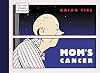
A family's struggle with cancer provides the plot for this touching and honest graphic memoir.
Brian's mom, after suffering a brief seizure, discovers that she has stage 4 lung cancer that has metastasized to her brain. She has less than a 5% chance of survival. Her choice to fight, and the awful toll cancer treatments take on her body and independence changes the family dynamic. Brian, Kid Sis and Nurse Sis each take on a different care-giving role, and the best and worst of their show more personalities come to light.
What I love about this book is that it's not what it seems to be. Picking it up, I thought "Great... another dead parent memoir." However, ultimately, this is a story about life and hope and families. Fries' slightly cartoony art style works gives realism to the proceedings, but remains clean and accessible. Also, sometimes, it's just nice to see a happy ending. show less
Brian's mom, after suffering a brief seizure, discovers that she has stage 4 lung cancer that has metastasized to her brain. She has less than a 5% chance of survival. Her choice to fight, and the awful toll cancer treatments take on her body and independence changes the family dynamic. Brian, Kid Sis and Nurse Sis each take on a different care-giving role, and the best and worst of their show more personalities come to light.
What I love about this book is that it's not what it seems to be. Picking it up, I thought "Great... another dead parent memoir." However, ultimately, this is a story about life and hope and families. Fries' slightly cartoony art style works gives realism to the proceedings, but remains clean and accessible. Also, sometimes, it's just nice to see a happy ending. show less
Public Domain Superman!
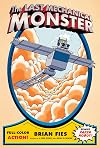
Well, actually, Superman only appears once and only as a name in a microfilm image of a Daily Planet newspaper headline halfway through the story. That's the moment when I stopped reading and started researching. And indeed, I found that this book is a sequel to "The Mechanical Monsters" cartoon produced by Max Fleischer back in the 1940s as part of a series of Superman animated shorts that were later allowed to fall into the public domain when their copyrights were show more not renewed. I must have watched this decades ago, but it had slipped from my mind, so I refreshed my memory by finding a version on YouTube. This connection is not mentioned anywhere on the cover, but it was mentioned on the blurb page that I had skipped, and it also turned up in the acknowledgments at the end.
Doing my homework gave the book an extra layer, but it didn't add as much depth as I expected since the cartoon is just a jumping off point for Brian Fies examination of aging and legacy. The villainous inventor who made the Mechanical Monsters in 1941 has spent six decades in prison, and upon his release he returns to his secret lair and resumes his evil plans with the single robot he is able to cobble together from the parts Superman left scattered about when he took down the whole robotic army.
Gathering the resources needed for his evil plans and day-to-day needs forces the aged inventor to interact with various members of the community near his lair as they help him play catch-up with the changes that have happened in the world during his absence. And like the Grinch coming down from the mountain, he finds the the size of his heart changing size.
I liked the fable aspects of the story, but I did get distracted by some bits that just didn't make much sense, like the length of his jail sentence, the fact that prison is treated like it exists in a vacuum with no access to outside news, and that the U.S. government while militarizing for World War II ignored the weaponry potential of the Mechanical Monsters. The officials who scooped up Nazi scientists with Operation Paperclip at the end of the war would have certainly implemented a work-release program for prisoners who could contribute automated fighting machines to the war effort.
And then the big finale just fell flat for me as the inventor's support network inevitably comes together to help in the moment of crisis as fire fighters and policemen just stand around twiddling their thumbs. Events unfold in increasingly unlikely ways to the point of being ridiculous.
It's a pretty decent book, but I just couldn't let myself go with the flow of it. show less
Well, actually, Superman only appears once and only as a name in a microfilm image of a Daily Planet newspaper headline halfway through the story. That's the moment when I stopped reading and started researching. And indeed, I found that this book is a sequel to "The Mechanical Monsters" cartoon produced by Max Fleischer back in the 1940s as part of a series of Superman animated shorts that were later allowed to fall into the public domain when their copyrights were show more not renewed. I must have watched this decades ago, but it had slipped from my mind, so I refreshed my memory by finding a version on YouTube. This connection is not mentioned anywhere on the cover, but it was mentioned on the blurb page that I had skipped, and it also turned up in the acknowledgments at the end.
Doing my homework gave the book an extra layer, but it didn't add as much depth as I expected since the cartoon is just a jumping off point for Brian Fies examination of aging and legacy. The villainous inventor who made the Mechanical Monsters in 1941 has spent six decades in prison, and upon his release he returns to his secret lair and resumes his evil plans with the single robot he is able to cobble together from the parts Superman left scattered about when he took down the whole robotic army.
Gathering the resources needed for his evil plans and day-to-day needs forces the aged inventor to interact with various members of the community near his lair as they help him play catch-up with the changes that have happened in the world during his absence. And like the Grinch coming down from the mountain, he finds the the size of his heart changing size.
I liked the fable aspects of the story, but I did get distracted by some bits that just didn't make much sense, like the length of his jail sentence, the fact that prison is treated like it exists in a vacuum with no access to outside news, and that the U.S. government while militarizing for World War II ignored the weaponry potential of the Mechanical Monsters. The officials who scooped up Nazi scientists with Operation Paperclip at the end of the war would have certainly implemented a work-release program for prisoners who could contribute automated fighting machines to the war effort.
And then the big finale just fell flat for me as the inventor's support network inevitably comes together to help in the moment of crisis as fire fighters and policemen just stand around twiddling their thumbs. Events unfold in increasingly unlikely ways to the point of being ridiculous.
It's a pretty decent book, but I just couldn't let myself go with the flow of it. show less
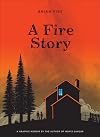
In graphic novel format,Brian Fies tells his own personal story as well as those of others who lost everything in the devastating Northern California fires of 2017. Their stories highlight the more mundane aspects of a living through a natural disaster—the bureaucratic red tape, the small things that trigger immense emotion, the weird sense of living as a displaced person in your own environs. Having experienced two devastating hurricanes myself, I can attest that Fies has accurately show more captured the moods and experiences of survivors of catastrophe. Some photos are also incorporated into the dramatic illustrations. This affecting book will stay with you much longer that the short time it will take to read it.
http://shelf-employed.blogspot.com show less
http://shelf-employed.blogspot.com show less
As I write this review fires are one again burning in California. So this book, while a memoir of one group's experience, is once again being lived by hundreds if not thousands of people. This story is poignant. I love how the author tells not just his story, but that of neighbors, friends, and other people he knew, some of which didn’t live to see the current blazes. I think this was the perfect format to tell this story. The author mixed his visual medium with his storytelling in a way show more that was compelling and kept the pages turning. A modern masterpiece of graphic novels that I think will be read for years to come, and maybe even be on future lists of best of best. show less
Lists
Awards


You May Also Like


Associated Authors
Statistics
- Works
- 4
- Also by
- 1
- Members
- 650
- Popularity
- #38,840
- Rating
- 4.1
- Reviews
- 43
- ISBNs
- 17
- Languages
- 2