
Alex Robinson (2) (1969–)
Author of Box Office Poison
For other authors named Alex Robinson, see the disambiguation page.
About the Author
Image credit: Photo taken by A.j. Michel (flickr name: syndprod) at San Diego Comic Con 08. Read her blog at www.syndicateproduct.com.
Works by Alex Robinson
Sherman's march 1 copy
Box Office Poison #2 1 copy
Box Office Poison #1 1 copy
Associated Works
Tagged
Common Knowledge
- Canonical name
- Robinson, Alex
- Birthdate
- 1969-08-08
- Gender
- male
- Organizations
- The Ink Panthers
- Awards and honors
- Eisner Award (Talent Deserving of Wider Recognition | 2001)
- Nationality
- USA
- Places of residence
- Yorktown Heights, New York, USA
- Associated Place (for map)
- New York, USA
Members
Reviews
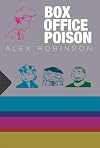
Robinson’s most famous work is in some ways his best—his obvious youthful enthusiasm for the comics medium helps you forgive his less successful experiments (the dark subplot about the runaway girls seems out of place with the more slice-of-life tone).
The plot revolves around a group of young New Yorkers in the mid-nineties, centered on frustrated book store clerk Sherman (clearly a stand-in for the young author) and his relationship with an alcoholic writer based on Algonquin wit show more Dorthy Parker. There’s a bit of comics history included, thanks to the interesting subplot about a cheated comics creator and his fight for recognition for having created the Night Stalker, a superhero who looks sort of like if Batman and Spider-Man.
The best part of the book is the characterization of the large cast. Robinson has a good ear for dialogue, and does a fun job of hinting that even minor supporting characters have their own stories going on.
The art is very much of its time, when “alternative” comics were in black and white and designed to appeal to lonely anti-social young men. It does have a crude cartoony charm and he does a very good job of “spotting blacks” which is a technical cartooning term for being awesome.
Also of its time are the dated mores of the latter half of the last century so more sensitive viewers should proceed with caution. There is a curious amount of male nudity (especially since comics at the time were, again, aimed largely at sexless, oafish males).
So if you like interesting characters and aren’t put off by the occasional wiener this book is definitely worth buying, used if you can. show less
The plot revolves around a group of young New Yorkers in the mid-nineties, centered on frustrated book store clerk Sherman (clearly a stand-in for the young author) and his relationship with an alcoholic writer based on Algonquin wit show more Dorthy Parker. There’s a bit of comics history included, thanks to the interesting subplot about a cheated comics creator and his fight for recognition for having created the Night Stalker, a superhero who looks sort of like if Batman and Spider-Man.
The best part of the book is the characterization of the large cast. Robinson has a good ear for dialogue, and does a fun job of hinting that even minor supporting characters have their own stories going on.
The art is very much of its time, when “alternative” comics were in black and white and designed to appeal to lonely anti-social young men. It does have a crude cartoony charm and he does a very good job of “spotting blacks” which is a technical cartooning term for being awesome.
Also of its time are the dated mores of the latter half of the last century so more sensitive viewers should proceed with caution. There is a curious amount of male nudity (especially since comics at the time were, again, aimed largely at sexless, oafish males).
So if you like interesting characters and aren’t put off by the occasional wiener this book is definitely worth buying, used if you can. show less

I probably waited 15 years too long to read this. It was well done, structurally interesting, and never once grabbed me. The chapters focusing on the character with schizophrenia did very interesting technical things which fit the vibe but were increasingly hard to read. If I had read this when I was just getting into comics, it would have blown me away. Instead, I struggled with maintaining interest in the loose plot and sometimes slapdash character development.
One of my favorite things about going into a good used bookstore (you know the ones that actually carry comics and graphic novels) is discovering artists/authors I hadn’t heard of before. And last year when exploring one of my favorite stores I came across the book “Too Cool To Be Forgotten” and was entranced by Alex’s art and story. So I eagerly looked to see what else he had done and soon discovered “Box Office Poison,” one of Alex’s best known works. The story explore themes show more of friendship, life, love...and comic books. How could I not be intrigued by that? But I have to admit when I first picked up the book I was a bit intimidated by it, I mean it is a massive book at just over 600 pages. But I was eager to read the story and dove into the work.
Sherman and Ed are two young friends trying to make it in the larger world. Sherman is just out of college and wants to be a writer, but for now he’s working a dead end job as a clerk in a bookstore. Ed, who is shy and a bit unsure of himself, wants to create comics for a living. He’s already got a few ideas brewing in his head and he’s got an internship lined up with a once great artist, whose know fallen out of favor and is forgotten. Along the way to fulfilling their dreams, Ed and Sherman make and lose new friends and roommates all on the same path as they are. All, even the oldest, are still trying to find their dreams and survive life as best as they can.
This is a long story, probably one of the longest that I’ve read in a long time (well since “Habibi” at the very least.) And dense. Wow is it dense, I had to stop a lot while reading it to ponder what was going on and because at times the storyline felt like it was resonating all too closely with my own life. I must have stopped and started the book a dozen or more times. Don’t get me wrong I enjoyed the book, but there was a lot to take in, not only with the story, but the artwork as well. But I kept reading the book, not just because I wanted to finish it, but because I related to the characters as they dealt with whatever life tossed their way (sometimes they dealt with it poorly, but still...) How they dealt and managed relationships and their own insecurities at times hit way too close to home, but enlightening at the same time. Alex did a great job of telling the story of these characters, not just of the troubles they had in life, but those moments of sheer joy and happiness as well. He made the story feel like I was reading a documentary, because nothing was kept out, nothing was scared, it was hopeful and depressing all at the same time.
I think one of my favorite parts of this book is right there at the very end, where there’s the discussion on friendships/catch up of what the characters are up too. There’s just this quote that really resonated with me and in many ways sums up how I viewed the book. The quote is “most friendships, if the end at all, end not by earthquake, but by erosion.” Not only does it tie everything together about the book (or at least it feels that way too me), but it just resonates with me at this juncture in my life as I’m in similar place. People moving, new jobs, doing new and different things and all of us moving along our own path to different parts of our lives. It almost feels like the fireworks and the explosions would be a better way to end it, because then you at least know why it ended and it’s definitive unlike the erosion...where no one did anything in particular to end but no one did anything to save it and you at times make half hearted efforts to restart it, before at some point just giving up. Its the thing that i’m still pondering even days after reading this book.
I have some difficulty with the art in this book, in part because Alex packs a lot and I do mean a lot, of art into the page. It at times makes it a bit difficult to see everything that’s going on and is another reason why I had to keep stopping and starting the book. He adds so many details in and in many ways it reminds me of some other underground comics artists, such as some of the work I’ve seen done by Matt Groening. What I did like though is that Alex isn’t often bound by typical border panels, he often has characters going off the edge or rearranging the panels till they twist and turn around a character’s head or in one instance using a solid black line through a panel bisecting the same scene to give a character the chance to interact with the story in a new way.
Overall I’d give the work 3.5 out of 5 stars (the density takes a bit off for me.) I’d recommend this book to those that like watching documentaries and wouldn’t mind reading one in print. show less
Sherman and Ed are two young friends trying to make it in the larger world. Sherman is just out of college and wants to be a writer, but for now he’s working a dead end job as a clerk in a bookstore. Ed, who is shy and a bit unsure of himself, wants to create comics for a living. He’s already got a few ideas brewing in his head and he’s got an internship lined up with a once great artist, whose know fallen out of favor and is forgotten. Along the way to fulfilling their dreams, Ed and Sherman make and lose new friends and roommates all on the same path as they are. All, even the oldest, are still trying to find their dreams and survive life as best as they can.
This is a long story, probably one of the longest that I’ve read in a long time (well since “Habibi” at the very least.) And dense. Wow is it dense, I had to stop a lot while reading it to ponder what was going on and because at times the storyline felt like it was resonating all too closely with my own life. I must have stopped and started the book a dozen or more times. Don’t get me wrong I enjoyed the book, but there was a lot to take in, not only with the story, but the artwork as well. But I kept reading the book, not just because I wanted to finish it, but because I related to the characters as they dealt with whatever life tossed their way (sometimes they dealt with it poorly, but still...) How they dealt and managed relationships and their own insecurities at times hit way too close to home, but enlightening at the same time. Alex did a great job of telling the story of these characters, not just of the troubles they had in life, but those moments of sheer joy and happiness as well. He made the story feel like I was reading a documentary, because nothing was kept out, nothing was scared, it was hopeful and depressing all at the same time.
I think one of my favorite parts of this book is right there at the very end, where there’s the discussion on friendships/catch up of what the characters are up too. There’s just this quote that really resonated with me and in many ways sums up how I viewed the book. The quote is “most friendships, if the end at all, end not by earthquake, but by erosion.” Not only does it tie everything together about the book (or at least it feels that way too me), but it just resonates with me at this juncture in my life as I’m in similar place. People moving, new jobs, doing new and different things and all of us moving along our own path to different parts of our lives. It almost feels like the fireworks and the explosions would be a better way to end it, because then you at least know why it ended and it’s definitive unlike the erosion...where no one did anything in particular to end but no one did anything to save it and you at times make half hearted efforts to restart it, before at some point just giving up. Its the thing that i’m still pondering even days after reading this book.
I have some difficulty with the art in this book, in part because Alex packs a lot and I do mean a lot, of art into the page. It at times makes it a bit difficult to see everything that’s going on and is another reason why I had to keep stopping and starting the book. He adds so many details in and in many ways it reminds me of some other underground comics artists, such as some of the work I’ve seen done by Matt Groening. What I did like though is that Alex isn’t often bound by typical border panels, he often has characters going off the edge or rearranging the panels till they twist and turn around a character’s head or in one instance using a solid black line through a panel bisecting the same scene to give a character the chance to interact with the story in a new way.
Overall I’d give the work 3.5 out of 5 stars (the density takes a bit off for me.) I’d recommend this book to those that like watching documentaries and wouldn’t mind reading one in print. show less
Robinson knows how to play with your sympathy with this one. I found myself alternating between compassion and disdain for some of the central characters, but ultimately, I think Robinson puts your emotions where he wants them. The book has a climactic ending that doesn't disappoint.
Lists
Awards


You May Also Like


Associated Authors
Statistics
- Works
- 18
- Also by
- 5
- Members
- 1,444
- Popularity
- #17,805
- Rating
- 3.7
- Reviews
- 33
- ISBNs
- 91
- Languages
- 7
- Favorited
- 1