
A. C. Grayling
Author of Wittgenstein: A Very Short Introduction
About the Author
Anthony Clifford "A. C." Grayling is a British philosopher. In 2011 he founded and became the first Master of New College of the Humanities, an independent undergraduate college in London. Until June 2011, he was Professor of Philosophy at Birkbeck, University of London, where he taught from 1991. show more Grayling was born and raised in Luanshya, Northern Rhodesia (now Zambia). After moving to England in his teens, he spent three years at the University of Sussex, but said that although he applauded their intention to educate generalists, he wished to be a scholar, so in addition to his BA from Sussex, he also completed one in philosophy as a University of London external student. He went on to obtain an MA from Sussex, then attended Magdalen College, Oxford, where he was taught by P. F. Strawson and A. J. Ayer, obtaining his doctorate in 1981. He lectured in philosophy at St Anne's College, Oxford, before taking up a post in 1991 at Birkbeck, University of London, where in 1998 he became reader in philosophy. (Bowker Author Biography) show less
Image credit: AC Grayling at the Edinburgh Book Festival, August 2011.
Series
Works by A. C. Grayling
Among the Dead Cities: The History and Moral Legacy of the WWII Bombing of Civilians in Germany and Japan (2006) 376 copies, 8 reviews
The Age of Genius: The Seventeenth Century and the Birth of the Modern Mind (2016) 269 copies, 3 reviews
Against All Gods: Six Polemics on Religion and an Essay on Kindness (Oberon Masters Series) (2007) 173 copies, 3 reviews
The Frontiers of Knowledge: What We Know About Science, History and The Mind (2021) 110 copies, 3 reviews
Liberty in the Age of Terror: A Defence of Civil Liberties and Enlightenment Values (2009) 94 copies
The Choice of Hercules: Pleasure, Duty and the Good Life in the 21st Century (2007) 84 copies, 2 reviews
The Britannica Guide to the Ideas That Made the Modern World (Britannica Guides) (2008) 68 copies, 1 review
To Set Prometheus Free: Essays on Religion, Reason and Humanity (Oberon Masters Series) (2009) 32 copies, 2 reviews
Towards The Light: The Story Of The Struggles For Liberty And Rights That Made The Modern West 1 copy
The Form Of Things 1 copy
A Epistemologia 1 copy
Symposium 1 copy
Associated Works
Reflections on the Revolution in France (1790) — Introduction, some editions — 3,296 copies, 30 reviews
The Art of Always Being Right (1864) — Introduction, some editions; Afterword, some editions — 1,562 copies, 23 reviews
Tagged
Common Knowledge
- Canonical name
- Grayling, A. C.
- Legal name
- Grayling, Anthony Clifford
- Birthdate
- 1949-04-03
- Gender
- male
- Education
- University of Sussex (BA|MA)
University of London (BA)
Magdalen College, University of Oxford (M.Phil)
Magdalen College, University of Oxford (D.Phil|1981) - Occupations
- philosopher
university professor - Organizations
- New College of the Humanities (founder)
Birkbeck College, University of London
St Anne's College, Oxford University
Bedford College, University of London
Aristotelian Society
British Humanist Association (show all 13)
United Kingdom Armed Forces Humanist Association (patron)
Dignity in Dying (patron)
World Economic Forum
London Library (trustee)
Prospect Magazine (contributing editor)
June Fourth
UN Human Rights Council for the International Humanist and Ethical Union - Awards and honors
- Order of the British Empire (Commander, 2017)
Royal Society of Arts (Fellow)
Royal Society of Literature (Fellow, 2006)
Forkosch Literary Prize (2013)
Bertrand Russell Society Award (2015) - Relationships
- Hickman, Katie (spouse)
Ayer, A. J. (doctoral advisor)
Strawson, P. F. (doctoral advisor) - Nationality
- UK
- Birthplace
- Luanshya, Northern Rhodesia (Zambia)
- Places of residence
- England, UK
- Associated Place (for map)
- UK
Members
Reviews
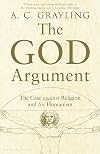
Taking an Axe to the Root of Religious Belief
Debates concerning religion and the existence of god can quickly get confusing because we often forget that we are frequently having (at least) three separate debates simultaneously, as A.C. Grayling points out in The God Argument: The Case Against Religion and For Humanism.
The first debate is metaphysical: we want to know if there are good or sufficient reasons for us to believe that god(s) or some divine agency exists. The second is social: we show more want to determine the influence religion should have in public debate and policy. And the third is moral: we want to establish whether morality comes from divine sanctions or else from human reflection and reason.
What is interesting to note—as Grayling correctly points out—is that if we answer the first question in the negative, and determine that there is no good reason to believe in the existence of god, then there is little point in discussing the social or moral ramifications of religious belief (insofar as it relies on god’s existence). It would make little sense to affirm that god does not exist—or that it is irrational to believe in god’s existence—and then to suggest that religious views predicated on god’s existence should be taken seriously in the public square or that our morality comes from a non-existent entity.
(Of course, people should have the freedom to form their own beliefs according to the dictates of their own conscience—and this should be respected in the personal sphere of life granted that harm is not inflicted upon others—but this certainly doesn’t mean that irrational ideas should receive undue and privileged public respect and influence. All ideas should be subject to challenge.)
So while there are many good reasons to fight for the separation of church and state, and many good reasons to prefer humanism over divine command theory (as Grayling masterfully covers), these issues are, largely, beside the point if it can be shown that there are no good reasons to believe that god exists in the first place. Therefore, by taking an axe to the root of religious belief—by demonstrating that belief in a supreme being is in fact highly irrational—we can resolve all debates simultaneously.
Let’s see if Grayling accomplishes this.
Explaining mysteries with mysteries
Let’s first consider this question: What counts as a good explanation? In very general terms, a good explanation must be both (1) specific and (2) testable. For example, a good explanation for how plants grow will include the details of photosynthesis and how plants convert light energy into chemical energy to be used to fuel the plants’ activity and growth. Photosynthesis is a good explanation because of the depth and specificity of the details, which makes the theory testable and falsifiable through experiment. Photosynthesis accounts for the available evidence in a specific way and would not be valid if the details of plant biology varied even slightly.
Conversely, what counts as a bad explanation? We can say, generally, that a bad explanation is one that is (1) non-specific and, therefore, (2) not testable or falsifiable. For example, if we were to say that plants grow through magic spells cast by invisible fairies, this could, in fact, account for all instances of actual and possible plant growth, but it would be impossible to test this theory because it’s not specific enough to be evaluated (and it actually shields itself against evaluation by asserting the invisibility of the fairies).
The key point is that the invisible fairy hypothesis would be consistent with plant growth even if plant biology were completely different. Because the hypothesis accounts for everything, in practical terms it accounts for nothing, or, as the philosopher of science Karl Popper would put it, “A theory that explains everything, explains nothing.”
The uncomfortable truth regarding the religious conceptions of god is that they are not as dissimilar from the invisible fairies as you might suppose. For example, we can ask the following question: Where did the universe and all of life come from?
Science, of course, provides some good (albeit incomplete) answers; modern physics and evolutionary biology describe, in painstaking mathematical and empirical detail, the physical and biological processes that make up the universe and life on earth. Scientific theories are testable and falsifiable and subject to refinement, and if the universe operated in slightly different ways, we would have to abandon our scientific theories and replace them with new ones.
What about the religious explanations for the existence of the universe and life on earth? They amount to little more than the argument that invisible fairies cast magic spells to grow plants. For example, modern versions of the cosmological argument—which claim that the universe requires a first cause—explicitly state that this first cause, which they call god, “transcends time and space,” which is, essentially, another way of saying that god is invisible and casts spells.
This is a necessary move for the theist to avoid a blatant contradiction. To see how, let’s quickly review a version of the cosmological argument known as the Kalam Cosmological Argument (KCA):
1. Whatever begins to exist has a cause;
2. The universe began to exist;
3. Therefore, the universe has a cause, which is God.
We can immediately see the problem here: if everything requires a cause, then why doesn’t god require a cause? The theist will then claim, as theologian William Lane Craig maintains, that god requires no cause because god exists outside of time and space, just like our invisible garden fairies!
Similarly, design arguments for the existence of god take the same stance. Theists maintain that the complexity of the world requires a designer, but when asked if the designer, who must be at least as complex as the universe it created, also requires a designer, they will claim that god is not actually complex. So god exists outside of time and space and has no complex parts or properties to explain, yet somehow created the universe and continues to interact with it. This is sounding uncomfortably close to our plant-growing fairies.
The problem with the arguments for god’s existence should by now be readily apparent. Theists are attempting to explain the mysteries of the universe with another mystery, without noticing that the substitute mystery (god) requires the exact same explanations as the original mysteries it is supposedly explaining (the origin and complexity of the universe). Further, the arguments for god’s existence only work if god is defined in such a way as to be completely inaccessible to investigation or evaluation.
God, defined in this way, can account for everything, and even if the universe were completely different, the cosmological and design arguments would still apply. But we should take pains to always remind ourselves of Popper’s crucial point: namely, that theories that explain everything explain nothing.
Sagan’s dragon and Russell’s teapot
Carl Sagan famously made a similar point in his book The Demon-Haunted World. In the chapter titled “The Dragon in My Garage,” Sagan wrote:
We can reframe Sagan’s question as follows: What’s the difference between an atemporal, nonspatial, incorporeal, invisible god and no god at all? Theists, in their attempts to define god in such a way as to make their arguments coherent, end up stripping away all of god’s properties until there’s nothing left.
Bertrand Russell, writing in 1952, expressed the same point in a different way. In an analogy referred to as Russell’s Teapot, Russell wrote:
Notice that within Russell’s teapot analogy is an argument against agnosticism. If someone were to ask you to describe your beliefs regarding the existence of the china teapot, would you describe yourself as an a-teapotist or as a teapot agnostic? The teapot almost certainly doesn’t exist, and just because someone asserts its existence without evidence doesn’t make it more likely to exist, and therefore we have no reason to believe in it, or to even label ourselves as undecided.
Whether we are talking about invisible fairies, Sagan’s invisible dragon, Russell’s invisible floating teapot, or incorporeal, nonspatial gods, the point is always the same: the philosophical burden of proof always falls on those making the claims (since a virtually infinite number of claims can be made), rather than shifting the burden of disproof onto others. Further, mysteries cannot be solved by introducing other mysteries, and, without the weight of tradition, irrational explanations would not be persuasive on their own.
Ask yourself how many people would be persuaded by something like the cosmological argument if they didn’t already believe in god? The likely answer is very few. The weight of tradition gives credibility to worldviews that, on their own, are nothing short of absurd. The absurdity, however, is masked by the number of followers and the emotional appeal of the beliefs. But we must never sacrifice our intellectual integrity in service to consolation, wishful thinking, or tradition alone. Faith, or belief in the face of little to no evidence, or even contradictory evidence, is no virtue.
A Better Alternative
Once the mind has been liberated from belief in god and has been disabused of the idea that life’s meaning must be imposed from an external source, the individual is truly free to develop a richer conception of life as the pursuit of one’s own meaning, goals, relationships, and pleasures. Love, friendship, hobbies, community involvement, helping others, and many other pleasurable and worthwhile endeavors lose nothing from the fact that an invisible entity is not perpetually watching you from above.
So, what then, is the good life? The best answer seems to be that there is no single, one-size-fits all answer, and that at least part of the answer lies in the pursuit of ethical knowledge itself. Living the good life is not about finding a single author, tradition, or text to simply obey. Rather, living the good life is more about taking full advantage of your intellectual freedom and rational capacity to explore the great traditions of the past and to choose what best suits your own life and personality.
Crafting one’s own meaning and purpose based on the exploration of humanity’s collective wisdom as expressed in the great literature of the past and present seems infinitely more fulfilling than blind obedience to a single ancient text and viewpoint that cannot withstand critical scrutiny. As Grayling wrote:
Debates concerning religion and the existence of god can quickly get confusing because we often forget that we are frequently having (at least) three separate debates simultaneously, as A.C. Grayling points out in The God Argument: The Case Against Religion and For Humanism.
The first debate is metaphysical: we want to know if there are good or sufficient reasons for us to believe that god(s) or some divine agency exists. The second is social: we show more want to determine the influence religion should have in public debate and policy. And the third is moral: we want to establish whether morality comes from divine sanctions or else from human reflection and reason.
What is interesting to note—as Grayling correctly points out—is that if we answer the first question in the negative, and determine that there is no good reason to believe in the existence of god, then there is little point in discussing the social or moral ramifications of religious belief (insofar as it relies on god’s existence). It would make little sense to affirm that god does not exist—or that it is irrational to believe in god’s existence—and then to suggest that religious views predicated on god’s existence should be taken seriously in the public square or that our morality comes from a non-existent entity.
(Of course, people should have the freedom to form their own beliefs according to the dictates of their own conscience—and this should be respected in the personal sphere of life granted that harm is not inflicted upon others—but this certainly doesn’t mean that irrational ideas should receive undue and privileged public respect and influence. All ideas should be subject to challenge.)
So while there are many good reasons to fight for the separation of church and state, and many good reasons to prefer humanism over divine command theory (as Grayling masterfully covers), these issues are, largely, beside the point if it can be shown that there are no good reasons to believe that god exists in the first place. Therefore, by taking an axe to the root of religious belief—by demonstrating that belief in a supreme being is in fact highly irrational—we can resolve all debates simultaneously.
Let’s see if Grayling accomplishes this.
Explaining mysteries with mysteries
Let’s first consider this question: What counts as a good explanation? In very general terms, a good explanation must be both (1) specific and (2) testable. For example, a good explanation for how plants grow will include the details of photosynthesis and how plants convert light energy into chemical energy to be used to fuel the plants’ activity and growth. Photosynthesis is a good explanation because of the depth and specificity of the details, which makes the theory testable and falsifiable through experiment. Photosynthesis accounts for the available evidence in a specific way and would not be valid if the details of plant biology varied even slightly.
Conversely, what counts as a bad explanation? We can say, generally, that a bad explanation is one that is (1) non-specific and, therefore, (2) not testable or falsifiable. For example, if we were to say that plants grow through magic spells cast by invisible fairies, this could, in fact, account for all instances of actual and possible plant growth, but it would be impossible to test this theory because it’s not specific enough to be evaluated (and it actually shields itself against evaluation by asserting the invisibility of the fairies).
The key point is that the invisible fairy hypothesis would be consistent with plant growth even if plant biology were completely different. Because the hypothesis accounts for everything, in practical terms it accounts for nothing, or, as the philosopher of science Karl Popper would put it, “A theory that explains everything, explains nothing.”
The uncomfortable truth regarding the religious conceptions of god is that they are not as dissimilar from the invisible fairies as you might suppose. For example, we can ask the following question: Where did the universe and all of life come from?
Science, of course, provides some good (albeit incomplete) answers; modern physics and evolutionary biology describe, in painstaking mathematical and empirical detail, the physical and biological processes that make up the universe and life on earth. Scientific theories are testable and falsifiable and subject to refinement, and if the universe operated in slightly different ways, we would have to abandon our scientific theories and replace them with new ones.
What about the religious explanations for the existence of the universe and life on earth? They amount to little more than the argument that invisible fairies cast magic spells to grow plants. For example, modern versions of the cosmological argument—which claim that the universe requires a first cause—explicitly state that this first cause, which they call god, “transcends time and space,” which is, essentially, another way of saying that god is invisible and casts spells.
This is a necessary move for the theist to avoid a blatant contradiction. To see how, let’s quickly review a version of the cosmological argument known as the Kalam Cosmological Argument (KCA):
1. Whatever begins to exist has a cause;
2. The universe began to exist;
3. Therefore, the universe has a cause, which is God.
We can immediately see the problem here: if everything requires a cause, then why doesn’t god require a cause? The theist will then claim, as theologian William Lane Craig maintains, that god requires no cause because god exists outside of time and space, just like our invisible garden fairies!
Similarly, design arguments for the existence of god take the same stance. Theists maintain that the complexity of the world requires a designer, but when asked if the designer, who must be at least as complex as the universe it created, also requires a designer, they will claim that god is not actually complex. So god exists outside of time and space and has no complex parts or properties to explain, yet somehow created the universe and continues to interact with it. This is sounding uncomfortably close to our plant-growing fairies.
The problem with the arguments for god’s existence should by now be readily apparent. Theists are attempting to explain the mysteries of the universe with another mystery, without noticing that the substitute mystery (god) requires the exact same explanations as the original mysteries it is supposedly explaining (the origin and complexity of the universe). Further, the arguments for god’s existence only work if god is defined in such a way as to be completely inaccessible to investigation or evaluation.
God, defined in this way, can account for everything, and even if the universe were completely different, the cosmological and design arguments would still apply. But we should take pains to always remind ourselves of Popper’s crucial point: namely, that theories that explain everything explain nothing.
Sagan’s dragon and Russell’s teapot
Carl Sagan famously made a similar point in his book The Demon-Haunted World. In the chapter titled “The Dragon in My Garage,” Sagan wrote:
“A fire-breathing dragon lives in my garage.”
Suppose I seriously make such an assertion to you. Surely you'd want to check it out, see for yourself. There have been innumerable stories of dragons over the centuries, but no real evidence. What an opportunity!
"Show me," you say. I lead you to my garage. You look inside and see a ladder, empty paint cans, an old tricycle--but no dragon.
"Where's the dragon?" you ask.
"Oh, she's right here," I reply, waving vaguely. "I neglected to mention that she's an invisible dragon."
You propose spreading flour on the floor of the garage to capture the dragon's footprints.
"Good idea," I say, "but this dragon floats in the air."
Then you'll use an infrared sensor to detect the invisible fire.
"Good idea, but the invisible fire is also heatless."
You'll spray-paint the dragon and make her visible.
"Good idea, but she's an incorporeal dragon and the paint won't stick."
And so on. I counter every physical test you propose with a special explanation of why it won't work.
Now, what's the difference between an invisible, incorporeal, floating dragon who spits heatless fire and no dragon at all? If there's no way to disprove my contention, no conceivable experiment that would count against it, what does it mean to say that my dragon exists? Your inability to invalidate my hypothesis is not at all the same thing as proving it true. Claims that cannot be tested, assertions immune to disproof are veridically worthless, whatever value they may have in inspiring us or in exciting our sense of wonder. What I'm asking you to do comes down to believing, in the absence of evidence, on my say-so.
We can reframe Sagan’s question as follows: What’s the difference between an atemporal, nonspatial, incorporeal, invisible god and no god at all? Theists, in their attempts to define god in such a way as to make their arguments coherent, end up stripping away all of god’s properties until there’s nothing left.
Bertrand Russell, writing in 1952, expressed the same point in a different way. In an analogy referred to as Russell’s Teapot, Russell wrote:
“Many orthodox people speak as though it were the business of sceptics to disprove received dogmas rather than of dogmatists to prove them. This is, of course, a mistake. If I were to suggest that between the Earth and Mars there is a china teapot revolving about the sun in an elliptical orbit, nobody would be able to disprove my assertion provided I were careful to add that the teapot is too small to be revealed even by our most powerful telescopes. But if I were to go on to say that, since my assertion cannot be disproved, it is intolerable presumption on the part of human reason to doubt it, I should rightly be thought to be talking nonsense. If, however, the existence of such a teapot were affirmed in ancient books, taught as the sacred truth every Sunday, and instilled into the minds of children at school, hesitation to believe in its existence would become a mark of eccentricity and entitle the doubter to the attentions of the psychiatrist in an enlightened age or of the Inquisitor in an earlier time.”
Notice that within Russell’s teapot analogy is an argument against agnosticism. If someone were to ask you to describe your beliefs regarding the existence of the china teapot, would you describe yourself as an a-teapotist or as a teapot agnostic? The teapot almost certainly doesn’t exist, and just because someone asserts its existence without evidence doesn’t make it more likely to exist, and therefore we have no reason to believe in it, or to even label ourselves as undecided.
Whether we are talking about invisible fairies, Sagan’s invisible dragon, Russell’s invisible floating teapot, or incorporeal, nonspatial gods, the point is always the same: the philosophical burden of proof always falls on those making the claims (since a virtually infinite number of claims can be made), rather than shifting the burden of disproof onto others. Further, mysteries cannot be solved by introducing other mysteries, and, without the weight of tradition, irrational explanations would not be persuasive on their own.
Ask yourself how many people would be persuaded by something like the cosmological argument if they didn’t already believe in god? The likely answer is very few. The weight of tradition gives credibility to worldviews that, on their own, are nothing short of absurd. The absurdity, however, is masked by the number of followers and the emotional appeal of the beliefs. But we must never sacrifice our intellectual integrity in service to consolation, wishful thinking, or tradition alone. Faith, or belief in the face of little to no evidence, or even contradictory evidence, is no virtue.
A Better Alternative
Once the mind has been liberated from belief in god and has been disabused of the idea that life’s meaning must be imposed from an external source, the individual is truly free to develop a richer conception of life as the pursuit of one’s own meaning, goals, relationships, and pleasures. Love, friendship, hobbies, community involvement, helping others, and many other pleasurable and worthwhile endeavors lose nothing from the fact that an invisible entity is not perpetually watching you from above.
So, what then, is the good life? The best answer seems to be that there is no single, one-size-fits all answer, and that at least part of the answer lies in the pursuit of ethical knowledge itself. Living the good life is not about finding a single author, tradition, or text to simply obey. Rather, living the good life is more about taking full advantage of your intellectual freedom and rational capacity to explore the great traditions of the past and to choose what best suits your own life and personality.
Crafting one’s own meaning and purpose based on the exploration of humanity’s collective wisdom as expressed in the great literature of the past and present seems infinitely more fulfilling than blind obedience to a single ancient text and viewpoint that cannot withstand critical scrutiny. As Grayling wrote:
“The message is clarion clear: to think for oneself is essential to the good life because what flows from doing so is one’s own. If others do the thinking for one, or if orthodoxies or traditions do it, one’s life is not one’s own. The good and well-lived life is not a servitude, but a service to one’s own chosen values. So the train of thought goes: freedom is what makes it possible to create meaning in one’s life, and the creation of meaning in one’s life is the good life itself.”show less
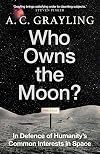
When readers want a current issue clarified, they can always turn to A.C. Grayling. The man has written clear, concise and insightful analyses of all sorts of current problem areas in several dozen books and I have no idea how many papers. This latest timely effort, Who Owns The Moon? deals with preventing mankind from ruining outer space, much as it has done to this planet. Because one thing we know for sure: without regulation, Man will ruin whatever he touches, in order to become show more richer.
What Grayling has going for him is the precedents of the Antarctic and the oceans. In those two cases, most of the countries of the world, including those without direct access to the oceans, have signed on to treaties making them agree to abide by sane rules. So much of the book is direct references to and from the United Nations Convention on the Law of the Seas (1967 & 1982) and the Antarctic Treaty (1961). It means there is hope.
Arguably the most important rules are those concerning law. Individuals are bound by the laws of their home country for any actions they take in the Antarctic or on the high seas. Otherwise, they would be above the laws of all countries. And the UN has no police.
The UN’s efforts are quite naturally diplomatic in nature. Their main strategy seems to be getting as many nations as possible to sign on. The result can be vague language instead of easily understood direction. For example, take nuclear weapons and weapons of mass destruction. Signatories “should refrain” from deploying them, rather than “all signatories are forbidden to deploy.”
The common principle that ought to be retained is “for the benefit of mankind as a whole.” As an operating principle, this is golden. It attempts to address the continuing tragedy of the commons, whereby someone or some country tries to scrape everything it wants from what is meant for all to share. It is endemic to mankind and can only be corralled by laws, enforcement, and penalties.
Yet the holes in the treaties are big enough to drive fracking equipment through. For example, anyone is allowed to explore Antarctica, but if a corporation decides to drill or mine, there is no one to stop it. And while people are supposed to be regulated by the laws of their own country, what if the country cannot be identified? What if it cannot manage such an investigation or prosecution? What if it has no space force or navy to physically seize the operation and shut it down? If Elon Musk fulfills his wish to explode nuclear bombs above Mars every five seconds over a period of years to heat the atmosphere and make it thicker, who back on Earth will be able to stop him today?
This kind of thing has already happened right here, Grayling says. “The Southern Ocean is an awful example of what happens when a common resource (the fishery) is open to commercial exploitation, and what might happen on the continent itself.”
Which leads to the air or space above. Grayling cites Arthur C. Clarke (who certainly informed my appreciation of outer space as a child): “As Earth rotated, every country would be claiming sovereignty over every region of space.” So everyone needs to agree to sane rules.
So far, countries have behaved remarkably civilly, but that could change at any moment. China, for one, is very big on privacy and total secrecy, which is totally opposite to what the treaties provide: open facilities for all to visit, mutual aid when needed, restitution to their native countries when humans are rescued, and so on. And then there are the wildcard billionaires like Musk, Bezos, Branson and their ilk, whose private agendas remain unknown, as well as how they might or might not co-operate with other billionaires and nations in space.
For years, nations kept signing treaty additions such as mutual aid and returning humans to their nations, until 1979, when only five signed on to the “Agreement concerning the activities of states on the moon or other celestial bodies.” This was a clear warning sign.
Grayling’s justified fear becomes clearer and more obvious with every passage and every act: “The truth is that space is not a separate warfighting domain, but a projection and continuation of Earth as the scene of almost continual warfare, somewhere or other, in most years of any decade.”
One of his biggest fears is the scramble. Suddenly, from the mid nineteenth century to the beginning of the twentieth, nations scrambled to lay claim, plant flags, build physical presence and declare loudly their possession of parts of Africa. All of it. King Leopold of Belgium actually did it for himself and not his country. It was enormously destructive, and of course, the ramifications are still very much felt today, two hundred years later. It’s all about grabbing resources for profit, and there is absolutely no reason to imagine it won’t happen on the moon or Mars, or even just beyond Earth’s atmosphere. Elon Musk continues to launch tens of thousands of his own satellites there, ever expanding the reach of his Starlink firm, from which he can cut off the entire country of Ukraine from the internet, for an unpaid bill. For all we know, he could be building Earth’s first ring; that’s how much hardware he flings out.
And while Antarctic treaties have taken care of some details quite well, there are time bombs abounding. No one is allowed to claim rights to the mineral wealth of Antarctica, for example, which is not now an issue because the land is miles below the ice, and current technologies cannot detect them. But there is a sunset to that clause – 2048. That should just be about the time the ice has sufficiently melted and the ice pack sufficiently broken up, that some country or company will want to make a grab for it. Almost certainly, this will result in another scramble, and/or wars.
This is major ugly stuff, but even the small stuff is a threat. The Law of the Sea waits until Article 194 (and 195) to mention that signatories must “prevent, reduce and control pollution of the marine environment.” Who is going to police miners from cyanide heap leaching hills and chemical slag ponds on Mars? Who is going to stop them from cutting off mountain tops because there should be lithium underneath?
So on the one hand, we have a lot of experience on Earth with the issues of keeping the commons in good repair. On the other hand, we ain’t seen nothin’ yet, where the wild west of outer space multiplies those challenges. Not that we’ve done so well here, either, as the Cod Wars, the plastic floating islands, and the total overfishing of all of the oceans demonstrate so vividly. I was optimistic that Grayling could paint a path to success when I first began reading Who Owns The Moon? By the time I finished, not so much.
David Wineberg show less
What Grayling has going for him is the precedents of the Antarctic and the oceans. In those two cases, most of the countries of the world, including those without direct access to the oceans, have signed on to treaties making them agree to abide by sane rules. So much of the book is direct references to and from the United Nations Convention on the Law of the Seas (1967 & 1982) and the Antarctic Treaty (1961). It means there is hope.
Arguably the most important rules are those concerning law. Individuals are bound by the laws of their home country for any actions they take in the Antarctic or on the high seas. Otherwise, they would be above the laws of all countries. And the UN has no police.
The UN’s efforts are quite naturally diplomatic in nature. Their main strategy seems to be getting as many nations as possible to sign on. The result can be vague language instead of easily understood direction. For example, take nuclear weapons and weapons of mass destruction. Signatories “should refrain” from deploying them, rather than “all signatories are forbidden to deploy.”
The common principle that ought to be retained is “for the benefit of mankind as a whole.” As an operating principle, this is golden. It attempts to address the continuing tragedy of the commons, whereby someone or some country tries to scrape everything it wants from what is meant for all to share. It is endemic to mankind and can only be corralled by laws, enforcement, and penalties.
Yet the holes in the treaties are big enough to drive fracking equipment through. For example, anyone is allowed to explore Antarctica, but if a corporation decides to drill or mine, there is no one to stop it. And while people are supposed to be regulated by the laws of their own country, what if the country cannot be identified? What if it cannot manage such an investigation or prosecution? What if it has no space force or navy to physically seize the operation and shut it down? If Elon Musk fulfills his wish to explode nuclear bombs above Mars every five seconds over a period of years to heat the atmosphere and make it thicker, who back on Earth will be able to stop him today?
This kind of thing has already happened right here, Grayling says. “The Southern Ocean is an awful example of what happens when a common resource (the fishery) is open to commercial exploitation, and what might happen on the continent itself.”
Which leads to the air or space above. Grayling cites Arthur C. Clarke (who certainly informed my appreciation of outer space as a child): “As Earth rotated, every country would be claiming sovereignty over every region of space.” So everyone needs to agree to sane rules.
So far, countries have behaved remarkably civilly, but that could change at any moment. China, for one, is very big on privacy and total secrecy, which is totally opposite to what the treaties provide: open facilities for all to visit, mutual aid when needed, restitution to their native countries when humans are rescued, and so on. And then there are the wildcard billionaires like Musk, Bezos, Branson and their ilk, whose private agendas remain unknown, as well as how they might or might not co-operate with other billionaires and nations in space.
For years, nations kept signing treaty additions such as mutual aid and returning humans to their nations, until 1979, when only five signed on to the “Agreement concerning the activities of states on the moon or other celestial bodies.” This was a clear warning sign.
Grayling’s justified fear becomes clearer and more obvious with every passage and every act: “The truth is that space is not a separate warfighting domain, but a projection and continuation of Earth as the scene of almost continual warfare, somewhere or other, in most years of any decade.”
One of his biggest fears is the scramble. Suddenly, from the mid nineteenth century to the beginning of the twentieth, nations scrambled to lay claim, plant flags, build physical presence and declare loudly their possession of parts of Africa. All of it. King Leopold of Belgium actually did it for himself and not his country. It was enormously destructive, and of course, the ramifications are still very much felt today, two hundred years later. It’s all about grabbing resources for profit, and there is absolutely no reason to imagine it won’t happen on the moon or Mars, or even just beyond Earth’s atmosphere. Elon Musk continues to launch tens of thousands of his own satellites there, ever expanding the reach of his Starlink firm, from which he can cut off the entire country of Ukraine from the internet, for an unpaid bill. For all we know, he could be building Earth’s first ring; that’s how much hardware he flings out.
And while Antarctic treaties have taken care of some details quite well, there are time bombs abounding. No one is allowed to claim rights to the mineral wealth of Antarctica, for example, which is not now an issue because the land is miles below the ice, and current technologies cannot detect them. But there is a sunset to that clause – 2048. That should just be about the time the ice has sufficiently melted and the ice pack sufficiently broken up, that some country or company will want to make a grab for it. Almost certainly, this will result in another scramble, and/or wars.
This is major ugly stuff, but even the small stuff is a threat. The Law of the Sea waits until Article 194 (and 195) to mention that signatories must “prevent, reduce and control pollution of the marine environment.” Who is going to police miners from cyanide heap leaching hills and chemical slag ponds on Mars? Who is going to stop them from cutting off mountain tops because there should be lithium underneath?
So on the one hand, we have a lot of experience on Earth with the issues of keeping the commons in good repair. On the other hand, we ain’t seen nothin’ yet, where the wild west of outer space multiplies those challenges. Not that we’ve done so well here, either, as the Cod Wars, the plastic floating islands, and the total overfishing of all of the oceans demonstrate so vividly. I was optimistic that Grayling could paint a path to success when I first began reading Who Owns The Moon? By the time I finished, not so much.
David Wineberg show less
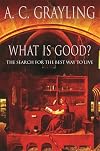
‘How shall I live in order to live a good life?’: It is good to stop once-in-a-while (– to be able to stop once-in-a-while! –) to ask oneself this question. So as not one day, when it is time to die, be confronted by the realisation that whatever one has dreamt of doing with one’s life - after all it is the only stab at life one is given - has passed one by.
Grayling leads us on a historical survey of answers given by western philosophy and religions over 2500 years, from antiquity show more to the present. He writes for a general readership, selecting from and summarising a vast amount of material. I get the impression that he admiringly succeeds in this task. A.C.G. is however not a detached commentator in this debate between secular and religious proponents. He firmly believes and enthusiastically advocates that the good life should be sought here on Earth and not in a promised Heavenly life-after-death by submitting to a transcendental authority. Grayling answers with Socrates that the best life is the considered life: “free, creative, informed and chosen, a life of achievement and fulfilment, of pleasure and understanding, of love and friendship.” Yes! And it is to be wished that circumstances be such as to give everybody a chance.
Looking into the future I am not, however, quite as optimistic as A.C.G. that the rational scientific attitude, as desirable as it is, will be able to overcome what he calls the “three ugly sisters: Ignorance, Superstition and Greed” (to which I will add: fear and aggression, all profoundly human qualities) for the reason, not discussed by G., that the (rational) secular and the (emotional) religious voices that oppose each other in the debate are not symmetrical antagonists: a rational approach can only then be taken if his/her emotional makeup is such that rationality is given the freedom to operate. In practice it means that a person’s emotions, at least momentarily during the debate, need balancing each other, no single emotion must dominate; and it is certainly required that the negative ones are kept under firm control. The rich emotional makeup of the individual is the soil in which the plant of rationality may grow or wither. Even the most vigorous rational growth may at times be hindered by emotions of which the bearer himself may not even be aware. Human ability for self-deception is practically unlimited. Even scientific debate may not be free from emotions, submission to authority and even fashion (!).
Humans are given the potential for rationality and a rational debate may be achievable concerning purely scientific and technical matters; but in a political landscape governed by strong emotions, foremost fear, intolerance and greed, I give rationality little chance.
The text is supplemented by a large bibliography and an index. (VII-11/VIII-11) show less
Grayling leads us on a historical survey of answers given by western philosophy and religions over 2500 years, from antiquity show more to the present. He writes for a general readership, selecting from and summarising a vast amount of material. I get the impression that he admiringly succeeds in this task. A.C.G. is however not a detached commentator in this debate between secular and religious proponents. He firmly believes and enthusiastically advocates that the good life should be sought here on Earth and not in a promised Heavenly life-after-death by submitting to a transcendental authority. Grayling answers with Socrates that the best life is the considered life: “free, creative, informed and chosen, a life of achievement and fulfilment, of pleasure and understanding, of love and friendship.” Yes! And it is to be wished that circumstances be such as to give everybody a chance.
Looking into the future I am not, however, quite as optimistic as A.C.G. that the rational scientific attitude, as desirable as it is, will be able to overcome what he calls the “three ugly sisters: Ignorance, Superstition and Greed” (to which I will add: fear and aggression, all profoundly human qualities) for the reason, not discussed by G., that the (rational) secular and the (emotional) religious voices that oppose each other in the debate are not symmetrical antagonists: a rational approach can only then be taken if his/her emotional makeup is such that rationality is given the freedom to operate. In practice it means that a person’s emotions, at least momentarily during the debate, need balancing each other, no single emotion must dominate; and it is certainly required that the negative ones are kept under firm control. The rich emotional makeup of the individual is the soil in which the plant of rationality may grow or wither. Even the most vigorous rational growth may at times be hindered by emotions of which the bearer himself may not even be aware. Human ability for self-deception is practically unlimited. Even scientific debate may not be free from emotions, submission to authority and even fashion (!).
Humans are given the potential for rationality and a rational debate may be achievable concerning purely scientific and technical matters; but in a political landscape governed by strong emotions, foremost fear, intolerance and greed, I give rationality little chance.
The text is supplemented by a large bibliography and an index. (VII-11/VIII-11) show less
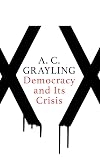
Democracy is not a fixed state. It is a concept, different to everyone at different times. It is continually evolving. As time goes on and attitudes change, the vote has been given to non-landowners and women, for example. In the original, in ancient Greece, voters had to be white adult male citizens who adhered to the state religion. Not a real democracy, but a good start.
Democracy and Its Crisis follows it through its many mutations and variations, from various People’s Republics of show more Murderous Dictatorship to the ossified, cobweb-encrusted American version, and the hypocritical and fraudulent British version. Most of it is speculation from philosophers, because democracy was not widespread until the last century. So everyone’s concept was valid, if blue-sky. The evidence of its many faults and inconsistencies is plainly out in front of us, and assembling it here points to the staggering failures, inefficiencies and frauds of this best of the worst systems.
There is a special condemnation of factions as Madison called what we know as parties. They corrupt the process and the execution, Whips ensure members vote as instructed, and party policy is more important than facts on the ground in the home constituency, or compromise with other parties. It has meant the most qualified steer clear of elected office, leaving voters with poor choices. So fewer and fewer bother to vote at all.
Grayling lays out the facts – they are not hard to find. His solutions are all reasonable and essentially impossible. He wants the vote to be mandatory and to begin at 16. He wants civics lessons to begin at 14. He wants proportional representation, because no one represents the voters who did not vote for the winner. That winner usually earns less than half the population and represents nothing. For example, in the Brexit referendum, only 37% of the electorate voted For (ie. Leave), and they represented just 26% of the adult population. So was democracy effective? Grayling would like to ensure it is by adapting the structure to our realities.
Because the real crisis of democracy is not fixed, either. It needs constant vigilance to ward off the ever-evolving corruption of parties, lobbies, those with ulterior motives, who have no intention of working for the common good but only to enrich themselves by offering to further enrich the rich, or gerrymandering or constituencies with no voters or that don’t even exist, and so on. It’s a task without end.
David Wineberg show less
Democracy and Its Crisis follows it through its many mutations and variations, from various People’s Republics of show more Murderous Dictatorship to the ossified, cobweb-encrusted American version, and the hypocritical and fraudulent British version. Most of it is speculation from philosophers, because democracy was not widespread until the last century. So everyone’s concept was valid, if blue-sky. The evidence of its many faults and inconsistencies is plainly out in front of us, and assembling it here points to the staggering failures, inefficiencies and frauds of this best of the worst systems.
There is a special condemnation of factions as Madison called what we know as parties. They corrupt the process and the execution, Whips ensure members vote as instructed, and party policy is more important than facts on the ground in the home constituency, or compromise with other parties. It has meant the most qualified steer clear of elected office, leaving voters with poor choices. So fewer and fewer bother to vote at all.
Grayling lays out the facts – they are not hard to find. His solutions are all reasonable and essentially impossible. He wants the vote to be mandatory and to begin at 16. He wants civics lessons to begin at 14. He wants proportional representation, because no one represents the voters who did not vote for the winner. That winner usually earns less than half the population and represents nothing. For example, in the Brexit referendum, only 37% of the electorate voted For (ie. Leave), and they represented just 26% of the adult population. So was democracy effective? Grayling would like to ensure it is by adapting the structure to our realities.
Because the real crisis of democracy is not fixed, either. It needs constant vigilance to ward off the ever-evolving corruption of parties, lobbies, those with ulterior motives, who have no intention of working for the common good but only to enrich themselves by offering to further enrich the rich, or gerrymandering or constituencies with no voters or that don’t even exist, and so on. It’s a task without end.
David Wineberg show less
Lists
Awards


You May Also Like


Associated Authors
Statistics
- Works
- 74
- Also by
- 14
- Members
- 8,024
- Popularity
- #3,019
- Rating
- 3.9
- Reviews
- 92
- ISBNs
- 270
- Languages
- 15
- Favorited
- 14

