
Julian Baggini
Author of The Pig That Wants to Be Eaten: 100 Experiments for the Armchair Philosopher
About the Author
Julian Baggini is the author, co-author or editor of over twenty books including How the World Thinks: A Global History of Philosophy (2018); A Short History of Truth: Consolations for a Post-Truth World (2018); The Edge of Reason: A Rational Skeptic in an Irrational World (2017), and The Pig that show more Wants to be Eaten and 99 other thought experiments (2010). He was the founding editor of The Philosopher's Magazine and has worked with the think tanks The Institute of Public Policy Research, Demos and Counterpoint. He has written for numerous newspapers and magazines, including the Guardian, Prospect and Aeon, and makes regular appearances on radio and television. He is Academic Director of the Royal Institute of Philosophy and an Honorary Research Fellow at the University of Kent. His website is www.microphilosophy.net. show less
Image credit: Courtesy of Allen and Unwin
Series
Works by Julian Baggini
The Pig That Wants to Be Eaten: 100 Experiments for the Armchair Philosopher (2005) 1,135 copies, 18 reviews
The Philosopher's Toolkit: A Compendium of Philosophical Concepts and Methods (2002) 655 copies, 6 reviews
The Duck That Won the Lottery: 100 New Experiments for the Armchair Philosopher (2008) 272 copies, 5 reviews
How to Think like a Philosopher: Twelve Key Principles for More Humane, Balanced, and Rational Thinking (2023) 109 copies
The Great Guide: What David Hume Can Teach Us about Being Human and Living Well (2021) 70 copies, 1 review
The Book of Coffee: A philosophy 4 copies
30-Second Philosophies: The 50 Most Thought-provoking Philosophies, Each Explained in Half a Minute 2 copies
Pensar Como um Flósofo 2 copies
Pensar como um filosofo 1 copy
你以為你的選擇真的是你的選擇? 1 copy
Hayat: Bir Kullanım Kılavuzu 1 copy
Associated Works
Düsseldorfer Schauspielhaus : Biedermann und die Brandstifter - von Max Frisch - Spielzeit 2022/23 (2022) — Contributor — 1 copy
Tagged
Common Knowledge
- Canonical name
- Baggini, Julian
- Birthdate
- 1968-09-09
- Gender
- male
- Education
- University College London (Ph.D|1996)
Reading University (BA|1990) - Occupations
- philosopher
journalist
editor - Organizations
- Royal Institute of Philosophers
Society of Authors - Nationality
- UK
- Birthplace
- Folkstone, England, UK
- Associated Place (for map)
- England, UK
Members
Reviews
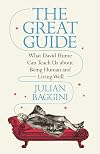
In a 1776 letter to William Strahan, Adam Smith, reflecting on the life and work of the Scottish Enlightenment philosopher David Hume, wrote the following: “Upon the whole, I have always considered him, both in his lifetime and since his death, as approaching as nearly to the idea of a perfectly wise and virtuous man, as perhaps the nature of human frailty will permit.”
While revered in his own time, today Hume is less known outside of academia and is generally underappreciated for his show more insights into human nature and living the good life. In The Great Guide: What David Hume Can Teach Us about Being Human and Living Well, philosopher Julian Baggini seeks to rectify this oversight by bringing the philosophy of “arguably the greatest philosopher in history” to a general audience.
Mixing biography and philosophy, Baggini explores both the life and work of Hume, with a focus on the Humean maxims and aphorisms (collected at the end of the book in the appendix) that one can use to lead a more rational, moral, and ultimately more satisfying life.
Hume lends himself to this literary approach particularly well because, unlike many philosophers, Hume actually lived his life consistent with his own principles, and considered philosophy to be a way of life rather than an isolated academic exercise. This is why attending to the biographical details is so important for Baggini. As he wrote:
“Philosophy, especially in the English-speaking world, tends to treat ideas and arguments as though they were timeless and placeless….This makes sense if you think that philosophy is a set of discrete intellectual problems to be solved. It makes less sense, however, if you think philosophy is a synoptic discipline, in which all the parts link together to form a (hopefully) coherent whole. And it makes no sense at all if you think that this whole comprises both life and work, ideas and practice. I hope to convince you that attending to a philosopher's life helps to make better sense of their work and that biography is a tool for the study of philosophy, not a distraction from doing it.”
Hume would almost certainly agree. In addition to his own works in philosophy (as we would define the term today, probably too narrowly) Hume also wrote about history, psychology, economics, and politics. Hume believed that “philosophy is either continuous with other disciplines or it is sterile, lifeless, and alone,” and that one should learn from as many sources as possible to attain a deeper understanding of not only how the world works but also how to live well. For Hume, as for the ancients, philosophy was a “way of life,” a systematic endeavor that cannot be disconnected from lived experience.
Hume’s resistance to specialization is one of the first and most important lessons of the book. As Baggini wrote:
“The ability to form an accurate view of reality and human nature requires a willingness to attend to all of experience and how it fits together, not specialized scientific knowledge.”
Hume resisted specialization at every turn. Although considered primarily a philosopher today, Hume wrote a six-volume history of England published from 1754 to 1761. Hume knew that human nature is a messy affair, complicated by a host of biological, social, environmental, and cultural factors, and that constructing a philosophical worldview based on nothing other than one’s imagination (armchair philosophizing)—disconnected from experience, observation, and science—can lead only to “sophistry and illusion.”
As Hume wrote:
“If we take in our hand any volume; of divinity or school metaphysics, for instance; let us ask, Does it contain any abstract reasoning concerning quantity or number? No. Does it contain any experimental reasoning concerning matter of fact and existence? No. Commit it then to the flames: for it can contain nothing but sophistry and illusion.”
Elsewhere, Hume wrote:
“Nothing is more dangerous to reason than the flights of the imagination, and nothing has been the occasion of more mistakes among philosophers.”
Hume saw through the superstitions of his time perhaps better than anyone else. Hume was the first to formulate the problem of induction and later developed several skeptical challenges to religion and the belief in miracles that we still use to this day.
But what makes Hume unique among the skeptics is that he never succumbed to the radical skepticism of the ancients. Faced with insoluble philosophical problems and skeptical challenges, Hume wrote:
“Most fortunately it happens, that since reason is incapable of dispelling these clouds, nature herself suffices to that purpose, and cures me of this philosophical melancholy and delirium, either by relaxing this bent of mind, or by some avocation, and lively impression of my senses, which obliterate all these chimeras. I dine, I play a game of backgammon, I converse, and am merry with my friends; and when after three or four hours' amusement, I would return to these speculations, they appear so cold, and strain'd, and ridiculous, that I cannot find in my heart to enter into them any farther.”
Hume’s skepticism told him that the deepest philosophical puzzles are unsolvable, but his cheerful demeanor and enjoyment of life told him that it didn’t matter; that what we can be sure of—i.e., the world of experience and our representations of it—is the only world we can know, and the only world worth trying to understand better. Nature thus dissolves unanswerable philosophical problems, and, while no knowledge can be said to be certain, if we take our experience and common sense seriously, we can focus instead on questions that we can actually make progress in solving, grounded in experience, observation, and evidence. This explains why his philosophical studies led him to the study of history, psychology, and politics rather than to metaphysics or religion.
There is an ethical element to this way of thinking, as well. Hume, for example, had no tolerance for the argument that we need religion to be moral. Quite the opposite, actually. Hume believed that “a morality based on nothing more than human nature is not only possible, but much more humane than most religious or rationalist alternatives.” It is only when we try to “reduce life to exact rule and method”—to ignore the obvious fact that “goodness is multifaceted, and so there is more than one way to live a good life”—that unnecessary harm is inflicted on others, usually by force and coercion rather than persuasion.
Morality was a more straightforward affair for Hume. In fact, the Humean formula is easy to emulate: enjoy life, provide assistance to others so that they may also enjoy life, and do not create undue harm. For Hume, as for Aristotle, being a morally upstanding individual is more a matter of habit and behavior than it is about theory, reflection, and rule-making. As Baggini wrote, in another Humean maxim:
“Practice doing the right thing in every situation, trivial or important, and you will build the kind of character that tends to act well in all situations.”
Hume lived by this maxim in his own life, and as a result was nearly universally revered for being both wise and moral (other than by the religious zealots that felt threatened by him). Hume held to his principles, accepted his imperfections, and strove to build admirable character traits through habitual moral behavior. If you’re looking for a philosopher to actually model your own behavior on, based on how they lived their own life, other than Marcus Aurelius I can think of very few philosophers as worthy as David Hume.
But this comes with its own caveat, one that Baggini formulated as another Humean maxim:
“Never slavishly follow even the greatest minds, for they too have prejudices, weaknesses, and blind spots.”
For all of Hume’s genius, generosity, and good spirit, he was never able to completely break free from the prejudices of his time. As Baggini covers in detail, Hume made some racist comments and adopted some questionable political positions, to be sure. But if we disqualify Hume because he didn’t meet our standards of perfection, we would be forced to conclude that not a single thinker in history is worth reading or learning from, which is absurd.
So while we should not “slavishy follow” Hume in all his thinking, we must also remember that, as Baggini wrote, “we should never completely dismiss even those who are almost always wrong, as they are almost always sometimes right too.” Part of what it means to become an independent thinker is the ability to distinguish what is worth preserving from a range of thinkers and belief systems and what is not—not to outright accept or reject any and all statements from any particular thinker (fans of Jordan Peterson might want to think about this).
Which brings us to the final Humean maxim, one that is especially relevant to the modern world:
“If you forget that we are all somewhat silly, fallible creatures, you become just the kind of dogmatist it is essential not to be.” show less
While revered in his own time, today Hume is less known outside of academia and is generally underappreciated for his show more insights into human nature and living the good life. In The Great Guide: What David Hume Can Teach Us about Being Human and Living Well, philosopher Julian Baggini seeks to rectify this oversight by bringing the philosophy of “arguably the greatest philosopher in history” to a general audience.
Mixing biography and philosophy, Baggini explores both the life and work of Hume, with a focus on the Humean maxims and aphorisms (collected at the end of the book in the appendix) that one can use to lead a more rational, moral, and ultimately more satisfying life.
Hume lends himself to this literary approach particularly well because, unlike many philosophers, Hume actually lived his life consistent with his own principles, and considered philosophy to be a way of life rather than an isolated academic exercise. This is why attending to the biographical details is so important for Baggini. As he wrote:
“Philosophy, especially in the English-speaking world, tends to treat ideas and arguments as though they were timeless and placeless….This makes sense if you think that philosophy is a set of discrete intellectual problems to be solved. It makes less sense, however, if you think philosophy is a synoptic discipline, in which all the parts link together to form a (hopefully) coherent whole. And it makes no sense at all if you think that this whole comprises both life and work, ideas and practice. I hope to convince you that attending to a philosopher's life helps to make better sense of their work and that biography is a tool for the study of philosophy, not a distraction from doing it.”
Hume would almost certainly agree. In addition to his own works in philosophy (as we would define the term today, probably too narrowly) Hume also wrote about history, psychology, economics, and politics. Hume believed that “philosophy is either continuous with other disciplines or it is sterile, lifeless, and alone,” and that one should learn from as many sources as possible to attain a deeper understanding of not only how the world works but also how to live well. For Hume, as for the ancients, philosophy was a “way of life,” a systematic endeavor that cannot be disconnected from lived experience.
Hume’s resistance to specialization is one of the first and most important lessons of the book. As Baggini wrote:
“The ability to form an accurate view of reality and human nature requires a willingness to attend to all of experience and how it fits together, not specialized scientific knowledge.”
Hume resisted specialization at every turn. Although considered primarily a philosopher today, Hume wrote a six-volume history of England published from 1754 to 1761. Hume knew that human nature is a messy affair, complicated by a host of biological, social, environmental, and cultural factors, and that constructing a philosophical worldview based on nothing other than one’s imagination (armchair philosophizing)—disconnected from experience, observation, and science—can lead only to “sophistry and illusion.”
As Hume wrote:
“If we take in our hand any volume; of divinity or school metaphysics, for instance; let us ask, Does it contain any abstract reasoning concerning quantity or number? No. Does it contain any experimental reasoning concerning matter of fact and existence? No. Commit it then to the flames: for it can contain nothing but sophistry and illusion.”
Elsewhere, Hume wrote:
“Nothing is more dangerous to reason than the flights of the imagination, and nothing has been the occasion of more mistakes among philosophers.”
Hume saw through the superstitions of his time perhaps better than anyone else. Hume was the first to formulate the problem of induction and later developed several skeptical challenges to religion and the belief in miracles that we still use to this day.
But what makes Hume unique among the skeptics is that he never succumbed to the radical skepticism of the ancients. Faced with insoluble philosophical problems and skeptical challenges, Hume wrote:
“Most fortunately it happens, that since reason is incapable of dispelling these clouds, nature herself suffices to that purpose, and cures me of this philosophical melancholy and delirium, either by relaxing this bent of mind, or by some avocation, and lively impression of my senses, which obliterate all these chimeras. I dine, I play a game of backgammon, I converse, and am merry with my friends; and when after three or four hours' amusement, I would return to these speculations, they appear so cold, and strain'd, and ridiculous, that I cannot find in my heart to enter into them any farther.”
Hume’s skepticism told him that the deepest philosophical puzzles are unsolvable, but his cheerful demeanor and enjoyment of life told him that it didn’t matter; that what we can be sure of—i.e., the world of experience and our representations of it—is the only world we can know, and the only world worth trying to understand better. Nature thus dissolves unanswerable philosophical problems, and, while no knowledge can be said to be certain, if we take our experience and common sense seriously, we can focus instead on questions that we can actually make progress in solving, grounded in experience, observation, and evidence. This explains why his philosophical studies led him to the study of history, psychology, and politics rather than to metaphysics or religion.
There is an ethical element to this way of thinking, as well. Hume, for example, had no tolerance for the argument that we need religion to be moral. Quite the opposite, actually. Hume believed that “a morality based on nothing more than human nature is not only possible, but much more humane than most religious or rationalist alternatives.” It is only when we try to “reduce life to exact rule and method”—to ignore the obvious fact that “goodness is multifaceted, and so there is more than one way to live a good life”—that unnecessary harm is inflicted on others, usually by force and coercion rather than persuasion.
Morality was a more straightforward affair for Hume. In fact, the Humean formula is easy to emulate: enjoy life, provide assistance to others so that they may also enjoy life, and do not create undue harm. For Hume, as for Aristotle, being a morally upstanding individual is more a matter of habit and behavior than it is about theory, reflection, and rule-making. As Baggini wrote, in another Humean maxim:
“Practice doing the right thing in every situation, trivial or important, and you will build the kind of character that tends to act well in all situations.”
Hume lived by this maxim in his own life, and as a result was nearly universally revered for being both wise and moral (other than by the religious zealots that felt threatened by him). Hume held to his principles, accepted his imperfections, and strove to build admirable character traits through habitual moral behavior. If you’re looking for a philosopher to actually model your own behavior on, based on how they lived their own life, other than Marcus Aurelius I can think of very few philosophers as worthy as David Hume.
But this comes with its own caveat, one that Baggini formulated as another Humean maxim:
“Never slavishly follow even the greatest minds, for they too have prejudices, weaknesses, and blind spots.”
For all of Hume’s genius, generosity, and good spirit, he was never able to completely break free from the prejudices of his time. As Baggini covers in detail, Hume made some racist comments and adopted some questionable political positions, to be sure. But if we disqualify Hume because he didn’t meet our standards of perfection, we would be forced to conclude that not a single thinker in history is worth reading or learning from, which is absurd.
So while we should not “slavishy follow” Hume in all his thinking, we must also remember that, as Baggini wrote, “we should never completely dismiss even those who are almost always wrong, as they are almost always sometimes right too.” Part of what it means to become an independent thinker is the ability to distinguish what is worth preserving from a range of thinkers and belief systems and what is not—not to outright accept or reject any and all statements from any particular thinker (fans of Jordan Peterson might want to think about this).
Which brings us to the final Humean maxim, one that is especially relevant to the modern world:
“If you forget that we are all somewhat silly, fallible creatures, you become just the kind of dogmatist it is essential not to be.” show less
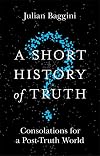
This is a decent book, but I have to say I much prefer the author’s previous book, The Edge of Reason: A Rational Skeptic in an Irrational World, for reasons I’ll explain.
In A Short History of Truth, Baggini presents an interesting and often insightful analysis of the different forms of truth. He also advocates for a better attitude towards the pursuit of truth. In his own words:
“Establishing the truth requires ‘epistemic virtues’ like modesty, scepticism, openness to other show more perspectives, a spirit of collective enquiry, a readiness to confront power, a desire to create better truths, a willingness to let our morals be guided by the facts.”
This attitude of humility and toleration is well received, particularly in this climate, but one wonders if he takes it a little too far. He seems, at times, to be going out of his way to defend nonsense.
Chapter 10, for example, begins with an extended discussion on why young earth creationism is not completely unreasonable. This is taking the principle of charity a bit too far. When a subjective belief contradicts everything we know about objective reality, at some point we should feel comfortable labeling it as irrational without reservation.
Bagginni is likewise overly charitable on the topics of religion, homeopathy, and conspiracy theories.
Science has taught us, or should have taught us, that our feelings of subjective certainty are often, in fact usually, wrong. For example, ancient cultures were certain that the earth was stationary because it felt that way and it seemed certain. They were wrong, of course, but this was only discovered by those willing to defer to the methods of empirical observation that anyone could independently verify.
Science has since then demonstrated to us that most of what we feel is true about how the world operates and even how our own minds work is utterly false. This should suggest to us that we ought to be very skeptical about the reliability of our intuitions and inner convictions, or at least temper them with the best available evidence.
We won’t all always agree, but at least by valuing evidence and experience over feeling and emotion we can make progress and pursue productive dialogue. It also means that when someone claims they have special knowledge about God or some spiritual energy we can rightly demand to see the evidence.
Truth may not always be black and white, but some arguments are certainly better or worse than others, and in the words of Carl Sagan, extraordinary claims require extraordinary evidence. And this extraordinary evidence is exactly what is lacking in the fantastical claims of most religions and conspiracy theories.
I think it’s important to also remember David Hume’s distinction between ‘relations of ideas’ and ‘matters of fact.’ Relations of ideas represent the truths of mathematics and logic. Things like 2 2=4 are true by definition but can’t ever tell you anything about the world. These truths are certain but largely inconsequential.
Matters of fact, on the other hand, are empirical, such as the theory of gravity. And while they can never be proven to remain correct forever with 100 percent certainty, they tell us valuable information about the world that is true with varying degrees of probability.
The implication is that to know things about the world, we have to sacrifice the certainty of intuitive knowledge. This means our knowledge can and should change and we should retain some humility in our views. But it also means that we should be skeptical about anyone who claims to know things about the world using primarily intuitive means (emotion, feeling, revelation, etc.)
In the words of Werner Heisenberg, “It will never be possible by pure reason to arrive at some absolute truth.” show less
In A Short History of Truth, Baggini presents an interesting and often insightful analysis of the different forms of truth. He also advocates for a better attitude towards the pursuit of truth. In his own words:
“Establishing the truth requires ‘epistemic virtues’ like modesty, scepticism, openness to other show more perspectives, a spirit of collective enquiry, a readiness to confront power, a desire to create better truths, a willingness to let our morals be guided by the facts.”
This attitude of humility and toleration is well received, particularly in this climate, but one wonders if he takes it a little too far. He seems, at times, to be going out of his way to defend nonsense.
Chapter 10, for example, begins with an extended discussion on why young earth creationism is not completely unreasonable. This is taking the principle of charity a bit too far. When a subjective belief contradicts everything we know about objective reality, at some point we should feel comfortable labeling it as irrational without reservation.
Bagginni is likewise overly charitable on the topics of religion, homeopathy, and conspiracy theories.
Science has taught us, or should have taught us, that our feelings of subjective certainty are often, in fact usually, wrong. For example, ancient cultures were certain that the earth was stationary because it felt that way and it seemed certain. They were wrong, of course, but this was only discovered by those willing to defer to the methods of empirical observation that anyone could independently verify.
Science has since then demonstrated to us that most of what we feel is true about how the world operates and even how our own minds work is utterly false. This should suggest to us that we ought to be very skeptical about the reliability of our intuitions and inner convictions, or at least temper them with the best available evidence.
We won’t all always agree, but at least by valuing evidence and experience over feeling and emotion we can make progress and pursue productive dialogue. It also means that when someone claims they have special knowledge about God or some spiritual energy we can rightly demand to see the evidence.
Truth may not always be black and white, but some arguments are certainly better or worse than others, and in the words of Carl Sagan, extraordinary claims require extraordinary evidence. And this extraordinary evidence is exactly what is lacking in the fantastical claims of most religions and conspiracy theories.
I think it’s important to also remember David Hume’s distinction between ‘relations of ideas’ and ‘matters of fact.’ Relations of ideas represent the truths of mathematics and logic. Things like 2 2=4 are true by definition but can’t ever tell you anything about the world. These truths are certain but largely inconsequential.
Matters of fact, on the other hand, are empirical, such as the theory of gravity. And while they can never be proven to remain correct forever with 100 percent certainty, they tell us valuable information about the world that is true with varying degrees of probability.
The implication is that to know things about the world, we have to sacrifice the certainty of intuitive knowledge. This means our knowledge can and should change and we should retain some humility in our views. But it also means that we should be skeptical about anyone who claims to know things about the world using primarily intuitive means (emotion, feeling, revelation, etc.)
In the words of Werner Heisenberg, “It will never be possible by pure reason to arrive at some absolute truth.” show less
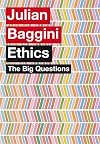
A very thought-provoking and challenging introduction to the tricky field of ethics and moral philosophy. Many of us like to think we live our lives in an ethical way, but if we really stop and consider the implications of what we do, is it really the most moral thing all round? Can it be possible that the most distasteful option is actually the best outcome for the world in general? Is it even possible to say what it moral?
Julian Baggini takes us though a number of scenarios, from the fat show more man on the railway bridge to questions of abortion, euthanasia, war and torture, examining them from an ethical viewpoint. Baggini makes a difficult subject accessible, but that doesn't mean it's comfortable reading. In the end we may reasonably come to the conclusion that living according to strict ethical principles is neither sustainable nor desirab;e show less
Julian Baggini takes us though a number of scenarios, from the fat show more man on the railway bridge to questions of abortion, euthanasia, war and torture, examining them from an ethical viewpoint. Baggini makes a difficult subject accessible, but that doesn't mean it's comfortable reading. In the end we may reasonably come to the conclusion that living according to strict ethical principles is neither sustainable nor desirab;e show less
A very thought-provoking and challenging introduction to the tricky field of ethics and moral philosophy. Many of us like to think we live our lives in an ethical way, but if we really stop and consider the implications of what we do, is it really the most moral thing all round? Can it be possible that the most distasteful option is actually the best outcome for the world in general? Is it even possible to say what it moral?
Julian Baggini takes us though a number of scenarios, from the fat show more man on the railway bridge to questions of abortion, euthanasia, war and torture, examining them from an ethical viewpoint. Baggini makes a difficult subject accessible, but that doesn't mean it's comfortable reading. In the end we may reasonably come to the conclusion that living according to strict ethical principles is neither sustainable nor desirab;e show less
Julian Baggini takes us though a number of scenarios, from the fat show more man on the railway bridge to questions of abortion, euthanasia, war and torture, examining them from an ethical viewpoint. Baggini makes a difficult subject accessible, but that doesn't mean it's comfortable reading. In the end we may reasonably come to the conclusion that living according to strict ethical principles is neither sustainable nor desirab;e show less
Lists
Awards


You May Also Like


Associated Authors
Statistics
- Works
- 55
- Also by
- 2
- Members
- 5,370
- Popularity
- #4,640
- Rating
- 3.6
- Reviews
- 74
- ISBNs
- 255
- Languages
- 14
- Favorited
- 2