
Maria Popova (1) (1984–)
Author of Figuring
For other authors named Maria Popova, see the disambiguation page.
About the Author
Image credit: Photograph by Allan Amato, taken at Pioneer Works
Works by Maria Popova
A Velocity of Being: Letters to a Young Reader (2018) — Editor; Introduction — 299 copies, 3 reviews
The Universe in Verse: 15 Portals to Wonder through Science and Poetry (2024) — Author; Narrator, some editions — 160 copies, 8 reviews
Brain Pickings 4 copies
Make Yourself a Seer: The Teenage Arthur Rimbaud on How to Be a Poet and a Prophet of Possibility 1 copy
How to Say Goodbye: An Illustrated Field Guide to Accompanying a Loved One at the End of Life 1 copy
Associated Works
Consolations: The Solace, Nourishment, and Underlying Meaning of Everyday Words (2015) — Introduction, some editions — 394 copies, 2 reviews
Dear Data: A Friendship in 52 Weeks of Postcards (2016) — Foreword, some editions — 253 copies, 4 reviews
Leave Me Alone with the Recipes: The Life, Art, and Cookbook of Cipe Pineles (2017) — Contributor — 52 copies, 2 reviews
Tagged
Common Knowledge
- Birthdate
- 1984-07-28
- Gender
- female
- Education
- American College of Sofia (BA, 2003)
University of Pennsylvania - Occupations
- writer
blogger
literary critic
cultural critic - Nationality
- Bulgaria
- Birthplace
- Sofia, Bulgaria
- Places of residence
- New York, New York, USA
- Associated Place (for map)
- Bulgaria
Members
Reviews
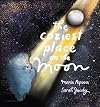
A creature named Re feels like "the loneliest creature on Earth" and decides to travel to the Moon on a beam of light (which takes exactly 1.255 seconds). Once there, Re hikes across the Sea of Tranquility, settles into a cozy lunar cave, and makes an unexpected discovery.
I like that this book combines real science (the "coziest place on the Moon" is based on a real discovery of collapsed lava tubes that likely maintain a constant mild temperature inside) and fantasy (Re and Mi can travel on show more beams of light and apparently do not need food, water, or even air to survive). I love how this book explores concepts of loneliness, solitude, and companionship, and distinguishes between "what it feels like to be happy-alone instead of lonely". I love how Re and Mi discover how to find companionship in their individual solitudes. I like that the story avoids pronouns or any gender markers, and I like the illustrations, which combine muted rainbow colours with blacks and deep midnight blues. This is quirky and odd picture book, but an oddly endearing one as well. show less
I like that this book combines real science (the "coziest place on the Moon" is based on a real discovery of collapsed lava tubes that likely maintain a constant mild temperature inside) and fantasy (Re and Mi can travel on show more beams of light and apparently do not need food, water, or even air to survive). I love how this book explores concepts of loneliness, solitude, and companionship, and distinguishes between "what it feels like to be happy-alone instead of lonely". I love how Re and Mi discover how to find companionship in their individual solitudes. I like that the story avoids pronouns or any gender markers, and I like the illustrations, which combine muted rainbow colours with blacks and deep midnight blues. This is quirky and odd picture book, but an oddly endearing one as well. show less
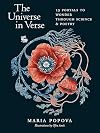
Poetry and science are often placed opposite each other because they describe different things. One describes the human soul; the other describes nature. That's unfortunate because they can complement each other vividly. The natural world and the vast universe are sources of unending wonder. It's a shame that too many people are put off by science as intimidating. In truth, it's awe-inducing and humbling.
Maria Popova brings these lessons to life with 15 poems by renowned poets that explicate show more some sort of scientific discovery, investigator, or event. They remind us that science is not merely a profession, but also an exploration of humanity's very small place in a vast place that we really don't understand well. These poems remind us that some of us are listening, however imperfectly.
Obviously, the scientific community will find these poems personally inspiring and helpful to relate their work's importance to the wider public. I hope some poets might be inspired to learn more about the minutiae of science to tell of its wonders through their poetry. I also hope public communicators like speechwriters and clergy might use some of these poems to bring their messages to life. Science is too often relegated to a niche topic when it truthfully touches all of life, much like other fields of knowledge. Popova eloquently reminds us that we're just made of stardust and will return to stardust; some of our time is surely wisely spent reflecting on the wonder of our existence. show less
Maria Popova brings these lessons to life with 15 poems by renowned poets that explicate show more some sort of scientific discovery, investigator, or event. They remind us that science is not merely a profession, but also an exploration of humanity's very small place in a vast place that we really don't understand well. These poems remind us that some of us are listening, however imperfectly.
Obviously, the scientific community will find these poems personally inspiring and helpful to relate their work's importance to the wider public. I hope some poets might be inspired to learn more about the minutiae of science to tell of its wonders through their poetry. I also hope public communicators like speechwriters and clergy might use some of these poems to bring their messages to life. Science is too often relegated to a niche topic when it truthfully touches all of life, much like other fields of knowledge. Popova eloquently reminds us that we're just made of stardust and will return to stardust; some of our time is surely wisely spent reflecting on the wonder of our existence. show less
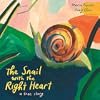
The Snail with the Right Heart is a story about time and chance, genetics and gender, love and death, evolution and infinity—concepts often too abstract for the human mind to fathom, often more accessible to the young imagination; concepts made fathomable in the concrete, finite life of one tiny, unusual creature dwelling in a pile of compost amid an English garden. Emerging from this singular life is a lyrical universal invitation not to mistake difference for defect and to welcome, show more across the accordion scales of time and space, diversity as the wellspring of the universe’s beauty and resilience.
This boldly illustrated book about evolution for children features a large gatefold that opens up to immerse readers in the story and will help kids understand that nature is all about differentiation and that being different is beautiful. show less
This boldly illustrated book about evolution for children features a large gatefold that opens up to immerse readers in the story and will help kids understand that nature is all about differentiation and that being different is beautiful. show less

This book begins with an unforgettable image, that of the mathematician and astronomer, Johannes Kepler, racing through the night to rescue his mother, who was being tried for witchcraft. From there, Popova sets off on a wide-ranging look at a variety of things, from asking how it is that genius arises to examining how people negotiated lives outside of the traditional heterosexual framework in times when there wasn't even the language to speak about sexuality. At first the book seemed to be show more a scattershot of ideas and historical tidbits which, while interesting enough, do not make a coherent narrative. But Popova settles down into the meat of her book, a series of biographies of women, mostly living in the mid-nineteenth century, who lived extraordinary lives, far outside of the parameters allowed American women at the time.
Her subjects range from women who are now largely unknown, like Margaret Fuller and Harriet Hosmer, to household names like Emily Dickinson and Rachel Carson. Popova lets each woman's story speak for itself, but she also is primarily interested in how each woman dealt with chronic health issues and how they negotiated love and relationships, which were often found outside of what was seen as acceptable at the time they lived. Margaret Fuller's life was the most revelatory for me; I'd never heard of her, despite her having been famous in her time and a woman who was able to forge an independent path for herself. Rachel Carson's story was also particularly well-told.
I'd recommend this book for anyone who likes an author to explore side trails and ask questions as they arise, or for anyone interested in the lives of women, early feminism, women in science and in how people negotiated love lives that were not traditional and heterosexual in the nineteenth century. I felt early on that this book was too episodic, but Popova had a plan and I'm glad I stuck with it. It's a book that gets more fascinating as it goes. show less
Her subjects range from women who are now largely unknown, like Margaret Fuller and Harriet Hosmer, to household names like Emily Dickinson and Rachel Carson. Popova lets each woman's story speak for itself, but she also is primarily interested in how each woman dealt with chronic health issues and how they negotiated love and relationships, which were often found outside of what was seen as acceptable at the time they lived. Margaret Fuller's life was the most revelatory for me; I'd never heard of her, despite her having been famous in her time and a woman who was able to forge an independent path for herself. Rachel Carson's story was also particularly well-told.
I'd recommend this book for anyone who likes an author to explore side trails and ask questions as they arise, or for anyone interested in the lives of women, early feminism, women in science and in how people negotiated love lives that were not traditional and heterosexual in the nineteenth century. I felt early on that this book was too episodic, but Popova had a plan and I'm glad I stuck with it. It's a book that gets more fascinating as it goes. show less
Lists
Awards


You May Also Like
Associated Authors
Statistics
- Works
- 25
- Also by
- 3
- Members
- 1,270
- Popularity
- #20,200
- Rating
- 4.2
- Reviews
- 29
- ISBNs
- 39
- Languages
- 1
- Favorited
- 2