
Marjorie Kinnan Rawlings (1896–1953)
Author of The Yearling
About the Author
Image credit: Photo by Carl Van Vechten, Jan. 18, 1953 (Library of Congress, Carl Van Vechten Collection, Reproduction number: LC-USZ62-106862)
Works by Marjorie Kinnan Rawlings
Max and Marjorie: The Correspondence between Maxwell E. Perkins and Marjorie Kinnan Rawlings (1999) 20 copies
Jacob's Ladder 4 copies
El cachorro 1 copy
Les pommes d'or 1 copy
The double image 1 copy
Kultaset hedelmät 1 copy
IL CUCCIOLO 1 copy
Associated Works
Sisters of the Earth: Women's Prose and Poetry About Nature (1991) — Contributor — 443 copies, 5 reviews
Choice Cuts: A Savory Selection of Food Writing from Around the World and Throughout History (2002) — Contributor — 369 copies, 2 reviews
Fifty Years of the American Short Story from the O. Henry Awards 1919-1970 (1970) — Contributor — 17 copies, 1 review
Great American Short Stories: O. Henry Memorial Prize Winning Stories, 1919-1934 (1935) — Contributor — 11 copies, 1 review
Fifty Years of the American Short Story from the O. Henry Awards 1919-1970, Volume 2 (1970) — Contributor — 5 copies
Readers Digest Condensed Books: Airs Above the Ground • Intern • The Secrets of the Day • The Yearling • May You Die in Ireland (1966) 4 copies
Furrow's End: An Anthology of Great Farm Stories — Contributor — 2 copies
Het Beste Boek 38: Spaanse romance / De kapitein / Jody en het hertejong / Een winter vol gevaren 1 copy, 1 review
Configurations: American Short Stories for the EFL Classroom, Advanced Level (1984) — Contributor — 1 copy
Tagged
Common Knowledge
- Canonical name
- Rawlings, Marjorie Kinnan
- Legal name
- Rawlings, Marjorie Kinnan
- Other names
- Kinnan, Marjorie
- Birthdate
- 1896-08-08
- Date of death
- 1953-12-14
- Gender
- female
- Education
- University of Wisconsin-Madison
- Occupations
- journalist
poet
novelist
short story writer - Organizations
- National Academy of Arts and Sciences
American Academy of Arts and Letters (Literature, 1939) - Relationships
- Rawlings, Charles (husband)
- Cause of death
- cerebral hemorrhage
- Nationality
- USA
- Birthplace
- Washington, D.C., USA
- Places of residence
- Washington, D.C., USA (birth)
Madison, Wisconsin, USA
New York, New York, USA
Cross Creek, Florida, USA
Van Hornesville, New York, USA
St. Augustine, Florida, USA (death) (show all 9)
Crescent Beach, Florida, USA
Louisville, Kentucky, USA
Rochester, New York, USA - Place of death
- St. Augustine, Florida, USA
- Burial location
- Antioch Cemetery, Island Grove, Florida, USA
- Associated Place (for map)
- USA
Members
Reviews
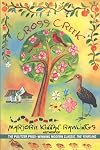
Cross Creek is one of the finest memoirs ever written, filled with grace and beauty from one of America's greatest writers, Marjorie Kinnan Rawlings. Perhaps no other writer has so perfectly and honestly captured a place and time like Rawlings did in Cross Creek. It will transport you to that small acreage of backwoods Florida and cause you to wish for a life such as this.
Marjorie Kinnan Rawlings purchased a seventy-two acre orange grove in this remote area and fled her aristocratic life in show more the city to perfect her craft and get published. It is here that all her beloved books would be written, including this memoir covering the years of hardships and beauty at Cross Creek. Rawlings was in many ways reborn in Cross Creek, and she would leave behind literary achievements such as "South Moon Under," "Golden Apples," "When the Whippoorwill," "Cross Creek Cookery," and of course, her Pulitzer winning, "The Yearling."
Her close relationships with her neighbors at the creek, both black and white, are told with humor and humanity. Their lives were often filled with hardships but serenity as well, for all of them had chosen to live this kind of life rather than conform to society. Especially poignant are Rawlings's observations of a young destitute couple who would later be portrayed so movingly in Jacob's Ladder.
Rawlings's recollections of her friendships with Moe and his daughter Mary, who was Moe's reason for living, and the only one in his family who cared whether he came or went, are told with such beauty we feel pain ourselves when he takes his last breath at the creek. Rawlings's deep friendships over the years with Tom and Old Martha are told with humor, honesty and a gift for description few have ever captured on paper.
Tinged with sadness is Marjorie's relationship both as employer and friend to 'Geechee. Rawlings would attempt to help her, but to no avail, as this sweet personality slowly became an unemployable alcoholic. Her mistreatment at the hands of a womanizer unworthy of her love was at the heart of her problem. It is perhaps also at the bottom of some bitter comments from Rawlings.
But Cross Creek is about the earth and our relationship to it. Rawlings came to believe over time that when we lose our connection to the earth, we lose a part of ourselves. The great and wondrous beauty of nature, from magnolia blossoms and rare herbs to Hayden mangos and papaya, are as much a part of this memoir as the people. Particularly hilarious are this gifted writer's descriptions of a pet racoon of such mischievous nature and cantankerous disposition that it almost seems human.
Rawlings's world at the creek is perhaps her legacy, a gift given to the reader we can never forget. In order to enjoy this memoir, however, one must take into consideration a number of factors. Published in 1942 and covering many years prior in a backwoods area of Florida, this was a time when racial equality was a distant dream. Some may be offended by Rawlings's casual - though never mean spirited - observations.
Rawlings honestly relates actual conversations from this time and place between blacks and whites, and blacks to other blacks. While Rawlings herself treated everyone fairly, a long string of farmhands prone to drink and violence - including the man who would destroy her friend and employee 'Geechee - prompted Rawlings to lump an entire race into one group, her friends at the creek being rare exceptions. I do not feel this caveat should keep anyone from reading this most beautiful and heartwarming of memoirs, as this is an unflinchingly honest look at a time and a place, as well as attitudes - warts and all.
Rawlings's graceful prose, whether describing a chorus of frogs singing at night as a Brahms waltz, the scent of hibiscus drifting through the air at dusk or myriad of dishes meticulously prepared and labored over for hours, is delightful and unforgettable. Cross Creek will make you hungry for succulent fruits, cornbread and hot biscuits with wild plum jelly, and the living of life itself.
Reading this lovingly written memoir will leave you with a wistful desire to walk away from society as Rawlings did, and live the life we crave in our very being, even if that life can only be lived in our hearts.
"Cross Creek belongs to the wind and the rain, to the sun and the seasons, to the cosmic secrecy of seed, and beyond all, to time."
Marjorie Kinnan Rawlings
(1896-1953) show less
Marjorie Kinnan Rawlings purchased a seventy-two acre orange grove in this remote area and fled her aristocratic life in show more the city to perfect her craft and get published. It is here that all her beloved books would be written, including this memoir covering the years of hardships and beauty at Cross Creek. Rawlings was in many ways reborn in Cross Creek, and she would leave behind literary achievements such as "South Moon Under," "Golden Apples," "When the Whippoorwill," "Cross Creek Cookery," and of course, her Pulitzer winning, "The Yearling."
Her close relationships with her neighbors at the creek, both black and white, are told with humor and humanity. Their lives were often filled with hardships but serenity as well, for all of them had chosen to live this kind of life rather than conform to society. Especially poignant are Rawlings's observations of a young destitute couple who would later be portrayed so movingly in Jacob's Ladder.
Rawlings's recollections of her friendships with Moe and his daughter Mary, who was Moe's reason for living, and the only one in his family who cared whether he came or went, are told with such beauty we feel pain ourselves when he takes his last breath at the creek. Rawlings's deep friendships over the years with Tom and Old Martha are told with humor, honesty and a gift for description few have ever captured on paper.
Tinged with sadness is Marjorie's relationship both as employer and friend to 'Geechee. Rawlings would attempt to help her, but to no avail, as this sweet personality slowly became an unemployable alcoholic. Her mistreatment at the hands of a womanizer unworthy of her love was at the heart of her problem. It is perhaps also at the bottom of some bitter comments from Rawlings.
But Cross Creek is about the earth and our relationship to it. Rawlings came to believe over time that when we lose our connection to the earth, we lose a part of ourselves. The great and wondrous beauty of nature, from magnolia blossoms and rare herbs to Hayden mangos and papaya, are as much a part of this memoir as the people. Particularly hilarious are this gifted writer's descriptions of a pet racoon of such mischievous nature and cantankerous disposition that it almost seems human.
Rawlings's world at the creek is perhaps her legacy, a gift given to the reader we can never forget. In order to enjoy this memoir, however, one must take into consideration a number of factors. Published in 1942 and covering many years prior in a backwoods area of Florida, this was a time when racial equality was a distant dream. Some may be offended by Rawlings's casual - though never mean spirited - observations.
Rawlings honestly relates actual conversations from this time and place between blacks and whites, and blacks to other blacks. While Rawlings herself treated everyone fairly, a long string of farmhands prone to drink and violence - including the man who would destroy her friend and employee 'Geechee - prompted Rawlings to lump an entire race into one group, her friends at the creek being rare exceptions. I do not feel this caveat should keep anyone from reading this most beautiful and heartwarming of memoirs, as this is an unflinchingly honest look at a time and a place, as well as attitudes - warts and all.
Rawlings's graceful prose, whether describing a chorus of frogs singing at night as a Brahms waltz, the scent of hibiscus drifting through the air at dusk or myriad of dishes meticulously prepared and labored over for hours, is delightful and unforgettable. Cross Creek will make you hungry for succulent fruits, cornbread and hot biscuits with wild plum jelly, and the living of life itself.
Reading this lovingly written memoir will leave you with a wistful desire to walk away from society as Rawlings did, and live the life we crave in our very being, even if that life can only be lived in our hearts.
"Cross Creek belongs to the wind and the rain, to the sun and the seasons, to the cosmic secrecy of seed, and beyond all, to time."
Marjorie Kinnan Rawlings
(1896-1953) show less

Over 30 years ago I found a copy of this book by Marjorie Rawlins in an English second-hand book shop and, as a former sea-cook and enthusiastic home entertainer I bought it. I cooked from it so often – particularly now living in the South – that it fell apart and I see from a note in the fly that I purchased my last replacement in 2007. This edition is even more a pleasure as it is generously illustrated by the sketches of Robert Camp.
Much more than a cook book, more than a collection show more of easy-to-follow recipes, each of the book’s chapters has a page or two of Rawlings' witty comments on life in the South, on her ‘help’; Idella who she clearly adores, or useful notes on technique or produce and, of course, her guests. The recipes are useful today (although Jersey Cream from her cow is a bit of a challenge) and delicious.
From the percussion of her duck dinner, known to bring gourmet Professors to their knees to a lyrical last chapter –“Better a Dinner of Herbs” – on hosting, kindness and guests.
My only hesitation in offering this review is that currently there is only one other member who seems to have found its delights – perhaps, like our favorite beauty spots – we should keep this treasure to ourselves? But no – I urge you to read it and try those recipes. Bon Appétit! show less
Much more than a cook book, more than a collection show more of easy-to-follow recipes, each of the book’s chapters has a page or two of Rawlings' witty comments on life in the South, on her ‘help’; Idella who she clearly adores, or useful notes on technique or produce and, of course, her guests. The recipes are useful today (although Jersey Cream from her cow is a bit of a challenge) and delicious.
From the percussion of her duck dinner, known to bring gourmet Professors to their knees to a lyrical last chapter –“Better a Dinner of Herbs” – on hosting, kindness and guests.
My only hesitation in offering this review is that currently there is only one other member who seems to have found its delights – perhaps, like our favorite beauty spots – we should keep this treasure to ourselves? But no – I urge you to read it and try those recipes. Bon Appétit! show less
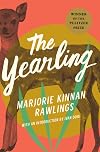
Rawlings deserved her Pulitzer for this wonderful book. Her writing is so evocative of the time and place in 1870s Florida where the Baxter family lives off the land, striving to make their farm provide the sustenance they require. There are the usual heartbreaking tragedies, including a near fatal snake bite, a flood which wipes nearly everything out and the nearest neighbors who don't view life in the same light as the Baxters.
Told over the span of a year, from the time son Jody Baxter show more adopts a young deer whose mother is killed in service to saving father Penny Baxter's life. The cycles of the season, the farm and life are caught as Jody, and his fawn, Flag grow together. Jody learns big lessons about life and death, as he mourns the changes that must be acknowledged in order to continue growing.
What a fantastic story! show less
Told over the span of a year, from the time son Jody Baxter show more adopts a young deer whose mother is killed in service to saving father Penny Baxter's life. The cycles of the season, the farm and life are caught as Jody, and his fawn, Flag grow together. Jody learns big lessons about life and death, as he mourns the changes that must be acknowledged in order to continue growing.
What a fantastic story! show less
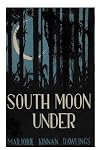
''Dead limbs were falling in the swamp. It was a certain sign of rain. They fell from trees before and after, as though some dropped in terror of the moist burden, and others resisted a little longer. Limpkins were crying, and it would not be long before the grey curtain over the scrub and river dissolved into a sweep of rain’’
Marjorie Kinnan Rawlings (1886-1953) was born in Washington and moved to Florida in 1928. Immediately she started work on her first novel. She drew material for show more her stories from the Alachua County region in community of Cross Creek. She lived with a moonshiner for several weeks whilst researching the novel. During this time she learned the local dialect and traditions that makes this book so unique.
South Moon Under is an absolutely fantastic book, focusing on three generations of a poor rural ‘Cracker’ family in Florida. The Lantry’s farm on remote land, which was mainly scrub forest, swamp and hammock.
The book focuses on Lant and his mother Piety (pronounced Py-tee). It’s title refers to one of the moon’s stages, what they believed to be a critical influence on hunting and crops. Lant learns to hunt deer using moonlight.
''On the way home he considered the deer and the moon. He considered the fish and the owls. The deer and the rabbits, the fish and the owls, stirred at moon-rise and at moon-down; at south-moon-over and at south-moon-under''
It’s a wonderful story about people who are totally at one with nature. The descriptions of all the plants and animals are just gorgeous. It’s deeply atmospheric and Rawlings captures the wilderness for all it’s danger, and beauty.
“The sun was high. The river red and gold and bronze, for the sweet gums and hickories and maples were in full autumn colour. The cypress needles had turned to the deep-red of Lant’s hair. The river water, stained by cypress and magnolia, dissolved in it’s clear brownness.”
There’s a host of colourful characters, all doing their bit to get by in an environment of extreme poverty. Prohibition plays a big part (and casts a long shadow) as Lant makes moonshine during the Depression. This only leads to a world of pain as his cousin becomes jealous of his success. It never ceases to amaze me what people will do for 25 pieces of silver.
South Moon Under was a finalist in the 1933 Pulitzer Prize. It was in good company. Faulkner’s magnificent Light in August was also a runner up. TB Stribling’s The Store was the winner in what was a wonderful year for southern literature.
The dialect makes it a little challenging, but don’t let that put you off. I started off slowly and ended up in awe of the writing. I really can’t do it justice. Without doubt a contender for my favourite book this year. show less
Marjorie Kinnan Rawlings (1886-1953) was born in Washington and moved to Florida in 1928. Immediately she started work on her first novel. She drew material for show more her stories from the Alachua County region in community of Cross Creek. She lived with a moonshiner for several weeks whilst researching the novel. During this time she learned the local dialect and traditions that makes this book so unique.
South Moon Under is an absolutely fantastic book, focusing on three generations of a poor rural ‘Cracker’ family in Florida. The Lantry’s farm on remote land, which was mainly scrub forest, swamp and hammock.
The book focuses on Lant and his mother Piety (pronounced Py-tee). It’s title refers to one of the moon’s stages, what they believed to be a critical influence on hunting and crops. Lant learns to hunt deer using moonlight.
''On the way home he considered the deer and the moon. He considered the fish and the owls. The deer and the rabbits, the fish and the owls, stirred at moon-rise and at moon-down; at south-moon-over and at south-moon-under''
It’s a wonderful story about people who are totally at one with nature. The descriptions of all the plants and animals are just gorgeous. It’s deeply atmospheric and Rawlings captures the wilderness for all it’s danger, and beauty.
“The sun was high. The river red and gold and bronze, for the sweet gums and hickories and maples were in full autumn colour. The cypress needles had turned to the deep-red of Lant’s hair. The river water, stained by cypress and magnolia, dissolved in it’s clear brownness.”
There’s a host of colourful characters, all doing their bit to get by in an environment of extreme poverty. Prohibition plays a big part (and casts a long shadow) as Lant makes moonshine during the Depression. This only leads to a world of pain as his cousin becomes jealous of his success. It never ceases to amaze me what people will do for 25 pieces of silver.
South Moon Under was a finalist in the 1933 Pulitzer Prize. It was in good company. Faulkner’s magnificent Light in August was also a runner up. TB Stribling’s The Store was the winner in what was a wonderful year for southern literature.
The dialect makes it a little challenging, but don’t let that put you off. I started off slowly and ended up in awe of the writing. I really can’t do it justice. Without doubt a contender for my favourite book this year. show less
Lists
1930s (1)
Newbery Adjacent (1)
Awards


You May Also Like


Associated Authors
Statistics
- Works
- 39
- Also by
- 37
- Members
- 7,575
- Popularity
- #3,223
- Rating
- 4.0
- Reviews
- 121
- ISBNs
- 172
- Languages
- 9
- Favorited
- 12
