
Ellen Glasgow (1873–1945)
Author of Barren Ground
About the Author
Ellen Anderson Gholson Glasgow (April 22, 1873 -November 21, 1945) was an American novelist who portrayed the changing world of the contemporary south. Glasgow was born in Richmond, Virginia, of a mother who traced her ancestry to the Cavalier settlers of Tidewater Virginia and a father who show more descended from the Scotch-Irish of the Shenandoah Valley. She was a writer whose divided background helps explain her ability to combine romantic sensibility with tough-minded realism. For the Virginia Edition of her works, published by Scribner in 1938 and now out of print, she chose 12 of her 18 novels and divided them into two main groups. What she called "novels of character and comedies of manners" consist of five works: The Battle-Ground (1902); The Deliverance (1904); They Stooped to Folly (1929); Virginia (1913); and Barren Ground (1925). The remaining seven novels she grouped under the heading "social history in the form of fiction." Covering almost 100 years of life in the Old Dominion, they are perhaps better read in historical sequence rather than the order in which they were originally published: The Miller of Old Church (1911); The Romantic Comedians (1926); The Voice of the People (1900); The Romance of a Plain Man (1909); Life and Gabriella (1916); The Sheltered Life (1932); and Vein of Iron (1935). The new prefaces that she wrote for each volume of the Virginia Edition form a valuable record of her literary growth and a treatise on novel writing that compares favorably with the prefaces that Henry James wrote for the New York Edition of his works. With the addition of an introduction to the one novel she published subsequently, the Pulitzer Prize-winning In This Our Life (1941), these prefaces were brought together and published as A Certain Measure (1943). The Woman Within (1954), her own story of her inner life, parallels her fiction in its account of a courageous woman who refused to become a victim of the outmoded codes of chivalry and male domination that characterized the Old South of her heritage. She remains a transitional figure of considerable importance in the literary history of America. (Bowker Author Biography) show less
Image credit: Image from Little pilgrimages among the women who have written famous books (1902) by Edward Francis Harkins
Works by Ellen Glasgow
Ellen Glasgow's Reasonable Doubts: A Collection of Her Writings (Southern Literary Studies) (1988) 3 copies
Beyond defeat; a critical edition 2 copies
“The Difference” 1 copy
Papers of Ellen Glasgow 1 copy
No title 1 copy
Associated Works
Written by Herself, Volume I: Autobiographies of American Women (1992) — Contributor — 453 copies, 6 reviews
American Fantastic Tales : Terror and the Uncanny from Poe to the Pulps (2009) — Contributor — 289 copies, 4 reviews
This is My Best: American Greatest Living Authors Present and Give Their Reasons Why (1942) — Contributor — 214 copies
Writing Women's Lives: An Anthology of Autobiographical Narratives by Twentieth-Century American Women Writers (1994) — Contributor — 128 copies, 3 reviews
What Did Miss Darrington See? An Anthology of Feminist Supernatural Fiction (1989) — Contributor — 126 copies
In the Shadow of Agatha Christie: Classic Crime Fiction by Forgotten Female Writers, 1850-1917 (2018) — Contributor — 109 copies, 8 reviews
Weird Women: Classic Supernatural Fiction by Groundbreaking Female Writers: 1852-1923 (2020) — Contributor — 108 copies, 2 reviews
Vampires, Zombies, Werewolves and Ghosts: 25 Classic Stories of the Supernatural (Signet Classics) (2011) — Contributor — 54 copies, 1 review
Twentieth-Century American Literature (Chelsea House Library of Literary Criticism) (1986) — Contributor — 20 copies
The Best Short Stories of 1921 and the Yearbook of the American Short Story (2007) — Contributor — 17 copies
Little Verses and Big Names — Contributor — 2 copies
Saturday Review of Literature, Volume VI Number 46: Saturday, June 7, 1930 — Contributor — 1 copy
The Reviewer, Volume I, Numbers 1-12 (April-August 1921) — Contributor — 1 copy
The Ethnic Image in Modern American Literature, 1900-1950, Volumes 1-2 (1984) — Contributor — 1 copy
Duchy Letniej Nocy 1 copy
Duch Na Rozstaju Dróg — Contributor — 1 copy
Tagged
Common Knowledge
- Legal name
- Glasgow, Ellen Anderson Gholson
- Birthdate
- 1873-04-22
- Date of death
- 1945-11-21
- Gender
- female
- Education
- private tutors
- Occupations
- novelist
short story writer
essayist
poet - Awards and honors
- William Dean Howells Medal (1940)
National Institute of Arts and Letters (1932-45)
American Academy of Arts and Letters (1938-45)
Ellen Glasgow House National Historical Landmark
American Academy of Arts and Letters (Literature ∙ 1932) - Relationships
- Cabell, James Branch (friend)
- Short biography
- Ellen Anderson Gholson Glasgow was born into an old and respected Southern colonial family and spent her summers at their historic Jerdone Castle plantation, a setting she used in her writings. She published her first book, The Descendant, at age 22 in 1897. All her many subsequent novels were set in the South, where her reputation was quickly established. Recovery from a suicide attempt in 1918 was to prove the inspiration behind her story of the strong and independent Dorinda Oakley, the heroine of Barren Ground (1925), considered one of the most powerfully moving of Ellen Glasgow’s works. She won the Pulitzer Prize in 1941 for In This Our Life. Ellen Glasgow corresponded with many other literary figures such as Maxwell Perkins, and several collections of her letters have been published. Her autobiography The Woman Within (1954) was published posthumously.
- Nationality
- USA
- Birthplace
- Richmond, Virginia, USA
- Places of residence
- Richmond, Virginia, USA
Bumpass, Virginia, USA - Place of death
- Richmond, Virginia, USA
- Burial location
- Hollywood Cemetery, Richmond, Virginia, USA
- Associated Place (for map)
- Richmond, Virginia, USA
Members
Reviews
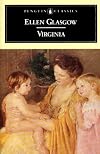
I read this book for my “Best of 1913” project, but I have more than a few sentences to say about it. Why is this masterpiece completely forgotten while people are reading all this garbage by William Faulkner? Could it be the clanking, undying machinery of sheer sexism?
Virginia tells the story of a woman who lives in the ignorant backwater of Dinwiddie, Virginia. It opens in the 1880’s when Virginia has just graduated from the Dinwiddie Academy for Young Ladies and she’s eager to show more fall in love and enjoy life to the fullest. Ellen Glasgow paints a very compelling picture of a town whose white citizens are willing to lay down their lives for Southern ideals a) which they don’t understand and b) the ideals are completely stupid. Still, Glasgow likes these benighted people and presents them as loveable. I really did feel for these characters. Virginia has received a terrible education that was designed to make her obedient and well-mannered, and she doesn’t realize that she shares the fate of her mother and all the other women she knows, of throwing her life away in service to some man. Then she crosses paths with the first young man she has ever met who is handsome, intelligent, and not her cousin. (This has been a common theme of the books of 1913 that I’ve read so far—marrying the first eligible man you lay your eyes on. We are so lucky that today we get to meet lots of people and do ordinary things like go to school with them.) After Virginia and her beloved meet five times, they become engaged.
The man in question, Oliver, is an interesting character. He’s from out of town and he’s different from everyone in Dimwittie because he believes in art and science while they believe in Christianity, how awesome they were during the Civil War, keeping up appearances, and making a buck. His greatest dream is to be a writer; he scorns money and working; and he reads things like The Origin of Species. Although he’s intelligent and original, he’s also very selfish and basically has no empathy or insight into other people’s feelings. Don’t we all know people just like this? What a fully realized character! He resists falling in love with Virginia because he can see that supporting a wife will hamper his wannabe Bohemian lifestyle, butthen he succumbs, and so he has to take a normal job and become interested in making money, just like everyone else. Throughout the novel he writes plays, which at first are complete flops. Then he decides to sell out and pander to the tastes of the Broadway audiences, and by the end of the book he has become an incredibly successful playwright, but he scorns his own work. I thought it was very clever of Ellen Glasgow not to even get into the question of whether Oliver’s writing is any good or not. She presents his POV and just leaves it at that.
Ultimately the portrayal of Oliver is of a person who has all these great qualities but is emotionally stunted to the point where he basically has no connection to his wife and children, yet he is in the typical range of males. Based on what I see in Redbook magazine, this problem is as prevalent today as it was a century ago. Virginia, meanwhile, is ignorant on every subject and isn’t curious about the world and has no time for rational thinking, but she can see with extraordinary sensitivity an entire realm of human psychology that is a closed book to Oliver. He’s impatient with her because all she cares about are her children and making the house look nice and managing the servants. He also gets cross that she doesn’t dress nicely anymore and has allowed her hands to get rough and coarsened—even though this has only happened because she’s been scrimping and pinching to make ends meet. Apparently the Southern gentlewoman wasn’t supposed to do any actual housework herself, but when she was too poor to afford servants she was supposed to do all the work secretly and still manage to look dainty and fresh.
The foil to Virginia’s simplicity and self-effacing nature is her best friend, Susan. Susan is naturally curious and forceful and thinks for herself. Her dream is to go to college, but her father won’t hear of it. (“Father, I want to go to college.” “If you want something to occupy you, you’d better start about helping your mother with her preserving.” “I put up seventy-five jars of strawberries.” “Well, the blackberries are coming along.”)To make the parallel exact, just as Oliver chooses a wife who is not his intellectual equal, Susan loves John Henry, a stolid, dull-witted man. But Susan and John Henry seem happy together and neither of them goes running around with fast actresses. Susan fills her life with charities and public movements and reading books. It seems to be enough.
(Virginia and Susan really are good friends! Listen to this:
“Promise me, Jinny, that you’ll never let anybody take my place,” she said, turning when they had reached the head of the steps.
“You silly Susan! Why of course they shan’t,” replied Virginia, and they kissed ecstatically.
“Nobody will ever love you as I do.”
“And I you, darling.”)
(But don’t worry, Virginia and Oliver’s love gets equal time:
“The world stopped suddenly while a starry eternity enveloped them. All youth was packed into that minute, all the troubled sweetness of desire, all the fugitive ecstasy of fulfilment.” You think they’re doing something really naughty, but actually it’s their first kiss.)
OK, I’m making fun of an overblown love scene, but they’re hard to do, and I really admire Ellen Glasgow’s writing. I wish I could write like her. Not just that I wish I could write such wonderful descriptions and could chivvy the plot along like she does while revealing meaningful things about the human condition. I wish I were “allowed” to write like her, with an omniscient third person narrator that tells you what’s right and wrong while letting you to see into the character’s hearts. If only that were still the fashion!
The one clunky part of the book was a transition when Virginia and Oliver are moving back to Dimwittie after an absence of five years, and we’re brought up to speed with dialogue like, “Isn’t it beautiful that her marriage has turned out so well?” I thought the most affecting parts were when Virginia’s mother dies (sorry for the spoiler. . . no wait, I’m not sorry) and when her son is very sick. Glasgow rips aside the veil and shows us that there’s little or no meaning to life but still we have to march along and invent meaning if we can. One of Virginia’s daughters leads a very different life from her mother because she goes to college, loves learning, has “modern ideas,” and scorns the feminine tradition of self-sacrifice. Too bad she’s also completely selfish and doesn’t care about her mother. Glasgow portrays the daughter’s modern views as correct but too late and of no help to someone like Virginia who is mired in tradition. Although the novel’s ending is grim, I was glad there was a ray of hope for Virginia.
The Achilles heel of this novel is exactly what you would expect of a novel about Southern life in the late nineteenth and early twentieth century: racism. When describing the African-American characters (all minor characters), there’s a lot of “primitive” this, “savage” that, “wild animal” this, such-and-such “creature.” Also some speech rendered in offensive dialect and one use of a racial slur (in dialogue or maybe a letter, not from the narrator’s POV.) The sad thing is that clearly Ellen Glasgow was liberal-minded and held the progressive views of her day, when a big civil rights issue was trying to get someone in power to do anything at all to stop lynching. So basically this kind of racist claptrap was as anti-racist as a book by a white person got at the time.
Here’s a spoiler for you— Virginia’s father dies preventing a lynching. No one lionizes him for it, and it may be that none of the white characters even know what happened. Just as Virginia has Susan as her opposite number, Virginia’s father has Cyrus Treadwell as his foil. They were buddies in the Civil War but while Virginia’s father is good and spiritual, Cyrus Treadwell is mean and greedy. An African-American washerwoman, Mandy, keeps appealing to Cyrus Treadwell to help her, the subtext being that he is the father of her son, conceived when she was a fifteen-year old servant in the Treadwell house in 1866. This is depicted so subtly that I wondered if I was imagining it until later in the book when it becomes slightly more explicit. Clearly Glasgow wants to condemn abusers like Cyrus Treadwell but the topic is too hot for her to approach it directly.
In conclusion, I thought this book was terrific and I think it deserves a greater reputation than it has. A lot of other books (by men) with some creepy racist elements are still regarded as worth reading so why not this one? I read the Penguin Classic edition and after I was done I read the introduction, which was, as always, somewhat bananas. This academic, in 1989, really thought it was totally fine to use the word “mulatto”? But I learned a few interesting tidbits about Ellen Glasgow and her family. Her sister Cary led a cheerless existence and after her husband (and her brother) died by suicide she devoted her life to reading books her husband had liked so that when they were reunited in the afterlife they would have something to talk about. Whaaat? But then I thought about it some more, and it makes as much sense as anything else. What are you supposed to do in that situation? Why am I reading the books of 1913? Why does anyone do anything?
Book design and all that: It looks like all the Penguin Classics of the pre-2002 template with the red top of the spine that means it’s in English. The cover art, a painting by Mary Cassatt, is very appropriate. Some typos.
Other book similar to this: The Life and Death of Harriet Frean by May Sinclair.
Theme song: The Ballad of Lucy Jordan by Marianne Faithfull show less
Virginia tells the story of a woman who lives in the ignorant backwater of Dinwiddie, Virginia. It opens in the 1880’s when Virginia has just graduated from the Dinwiddie Academy for Young Ladies and she’s eager to show more fall in love and enjoy life to the fullest. Ellen Glasgow paints a very compelling picture of a town whose white citizens are willing to lay down their lives for Southern ideals a) which they don’t understand and b) the ideals are completely stupid. Still, Glasgow likes these benighted people and presents them as loveable. I really did feel for these characters. Virginia has received a terrible education that was designed to make her obedient and well-mannered, and she doesn’t realize that she shares the fate of her mother and all the other women she knows, of throwing her life away in service to some man. Then she crosses paths with the first young man she has ever met who is handsome, intelligent, and not her cousin. (This has been a common theme of the books of 1913 that I’ve read so far—marrying the first eligible man you lay your eyes on. We are so lucky that today we get to meet lots of people and do ordinary things like go to school with them.) After Virginia and her beloved meet five times, they become engaged.
The man in question, Oliver, is an interesting character. He’s from out of town and he’s different from everyone in Dimwittie because he believes in art and science while they believe in Christianity, how awesome they were during the Civil War, keeping up appearances, and making a buck. His greatest dream is to be a writer; he scorns money and working; and he reads things like The Origin of Species. Although he’s intelligent and original, he’s also very selfish and basically has no empathy or insight into other people’s feelings. Don’t we all know people just like this? What a fully realized character! He resists falling in love with Virginia because he can see that supporting a wife will hamper his wannabe Bohemian lifestyle, but
Ultimately the portrayal of Oliver is of a person who has all these great qualities but is emotionally stunted to the point where he basically has no connection to his wife and children, yet he is in the typical range of males. Based on what I see in Redbook magazine, this problem is as prevalent today as it was a century ago. Virginia, meanwhile, is ignorant on every subject and isn’t curious about the world and has no time for rational thinking, but she can see with extraordinary sensitivity an entire realm of human psychology that is a closed book to Oliver. He’s impatient with her because all she cares about are her children and making the house look nice and managing the servants. He also gets cross that she doesn’t dress nicely anymore and has allowed her hands to get rough and coarsened—even though this has only happened because she’s been scrimping and pinching to make ends meet. Apparently the Southern gentlewoman wasn’t supposed to do any actual housework herself, but when she was too poor to afford servants she was supposed to do all the work secretly and still manage to look dainty and fresh.
The foil to Virginia’s simplicity and self-effacing nature is her best friend, Susan. Susan is naturally curious and forceful and thinks for herself. Her dream is to go to college, but her father won’t hear of it. (“Father, I want to go to college.” “If you want something to occupy you, you’d better start about helping your mother with her preserving.” “I put up seventy-five jars of strawberries.” “Well, the blackberries are coming along.”)
(Virginia and Susan really are good friends! Listen to this:
“Promise me, Jinny, that you’ll never let anybody take my place,” she said, turning when they had reached the head of the steps.
“You silly Susan! Why of course they shan’t,” replied Virginia, and they kissed ecstatically.
“Nobody will ever love you as I do.”
“And I you, darling.”)
(But don’t worry, Virginia and Oliver’s love gets equal time:
“The world stopped suddenly while a starry eternity enveloped them. All youth was packed into that minute, all the troubled sweetness of desire, all the fugitive ecstasy of fulfilment.” You think they’re doing something really naughty, but actually it’s their first kiss.)
OK, I’m making fun of an overblown love scene, but they’re hard to do, and
The Achilles heel of this novel is exactly what you would expect of a novel about Southern life in the late nineteenth and early twentieth century: racism. When describing the African-American characters (all minor characters), there’s a lot of “primitive” this, “savage” that, “wild animal” this, such-and-such “creature.” Also some speech rendered in offensive dialect and one use of a racial slur (in dialogue or maybe a letter, not from the narrator’s POV.) The sad thing is that clearly Ellen Glasgow was liberal-minded and held the progressive views of her day, when a big civil rights issue was trying to get someone in power to do anything at all to stop lynching. So basically this kind of racist claptrap was as anti-racist as a book by a white person got at the time.
Here’s a spoiler for you—
In conclusion, I thought this book was terrific and I think it deserves a greater reputation than it has. A lot of other books (by men) with some creepy racist elements are still regarded as worth reading so why not this one? I read the Penguin Classic edition and after I was done I read the introduction, which was, as always, somewhat bananas. This academic, in 1989, really thought it was totally fine to use the word “mulatto”? But I learned a few interesting tidbits about Ellen Glasgow and her family. Her sister Cary led a cheerless existence and after her husband (and her brother) died by suicide she devoted her life to reading books her husband had liked so that when they were reunited in the afterlife they would have something to talk about. Whaaat? But then I thought about it some more, and it makes as much sense as anything else. What are you supposed to do in that situation? Why am I reading the books of 1913? Why does anyone do anything?
Book design and all that: It looks like all the Penguin Classics of the pre-2002 template with the red top of the spine that means it’s in English. The cover art, a painting by Mary Cassatt, is very appropriate. Some typos.
Other book similar to this: The Life and Death of Harriet Frean by May Sinclair.
Theme song: The Ballad of Lucy Jordan by Marianne Faithfull show less

My first Ellen Glasgow, of which I was very unsure at the outset, but which ended up leaving me bowled over. Parts of it went exactly where I expected, but there was a major twist that I had not expected, and that one told me everything about who these characters really were.
It was a very hard look at one family and how they affected one another, their struggles for happiness against the odds, and the different ways they brought on or dealt with suffering. What looked like a side story in show more the beginning of the novel became a major element, and it was this that propelled it from a mediocre look at these people to a work of worth and substance. I’d deem Ellen Glasgow as clever indeed.
Published in 1941, Glasgow also paints an excruciatingly vivid picture of the complicated race relations of the time. If I have ever encountered a realistic picture of how double-sided and confusing the Southern relationship between blacks and whites could be, I found it here. Asa Timberlake is not Atticus Finch, but he is a man of conscious who feels genuine love and respect for the women who have served his family for generations and is unwilling to discount a black life as if it had no value. The attitudes of the others around him are often disgustingly apathetic if not downright evil.
There is every kind of human emotion portrayed in these pages: greed, lust, mendacity, betrayal, self-sacrifice, resentment, and destructive indulgence. There are characters you cannot help despising, some you cannot help wishing better things for, and some who are too small and mean to even merit your concern. Mostly you root for escape for those who deserve it, but how does one escape a family, or a society, or a time such as this? Would you believe the hope that seems to loom is the beginning of a World War that will rock the foundations? The characters do not know, but we do, that this world is about to change...and not a moment too soon. show less
It was a very hard look at one family and how they affected one another, their struggles for happiness against the odds, and the different ways they brought on or dealt with suffering. What looked like a side story in show more the beginning of the novel became a major element, and it was this that propelled it from a mediocre look at these people to a work of worth and substance. I’d deem Ellen Glasgow as clever indeed.
Published in 1941, Glasgow also paints an excruciatingly vivid picture of the complicated race relations of the time. If I have ever encountered a realistic picture of how double-sided and confusing the Southern relationship between blacks and whites could be, I found it here. Asa Timberlake is not Atticus Finch, but he is a man of conscious who feels genuine love and respect for the women who have served his family for generations and is unwilling to discount a black life as if it had no value. The attitudes of the others around him are often disgustingly apathetic if not downright evil.
There is every kind of human emotion portrayed in these pages: greed, lust, mendacity, betrayal, self-sacrifice, resentment, and destructive indulgence. There are characters you cannot help despising, some you cannot help wishing better things for, and some who are too small and mean to even merit your concern. Mostly you root for escape for those who deserve it, but how does one escape a family, or a society, or a time such as this? Would you believe the hope that seems to loom is the beginning of a World War that will rock the foundations? The characters do not know, but we do, that this world is about to change...and not a moment too soon. show less
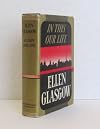
In This Our Life is one of the last Pulitzers I had left to read. It’s taken me this long because the book is out of print and there aren’t a ton of copies available. Really, this is not surprising given how utterly boring the book is.
There’s both a lot going on in the story and also not much of anything. I really just couldn’t muster two licks of giving a shit about these privileged, whiny characters. They did seem to be even more bored with their own lives than I was, which is show more saying something because god damn was I bored with them.
Each of the characters had their own internal struggles, most of which revolved around reconciling what one wants to do with what one must or should do. Certainly not a new theme, but one that is interesting and universal enough. That is, if you are at all interested in the characters.
Really what best demonstrates my experience with this book is when I realized there were about 20 pages missing from the middle of the book and apparently nothing of import happened in those pages, because it picked up pretty much in the same place it was before the pages went missing.
Obviously, I would not recommend this book. show less
There’s both a lot going on in the story and also not much of anything. I really just couldn’t muster two licks of giving a shit about these privileged, whiny characters. They did seem to be even more bored with their own lives than I was, which is show more saying something because god damn was I bored with them.
Each of the characters had their own internal struggles, most of which revolved around reconciling what one wants to do with what one must or should do. Certainly not a new theme, but one that is interesting and universal enough. That is, if you are at all interested in the characters.
Really what best demonstrates my experience with this book is when I realized there were about 20 pages missing from the middle of the book and apparently nothing of import happened in those pages, because it picked up pretty much in the same place it was before the pages went missing.
Obviously, I would not recommend this book. show less

Set in a fictionalised version of her own home town of Richmond in the years leading up to the First World War, Ellen Glasgow’s The Sheltered Life depicts a way of life on the brink of shattering change. With the class barriers breaking down in Queensborough, Virginia, and industrialisation thrusting itself into ugly prominence, Glasgow’s story focuses upon the representatives of “the old way”, the Archbalds and the Birdsongs, whose homes sit stubbornly in what used to be the show more exclusive quarter of their town, but which is now the slender margin between old and new. The two houses stand alone, overlooking the factory district, the homes of the poor and the coloured, and the local prison; the residents’ attempts to ignore the evolving world beyond their high fences thwarted by a foul odour that wafts into their preserves whenever the wind shifts.
Glasgow’s narrative is split between two observers, the elderly David Archbald and his granddaughter, Jenny Blair Archbald; and what the two of them are mostly set upon observing is their neighbour, Eva Birdsong. Some twenty years earlier, Eva was the reigning beauty not merely of Queensborough, but Virginia. With her world at her feet, she then stunned her admirers by eloping with a man who was, as we are told baldly at the outset, “quite unworthy of her”, the superficially charming but profoundly selfish George Birdsong. It is through Eva that Ellen Glasgow criticises the false values of Southern society, a world of hard surfaces and brittle interiors, as Eva makes a career out of being “beautiful”, “charming” and “gracious”, clinging obsessively to the vision of herself as George’s ideal even as he betrays her almost openly with a series of other women, even risking her life rather than disturb the image of herself she has spent a lifetime creating. Eva’s house is one built upon the sand, and sooner or later it must fall...
David Archbald, too, is a victim of this false code. Now an old man, he looks back at himself across the years: at a boy too aware of the world’s pain and cruelty, spurned by his family for a lack of proper “manliness”; at his war service, fighting for a cause in which he did not believe; at a life of unfulfilled dreams and happiness sacrificed to the demands of others:
No man needed protection less, but because he had lived a solitary male among women, he could never escape it, and because these women depended upon him, he had remained at their mercy. It was impossible to wound the feelings of women who owed him the bread they ate and the roof over their heads, and so long as he did not hurt their feelings, they would be stronger than he was.
But if Ellen Glasgow is profoundly critical of this dying world and its warped values, she is also apprehensive about the one that is taking its place, as represented by the facile Jenny Blair. The little girl who embraces life with an internal cry of, “I’m alive, alive, alive, and I’m Jenny Blair Archbald!” grows into a young woman no less self-centred; and if she is more “real” than the transcendent Eva Birdsong, she is also ominously lacking in the very qualities that, in their overabundance, have made her grandfather’s life one of voluntary if reluctant sacrifice: compassion and empathy. Always “meaning well”, Jenny Blair is nevertheless capable of a selfishness quite equal to George Birdsong’s own, with an internal monologue of self-exculpation to match:
“Anything is better than this,” she thought, as she walked down the block to the Birdsongs’ gate. “It isn’t,” she changed the bag and fan to her left hand, and opened the gate, “as if I were to blame. It isn’t,” she stooped to detach a muslin flounce from the thorn of a rose, “as if I had chosen to suffer like this...”
Though beautifully written, The Sheltered Life is quite a disturbing book, its initial ripples of sadness building to a breaking wave of what seems, in retrospect, inevitable tragedy. There is little relief here, apart perhaps from the clarity of General Archbald’s introspection; if we do not have comfort, in the end we at least have understanding. But the General himself is not free of guilt: although he has been a victim, he has also in a sense been a victimiser, one of those whose idealisation has helped to create the idea of Eva Birdsong, whose unspoken devotion has compelled the real and vital woman to retreat behind the beautiful mask:
So seldom had he, or any other man, he imagined, surprised her with the animation drained from her face, that he had thought of her spirit as effortless. Not until the last few months had he suspected that the sudden radiance of her smile was less natural than the upward flight of her eyebrows. But, as he looked at her now, a quiver ran through his heart, and he felt, with agitated senses, that he was seeing her stripped naked, that he was helplessly watching a violation. For they were looking at her through the ruin of her pride... show less
Glasgow’s narrative is split between two observers, the elderly David Archbald and his granddaughter, Jenny Blair Archbald; and what the two of them are mostly set upon observing is their neighbour, Eva Birdsong. Some twenty years earlier, Eva was the reigning beauty not merely of Queensborough, but Virginia. With her world at her feet, she then stunned her admirers by eloping with a man who was, as we are told baldly at the outset, “quite unworthy of her”, the superficially charming but profoundly selfish George Birdsong. It is through Eva that Ellen Glasgow criticises the false values of Southern society, a world of hard surfaces and brittle interiors, as Eva makes a career out of being “beautiful”, “charming” and “gracious”, clinging obsessively to the vision of herself as George’s ideal even as he betrays her almost openly with a series of other women, even risking her life rather than disturb the image of herself she has spent a lifetime creating. Eva’s house is one built upon the sand, and sooner or later it must fall...
David Archbald, too, is a victim of this false code. Now an old man, he looks back at himself across the years: at a boy too aware of the world’s pain and cruelty, spurned by his family for a lack of proper “manliness”; at his war service, fighting for a cause in which he did not believe; at a life of unfulfilled dreams and happiness sacrificed to the demands of others:
No man needed protection less, but because he had lived a solitary male among women, he could never escape it, and because these women depended upon him, he had remained at their mercy. It was impossible to wound the feelings of women who owed him the bread they ate and the roof over their heads, and so long as he did not hurt their feelings, they would be stronger than he was.
But if Ellen Glasgow is profoundly critical of this dying world and its warped values, she is also apprehensive about the one that is taking its place, as represented by the facile Jenny Blair. The little girl who embraces life with an internal cry of, “I’m alive, alive, alive, and I’m Jenny Blair Archbald!” grows into a young woman no less self-centred; and if she is more “real” than the transcendent Eva Birdsong, she is also ominously lacking in the very qualities that, in their overabundance, have made her grandfather’s life one of voluntary if reluctant sacrifice: compassion and empathy. Always “meaning well”, Jenny Blair is nevertheless capable of a selfishness quite equal to George Birdsong’s own, with an internal monologue of self-exculpation to match:
“Anything is better than this,” she thought, as she walked down the block to the Birdsongs’ gate. “It isn’t,” she changed the bag and fan to her left hand, and opened the gate, “as if I were to blame. It isn’t,” she stooped to detach a muslin flounce from the thorn of a rose, “as if I had chosen to suffer like this...”
Though beautifully written, The Sheltered Life is quite a disturbing book, its initial ripples of sadness building to a breaking wave of what seems, in retrospect, inevitable tragedy. There is little relief here, apart perhaps from the clarity of General Archbald’s introspection; if we do not have comfort, in the end we at least have understanding. But the General himself is not free of guilt: although he has been a victim, he has also in a sense been a victimiser, one of those whose idealisation has helped to create the idea of Eva Birdsong, whose unspoken devotion has compelled the real and vital woman to retreat behind the beautiful mask:
So seldom had he, or any other man, he imagined, surprised her with the animation drained from her face, that he had thought of her spirit as effortless. Not until the last few months had he suspected that the sudden radiance of her smile was less natural than the upward flight of her eyebrows. But, as he looked at her now, a quiver ran through his heart, and he felt, with agitated senses, that he was seeing her stripped naked, that he was helplessly watching a violation. For they were looking at her through the ruin of her pride... show less
Lists
Southern Fiction (1)
Awards


You May Also Like


Associated Authors
Statistics
- Works
- 42
- Also by
- 42
- Members
- 1,419
- Popularity
- #18,131
- Rating
- 3.7
- Reviews
- 23
- ISBNs
- 244
- Languages
- 2
- Favorited
- 7


