
Ryan Boudinot
Author of Blueprints of the Afterlife
Works by Ryan Boudinot
The Guy Who Kept Meeting Himself 2 copies
Civilization 1 copy
The Armies of Elf Land 1 copy
Twenty-Minute Stories 1 copy
Associated Works
McSweeney's 14: McSweeney's at War for the Foreseeable Future and He's Never Been So Scared (2004) — Contributor — 412 copies, 5 reviews
McSweeney's 12: Unpublished, Unknown, and/or Unbelievable (2003) — Contributor — 290 copies, 4 reviews
You Must Be This Tall to Ride: Contemporary Writers Take You Inside the Story (2009) — Contributor — 21 copies
Tagged
Common Knowledge
- Birthdate
- 1972-11-06
- Gender
- male
- Organizations
- Goddard College
Amazon.com - Nationality
- USA
- Birthplace
- Saint Croix, U.S. Virgin Islands
- Places of residence
- Seattle, Washington, USA
- Associated Place (for map)
- USA
Members
Reviews

I love to read something once in while that seems to have that halo glow of under-appreciation as it sits on the shelf. This book is one of them. First, that cover! One of my favorites. It looks like a Halloween costume box... with a Hitler mask. The end-papers even emulate the cardboard box back that the back-cover has. It's a piece of art, in design. And the writing! Fun, dark, but with a hint of whimsy short stories that would fit right on the shelf of writers with Kelly Link, George show more Saunders, Sharma Shields, Lydia Millet, Julia Elliott, Karen Russell, Helen Oyeyemi, Kevin Wilson... I'm sure I'm not recalling MANY of these sorts of writers at the moment, or haven't delved in to them yet. But I love these sorts of stories. Hilarious but terrifying, like terrorists in clown costumes on Halloween (don't worry, that one is only two pages long.) I would have liked more back-story detail with some of these stories, like 'Civilization'. But I noticed my favorite stories in this collection are usually the stories with kids because he writes them really well and nostalgically, so my favorites: The Littlest Hitler, So Little Time, Blood Relatives, and Newholly are the top four, but I love most of these stories. I bet Mr. Boudinot really loved Jean Shepherd's Christmas Story. Please write more! show less
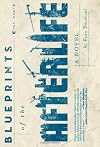
Championship dishwasher Woo-jin Kan is told by his future self that he must quit his job at Il Italian Joint and write a book called How to Love People so that The Last Dude, who sits atop an Arizona mesa, can read this book and spell out for any onlookers what it was that brought about the end of humanity. It starts there and gets weirder. Marauding sentient glaciers, floating celestial heads, miniature software development monks - that sort of thing.
Boudinot is both a hilariously gifted show more wordsmith and a master storyteller, and Blueprints of the Afterlife will most certainly be among the best books of 2012. show less
Boudinot is both a hilariously gifted show more wordsmith and a master storyteller, and Blueprints of the Afterlife will most certainly be among the best books of 2012. show less
Slipstream is a genre name coined by Bruce Sterling to describe a " ... kind of writing which simply makes you feel very strange; the way that living in the twentieth century makes you feel, if you are a person of a certain sensibility." This is work that fits somewhere in the interstices between literary fiction, science fiction, and fantasy. It is more like magical realism than any other genre, but it is its own thing. Slipstream contains elements of genre (like science fiction), but it show more isn't really about genre. It is more the celebration of the fantastical in the ordinary, the joy of playing the with the toys of any genre and putting them together in your very own way. Many writers are playing in this form, although they may seem unrelated. I would include China Mieville, but also Thomas Pynchon, Margaret Atwood, Isabelle Allende, and Gabrielle Garcia Marquez. There's Kathy Acker, certainly Jonathan Carroll, Don DeLillo. Also, there's Ryan Boudinot.
Blueprints of the Afterlife begins in the Age of Fucked Up Shit. It is post-apocalyptic and satirical, addressing many pieces of our current fucked up lives - overconsumption, lack of identity, and mysticism. What do we do after the apocalypse with all the junk left over? What do we privilege? Do we create or re-create? How do we begin to re-define ourselves and our humanity (or do we)?
This is a complex and dense book, unfolding in small bites like a tasting menu. I thought of tasting menus developed in the world of molecular gastronomy (its very own interstice with interesting philosophical considerations), but also of the tasting menus of chef working at the top of their game incorporating classic techniques, fresh ingredients, and their own unique visions. Boudinot has written a long, 12-course tasting menu and like such a menu it can be confusing, overwhelming, scary, mysterious, and just plain delicious.
If you're feeling adventurous and don't mind ambiguity and middle spaces this is the book for you. Mr. Boudinot has a glorious uninhibited imagination and a deft hand for pacing and for drawing you into a story that will make you think about who we are, where we might be going, and the fantastical possibilities of what-if. show less
Blueprints of the Afterlife begins in the Age of Fucked Up Shit. It is post-apocalyptic and satirical, addressing many pieces of our current fucked up lives - overconsumption, lack of identity, and mysticism. What do we do after the apocalypse with all the junk left over? What do we privilege? Do we create or re-create? How do we begin to re-define ourselves and our humanity (or do we)?
This is a complex and dense book, unfolding in small bites like a tasting menu. I thought of tasting menus developed in the world of molecular gastronomy (its very own interstice with interesting philosophical considerations), but also of the tasting menus of chef working at the top of their game incorporating classic techniques, fresh ingredients, and their own unique visions. Boudinot has written a long, 12-course tasting menu and like such a menu it can be confusing, overwhelming, scary, mysterious, and just plain delicious.
If you're feeling adventurous and don't mind ambiguity and middle spaces this is the book for you. Mr. Boudinot has a glorious uninhibited imagination and a deft hand for pacing and for drawing you into a story that will make you think about who we are, where we might be going, and the fantastical possibilities of what-if. show less
Blueprints of the Afterlife: A Novel by Ryan Boudinot (New York: Black Cat, 2012. 430pp). Originally posted at wherepenmeetspaper.blogspot.com
Ryan Boudinot is the author of the novel Misconception, as well as The Littlest Hitler, the latter which won the book of the year from Publisher’s Weekly. He is on the faculty of Goddard College’s MFA program in Port Townsend, and blogs about film at therumpus.net. A native of Washington state, he currently lives in the city of Seattle.
New York show more Alki
Setting off in mild trepidation down my newfound odyssey of contemporary literature, I have found some amazing novels. Despite my fear, Blueprints of the Afterlife takes home the proverbial first prize. In this weird, somewhat dystopian, mainly dysfunctional, post-apocalyptic world, Ryan Boudinot carefully weaves a story of my beloved city and hometown, Seattle, which is both brilliant and freakishly weird.
Woo-jin is our protagonist, and an award winning dishwasher, who suffers from ennui attacks (excessive empathy). He finds a body, not once, but twice, later meeting its owner, Abby Fogg, alive in “superposition” (a place where she can exist in multiple states: both dead and not). Amidst the entirety of the plot there is a man named Dirk Bickle who remains an enigma throughout the novel.
But what interested me throughout wasn’t the plot, which was absolutely mind-bending (in fact mind-bending isn’t strong enough a phrase) and fabulously entertaining overall. Rather, it was the setting. Set in Seattle, society is building New York City on the shores of Bainbridge Island, an island located close to Seattle.
“In the notes we found several references to the ‘New York Alki’ project. I’d taken Washington state history and knew what this meant. When the first white settlers came to the region in the nineteenth century, they debated what to call their settlement. They had big aspirations for their little frontier outpost but were really bummed out by all the mud and rain. To cheer themselves up they considered naming the place ‘New York Alki.’ Alki was a Chinook word for ‘by and by.’ Meaning, ‘someday.’ ‘New York Alki’ meant that someday this place would be as big and vibrant as New York City. But cooler heads prevailed and decided that naming their city after New York, itself named after old York, was retarded. So they named the city after Chief Sealth and called it a day” (68).
A Consistent Backdrop
The ill-founded attempt to name Seattle New York influences Boudinot’s writing, and the backdrop of the entire novel. In the future, this past idea becomes future reality, and the consistent setting of the entire story is this New New York emerging where all the characters meander about their crazed, strange, unconventional lives. The other backdrop is a futuristic Seattle, one that I think can only truly be appreciated if you live here.
“After the great fire of 1889, when Seattle laid new streets atop the ruins of Pioneer Square, the ground levels of hotels, brothers, and dry-goods merchants became the underground. Post-FUS [Fucked Up Shit], a third layer arose, preserving Pioneer Square under a dome. In this district it was always night, lit with yellowish streetlights, real trees supplanted by facsimile trees of concrete and latex” (175).
Living next-door to Pioneer Square (I can literally see Seattle from my window), it’s truly mesmerizing to think about the future of the city as I look at it.
Post FUS
Now in the post-FUS era the earth, and the Pacific Northwest in general, has become a strange place. I should state that this isn’t so much a dystopian novel, it’s a post-dystopian novel. The dystopia has already occurred (the FUS), and now it’s plainly dysfunctional. Part of the era of FUS included a glacier taking over most of Canada (ha!), and parts of America as well.
“Several theories emerged to explain the origin and sheer persistence of the glacier. Many suggested the mass of ice possessed an intelligence. It was easy to personify, as it appeared to be deliberately targeting concentrations of human civilization. As it approached Saskatoon, Canadians stood on top of buildings and bridges with bullhorns, loudly and profusely apologizing for warming the planet. But the glacier would not be placated...while [the glacier named] Malaspina laid waste to the Great White North, Americans paid little attention” (171).
This quotation exemplifies the kind of strange “Palahniukian” writing that takes place in the novel. Its strange gore mixes with creepy and odd science fiction. But, surrounded by the odd science fiction comes a sort of unusual, Malthusian catastrophe story, where humans are forced to reconcile with how they’ve treated the planet by raping the earth’s resources. Boudinot places effective social commentary and ecological awareness amid this strange science fiction novel.
“It was obvious and apparent: stop using oil, stop making plastic, control the growth of the population to a logical level so we could exist within the parameters of our ecology. If we didn’t do these things, most of us would die. But we were willing to die because a more powerful part of our minds, the old mammalian limbic system, was busy pushing those bars. The more recent, less developed part of our brains, the neocortex, was waving its arms and screaming for us to stop our destructive behavior. In this war between the limbic system and the neocortex, the limbic system won, hence the FUS” (150).
The beauty of this book is the way Boudinot allows the plot to unfold. He uses the common setting of an emerging, post-apocalyptic Seattle as well as the backstory of the FUS era to create a plot that simply rocks hard. He uses crass language (like FUS) in a way that really effectively tells the story of this new dysfunctional world, and uses characters with weird unimaginable things going on to tell a story of epic proportions. Simply stated, I recommend Blueprints of the Afterlife. Even if you don’t enjoy dystopian novels, this one will surely engage, as it focuses more on human dysfunction as a whole. If you enjoy science or historical fiction, this novel would also be an excellent choice. Just give it a try—you’ll be entertained if nothing else.
Originally posted at wherepenmeetspaper.blogspot.com show less
Ryan Boudinot is the author of the novel Misconception, as well as The Littlest Hitler, the latter which won the book of the year from Publisher’s Weekly. He is on the faculty of Goddard College’s MFA program in Port Townsend, and blogs about film at therumpus.net. A native of Washington state, he currently lives in the city of Seattle.
New York show more Alki
Setting off in mild trepidation down my newfound odyssey of contemporary literature, I have found some amazing novels. Despite my fear, Blueprints of the Afterlife takes home the proverbial first prize. In this weird, somewhat dystopian, mainly dysfunctional, post-apocalyptic world, Ryan Boudinot carefully weaves a story of my beloved city and hometown, Seattle, which is both brilliant and freakishly weird.
Woo-jin is our protagonist, and an award winning dishwasher, who suffers from ennui attacks (excessive empathy). He finds a body, not once, but twice, later meeting its owner, Abby Fogg, alive in “superposition” (a place where she can exist in multiple states: both dead and not). Amidst the entirety of the plot there is a man named Dirk Bickle who remains an enigma throughout the novel.
But what interested me throughout wasn’t the plot, which was absolutely mind-bending (in fact mind-bending isn’t strong enough a phrase) and fabulously entertaining overall. Rather, it was the setting. Set in Seattle, society is building New York City on the shores of Bainbridge Island, an island located close to Seattle.
“In the notes we found several references to the ‘New York Alki’ project. I’d taken Washington state history and knew what this meant. When the first white settlers came to the region in the nineteenth century, they debated what to call their settlement. They had big aspirations for their little frontier outpost but were really bummed out by all the mud and rain. To cheer themselves up they considered naming the place ‘New York Alki.’ Alki was a Chinook word for ‘by and by.’ Meaning, ‘someday.’ ‘New York Alki’ meant that someday this place would be as big and vibrant as New York City. But cooler heads prevailed and decided that naming their city after New York, itself named after old York, was retarded. So they named the city after Chief Sealth and called it a day” (68).
A Consistent Backdrop
The ill-founded attempt to name Seattle New York influences Boudinot’s writing, and the backdrop of the entire novel. In the future, this past idea becomes future reality, and the consistent setting of the entire story is this New New York emerging where all the characters meander about their crazed, strange, unconventional lives. The other backdrop is a futuristic Seattle, one that I think can only truly be appreciated if you live here.
“After the great fire of 1889, when Seattle laid new streets atop the ruins of Pioneer Square, the ground levels of hotels, brothers, and dry-goods merchants became the underground. Post-FUS [Fucked Up Shit], a third layer arose, preserving Pioneer Square under a dome. In this district it was always night, lit with yellowish streetlights, real trees supplanted by facsimile trees of concrete and latex” (175).
Living next-door to Pioneer Square (I can literally see Seattle from my window), it’s truly mesmerizing to think about the future of the city as I look at it.
Post FUS
Now in the post-FUS era the earth, and the Pacific Northwest in general, has become a strange place. I should state that this isn’t so much a dystopian novel, it’s a post-dystopian novel. The dystopia has already occurred (the FUS), and now it’s plainly dysfunctional. Part of the era of FUS included a glacier taking over most of Canada (ha!), and parts of America as well.
“Several theories emerged to explain the origin and sheer persistence of the glacier. Many suggested the mass of ice possessed an intelligence. It was easy to personify, as it appeared to be deliberately targeting concentrations of human civilization. As it approached Saskatoon, Canadians stood on top of buildings and bridges with bullhorns, loudly and profusely apologizing for warming the planet. But the glacier would not be placated...while [the glacier named] Malaspina laid waste to the Great White North, Americans paid little attention” (171).
This quotation exemplifies the kind of strange “Palahniukian” writing that takes place in the novel. Its strange gore mixes with creepy and odd science fiction. But, surrounded by the odd science fiction comes a sort of unusual, Malthusian catastrophe story, where humans are forced to reconcile with how they’ve treated the planet by raping the earth’s resources. Boudinot places effective social commentary and ecological awareness amid this strange science fiction novel.
“It was obvious and apparent: stop using oil, stop making plastic, control the growth of the population to a logical level so we could exist within the parameters of our ecology. If we didn’t do these things, most of us would die. But we were willing to die because a more powerful part of our minds, the old mammalian limbic system, was busy pushing those bars. The more recent, less developed part of our brains, the neocortex, was waving its arms and screaming for us to stop our destructive behavior. In this war between the limbic system and the neocortex, the limbic system won, hence the FUS” (150).
The beauty of this book is the way Boudinot allows the plot to unfold. He uses the common setting of an emerging, post-apocalyptic Seattle as well as the backstory of the FUS era to create a plot that simply rocks hard. He uses crass language (like FUS) in a way that really effectively tells the story of this new dysfunctional world, and uses characters with weird unimaginable things going on to tell a story of epic proportions. Simply stated, I recommend Blueprints of the Afterlife. Even if you don’t enjoy dystopian novels, this one will surely engage, as it focuses more on human dysfunction as a whole. If you enjoy science or historical fiction, this novel would also be an excellent choice. Just give it a try—you’ll be entertained if nothing else.
Originally posted at wherepenmeetspaper.blogspot.com show less
Awards


You May Also Like


Associated Authors
Statistics
- Works
- 12
- Also by
- 13
- Members
- 610
- Popularity
- #41,202
- Rating
- 3.7
- Reviews
- 31
- ISBNs
- 13
- Languages
- 1