
Joshua Cohen (1) (1980–)
Author of The Netanyahus: An Account of a Minor and Ultimately Even Negligible Episode in the History of a Very Famous Family
For other authors named Joshua Cohen, see the disambiguation page.
About the Author
Joshua Cohen is the author of Book of Numbers which has been shortlisted for the 2015 Bad S-x in Fiction Award. (Bowker Author Biography)
Works by Joshua Cohen
The Netanyahus: An Account of a Minor and Ultimately Even Negligible Episode in the History of a Very Famous Family (2021) 901 copies, 36 reviews
Two Tribal Stories 1 copy
The Coffin Factory Issue 5 1 copy
Associated Works
Tagged
Common Knowledge
- Birthdate
- 1980-09-06
- Gender
- male
- Occupations
- book reviewer (The Forward)
novelist - Organizations
- Massachusetts Institute of Technology
Philosophy and Public Affairs (Associate Editor)
The Boston Review (Editor) - Awards and honors
- The 50 Most Essential Works Of Jewish Fiction Of The Last 100 Years (49)
- Nationality
- USA
- Birthplace
- New Jersey, USA
- Places of residence
- Prague, Czech Republic
Brooklyn, New York, USA - Associated Place (for map)
- USA
Members
Reviews

****.5
Scrumptious wordplay. Oozes with allusions both profound and obscure. Maddeningly brilliant, rambling and meandering with frequent random digressions and stray thoughts and phrases thrust into the narrative for no good reason. The result is a beautiful mess, frustrating and difficult to follow at times. While dazzling, it's also exhausting, best broken up into short sessions rather than attempting to plough straight through.
After settling into the orgiastic style and grasping at the show more edges of the slowly developing plot, I began to wonder "what is the point of all this?" Is there a message here, or is the whole thing merely a show-off exercise in mental masturbation? The plot is more of a sketch than a serious attempt to tell a story, and there are so many embellishments, dead-ends, asides, assorted literary devices, and distractions, that I decided to just enjoy the ride and not be particularly concerned with where [or whether] it ended up.
For best results, read along while listening to the audiobook, as the multimodal experience helps demuddle the mess somewhat. show less
Scrumptious wordplay. Oozes with allusions both profound and obscure. Maddeningly brilliant, rambling and meandering with frequent random digressions and stray thoughts and phrases thrust into the narrative for no good reason. The result is a beautiful mess, frustrating and difficult to follow at times. While dazzling, it's also exhausting, best broken up into short sessions rather than attempting to plough straight through.
After settling into the orgiastic style and grasping at the show more edges of the slowly developing plot, I began to wonder "what is the point of all this?" Is there a message here, or is the whole thing merely a show-off exercise in mental masturbation? The plot is more of a sketch than a serious attempt to tell a story, and there are so many embellishments, dead-ends, asides, assorted literary devices, and distractions, that I decided to just enjoy the ride and not be particularly concerned with where [or whether] it ended up.
For best results, read along while listening to the audiobook, as the multimodal experience helps demuddle the mess somewhat. show less
The Netanyahus: An Account of a Minor and Ultimately Even Negligible Episode in the History of a Very Famous Family by Joshua Cohen

Joshua Cohen Might Have Been a Great Writer.
I first encountered Joshua Cohen’s through his novel Book of Numbers (2015). The biblical references drew in me and I stayed for the excellent, dare I say, prophetic writing.
I felt like I was reading a Jewish James Joyce. Cohen, like Joyce, has a masterful command of English: He fuses description, narrative, and dialogue with wit, social commentary, and playful exploration. It’s a rare talent.
So, a year later, I picked up The Netanyahus (2021). show more The subtitle is; An Account of a Minor and Ultimately Even Negligible Episode in the History of a Very Famous Family. I was hoping for a fun read. At minimum, an anecdotal introduction to Bibi Netanyahu’s revisionist- Zionist intellectual and family background.
According to Cohen, this idea for the book arose from conversations with the great literary critic, Harold Bloom, who had once related a story about hosting Ben Zion Netanyahu (father of Israeli Prime Minister Benjamin Netanyahu) at Cornell University in the late 1950s. In Cohen’s fictional version, the visit takes place at the WASP-ish “Corbin College,” and the host is one Ruben Blum, a Jewish professor navigating the precarious position of being the school’s “token Jew.”
Cohen’s linguistic virtuosity shines. He sets the scene with detailed and often comical descriptions of the campus, Blum’s family life, and the absurdities of academic politics. Yet with the Netanyahus, I realized Cohen had taken the low road. Instead of offering a balanced or nuanced portrayal of Netanyahu and his family, he launches into a caricature that is biased and even outright derisive:
Without evidence, Cohen depicts Ben Zion and his wife as a typical Israeli: Loud and boorish. His sons—Jonathan (Yoni), Benjamin (Bibi), and Iddo—arrive in tow, creating chaos and cultural clashes that veer into the farcical. The most jarring moment involves the alleged rape of Blum’s teenage daughter by Yoni. That’s the same Yoni who lead the famous Israel raid on Entebbe in 1976. Yoni paid with highest price - his life - to save many American and Jewish lives. But Cohen saw it fit - for his story - to make this unjustified and unsubstantiated accusation against a dead Israeli hero. If ever I have seen a poison pen, this is it. Cohen uses the veil of fiction to accuse Yoni rape while also hiding behind fact that his is dead - and so cannot answer the slander.
Venomous! But even this proves insufficient for Cohen. He uses a PostScript to further attempts to aggrandize himself.
Rather than provide “behind-the-scenes” glimpses into his research, he mentions his extensive talks with Harold Bloom (who died in 2019) about American literature, as if to certify his own importance within that scholarly circle. But these anecdotes are at best self-serving - designed to align Cohen with literary giants. In the worst case, Cohen is just trying to flatter his way into acceptance by important figures in his field.
And then - as if that it’s not enough that he has slandered Ben Zion, Yoni and Bibi, he makes a point of telling the reader that he tried to contact Iddo Netanyahu, who is a radiologist and a writer in real life, to discuss family history. Iddo refused—understandably, given how the novel portrays the family.
Perhaps the greatest tragedy is that I believe Cohen might have written a significant novel on this subject:
The meeting between Ben-Zion Netanyahu, a distinguished scholar of Judaic history, and a revisionist Zionist, with the American academic landscape of the 1950s, and a liberal Jewish family, seeking to find acceptance in America is a multi-layered and rich premise. It could have shed light on post-war American Jewry - seeking acceptance, and the nascent State of Israel seeking to survive. It could have peeled off the layers of those competing ideologies. The novel might have explored each protagonist’s perspective, showcasing their respective triumphs and tragedies. Instead, Cohen reduces grand themes to petty insults and comedic set-pieces.
Yes, the language is Joycean. But the substance remains too preoccupied with mocking the Netanyahu family to deliver a deeper insight.
In the end, The Netanyahus shows off Cohen’s verbal virtuosity while revealing a willingness to settle for cheap shots. It is a missed opportunity. A brilliant writer who went for a quick satirical jab.
It’s a shame. Despite his immense gifts, Joshua Cohen crafted a story so mired in partisanship and caricature that it sacrifices the grandeur and complexity of its subject. He clearly masters the English language, but the novel’s enduring legacy will have less to do with Cohen’s prophetic, Joycean experimentation and with his partisan, servile sniveling towards literary establishment at the expense of those unable to defend themselves. show less
I first encountered Joshua Cohen’s through his novel Book of Numbers (2015). The biblical references drew in me and I stayed for the excellent, dare I say, prophetic writing.
I felt like I was reading a Jewish James Joyce. Cohen, like Joyce, has a masterful command of English: He fuses description, narrative, and dialogue with wit, social commentary, and playful exploration. It’s a rare talent.
So, a year later, I picked up The Netanyahus (2021). show more The subtitle is; An Account of a Minor and Ultimately Even Negligible Episode in the History of a Very Famous Family. I was hoping for a fun read. At minimum, an anecdotal introduction to Bibi Netanyahu’s revisionist- Zionist intellectual and family background.
According to Cohen, this idea for the book arose from conversations with the great literary critic, Harold Bloom, who had once related a story about hosting Ben Zion Netanyahu (father of Israeli Prime Minister Benjamin Netanyahu) at Cornell University in the late 1950s. In Cohen’s fictional version, the visit takes place at the WASP-ish “Corbin College,” and the host is one Ruben Blum, a Jewish professor navigating the precarious position of being the school’s “token Jew.”
Cohen’s linguistic virtuosity shines. He sets the scene with detailed and often comical descriptions of the campus, Blum’s family life, and the absurdities of academic politics. Yet with the Netanyahus, I realized Cohen had taken the low road. Instead of offering a balanced or nuanced portrayal of Netanyahu and his family, he launches into a caricature that is biased and even outright derisive:
Without evidence, Cohen depicts Ben Zion and his wife as a typical Israeli: Loud and boorish. His sons—Jonathan (Yoni), Benjamin (Bibi), and Iddo—arrive in tow, creating chaos and cultural clashes that veer into the farcical. The most jarring moment involves the alleged rape of Blum’s teenage daughter by Yoni. That’s the same Yoni who lead the famous Israel raid on Entebbe in 1976. Yoni paid with highest price - his life - to save many American and Jewish lives. But Cohen saw it fit - for his story - to make this unjustified and unsubstantiated accusation against a dead Israeli hero. If ever I have seen a poison pen, this is it. Cohen uses the veil of fiction to accuse Yoni rape while also hiding behind fact that his is dead - and so cannot answer the slander.
Venomous! But even this proves insufficient for Cohen. He uses a PostScript to further attempts to aggrandize himself.
Rather than provide “behind-the-scenes” glimpses into his research, he mentions his extensive talks with Harold Bloom (who died in 2019) about American literature, as if to certify his own importance within that scholarly circle. But these anecdotes are at best self-serving - designed to align Cohen with literary giants. In the worst case, Cohen is just trying to flatter his way into acceptance by important figures in his field.
And then - as if that it’s not enough that he has slandered Ben Zion, Yoni and Bibi, he makes a point of telling the reader that he tried to contact Iddo Netanyahu, who is a radiologist and a writer in real life, to discuss family history. Iddo refused—understandably, given how the novel portrays the family.
Perhaps the greatest tragedy is that I believe Cohen might have written a significant novel on this subject:
The meeting between Ben-Zion Netanyahu, a distinguished scholar of Judaic history, and a revisionist Zionist, with the American academic landscape of the 1950s, and a liberal Jewish family, seeking to find acceptance in America is a multi-layered and rich premise. It could have shed light on post-war American Jewry - seeking acceptance, and the nascent State of Israel seeking to survive. It could have peeled off the layers of those competing ideologies. The novel might have explored each protagonist’s perspective, showcasing their respective triumphs and tragedies. Instead, Cohen reduces grand themes to petty insults and comedic set-pieces.
Yes, the language is Joycean. But the substance remains too preoccupied with mocking the Netanyahu family to deliver a deeper insight.
In the end, The Netanyahus shows off Cohen’s verbal virtuosity while revealing a willingness to settle for cheap shots. It is a missed opportunity. A brilliant writer who went for a quick satirical jab.
It’s a shame. Despite his immense gifts, Joshua Cohen crafted a story so mired in partisanship and caricature that it sacrifices the grandeur and complexity of its subject. He clearly masters the English language, but the novel’s enduring legacy will have less to do with Cohen’s prophetic, Joycean experimentation and with his partisan, servile sniveling towards literary establishment at the expense of those unable to defend themselves. show less
The Netanyahus: An Account of a Minor and Ultimately Even Negligible Episode in the History of a Very Famous Family by Joshua Cohen
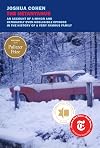
Joshua Cohen was a young author unknown to me, so THE NETANYAHUS (2021) was my introduction to his work, and I just flat-out enjoyed the holy hell outa this book. It's a rather cerebral (much about the persecution of the Jews in the middle ages and beyond, some of which may or may not be true) and often hilarious novel of academia set on a small college campus in rural New York in 1959-60. I call it cerebral because you really have to pay close attention to some of the rants and speeches show more here about being Jewish and the historical trials and tribulations of same. Our narrator is Professor Ruben Bloom, the only (token?) Jew on the faculty at Corbin College, indeed perhaps the only Jew in town. He is tasked by his Department Chair to host an applicant coming to interview for a faculty position. That applicant is Dr Ben-Zion Netanyahu, coming from Israel via Philadelphia, who brings along his whole family - outspoken wife Tzila and three rowdy sons: Jonathan (13), Benjamin/Bibi (10) and Iddo (7) - who proceed to disrupt and lay waste to the Blooms' quiet home and family, and to the whole carefully planned proceedings. And yes, that middle son is THE Benjamin Netanyahu who is still so much in the news today. Indeed the book's subtitle is AN ACCOUNT OF A MINOR AND EVEN NEGLIGIBLE EPISODE IN THE HISTORY OF A VERY FAMOUS FAMILY. So. Fiction based on fact? Yes, or kind of. And be sure to read Cohen's "Credits & Extra Credits" at the end of the book, which explains much about the whole Netanyahu family and also the author's unique friendship with the noted literary critic Harold Bloom.
I absolutely loved this novel. So much that I already have another Joshua Cohen novel (MOVING KINGS) on my must-read list. Very, very highly recommended.
- Tim Bazzett, author of the memoir, BOOKLOVER show less
I absolutely loved this novel. So much that I already have another Joshua Cohen novel (MOVING KINGS) on my must-read list. Very, very highly recommended.
- Tim Bazzett, author of the memoir, BOOKLOVER show less
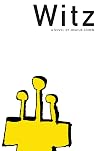
It. Is. Done. Finishing this book leaves me with a feeling akin to a dream. For over a year, close to two, I've been reading this tome off and on. And, like similarly long and dense works like 'Gravity's Rainbow' or 'Ulysses', I've read a decent number of shorter, more accessible works, in the time it's taken me to finish this book once.
What does all that say? Well, that namely this book not only prides itself on allusive as well as stylistic density, but that it does all of this with a show more complete lack of apology or compromise towards the reader (in fact, according to one or more interviews with Joshua Cohen, his first draft was something like 4000 pages long with one passage in PHONETIC HEBREW).
But why? Is there a point? Is this just a 'Jewish Ulysses'? A Brooklyn Jewish writer's attempt at HIS Gravity's Rainbow or some such other high modernist and/or post modern literary opus?
Well, in this reader's opinion, it is those things, but really, only accidentally. Whereas there are moments or even long protracted sequences in GR or Ulysses where the narrative itself seems completely obfuscated by the author's density of language, here, in Witz, the plot is actually fairly, actually very, simple, and even linear. Read the back cover of this book and you will see a very succinct and concise summation of what (mostly) happens in the book. The plot here is not complicated. A to B to C with a few digressions here and there (sometimes flashbacks or postmodern tropes like the listing of objects or even a recipe) with an eventual break, a sudden change in setting and character, and that's it, the end, mind blowing apparently ensues, and we're left to wonder what we know about this, what was worth knowing about this, and how or what do we tell others of what we know about this.
But enough talking around the book, what about the book itself? Really, I liked it, a lot. Of all the words used in the reviews for this book I'd side with 'bold', 'ambitious', even, for the most part, 'brilliant'. Over the course of a ten year (!) writing period Cohen has constructed what will surely be an eternal work (so much as there are readers bold and simultaneously humble enough to tackle texts of this viciously intellectual level). His use of language is exactly half awesome and half maddening. The 'yiddishspeak' in question is for the most part a near unbearable ordeal to read through, especially over the course of 800+ pages. But within that ordeal there are passages that are so rich in poetry, so suffused with a Jewish wit that was, apparently still is, has always been, but may never be again, along with allusions to texts, people, and events that, I can admit went almost completely over my head (this book has to be read with a dictionary, several in fact, and with access to the internet or a person to explain every reference, maybe Cohen himself, not sure if he'd be up for that), that I found myself unable to not finish the book. I had to see where the writer was going with all of these ideas and what, if anything, he was going to 'say' about, what, EVERYTHING regarding Jews and Judaism, specifically it would seem, the Jews of Europe and America, essentially, those in the Diaspora, the Galut, the Exile, outside of the apparently chosen Land.
In essence I've never read nor do I think I ever will read such a bloodlessly cruel yet infinitely understanding text of what it means to be Jewish. From any Jewish author, American, Israeli, of any European extraction, none of them has come close to this, all were, up until now, apparently poking or ice-skating on the surface of it (to borrow a term from Charles Bukowski describing Truman Capote). The pride, the loathing, the love, the hate, the brilliance, the idiocy, the ritual, the pageantry, the heritage, the meaninglessness, the humor, and so much else. But if I can say anything about this text, what it all means(!?) to me, it would read like this:
This is a book about humor and finding humor, like most humor is found, in the ridiculousness of life. And there is no place better for that humor to be found than in the story of the Jewish people. This isn't a 'warm' humor or a 'wink-wink' we're all in on it because we're a special and Chosen People kind of humor, no, it's simpler and a lot harder to bear than that. The humor, the joke, to me, is that even with everything that the Jewish people have been through be it expulsions, pogroms, inquisitions, holocausts, wars, oppression and abuses of all kinds...the destruction (twice) of our most holy temple, the loss and eventual reestablishment of our 'homeland'...we still find it in ourselves, as a people, to be crueler and infinitely more destructive to each other (our apparent 'own' our family) than any of our oppressors/enemies real and imagined could ever be in their wildest most disgusting imaginings. But then, who's more damaging than family? Who could be? Who would want to be? And yet, we're still around. And more than anything else, that's fucking hysterical to me. show less
What does all that say? Well, that namely this book not only prides itself on allusive as well as stylistic density, but that it does all of this with a show more complete lack of apology or compromise towards the reader (in fact, according to one or more interviews with Joshua Cohen, his first draft was something like 4000 pages long with one passage in PHONETIC HEBREW).
But why? Is there a point? Is this just a 'Jewish Ulysses'? A Brooklyn Jewish writer's attempt at HIS Gravity's Rainbow or some such other high modernist and/or post modern literary opus?
Well, in this reader's opinion, it is those things, but really, only accidentally. Whereas there are moments or even long protracted sequences in GR or Ulysses where the narrative itself seems completely obfuscated by the author's density of language, here, in Witz, the plot is actually fairly, actually very, simple, and even linear. Read the back cover of this book and you will see a very succinct and concise summation of what (mostly) happens in the book. The plot here is not complicated. A to B to C with a few digressions here and there (sometimes flashbacks or postmodern tropes like the listing of objects or even a recipe) with an eventual break, a sudden change in setting and character, and that's it, the end, mind blowing apparently ensues, and we're left to wonder what we know about this, what was worth knowing about this, and how or what do we tell others of what we know about this.
But enough talking around the book, what about the book itself? Really, I liked it, a lot. Of all the words used in the reviews for this book I'd side with 'bold', 'ambitious', even, for the most part, 'brilliant'. Over the course of a ten year (!) writing period Cohen has constructed what will surely be an eternal work (so much as there are readers bold and simultaneously humble enough to tackle texts of this viciously intellectual level). His use of language is exactly half awesome and half maddening. The 'yiddishspeak' in question is for the most part a near unbearable ordeal to read through, especially over the course of 800+ pages. But within that ordeal there are passages that are so rich in poetry, so suffused with a Jewish wit that was, apparently still is, has always been, but may never be again, along with allusions to texts, people, and events that, I can admit went almost completely over my head (this book has to be read with a dictionary, several in fact, and with access to the internet or a person to explain every reference, maybe Cohen himself, not sure if he'd be up for that), that I found myself unable to not finish the book. I had to see where the writer was going with all of these ideas and what, if anything, he was going to 'say' about, what, EVERYTHING regarding Jews and Judaism, specifically it would seem, the Jews of Europe and America, essentially, those in the Diaspora, the Galut, the Exile, outside of the apparently chosen Land.
In essence I've never read nor do I think I ever will read such a bloodlessly cruel yet infinitely understanding text of what it means to be Jewish. From any Jewish author, American, Israeli, of any European extraction, none of them has come close to this, all were, up until now, apparently poking or ice-skating on the surface of it (to borrow a term from Charles Bukowski describing Truman Capote). The pride, the loathing, the love, the hate, the brilliance, the idiocy, the ritual, the pageantry, the heritage, the meaninglessness, the humor, and so much else. But if I can say anything about this text, what it all means(!?) to me, it would read like this:
This is a book about humor and finding humor, like most humor is found, in the ridiculousness of life. And there is no place better for that humor to be found than in the story of the Jewish people. This isn't a 'warm' humor or a 'wink-wink' we're all in on it because we're a special and Chosen People kind of humor, no, it's simpler and a lot harder to bear than that. The humor, the joke, to me, is that even with everything that the Jewish people have been through be it expulsions, pogroms, inquisitions, holocausts, wars, oppression and abuses of all kinds...the destruction (twice) of our most holy temple, the loss and eventual reestablishment of our 'homeland'...we still find it in ourselves, as a people, to be crueler and infinitely more destructive to each other (our apparent 'own' our family) than any of our oppressors/enemies real and imagined could ever be in their wildest most disgusting imaginings. But then, who's more damaging than family? Who could be? Who would want to be? And yet, we're still around. And more than anything else, that's fucking hysterical to me. show less
Lists
Awards


You May Also Like


Associated Authors
Statistics
- Works
- 14
- Also by
- 7
- Members
- 1,966
- Popularity
- #13,075
- Rating
- 3.7
- Reviews
- 63
- ISBNs
- 109
- Languages
- 11
- Favorited
- 1