
Wendy Doniger
Author of Hindu Myths
About the Author
Wendy Doniger is the Mircea Eliade Distinguished Service Professor Emerita of the History of Religions, University of Chicago Divinity School, and the author of over forty books.
Image credit: Religious studies scholar Wendy Doniger giving the commencement speech at Chicago's Shimer College in 2012. [credit: Miles Stepto / Shimer College]
Works by Wendy Doniger
Splitting the Difference: Gender and Myth in Ancient Greece and India (Jordan Lectures in Comparative Religion) (1999) 64 copies
Textual Sources for the Study of Hinduism (Textual Sources for the Study of Religion) (1988) 51 copies
Off with Her Head!: The Denial of Women's Identity in Myth, Religion, and Culture (1995) — Editor — 37 copies
Against Dharma: Dissent in the Ancient Indian Sciences of Sex and Politics (2018) 21 copies, 1 review
Tales of Sex and Violence: Folklore, Sacrifice, and Danger in the Jaiminiya Brahmana (1985) 14 copies
Winged Stallions and Wicked Mares: Horses in Indian Myth and History (Richard Lectures) (2021) 13 copies
The Norton Anthology of World Religions, Volume 1: Hinduism, Buddhism, Daoism (2014) — Editor — 10 copies
The Dharma of Unfaithful Wives and Faithful Jackals: Some Moral Tales From The Mahabharata (2024) 5 copies, 1 review
Associated Works
The Oresteia: Agamemnon, Women at the Graveside, Orestes in Athens (0458) — Translator, some editions; Translator, some editions — 11,709 copies, 87 reviews
Death, War, and Sacrifice: Studies in Ideology & Practice (1991) — Foreword, some editions — 73 copies
Paths to the power of myth : Joseph Campbell and the study of religion (1990) — Contributor — 32 copies
The Place of the Hidden Moon: Erotic Mysticism in the Vaisnava-Sahajiya Cult of Bengal (1989) — Foreword, some editions — 20 copies
Literary imagination, ancient and modern : essays in honor of David Grene (1999) — Contributor — 9 copies
Tagged
Common Knowledge
- Canonical name
- Doniger, Wendy
- Other names
- Doniger O'Flaherty, Wendy
- Birthdate
- 1940-11-20
- Gender
- female
- Education
- Harvard University (Ph.D.)
University of Oxford (D. Phil)
Harvard Graduate School of Arts and Sciences (M.A.)
Radcliffe College (Sanskrit and Indian Studies) - Occupations
- Indologist
professor - Organizations
- University of Chicago
University of London - Nationality
- USA
- Birthplace
- New York, New York, USA
- Places of residence
- Chicago, Illinois, USA
- Associated Place (for map)
- USA
Members
Reviews
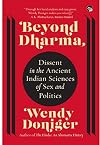
Wendy Doniger’s “Beyond Dharma” is a fascinating book that deserves a broad audience. I would like to add to the last statement and say that the book deserves a broad audience in India.
Wendy Doniger’s book focuses on three Indian texts, ‘The Manusmriti,’ ‘The Arthashastra,’ and ‘The Kamasutra.’ The three books interpret the term ‘dharma’ differently. I have read these three books, but Wendy Doniger’s book has now motivated me to reread them and to study them show more carefully.
When reading these three ancient Indian texts, I had not realized that they often borrow from each other. I had always regarded them as independent texts, written at different times. Many modern Indians are unaware that various authors modified some ancient texts, and these modifications continued for several centuries. In our day, the RSS is calling for a revisionist approach to a few ancient texts.
If one author alone had written these books, then it is unlikely that they could borrow concepts from each other or even critique each other.
Wendy Doniger’s book makes it clear that there was no single interpretation of the word ‘dharma.’ The Manusmriti appears to be the most regressive and rigid of the three books, especially when viewed through a modern lens. The Arthashastra and The Kamasutra are the more worldly, ruthless, and even cynical of the trio. The Kamasutra is the most progressive when viewed through a feminine lens.
There is a chapter on the ‘Charvakas,’ an enduring line of skeptics who, sadly, appear to have disappeared from Indian society. This chapter seemed out of place in the book, and it was only when I completed it that I understood its significance.
If you read this book by Wendy Doniger, follow it up by reading the ancient triad of books, and then reread ‘Beyond Dharma.’ This exercise will help you appreciate all four books and make proper sense of them. show less
Wendy Doniger’s book focuses on three Indian texts, ‘The Manusmriti,’ ‘The Arthashastra,’ and ‘The Kamasutra.’ The three books interpret the term ‘dharma’ differently. I have read these three books, but Wendy Doniger’s book has now motivated me to reread them and to study them show more carefully.
When reading these three ancient Indian texts, I had not realized that they often borrow from each other. I had always regarded them as independent texts, written at different times. Many modern Indians are unaware that various authors modified some ancient texts, and these modifications continued for several centuries. In our day, the RSS is calling for a revisionist approach to a few ancient texts.
If one author alone had written these books, then it is unlikely that they could borrow concepts from each other or even critique each other.
Wendy Doniger’s book makes it clear that there was no single interpretation of the word ‘dharma.’ The Manusmriti appears to be the most regressive and rigid of the three books, especially when viewed through a modern lens. The Arthashastra and The Kamasutra are the more worldly, ruthless, and even cynical of the trio. The Kamasutra is the most progressive when viewed through a feminine lens.
There is a chapter on the ‘Charvakas,’ an enduring line of skeptics who, sadly, appear to have disappeared from Indian society. This chapter seemed out of place in the book, and it was only when I completed it that I understood its significance.
If you read this book by Wendy Doniger, follow it up by reading the ancient triad of books, and then reread ‘Beyond Dharma.’ This exercise will help you appreciate all four books and make proper sense of them. show less
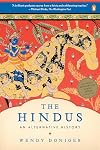
Whatever the layer of Hindu tradition, or period of Indian history, Doniger has fascinating things to say about it—the sources of Indus Valley civilization, the relationship between the sacrifice descriptions in the Rig Veda and actual practice, the obscurities of the Brahmanas and Upanishads, the narrative strands and evolution of the Ramayana, and the Mahabharata, a bullshit-free take on “Sects and Sex in the Tantric Puranas and the Tantras,” and of course, the Mughals and the show more British Raj.
Wendy Doniger's style is direct, and she does not hide behind academic jargon or specialized vocabulary. She is witty, punny, and incisive. Yes, she is erudite and yes, the references and complexities do come thick and fast, but she is never deliberately oblique or unnecessarily difficult.
As others have said, The Hindus: An Alternative History isn't by itself an introduction to Hinduism. In the decade since I took a basic undergrad one-semester intro to Hinduism, I have read a modern translation of the Ramayana and a heavily abridged translation of the Mahabharata, and spent about a month studying the Mughals in a grad history seminar. So I had some very basic foundations in place to read this—enough to make sense of much of this text at first go. For others I would suggest, as Doniger does in her introduction, that a little preparatory/supplementary reading would not hurt. There are easier starting points.
It may sound like a slightly awkward recommendation, but this is a perfect second book to read about Hinduism—compelling enough to keep this reader thoroughly engaged through 700 pages of fairly dense prose.
More than enjoyable, it is also important, and not merely because of the well-publicized censorship fight around it. Doniger herself has written (last week in the New York Review of Books) about the censorship fight in India, and also about parallel conflicts over public school curricula in the US. We can’t allow a situation to emerge where only religiously-authorized voices can speak publicly about religions. Scholarship *about* religions needs to have a public face. Our world needs more Wendy Donigers. show less
Wendy Doniger's style is direct, and she does not hide behind academic jargon or specialized vocabulary. She is witty, punny, and incisive. Yes, she is erudite and yes, the references and complexities do come thick and fast, but she is never deliberately oblique or unnecessarily difficult.
As others have said, The Hindus: An Alternative History isn't by itself an introduction to Hinduism. In the decade since I took a basic undergrad one-semester intro to Hinduism, I have read a modern translation of the Ramayana and a heavily abridged translation of the Mahabharata, and spent about a month studying the Mughals in a grad history seminar. So I had some very basic foundations in place to read this—enough to make sense of much of this text at first go. For others I would suggest, as Doniger does in her introduction, that a little preparatory/supplementary reading would not hurt. There are easier starting points.
It may sound like a slightly awkward recommendation, but this is a perfect second book to read about Hinduism—compelling enough to keep this reader thoroughly engaged through 700 pages of fairly dense prose.
More than enjoyable, it is also important, and not merely because of the well-publicized censorship fight around it. Doniger herself has written (last week in the New York Review of Books) about the censorship fight in India, and also about parallel conflicts over public school curricula in the US. We can’t allow a situation to emerge where only religiously-authorized voices can speak publicly about religions. Scholarship *about* religions needs to have a public face. Our world needs more Wendy Donigers. show less
Hinduism (the religion) is complicated and complex and probably not coherent. That makes for a difficult book to write but Doniger tackles it brilliantly. She moves from the earliest texts through later ones and then adds the traditions, history, outside influences and finally folklore. She compares it to a banyan tree constantly going back to its roots but coming up with bewilderingly new offshoots. The book is magnificent. She shows, with fascinating detail, how a religion can change show more completely over the centuries and yet remain the same religion. Even the gods who are worshipped have changed over the millennia (and are still changing). It is also a fun gallop through many aspects of the history of the sub-continent.
Nonetheless, perhaps because of its vegetative complexity, you come out of the book with a coherent view of the development and growth of a thought system.
Strong on myth, philosophy, theology, poetry. She tends to pick out themes which are of interest to her - women and gender issues for instance being very important here - but I think in doing so she is showing how Hinduism is stronger than the blinkered fundamentalists in India and the west. It can and has incorporated change and tolerance and inclusiveness.
If you are of a religious persuasion you will probably not enjoy this book. By being such a superb description of the growth of a religion, it shows with great clarity what a man-made, though very important, project religion is and how it reflects, grows out of and feeds back into its society. show less
Nonetheless, perhaps because of its vegetative complexity, you come out of the book with a coherent view of the development and growth of a thought system.
Strong on myth, philosophy, theology, poetry. She tends to pick out themes which are of interest to her - women and gender issues for instance being very important here - but I think in doing so she is showing how Hinduism is stronger than the blinkered fundamentalists in India and the west. It can and has incorporated change and tolerance and inclusiveness.
If you are of a religious persuasion you will probably not enjoy this book. By being such a superb description of the growth of a religion, it shows with great clarity what a man-made, though very important, project religion is and how it reflects, grows out of and feeds back into its society. show less

I struggled with Doniger's massive survey of Hindu history and thought for over six months. In the end I completed it not because I was determined to get the better of it, but because I started to enjoy it. Which was a long way from my initial experience. Doniger's writing style at first infuriated me. She packs in as much detail as possible to every story and then insists on standing in front of the story, imposing her presence with little asides to the reader and laboured puns. Then I show more realized this wasn't a writing style but in fact a lecturing style. 'Keep them interested, keep them awake.' But really what comes through is not a concocted liveliness or enthusiasm. As I came to appreciate it, Doniger IS enthusiastic - and incredibly knowledgable and perceptive. And brave - she is in the firing line of what calls itself Hindu Orthodoxy in modern times.
I realized that she was writing nothing less than a complete history of every aspect of Hindu thought, with Islam and Christianity, Buddhism and Animism (and everything else that ever happened in the history of ideas in India thrown in for good measure). Which led to my next difficulty. Doniger starts at creation and moves forward (the expression Juggernaut comes to mind...) century by century. She piles one story upon another, every sect, every significant text, every tortuous twist and turn in the political history of an incredibly fractured and chaotic country. There is no sense of a developing theme or direction to Hindu thought, it seems it advances and retreats constantly in Doniger's account and changes its nature as often as the sun rises and sets. Which is ultimately Doniger's point. Light begins to dawn; heterodoxy triumphs over orthodoxy. And what heterodoxy. Doniger presents a description of the treasury of Indian thought, hallways stacked with mountains of jewels - and she sets out to describe it one glittering stone at a time over nearly 800 pages.
In the end I cracked this book by reading it backwards - chapter by chapter. What was impossibly remote and alien (the early history) had a context (modern history). I recognized Doniger was mining a mountain of ideas by drilling into it. Suddenly I could see her plan. Reading the book (as I started out doing) from the front had left me with the impression that she was simply dumping one random pebble of fact or reflection upon another until she had built an imposing but ultimately forgettable spoil heap of history. I can't think of any other instance where I would recommend an audio version over a written version, but if ever one comes out for work I couldn't recommend it too highly. As it stands, go in prepared. Pack supplies for a long campaign, and consider starting with whatever chapter engages you attention most of all and spreading out from there. show less
I realized that she was writing nothing less than a complete history of every aspect of Hindu thought, with Islam and Christianity, Buddhism and Animism (and everything else that ever happened in the history of ideas in India thrown in for good measure). Which led to my next difficulty. Doniger starts at creation and moves forward (the expression Juggernaut comes to mind...) century by century. She piles one story upon another, every sect, every significant text, every tortuous twist and turn in the political history of an incredibly fractured and chaotic country. There is no sense of a developing theme or direction to Hindu thought, it seems it advances and retreats constantly in Doniger's account and changes its nature as often as the sun rises and sets. Which is ultimately Doniger's point. Light begins to dawn; heterodoxy triumphs over orthodoxy. And what heterodoxy. Doniger presents a description of the treasury of Indian thought, hallways stacked with mountains of jewels - and she sets out to describe it one glittering stone at a time over nearly 800 pages.
In the end I cracked this book by reading it backwards - chapter by chapter. What was impossibly remote and alien (the early history) had a context (modern history). I recognized Doniger was mining a mountain of ideas by drilling into it. Suddenly I could see her plan. Reading the book (as I started out doing) from the front had left me with the impression that she was simply dumping one random pebble of fact or reflection upon another until she had built an imposing but ultimately forgettable spoil heap of history. I can't think of any other instance where I would recommend an audio version over a written version, but if ever one comes out for work I couldn't recommend it too highly. As it stands, go in prepared. Pack supplies for a long campaign, and consider starting with whatever chapter engages you attention most of all and spreading out from there. show less
Lists
Awards


You May Also Like


Associated Authors
Statistics
- Works
- 56
- Also by
- 15
- Members
- 2,943
- Popularity
- #8,691
- Rating
- 3.9
- Reviews
- 22
- ISBNs
- 149
- Languages
- 5
- Favorited
- 1


