
Windy Dryden
Author of Handbook of Individual Therapy
About the Author
Windy Dryden, Ph.D., is in part-time clinical and consultative practice and is an international authority on cognitive behaviour therapy (CBT). He is Honorary Vice President of the International Society for Coaching Psychology, was granted honarary membership in the International Association of show more Cognitive Behavioral Coaching in 2014 and is Emeritus Professor of Psychotherapeutic Studies at Goldsmiths University of London. He has worked in the helping professions for more than 40 years and is the author and editor of over 215 books. show less
Image credit: www.windydryden.com/
Series
Works by Windy Dryden
Dealing with Emotional Problems Using Rational-Emotive Cognitive Behaviour Therapy: A Practitioner's Guide (1990) 45 copies, 2 reviews
Counselling Individuals: A Rational Emotive Behavioural Handbook (Exc Business and Economy (Whurr)) (1993) 10 copies
The Cognitive Behaviour Counselling Primer: A Concise, Accessible and Comprehensive Introduction (2014) 7 copies
The Historical and Philosophical Context of Rational Psychotherapy: The Legacy of Epictetus (2012) 7 copies
Working with Resistance in Rational Emotive Behaviour Therapy: A Practitioner's Guide (2011) 4 copies
The Rational Emotive Behavioural Approach to Therapeutic Change (SAGE Therapeutic Change Series) (2004) 3 copies
Rational Emotive Behaviour Therapy: A Personal Approach (Helping People Change: The Essential Counselling) (1999) 2 copies
Superar las heridas alternativas sanas a lo que los demás nos hacen o dejan de hacer (2009) 2 copies
Unexpected Affinities: The History of Type in Architectural Project from Laugier to Duchamp (2018) 2 copies
Dealing with Clients' Emotional Problems in Life Coaching: A Rational-Emotive and Cognitive Behaviour Therapy (RECBT) Approach (2010) 2 copies
Think Rationally: Brief Guide to Overcoming Your Emotional Problems (Rational Emotive Behaviour Therapy S.) (1995) 1 copy
How to Make Yourself Miserable: Manage Your Emotions by Controlling Your Thoughts (Overcoming common problems) (2001) 1 copy
When Time Is at a Premium: Cognitive-Behavioural Approaches to Single-Session Therapy and Very Brief Coaching (2016) 1 copy
Psychologische Kurzberatung und Kurztherapie. Einführung in die praktischen Techniken. (1994) 1 copy
Associated Works
Favorite Counseling and Therapy Homework Assignments: Leading Therapists Share Their Most Creative Strategies (2001) — Contributor — 11 copies
Tagged
Common Knowledge
- Birthdate
- 20th Century
- Gender
- male
- Organizations
- Goldsmiths College, University of London
- Nationality
- UK
- Map Location
- England, UK
Members
Reviews
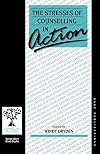
A better title for the book might be 'The Challenges of Counselling in Action', and this is what many of the contributors describe, often with clarity and insight. There is for instance Julia Segal on working with clients with disabilities, and Colin Feltham on counselling in private practice. Feltham is commendably open about the tensions between work and private life. To counsel effectively, therapists need to be relatively free from stress themselves. Stress can emerge in the work that show more counselors do with specific client groups, in the contexts in which counseling takes place, and in the educational process both for counselor educators and for counselors in training. The chapters in this book, all written by practicing therapists and counselors with first-hand experience of dealing with stress, outline the nature of the stress that counselors encounter, detail typical coping responses (both healthy and unhealthy), and suggest methods for improved coping. An opening chapter puts the others into context by reviewing the relevant research that has been carried out on this type of stress. Practical, supportive, and encouraging, the book's most important function is to make practitioners aware that they are not alone in experiencing stress, and to reassure them that successful coping methods are available. The Stresses of Counseling in Action provides an invaluable resource for both trainee counselors and more experienced practitioners of all approaches and disciplines. show less
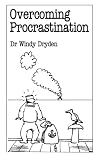
Dr Dryden walks the reader through different types of beliefs and thought patterns that lead to procrastination. He offers counter thoughts and exercises to retrain yourself. Of course, no one can try all of these options, but it's useful to read each, sit with it, and feel "if the shoe fits" so to speak.
My issue is discomfort. The smallest discomfort prevents me from engaging in unpredictable, professional tasks that are good for me, and that I even enjoy. So, I return to comfortable, easy show more things. My mode of operation is very cognitive and analytical, so books like Dryden's that offer mostly analytical exercises (write down a belief, estimate your percent agreement and then attack and defend it) are enlightening but not as helpful to me. I need more emotional approaches. There were a few of these types of exercises in the book. Specifically, if I feel discomfort, I should try embracing it, or at least tolerating it. So, I will practice feeling discomfort. show less
My issue is discomfort. The smallest discomfort prevents me from engaging in unpredictable, professional tasks that are good for me, and that I even enjoy. So, I return to comfortable, easy show more things. My mode of operation is very cognitive and analytical, so books like Dryden's that offer mostly analytical exercises (write down a belief, estimate your percent agreement and then attack and defend it) are enlightening but not as helpful to me. I need more emotional approaches. There were a few of these types of exercises in the book. Specifically, if I feel discomfort, I should try embracing it, or at least tolerating it. So, I will practice feeling discomfort. show less
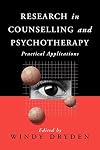
This book bridges the gap that currently exists between research and practice in counselling and psychotherapy by providing detailed clinical examples of the practical relevance of research. It brings together contributions from leading British and American psychotherapy researchers, who describe their research programmes and spell out the practical applications for therapy of that programme's results. They explore how their findings can substantially inform therapeutic practice, and assess show more their immediate relevance for practitioners. Research in Counselling and Psychotherapy calls for the close integration of research, skills training and supervised clinical practice on training courses. show less
Excellent refresher for cognitive techniques and model.
You May Also Like


Associated Authors
Statistics
- Works
- 151
- Also by
- 3
- Members
- 1,150
- Popularity
- #22,331
- Rating
- 3.8
- Reviews
- 14
- ISBNs
- 505
- Languages
- 8