
Eilat Negev
Author of Giants: The Dwarfs of Auschwitz
About the Author
Eilat Negev has studied English Literature and History of Art, and has an MA in Mass Communication and Translation from the Hebrew University, Jerusalem. She is the literary correspondent of Yedioth Achronot, Israel's major daily
Works by Eilat Negev
Giants: The Dwarfs of Auschwitz (2003) — Author; Author, some editions; Author — 254 copies, 7 reviews
The First Lady of Fleet Street: The Life of Rachel Beer: Crusading Heiress and Newspaper Pioneer (2011) 57 copies, 3 reviews
Tagged
Common Knowledge
- Canonical name
- Negev, Eilat
- Gender
- female
Members
Reviews
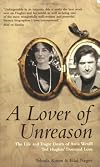
Assia Wevill is the dark lady of the Plath/Hughes agon. As Yehuda Koren and Eilat Negev put it in "Lover of Unreason" (Carroll & Graf, 268 pages, $27.95), "Assia was reduced to the role of a she-devil and an enchantress, the woman alleged to have severed the union of twentieth-century poetry's most celebrated couple."
When Sylvia Plath and Assia first met, they liked each other. Assia, a part-Jewish refugee from Hitler's Germany, bore, in Plath's words, her "passport on her face." She had show more lived the suffering that Sylvia had imagined in poems like "Daddy." Plath was happy that Assia and her husband David, a fine poet, would occupy the flat she and Ted were relinquishing to pursue their passion for poetry and for each other in the Devon countryside.
Then the Wevills were invited to Devon, and the world went terribly wrong. Later Ted Hughes would accuse Assia of being the "dark destructive force that destroyed Sylvia." Several biographers say Assia boasted to friends she was putting on her war paint to seduce Ted Hughes. She was on her third marriage and had a reputation as a femme fatale.
But what exactly happened in Devon is hard to say. Even Olwyn Hughes, a staunch defender of her brother, could tell Anne Stevenson (commissioned by the Hughes Estate to write "Bitter Fame: A Life of Sylvia Plath" [1989]), no more than what Assia told Olywn: There had been a "sexual current" between Assia and Ted that enraged Sylvia. In "Rough Magic: A Biography of Sylvia Plath" (1991), Paul Alexander reports: "Strong-will and determined, Assia — apparently — made the first move with Ted." Diane Middlebrook in "Her Husband: Hughes and Plath — A Marriage" (2003) follows a similar line, suggesting Assia had Ted "under a spell."
And yet Elaine Feinstein's "Ted Hughes: The Life of a Poet" (2001) presents evidence that confirms the story in "Lover of Unreason": Ted Hughes was "a sexual stalker by nature" and no longer enraptured with Sylvia, who had become a housewife and mother — a "hag," as he called her in one of their arguments after the Wevill visit to Devon. According to Ms. Feinstein, Hughes eventually tired of Assia too because, in the words of William Congreve's "Way of the World," she had begun to "dwindle into a wife."
Whatever the alluring Assia did or did not do during that fateful rendezvous in Devon, she became the vessel of Ted Hughes's desire to shuck off his domestic duties and seek some haven where he could recapture his poetic spirit. Assia did not make it easy for Hughes, since she still cared a great deal for David Wevill and continued to live with him off and on. Meanwhile, Hughes attempted to square himself with his disapproving parents and settle on some kind of domestic routine with the two young children Plath had been careful not to gas when she took her life on February 11, 1963.
But if Assia was slow to forsake David — as David has made clear to several biographers — she could not have been simply the she-devil enchantress of legend. Perhaps the most telling part of "Lover of Unreason" concerns Hughes's search for a home that he and Assia could share. A man who had never previously had trouble making up his mind about where to live, Hughes repeatedly found fault with the houses he and Assia inspected. Indeed, he led her on, for during this house-hunting period he had several other women on the side — it was Hughes's practice to create the conditions that provoked women to leave him.
No biographer would be willing to state that Ted Hughes was a very bad man, for to do so is to invite the biography to be read as an indictment. Ms. Feinstein feels the need to mitigate Hughes's appalling behavior — destroying some of Plath's work, essentially erasing the record of Assia's important role in his life, and in so many ways attempting to control the telling not only of his biography but those of Plath and Wevill. To Ms. Feinstein, Hughes had a "granite endurance" to go on writing after so many tragedies. Of his cover-ups, she suggests he took the "harsh road of a survivor." Yehuda Kore and Eilat Negev are careful not to condemn him, but they eschew such rationalizations.
The worst of it is that on March 23, 1969, Assia Wevill took not only her life but also that of her 4-year-old daughter by Hughes. As her biographers show, such acts are not uncommon among single mothers in their 40s who are so disturbed at the horrible nature of the world that they cannot imagine a better one for their offspring. Except for a few periods and poems of self-blame, Hughes never could confront his culpable role in the lives of Plath and Wevill; instead, he issued his apologia in the form of a poetry collection, "Birthday Letters" (1998). So it is fortunate indeed to have "Lover of Unreason," an impressively researched and well-told biography that will occasion, I believe, yet another rewriting of the Plath/ Hughes agon. show less
When Sylvia Plath and Assia first met, they liked each other. Assia, a part-Jewish refugee from Hitler's Germany, bore, in Plath's words, her "passport on her face." She had show more lived the suffering that Sylvia had imagined in poems like "Daddy." Plath was happy that Assia and her husband David, a fine poet, would occupy the flat she and Ted were relinquishing to pursue their passion for poetry and for each other in the Devon countryside.
Then the Wevills were invited to Devon, and the world went terribly wrong. Later Ted Hughes would accuse Assia of being the "dark destructive force that destroyed Sylvia." Several biographers say Assia boasted to friends she was putting on her war paint to seduce Ted Hughes. She was on her third marriage and had a reputation as a femme fatale.
But what exactly happened in Devon is hard to say. Even Olwyn Hughes, a staunch defender of her brother, could tell Anne Stevenson (commissioned by the Hughes Estate to write "Bitter Fame: A Life of Sylvia Plath" [1989]), no more than what Assia told Olywn: There had been a "sexual current" between Assia and Ted that enraged Sylvia. In "Rough Magic: A Biography of Sylvia Plath" (1991), Paul Alexander reports: "Strong-will and determined, Assia — apparently — made the first move with Ted." Diane Middlebrook in "Her Husband: Hughes and Plath — A Marriage" (2003) follows a similar line, suggesting Assia had Ted "under a spell."
And yet Elaine Feinstein's "Ted Hughes: The Life of a Poet" (2001) presents evidence that confirms the story in "Lover of Unreason": Ted Hughes was "a sexual stalker by nature" and no longer enraptured with Sylvia, who had become a housewife and mother — a "hag," as he called her in one of their arguments after the Wevill visit to Devon. According to Ms. Feinstein, Hughes eventually tired of Assia too because, in the words of William Congreve's "Way of the World," she had begun to "dwindle into a wife."
Whatever the alluring Assia did or did not do during that fateful rendezvous in Devon, she became the vessel of Ted Hughes's desire to shuck off his domestic duties and seek some haven where he could recapture his poetic spirit. Assia did not make it easy for Hughes, since she still cared a great deal for David Wevill and continued to live with him off and on. Meanwhile, Hughes attempted to square himself with his disapproving parents and settle on some kind of domestic routine with the two young children Plath had been careful not to gas when she took her life on February 11, 1963.
But if Assia was slow to forsake David — as David has made clear to several biographers — she could not have been simply the she-devil enchantress of legend. Perhaps the most telling part of "Lover of Unreason" concerns Hughes's search for a home that he and Assia could share. A man who had never previously had trouble making up his mind about where to live, Hughes repeatedly found fault with the houses he and Assia inspected. Indeed, he led her on, for during this house-hunting period he had several other women on the side — it was Hughes's practice to create the conditions that provoked women to leave him.
No biographer would be willing to state that Ted Hughes was a very bad man, for to do so is to invite the biography to be read as an indictment. Ms. Feinstein feels the need to mitigate Hughes's appalling behavior — destroying some of Plath's work, essentially erasing the record of Assia's important role in his life, and in so many ways attempting to control the telling not only of his biography but those of Plath and Wevill. To Ms. Feinstein, Hughes had a "granite endurance" to go on writing after so many tragedies. Of his cover-ups, she suggests he took the "harsh road of a survivor." Yehuda Kore and Eilat Negev are careful not to condemn him, but they eschew such rationalizations.
The worst of it is that on March 23, 1969, Assia Wevill took not only her life but also that of her 4-year-old daughter by Hughes. As her biographers show, such acts are not uncommon among single mothers in their 40s who are so disturbed at the horrible nature of the world that they cannot imagine a better one for their offspring. Except for a few periods and poems of self-blame, Hughes never could confront his culpable role in the lives of Plath and Wevill; instead, he issued his apologia in the form of a poetry collection, "Birthday Letters" (1998). So it is fortunate indeed to have "Lover of Unreason," an impressively researched and well-told biography that will occasion, I believe, yet another rewriting of the Plath/ Hughes agon. show less
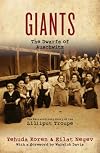
This is as the sub title notes "The Extraordinary Story of the Lilliput Troupe"
In the 1930's and early 1940's, the Lilliput Troupe traveled near and far entertaining all who attended to see these seven little people, all from one family, perform plays, perform concerts using various instruments, and sing as high as their voices would allow.
Dressing in lovely handmade customs, wearing lots of make up, and smiling, always smiling, the troupe soon gained fame, not only for their small size, but show more for their courage and talent. Living in Romania, and consumed with their daily life, they had little knowledge of the war fast at their door step.
Soon Hitler's War would claim the seven Ovitz family dwarfs and other family members, loading them on a train with the final destination of the dreaded killing factories of Auschwitz.
From their first day, Dr. Joseph Mengele, aptly named "The Angel of Death", claimed the family as his testing material.
Watching thousands herded into the gas chambers, and as they watched body after body lay heaped upon piles of death, they knew that as soon as Mengele was finished with his experiments on them, they too would have the same fate.
Well written and highly detailed, using surviving materials and records as well as extensive interviews, the authors deserve much credit for allowing the pride and beauty of the Ovitz family to shine through amid the pain and suffering of a hellish torment.
Using dwarfs to show that the Jewish race was filled with deformity, Mengele was never able to substantiate his wicked, evil thoughts. As the Russian troops approached, Mengele fled the camp, leaving behind his family of dwarfs.
Paradoxically, while Mengele tried to use the theory of eugenics and survival of the fittest to match his creepy, crazy thought processes, it was the fact that the Ovitz family was indeed so different that allowed them to survival. All family members taken to Mengele's lab survived.
What an amazing story! Highly recommended. show less
In the 1930's and early 1940's, the Lilliput Troupe traveled near and far entertaining all who attended to see these seven little people, all from one family, perform plays, perform concerts using various instruments, and sing as high as their voices would allow.
Dressing in lovely handmade customs, wearing lots of make up, and smiling, always smiling, the troupe soon gained fame, not only for their small size, but show more for their courage and talent. Living in Romania, and consumed with their daily life, they had little knowledge of the war fast at their door step.
Soon Hitler's War would claim the seven Ovitz family dwarfs and other family members, loading them on a train with the final destination of the dreaded killing factories of Auschwitz.
From their first day, Dr. Joseph Mengele, aptly named "The Angel of Death", claimed the family as his testing material.
Watching thousands herded into the gas chambers, and as they watched body after body lay heaped upon piles of death, they knew that as soon as Mengele was finished with his experiments on them, they too would have the same fate.
Well written and highly detailed, using surviving materials and records as well as extensive interviews, the authors deserve much credit for allowing the pride and beauty of the Ovitz family to shine through amid the pain and suffering of a hellish torment.
Using dwarfs to show that the Jewish race was filled with deformity, Mengele was never able to substantiate his wicked, evil thoughts. As the Russian troops approached, Mengele fled the camp, leaving behind his family of dwarfs.
Paradoxically, while Mengele tried to use the theory of eugenics and survival of the fittest to match his creepy, crazy thought processes, it was the fact that the Ovitz family was indeed so different that allowed them to survival. All family members taken to Mengele's lab survived.
What an amazing story! Highly recommended. show less
"Seven dwarfs ...liege to no benevolent Snow White but to a heartless beast"
By sally tarbox on 3 October 2017
Format: Paperback
The fascinating and terribly moving story of the Jewish Romanian Ovitz family, ten siblings, of whom seven were dwarfs. From a happy early life, where they formed The Lilliput Troupe, a successful vaudeville act, they were later caught up in the horrors of World War 2.
The narrative follows their time in Auschwitz, where their disability saved their lives - although at show more the cost of tortuous and pointless medical experimentation by Dr Josef Mengele, who was fascinated by the genetics of abnormalities. Their size also saved non-dwarf family members (and friends who claimed to be related); they got to live together with slightly better conditions than the rest. But life was fraught as they realised they could be killed at any time. However the whole family miraculously made it through - the only sibling killed was an average-sized brother who was living independently.
After Liberation, realising they had no future in Romania, they settled in Haifa in the emerging state of Israel - again a tough life at the outset, but one where they succeeeded.
The husband and wife authors are Israeli journalists. They meet with the only remaining sibling, Perla, and travel to the family's former home in Rozavlea, Romania; and to Auschwitz, where they pore over documentation and give an emotive view of the place.
Very interesting and terrible account. show less
By sally tarbox on 3 October 2017
Format: Paperback
The fascinating and terribly moving story of the Jewish Romanian Ovitz family, ten siblings, of whom seven were dwarfs. From a happy early life, where they formed The Lilliput Troupe, a successful vaudeville act, they were later caught up in the horrors of World War 2.
The narrative follows their time in Auschwitz, where their disability saved their lives - although at show more the cost of tortuous and pointless medical experimentation by Dr Josef Mengele, who was fascinated by the genetics of abnormalities. Their size also saved non-dwarf family members (and friends who claimed to be related); they got to live together with slightly better conditions than the rest. But life was fraught as they realised they could be killed at any time. However the whole family miraculously made it through - the only sibling killed was an average-sized brother who was living independently.
After Liberation, realising they had no future in Romania, they settled in Haifa in the emerging state of Israel - again a tough life at the outset, but one where they succeeeded.
The husband and wife authors are Israeli journalists. They meet with the only remaining sibling, Perla, and travel to the family's former home in Rozavlea, Romania; and to Auschwitz, where they pore over documentation and give an emotive view of the place.
Very interesting and terrible account. show less
In Our Hearts We Were Giants: The Remarkable Story of the Lilliput Troupe: A Dwarf Family's Survival of the Holocaust by Yehuda Koren
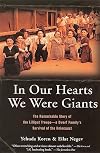
I was drawn in by the mere title of the book, and sighed in admiration upon seeing the elegance of the cover. I joyfully looked at the beaming, warm smiles of the family outfitted in such finery of the likes I only wear on Yom Kippur. The sepia tone of the photo above the plain blackness of the title background was an excellent artistic choice. I kept going back to this cover as I read this book, and even as I started reading, I lingered on it. I wanted something beautiful in my mind to show more combat the horrors I was about to encounter.
Sometimes this book goes into second person narration, which I'm not a fan of, but I kept reading. The book goes into the social history of people with dwarfism, which fascinating and horrifying. Human beings were baked into pies and jumped out as merriment. I was so upset to learn that, that I had to set down the book for twenty minutes. That's not even thirty pages in. People were given to royal families as gifts, and seen as pets, entertainment, and most frequently, children. I hadn't known any of this before. I'm glad I do now. I was aware of the royalty-inspired stage names, though. Originally I was so upset, thinking they were terms of mockery. This book informed me that no, the entertainers chose their own names. Then it made a few jabs at rulers including Napoleon, and I laughed uproariously.
The descriptions of the camps and the testing, along with my horror and disgust, started soon after. The experiences of other prisoners are described as well. Halfway through the book, I wanted it to be over. Meticulous historical details are presented, and--just kept going. Many years' experiences are documented, and nine chapters are spent on 1944 alone. The chapters that follow address the decades until 2000, when the last survivor of the family, Perla, died. Two different collections of photos are scanned into the book, one solely from the 1940s and the other from 1945 onward. The photos somehow make everything bleaker, but I looked at them carefully. I tried to read this book in one sitting so it would be over, and worried I'd have nightmares. I didn't dream anything I could remember, and finished the book the next morning. I just sat for awhile. There was little else I could do.
This book is so important. show less
Sometimes this book goes into second person narration, which I'm not a fan of, but I kept reading. The book goes into the social history of people with dwarfism, which fascinating and horrifying. Human beings were baked into pies and jumped out as merriment. I was so upset to learn that, that I had to set down the book for twenty minutes. That's not even thirty pages in. People were given to royal families as gifts, and seen as pets, entertainment, and most frequently, children. I hadn't known any of this before. I'm glad I do now. I was aware of the royalty-inspired stage names, though. Originally I was so upset, thinking they were terms of mockery. This book informed me that no, the entertainers chose their own names. Then it made a few jabs at rulers including Napoleon, and I laughed uproariously.
The descriptions of the camps and the testing, along with my horror and disgust, started soon after. The experiences of other prisoners are described as well. Halfway through the book, I wanted it to be over. Meticulous historical details are presented, and--just kept going. Many years' experiences are documented, and nine chapters are spent on 1944 alone. The chapters that follow address the decades until 2000, when the last survivor of the family, Perla, died. Two different collections of photos are scanned into the book, one solely from the 1940s and the other from 1945 onward. The photos somehow make everything bleaker, but I looked at them carefully. I tried to read this book in one sitting so it would be over, and worried I'd have nightmares. I didn't dream anything I could remember, and finished the book the next morning. I just sat for awhile. There was little else I could do.
This book is so important. show less
Lists
You May Also Like


Associated Authors
Statistics
- Works
- 5
- Members
- 528
- Popularity
- #47,120
- Rating
- 3.9
- Reviews
- 16
- ISBNs
- 28
- Languages
- 4