
Steven Garber
Author of The Fabric of Faithfulness: Weaving Together Belief and Behavior During the University Years
About the Author
Steven Garber is the principal of The Washington Institute for Faith, Vocation Culture, which is focused on the meaning of vocation and the common good. A consultant to foundations, corporations and schools, he is the author of The Fabric of Faithfulness.
Works by Steven Garber
The Fabric of Faithfulness: Weaving Together Belief and Behavior During the University Years (1996) 397 copies, 2 reviews
Alternative Litigation Financing in the United States: Issues, Knowns, and Unknowns (Occasional Paper) (2010) 3 copies
Associated Works
Tagged
Common Knowledge
- Gender
- male
Members
Reviews
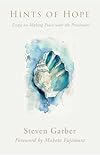
Summary: How we might live with hope in a beautiful but broken world where even our best efforts realize only proximately our ideals.
As followers of Christ, we speak of our hope in Christ, of new life in a renewed creation. But that seems far away for many of us. In the lives we live now, we struggle with the disparity between the vision toward which we live and the present realities of living in a beautiful but broken world as beautiful but broken people. Whether we look at our marriages, show more our parenting, our work, our civic engagement, we find much that is good. And yet….
That “and yet” is what Steve Garber calls the proximate. Whatever good we experience in the various arenas of our lives pales before what we know things could be. Often, life is marked with failure and grief as well as joy and achievement. One of the big questions is how we might continue to live with hope and make our peace with the proximate. It is to this that Garber devotes the essays that make up this book. In the Introduction, he likens our lives to the seashells we find along a beach–all beautiful, but broken, all glorious ruins–and all seeking to make sense of our reason for being. Then in the following eight essays, he will reflect further, often coming back to the affections, the love on which our lives turn.
Garber begins with his own story, and that of his father, a plant researcher who focused on growing good, disease resistant cotton. And much good cotton was grown, yet plant diseases persist to this day. The proximate. Then Garber turns to travels through Slovakia, the writing of Vaclav Havel, and Jozef Luptak, who convened a society-wide music festival called Konvergencie. It represented an effort to curate the best of Slovak culture while many remained indifferent. The proximate. Finally, he turns to the Lord of the Rings and the amazing quest of Frodo and Sam, destroying the Ring of Power, witnessing the coronation of Aragorn, and cleansing the Shire. And yet there were wounds that only a journey to the Western lands could heal.
That’s one chapter, weaving several stories around the theme of “glimpses of hope.” Garber’s remaining chapters follow a similar pattern, mixing personal narrative, the stories of others, and reflections from literature around a theme. He weighs the question of telos, the end toward which we live, and how it shapes our praxis. In exploring our quest for meaning, he considers Douglas Copeland and his Life After God. Can we make sense of our lives apart from God?
Then follow several chapters on various aspects of what it is to love. He reflects on how, in Wendell Berry’s words, “it all turns on affection”–our families, our work, our economic life, our communal and political life. It is a question Augustine asks: “What do you love?” Then Garber goes on to consider how Hannah Arendt, Reinhold Niebuhr, Lesslie Newbigin, and Jean Bethke Elshtain answered the question. “Love in the Ruins” connects stories from around the world of those who loved amid the proximate. Finally, “A Long-loved Love” looks at love and the proximate in marriages, including Garber’s own.
The final chapters face both the wounds and scars we bear and our longing for something more. We follow Garber from Birmingham to Pittsburgh to the art studios of Makoto Fujimura, who demonstrates the art of kintsugi. Each story is one of fashioning beauty out of brokenness. Finally, he considers the something more for which we long. He tells an amazing story of the Tunyi family from Nagaland. This is a remote place bordering Bangladesh, Bhutan, and Myanmar. They are dedicated to cultivating the good for the sake of the kingdom. Their efforts range across education, healthcare, and politics, as signposts pointing to the something more. And to close the circle, Garber ends with Lewis and Tolkien.
Garber writes beautifully, evoking in the reader images, thoughts, and feelings as one reads. There is the ethos of Garber’s own life, and search for hope. Then we have the pathos of so many stories of those living hopefully while making peace with the proximate. Finally, there is also logos, as Garber in the company of great writers, invites us to consider our telos. Toward what end do we live and what do we love?
If I were to offer any critique, it would be that these reflections sometimes border on “stream of consciousness.” There are so many stories that sometimes, keeping track of Garber’s theme can be a challenge. It’s easy to get lost in his excellent prose and skilled storytelling!
So what this calls for is slow and attentive reading…and reflecting. But what that yields is so worth it. In a world that vacillates between unrealistic ideals and ideologies and deep disillusionment, living with hope in the proximate is good news. Garber sees beyond the “glittering images” to our beautiful and broken reality, and helps us live toward something more.
_______________________
Disclosure of Material Connection: I received a complimentary copy of this book from the publisher for review. show less
As followers of Christ, we speak of our hope in Christ, of new life in a renewed creation. But that seems far away for many of us. In the lives we live now, we struggle with the disparity between the vision toward which we live and the present realities of living in a beautiful but broken world as beautiful but broken people. Whether we look at our marriages, show more our parenting, our work, our civic engagement, we find much that is good. And yet….
That “and yet” is what Steve Garber calls the proximate. Whatever good we experience in the various arenas of our lives pales before what we know things could be. Often, life is marked with failure and grief as well as joy and achievement. One of the big questions is how we might continue to live with hope and make our peace with the proximate. It is to this that Garber devotes the essays that make up this book. In the Introduction, he likens our lives to the seashells we find along a beach–all beautiful, but broken, all glorious ruins–and all seeking to make sense of our reason for being. Then in the following eight essays, he will reflect further, often coming back to the affections, the love on which our lives turn.
Garber begins with his own story, and that of his father, a plant researcher who focused on growing good, disease resistant cotton. And much good cotton was grown, yet plant diseases persist to this day. The proximate. Then Garber turns to travels through Slovakia, the writing of Vaclav Havel, and Jozef Luptak, who convened a society-wide music festival called Konvergencie. It represented an effort to curate the best of Slovak culture while many remained indifferent. The proximate. Finally, he turns to the Lord of the Rings and the amazing quest of Frodo and Sam, destroying the Ring of Power, witnessing the coronation of Aragorn, and cleansing the Shire. And yet there were wounds that only a journey to the Western lands could heal.
That’s one chapter, weaving several stories around the theme of “glimpses of hope.” Garber’s remaining chapters follow a similar pattern, mixing personal narrative, the stories of others, and reflections from literature around a theme. He weighs the question of telos, the end toward which we live, and how it shapes our praxis. In exploring our quest for meaning, he considers Douglas Copeland and his Life After God. Can we make sense of our lives apart from God?
Then follow several chapters on various aspects of what it is to love. He reflects on how, in Wendell Berry’s words, “it all turns on affection”–our families, our work, our economic life, our communal and political life. It is a question Augustine asks: “What do you love?” Then Garber goes on to consider how Hannah Arendt, Reinhold Niebuhr, Lesslie Newbigin, and Jean Bethke Elshtain answered the question. “Love in the Ruins” connects stories from around the world of those who loved amid the proximate. Finally, “A Long-loved Love” looks at love and the proximate in marriages, including Garber’s own.
The final chapters face both the wounds and scars we bear and our longing for something more. We follow Garber from Birmingham to Pittsburgh to the art studios of Makoto Fujimura, who demonstrates the art of kintsugi. Each story is one of fashioning beauty out of brokenness. Finally, he considers the something more for which we long. He tells an amazing story of the Tunyi family from Nagaland. This is a remote place bordering Bangladesh, Bhutan, and Myanmar. They are dedicated to cultivating the good for the sake of the kingdom. Their efforts range across education, healthcare, and politics, as signposts pointing to the something more. And to close the circle, Garber ends with Lewis and Tolkien.
Garber writes beautifully, evoking in the reader images, thoughts, and feelings as one reads. There is the ethos of Garber’s own life, and search for hope. Then we have the pathos of so many stories of those living hopefully while making peace with the proximate. Finally, there is also logos, as Garber in the company of great writers, invites us to consider our telos. Toward what end do we live and what do we love?
If I were to offer any critique, it would be that these reflections sometimes border on “stream of consciousness.” There are so many stories that sometimes, keeping track of Garber’s theme can be a challenge. It’s easy to get lost in his excellent prose and skilled storytelling!
So what this calls for is slow and attentive reading…and reflecting. But what that yields is so worth it. In a world that vacillates between unrealistic ideals and ideologies and deep disillusionment, living with hope in the proximate is good news. Garber sees beyond the “glittering images” to our beautiful and broken reality, and helps us live toward something more.
_______________________
Disclosure of Material Connection: I received a complimentary copy of this book from the publisher for review. show less
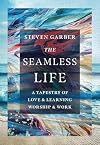
Summary: A collection of short reflections around the integral relationship between our daily life and work and the love of God, accompanied by the author's photography.
Steven Garber has written thoughtfully on the integration of faith and learning for students in The Fabric of Faithfulness, and of loving a broken word, joining with God's love for his creation in living out our callings in Visions of Vocation. This is a very different book that rings the changes on the themes of these show more previous books. Garber writes:
This is a book about vocation, but a different book, a collection of essays and photos. An unusual effort for the publisher, it is new for me too. Rather than making an argument that is developed over scores of pages and many chapters, this one is a deeper and deeper reflection on one question: What does it mean to see seamlessly? To see the whole of life as important to God, to us, and to the world--the deepest and truest meaning of vocation--is to understand that our longing for coherence is born of our truest humanity, a calling into the reality that being human and being holy are one and the same life.
The book is a collection of short (2-3 pages each) essays that follow Garber across the country and through his personal history. We begin with a Madison Avenue company that consults with social entrepreneur non-profits seeking to do good work for the common good, later with one of the companies that are a client of the firm, situated in the Catskills, and then with faith leaders from different sectors of Pittsburgh committed to seeking the flourishing of their city. The journey continues across the country. These reflections are woven into ones on Garber's own history, from restoring order to a house he and his son are renovating to a visit to a New Mexico livestock auction, bringing back memories of his cowboy grandfather who worked out his belief in God in the way he worked with competence and character.
He reflects on movies, and on words like vocation and occupation; the common root of cult, cultivate, and culture; and proximate. He writes beautifully of the growing friendship he has shared with his wife, Meg and thoughtfully about how joy and sorrow are linked in our lives.
All of this is accompanied by the photography of the author at the beginning of each essay. Many of these could be hung in a gallery. One I love, because it is a view etched in my own memories, is the skyline of Pittsburgh at night from Mount Washington.
This is a wonderful book to be read slowly, perhaps as it has been written over the course of many journeys. It speaks to our longing not only that our lives would matter but cohere. This is a good book to give as a graduation gift, but perhaps a better book for one in the middle of life wondering if the endeavors of every day connect to the deep and transcendent longings of us all. It is far better than the waste of a mid-life crisis. It is a book for those who both love and grieve the world and wonder how this might be held together--seamlessly.
________________________________
Disclosure of Material Connection: I received a complimentary review copy of this book from the publisher. The opinions I have expressed are my own. show less
Steven Garber has written thoughtfully on the integration of faith and learning for students in The Fabric of Faithfulness, and of loving a broken word, joining with God's love for his creation in living out our callings in Visions of Vocation. This is a very different book that rings the changes on the themes of these show more previous books. Garber writes:
This is a book about vocation, but a different book, a collection of essays and photos. An unusual effort for the publisher, it is new for me too. Rather than making an argument that is developed over scores of pages and many chapters, this one is a deeper and deeper reflection on one question: What does it mean to see seamlessly? To see the whole of life as important to God, to us, and to the world--the deepest and truest meaning of vocation--is to understand that our longing for coherence is born of our truest humanity, a calling into the reality that being human and being holy are one and the same life.
The book is a collection of short (2-3 pages each) essays that follow Garber across the country and through his personal history. We begin with a Madison Avenue company that consults with social entrepreneur non-profits seeking to do good work for the common good, later with one of the companies that are a client of the firm, situated in the Catskills, and then with faith leaders from different sectors of Pittsburgh committed to seeking the flourishing of their city. The journey continues across the country. These reflections are woven into ones on Garber's own history, from restoring order to a house he and his son are renovating to a visit to a New Mexico livestock auction, bringing back memories of his cowboy grandfather who worked out his belief in God in the way he worked with competence and character.
He reflects on movies, and on words like vocation and occupation; the common root of cult, cultivate, and culture; and proximate. He writes beautifully of the growing friendship he has shared with his wife, Meg and thoughtfully about how joy and sorrow are linked in our lives.
All of this is accompanied by the photography of the author at the beginning of each essay. Many of these could be hung in a gallery. One I love, because it is a view etched in my own memories, is the skyline of Pittsburgh at night from Mount Washington.
This is a wonderful book to be read slowly, perhaps as it has been written over the course of many journeys. It speaks to our longing not only that our lives would matter but cohere. This is a good book to give as a graduation gift, but perhaps a better book for one in the middle of life wondering if the endeavors of every day connect to the deep and transcendent longings of us all. It is far better than the waste of a mid-life crisis. It is a book for those who both love and grieve the world and wonder how this might be held together--seamlessly.
________________________________
Disclosure of Material Connection: I received a complimentary review copy of this book from the publisher. The opinions I have expressed are my own. show less
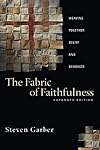
The principles laid out are important and well-articulated, but I would have liked more practical suggestions for applying them.
The Fabric of Faithfulness: Weaving Together Belief and Behavior During the University Years by Steven Garber
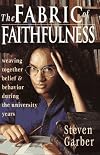
Author Steven Garber challenges Christian educators and students to answer the question, "Why do you get up in the morning?" He explores the issue of life's purpose from a reasoned, Christian worldview. How can a young, educated individual remain faithful and make a difference for Christ in society? Garber's influence by Francis Schaeffer and other Christian thinkers is evident. He provides fodder for educators to explore how to mentor young people as they find their place and voice in the show more world. A commendable effort. It contains 21 pages of endnotes and bibiliography. show less
Awards

You May Also Like


Associated Authors
Statistics
- Works
- 9
- Also by
- 1
- Members
- 731
- Popularity
- #34,740
- Rating
- 4.0
- Reviews
- 4
- ISBNs
- 21