
Harry V. Jaffa (1918–2015)
Author of Crisis of the House Divided: An Interpretation of the Issues in the Lincoln-Douglas Debates
About the Author
Harry V. Jaffa is the Henry Salvatori Professor of Political Philosophy Emeritus at Claremont McKenna College and Claremont Graduate University, a Distinguished Fellow of the Claremont Institute, and the author of ten books. He lives in Claremont, California. (Bowker Author Biography)
Image credit: FORA.tv
Works by Harry V. Jaffa
Crisis of the House Divided: An Interpretation of the Issues in the Lincoln-Douglas Debates (1973) 238 copies, 1 review
A New Birth of Freedom: Abraham Lincoln and the Coming of the Civil War (2000) 161 copies, 3 reviews
Thomism and Aristotelianism: A Study of the Commentary by Thomas Aquinas on the Nicomachean Ethics (1979) 24 copies
Crisis of the Strauss Divided: Essays on Leo Strauss and Straussianism, East and West (2012) 11 copies
Statesmanship: Essays in Honor of Sir Winston S. Churchill (Studies in statesmanship of the Winston S. Churchill Associa (1981) — Editor — 6 copies
In the name of the people; speeches and writings of Lincoln and Douglas in the Ohio campaign of 1859 (1959) — Editor — 6 copies
The American founding as the best regime: The bonding of civil and religious liberty (1990) 3 copies
Defenders of the constitution: Calhoun versus Madison, a bicentennial cerebration [sic] / Harry V. Jaffa (1987) 2 copies
What is political science?, or, How to deal with the lemming (or Gadarene swine) instinct (1988) 2 copies
The Quotable Jaffa 1 copy
Inventing the past: Garry Wills's "Inventing America" and the pathology of ideological scholarship 1 copy
Equality and the founding 1 copy
Associated Works
American Political Thought: The Philosophic Dimensions of American Statesmanship (1971) — Contributor, some editions — 26 copies
Life, Liberty, and the Pursuit of Happiness: Ten Years of the Claremont Review of Books (2012) — Contributor — 17 copies
Tagged
Common Knowledge
- Legal name
- Jaffa, Harry Victor
- Birthdate
- 1918-10-07
- Date of death
- 2015-01-10
- Gender
- male
- Education
- Yale University (BA ∙ English ∙ 1939)
The New School for Social Research (PhD ∙ Political Philosophy|1951) - Occupations
- professor
historian
speechwriter - Organizations
- Guggenheim fellow
Relm Foundation fellow
Mershon fellow
Salvatori fellow
Claremont McKenna College
Winston S. Churchill Association (show all 7)
Claremont Institute - Short biography
- Speechwriter for Barry Goldwater's 1964 speech accepting the Republican Nomination.
- Nationality
- USA
- Birthplace
- New York, New York, USA
- Places of residence
- New York, New York, USA
Claremont, California, USA
Columbus, Ohio, USA - Place of death
- Pomona, California, USA
- Associated Place (for map)
- USA
Members
Reviews
The Doughface Dilemma or The Invisible Slave in the American Enterprise Institute's Bicentennial (Occasional Paper Number 5) by Harry V. Jaffa

This slim volume, by the legendary Straussian scholar at Claremont, is a masterpiece of political invective, particularly noteworthy since it comes from one conservative exposing the noxious and antidemocratic underpinnings of another--or in this case, of a whole movement.
Although this pamphlet may appear to be nothing more than a salvo in an obscure internecine battle among conservative thinkers--and it is that--it is something more than that. Jaffa meticulously lays out the case that the show more American Enterprise Institute strain of neoconservatism takes its philosophy, intentionally or not, from the thought of John C. Calhoun, and is essentially that of the Confederate States of America. It would be well for progressives to pay close attention to Jaffa, because he outlines the fundamental principles on which liberalism is based. They may not like the specific policy choices he derives from this examination, but they will find no more pointed dissection of the dominant brand of modern conservatism--and they may find, unsettlingly, that some of their own ideas stem from the same flawed principles. show less
Although this pamphlet may appear to be nothing more than a salvo in an obscure internecine battle among conservative thinkers--and it is that--it is something more than that. Jaffa meticulously lays out the case that the show more American Enterprise Institute strain of neoconservatism takes its philosophy, intentionally or not, from the thought of John C. Calhoun, and is essentially that of the Confederate States of America. It would be well for progressives to pay close attention to Jaffa, because he outlines the fundamental principles on which liberalism is based. They may not like the specific policy choices he derives from this examination, but they will find no more pointed dissection of the dominant brand of modern conservatism--and they may find, unsettlingly, that some of their own ideas stem from the same flawed principles. show less
Crisis of the House Divided: An Interpretation of the Issues in the Lincoln-Douglas Debates by Harry V. Jaffa
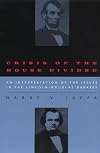
A book of superb legal and philosophic analysis, though reading it today one is put off by the degree to which it is fixated on historiographic disputes of the 1950s. Jaffa undertakes a thorough but mostly fair defense of Abraham Lincoln, pre-presidency, against historians of his day who were taking the side of Stephen Douglas and his "popular sovereignty" doctrine.
Lincoln's star has risen somewhat since this work's original publication — perhaps in no small part BECAUSE of this work's show more publication. But its careful reading and contextualization of Lincoln's speeches, as well as a shorter preceding explication of Douglas's point of view, remains sharp and still relevant today.
The book does presume a fairly hefty preknowledge of the life and career of Abraham Lincoln and the major political controversies of the 1850s — not merely a basic understanding of "popular sovereignty," "Bleeding Kansas" and "Dred Scott" but details of particular speeches and the exact path certain laws took through Congress. The book is still readable with a moderate historical background, but the occasional omission of important context combines with its already intricate political philosophy to make this a pretty tough slog, though always fascinating. show less
Lincoln's star has risen somewhat since this work's original publication — perhaps in no small part BECAUSE of this work's show more publication. But its careful reading and contextualization of Lincoln's speeches, as well as a shorter preceding explication of Douglas's point of view, remains sharp and still relevant today.
The book does presume a fairly hefty preknowledge of the life and career of Abraham Lincoln and the major political controversies of the 1850s — not merely a basic understanding of "popular sovereignty," "Bleeding Kansas" and "Dred Scott" but details of particular speeches and the exact path certain laws took through Congress. The book is still readable with a moderate historical background, but the occasional omission of important context combines with its already intricate political philosophy to make this a pretty tough slog, though always fascinating. show less
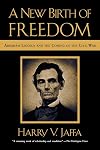
I read only part of this book--the chapter "Slavery, Succession and State Rights." This chapter discusses John C. Calhoun, and attempts to refute his two claims or theories: that all men are *not* created equal as the Declaration of Independence claims they are (the former was used to defend slavery), and the "concurrent majority" theory (used to justify states' right to secede from the Union). The criticisms of concurrent majority theory seem reasonable.
I was looking here for refutation of show more author Thomas Dilorenzo's defense of the South and of secession (in his book The Real Lincoln), based on a recommendation of this book by the Claremont Institute as an overall answer to Dilorenzo. In particular, I was looking for refutation of these two claims from Dilorenzo: that states individually ratified the Constitution and therefore had a right to withdraw their ratification; and that if the thirteen colonies seceded from Great Britain, why couldn't states secede from the Union?
I didn't really find what I was looking for in this chapter of A New Birth of Freedom, and will have to read the entire book. Which is somewhat daunting, because it is denser and far more overtly philosophical than The Real Lincoln.
Jaffa states, "Calhoun's theory ...den[ied:] any rational ground to the formation of governments[.:]" Having not read the works of Calhoun yet, I don't know whether that's true; but Edmund Burke, arguably the philosophical father of conservatism, seemed to know that the formation of government *isn't* entirely rational; it's organic, in the sense of resulting from traditions and ideas accreted over long periods of time.
This book, at least the sections on Calhoun, presume that the reader is already familiar with Calhoun's thought; so I think I'll put it aside and read Calhoun instead. show less
I was looking here for refutation of show more author Thomas Dilorenzo's defense of the South and of secession (in his book The Real Lincoln), based on a recommendation of this book by the Claremont Institute as an overall answer to Dilorenzo. In particular, I was looking for refutation of these two claims from Dilorenzo: that states individually ratified the Constitution and therefore had a right to withdraw their ratification; and that if the thirteen colonies seceded from Great Britain, why couldn't states secede from the Union?
I didn't really find what I was looking for in this chapter of A New Birth of Freedom, and will have to read the entire book. Which is somewhat daunting, because it is denser and far more overtly philosophical than The Real Lincoln.
Jaffa states, "Calhoun's theory ...den[ied:] any rational ground to the formation of governments[.:]" Having not read the works of Calhoun yet, I don't know whether that's true; but Edmund Burke, arguably the philosophical father of conservatism, seemed to know that the formation of government *isn't* entirely rational; it's organic, in the sense of resulting from traditions and ideas accreted over long periods of time.
This book, at least the sections on Calhoun, presume that the reader is already familiar with Calhoun's thought; so I think I'll put it aside and read Calhoun instead. show less
Lists
Awards


You May Also Like


Associated Authors
Statistics
- Works
- 31
- Also by
- 11
- Members
- 711
- Popularity
- #35,655
- Rating
- 4.2
- Reviews
- 6
- ISBNs
- 35
- Favorited
- 1