
Thomas H. Cook
Author of The Chatham School Affair
About the Author
Image credit: http://www.vjbooks.com/Thomas-H-Cook-s/506.htm
Series
Works by Thomas H. Cook
Even Darkness Sings: From Auschwitz to Hiroshima: Finding Hope and Optimism in the Saddest Places on Earth (2018) 22 copies
Fatherhood 3 copies
Lugares na Escuridão 2 copies
Il veleno nella mente 1 copy
Murder For Revenge 1 copy
Au lieu-dit Noir-Etang... 1 copy
Associated Works
Books to Die For: The World's Greatest Mystery Writers on the World's Greatest Mystery Novels (2012) 277 copies, 10 reviews
Bibliomysteries: Crime in the World of Books and Bookstores, Volume One (2013) — Contributor — 242 copies, 14 reviews
Manhattan Mayhem: New Crime Stories from Mystery Writers of America (2015) — Contributor — 212 copies, 30 reviews
In the Shadow of the Master: Classic Tales by Edgar Allan Poe (2009) — Contributor — 204 copies, 3 reviews
A Confederacy of Crime: New Stories of Southern-Style Mystery (2001) — Contributor — 42 copies, 1 review
Tagged
Common Knowledge
- Birthdate
- 1947-09-19
- Gender
- male
- Education
- Columbia University
- Nationality
- USA
- Birthplace
- Fort Payne, Alabama, USA
- Places of residence
- Harwich, Massachusetts, USA
- Associated Place (for map)
- USA
Members
Reviews
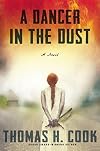
Good God, why isn't everyone reading Thomas H. Cook's book all the time?!?!?!
The weight that Cook's characters bear has brought me to tears, made me gasp, left me with an aching heart, mired me in an unshakeable sadness that ebbs away only when I embrace a new book. A Dancer in the Dust is no exception. In this story, Cook explores racism, sexism, power, & betrayal on a global scale. The death of one woman is bound up in the grand schemes of men, all intent on doing good as they see it.
It's show more also a tale of globalization versus self-sufficiency, a cautionary tale. Ray is an idealist who goes to Lubanda to "help." He is assigned to a village where he encounters a white woman. But she is local, a native of Lubanda, born in country, and has never left. Her one desire in life is to work the farm her father left her. This should be so easy, to hold on to a few acres in a part of the world no one knows about. But those acres - as much as her fierce defiance of the men who try to lay claim to them - become pivotal in the struggle for Lubanda. And Ray, who is enthralled by her, wants to possess Martine herself, not her land, so he schemes as well. Martine is caught up in it all, as one man after another cannot tolerate her refusals, her defiance, her attempts at self-determination.
As always, Cook apportions blame & responsibility justly & heavily. What also happens here, and I don't think I've seen it in his prior works, is atonement. Ray & Martine once discuss atonement, as he tries to explain it to her. Ray later talks about how rare it is for one to get a chance to right a wrong. Though it isn't enough, it seems Ray is able to do the most he can to atone for his part in Martine's destruction. And like Ray, with that, we must be satisfied.
The beauty of Cook is his prose. If his books were songs, they would be quiet pieces written in minor chords, that tug at your heart with every refrain, and give you glimpses of alternative possibilities at the bridge with an angst and a yearning that make you ache. He uses simple words, simple metaphors, simple phrases. Yet every so often they synthesize so that Cook reveals a simple truth in a stark, but poetic, way. And throughout there is an undertow that you can just detect, signaling that something else is at work, something else is happening. You will find out what it is. And it will leave you wasted when you do. It's a crescendo, a wave that crashes over you, & you need to catch your breath & gain your bearings. For decades now, each of Cook's books have promised this emotional exhaustion. His new releases should be heralded.
The only thing holding this back from 5 stars is that it's missing a sense of time: when did the original events occur, are the current events happening in 2016 (or thereabouts), how old is Ray & everyone involved? Cook touches on some of these, but you don't really feel the answers, & so they distract a bit. But don't let that stop you from picking up this book. It's beautiful. show less
The weight that Cook's characters bear has brought me to tears, made me gasp, left me with an aching heart, mired me in an unshakeable sadness that ebbs away only when I embrace a new book. A Dancer in the Dust is no exception. In this story, Cook explores racism, sexism, power, & betrayal on a global scale. The death of one woman is bound up in the grand schemes of men, all intent on doing good as they see it.
It's show more also a tale of globalization versus self-sufficiency, a cautionary tale. Ray is an idealist who goes to Lubanda to "help." He is assigned to a village where he encounters a white woman. But she is local, a native of Lubanda, born in country, and has never left. Her one desire in life is to work the farm her father left her. This should be so easy, to hold on to a few acres in a part of the world no one knows about. But those acres - as much as her fierce defiance of the men who try to lay claim to them - become pivotal in the struggle for Lubanda. And Ray, who is enthralled by her, wants to possess Martine herself, not her land, so he schemes as well. Martine is caught up in it all, as one man after another cannot tolerate her refusals, her defiance, her attempts at self-determination.
As always, Cook apportions blame & responsibility justly & heavily. What also happens here, and I don't think I've seen it in his prior works, is atonement. Ray & Martine once discuss atonement, as he tries to explain it to her. Ray later talks about how rare it is for one to get a chance to right a wrong. Though it isn't enough, it seems Ray is able to do the most he can to atone for his part in Martine's destruction. And like Ray, with that, we must be satisfied.
The beauty of Cook is his prose. If his books were songs, they would be quiet pieces written in minor chords, that tug at your heart with every refrain, and give you glimpses of alternative possibilities at the bridge with an angst and a yearning that make you ache. He uses simple words, simple metaphors, simple phrases. Yet every so often they synthesize so that Cook reveals a simple truth in a stark, but poetic, way. And throughout there is an undertow that you can just detect, signaling that something else is at work, something else is happening. You will find out what it is. And it will leave you wasted when you do. It's a crescendo, a wave that crashes over you, & you need to catch your breath & gain your bearings. For decades now, each of Cook's books have promised this emotional exhaustion. His new releases should be heralded.
The only thing holding this back from 5 stars is that it's missing a sense of time: when did the original events occur, are the current events happening in 2016 (or thereabouts), how old is Ray & everyone involved? Cook touches on some of these, but you don't really feel the answers, & so they distract a bit. But don't let that stop you from picking up this book. It's beautiful. show less
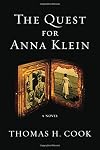
4.5 stars... and I'll tell you why at the end.
If you are going to read Thomas H cook, bring your A-game. These are not books you can bluff your way through, skimming over some descriptive paragraphs, looking for "the action." Every word counts. You might have gotten away with that with some of his earlier works, sure. But those days are gone; Cook gets tighter and tighter with each tale.
If you pick up this book, settle in: this story is best read with no other distractions, in a couple short show more stints. You need to keep the tension, but you'll also need time to digest a bit, to mull over what you think of each character. They're plotting to assassinate Hitler in 1939. Yet some in their midst are playing games; no one is known enough to be trusted.
This story is an homage to things that seem lost to a bygone age: honor; loyalty; single-minded determination; commitment; the passion of true vengeance; a quest; and a love tested by the most brutal forces. It is a grand tale, told across 4 continents and almost 100 years, encompassing the horrors of the Armenian genocide up to September 11th. The characters Cook introduces us to are by all means extraordinary in their experiences and accomplishments. But he holds true by sharing their scars, not extolling them only as virtuous creatures or innocents or hapless victims.
The only flaw comes in the last couple paragraphs. The narrator (and thus the reader) finally learns the truth underpinning and tying together everything that makes Anna Klein, and thus what drives this story. But it refers back to a person mentioned once on page 166. If you do not remember this story, the impact of the reveal will be lost until you go back and find it. As much as I respect Cook for tying the story up so well, it was so deftly hidden that even a reader expecting a trick like that wasn't quite ready for it. Perhaps a second mention, even just in passing, to remind the reader of this presence, would have helped. Tom Danforth is circling back throughout his story, and this is the ultimate circling back. But while I caught every other one, this one eluded me. I had to find it, re-read that passage, and then re-read the last page to get the full impact.
I still highly recommend this novel, and any other book by Thomas H Cook. I have yet to be disappointed. He is an American treasure, and books like this should be read by everyone. It is one of the finest, purest examples of true literature I've come across in the past 5 years, up there with The Goldfinch. show less
If you are going to read Thomas H cook, bring your A-game. These are not books you can bluff your way through, skimming over some descriptive paragraphs, looking for "the action." Every word counts. You might have gotten away with that with some of his earlier works, sure. But those days are gone; Cook gets tighter and tighter with each tale.
If you pick up this book, settle in: this story is best read with no other distractions, in a couple short show more stints. You need to keep the tension, but you'll also need time to digest a bit, to mull over what you think of each character. They're plotting to assassinate Hitler in 1939. Yet some in their midst are playing games; no one is known enough to be trusted.
This story is an homage to things that seem lost to a bygone age: honor; loyalty; single-minded determination; commitment; the passion of true vengeance; a quest; and a love tested by the most brutal forces. It is a grand tale, told across 4 continents and almost 100 years, encompassing the horrors of the Armenian genocide up to September 11th. The characters Cook introduces us to are by all means extraordinary in their experiences and accomplishments. But he holds true by sharing their scars, not extolling them only as virtuous creatures or innocents or hapless victims.
The only flaw comes in the last couple paragraphs. The narrator (and thus the reader) finally learns the truth underpinning and tying together everything that makes Anna Klein, and thus what drives this story. But it refers back to a person mentioned once on page 166. If you do not remember this story, the impact of the reveal will be lost until you go back and find it. As much as I respect Cook for tying the story up so well, it was so deftly hidden that even a reader expecting a trick like that wasn't quite ready for it. Perhaps a second mention, even just in passing, to remind the reader of this presence, would have helped. Tom Danforth is circling back throughout his story, and this is the ultimate circling back. But while I caught every other one, this one eluded me. I had to find it, re-read that passage, and then re-read the last page to get the full impact.
I still highly recommend this novel, and any other book by Thomas H Cook. I have yet to be disappointed. He is an American treasure, and books like this should be read by everyone. It is one of the finest, purest examples of true literature I've come across in the past 5 years, up there with The Goldfinch. show less
I had to write a review of A Dancer in the Dust by Thomas H. Cook with a limit of 200 words. Impossible. So, here’s a little fuller review.
Let me start by saying I am an avid Thomas H. Cook fan, beginning with The Chatham School Affair (which I’m planning to read again, one of these days), which is my favorite still. His writing is lyrical and descriptive. His plots are unusual. His characters run the range of likeable to untrustworthy. A Dancer in the Dust is a departure from his norm, show more if you can actually say he has a norm.
As an idealistic college graduate, Ray Chambers decides to spend a year in the African nation of Lubanda through an organization called Hope for Lubanda. His boss was Bill Hammond. His native assistant is Seso Alaya. On his first day there, in the market, he meets Martine Aubert, a white Lubandan farmer whose father had emigrated to Lubanda many decades ago. Aubert had very distinct opinions as to what these ‘do-good’ organizations were really doing and whether they actually made Lubandan life better–no they didn’t. This was contrary to
Chambers’ opinion and those of the nation’s dictator. She was a thorn in the government’s side. But of course, Chambers fell in love with her.
Twenty years later, Alaya’s tortured body is found in an alleyway near a sleazy Manhattan hotel. He had called Hammond a week prior saying he had important information but they never met and that information was never passed. Hammond asks Chambers to investigate the murder and retrieve the information.
The scene is set. Alaya’s murder is merely the ploy for the rest of the book. The book flips back and forth between the current day and Chambers’ reminiscences about his time spent in Lubanda, especially his relationship with Martine, as well as the political climate of the country. It is also a means for Cook’s diatribe against the Westernization of underdeveloped countries.
A Dancer in the Dust kept my interest but it was certainly not up to the standards of his most recent book Sandrine’s Case or his Edgar Award winning Chatham School Affair. If you’re a Cook fan or you like more political oriented intrigue, then I’d give A Dancer in the Dust a try, but I’m certainly not going to say it’s a ‘must read’ like most of Cook’s other books. show less
Let me start by saying I am an avid Thomas H. Cook fan, beginning with The Chatham School Affair (which I’m planning to read again, one of these days), which is my favorite still. His writing is lyrical and descriptive. His plots are unusual. His characters run the range of likeable to untrustworthy. A Dancer in the Dust is a departure from his norm, show more if you can actually say he has a norm.
As an idealistic college graduate, Ray Chambers decides to spend a year in the African nation of Lubanda through an organization called Hope for Lubanda. His boss was Bill Hammond. His native assistant is Seso Alaya. On his first day there, in the market, he meets Martine Aubert, a white Lubandan farmer whose father had emigrated to Lubanda many decades ago. Aubert had very distinct opinions as to what these ‘do-good’ organizations were really doing and whether they actually made Lubandan life better–no they didn’t. This was contrary to
Chambers’ opinion and those of the nation’s dictator. She was a thorn in the government’s side. But of course, Chambers fell in love with her.
Twenty years later, Alaya’s tortured body is found in an alleyway near a sleazy Manhattan hotel. He had called Hammond a week prior saying he had important information but they never met and that information was never passed. Hammond asks Chambers to investigate the murder and retrieve the information.
The scene is set. Alaya’s murder is merely the ploy for the rest of the book. The book flips back and forth between the current day and Chambers’ reminiscences about his time spent in Lubanda, especially his relationship with Martine, as well as the political climate of the country. It is also a means for Cook’s diatribe against the Westernization of underdeveloped countries.
A Dancer in the Dust kept my interest but it was certainly not up to the standards of his most recent book Sandrine’s Case or his Edgar Award winning Chatham School Affair. If you’re a Cook fan or you like more political oriented intrigue, then I’d give A Dancer in the Dust a try, but I’m certainly not going to say it’s a ‘must read’ like most of Cook’s other books. show less

The Crime of Julian Wells is an absorbing read and I truly enjoyed this introduction to Cook's work. Cook masterfully weaves elements of Julian's past, his fervent belief that a father is the most important element in a child's life into a compelling and tense narrative that makes you consider the many angles from which Julian made such a spectacular misstep as the one that would cause him to take his own life. The novel is smartly written, and is a clever mixing of the history of infamous show more serial killers, the enigmatic nature of friendship and the fragile balance in maintaining dearly held beliefs. Phillip's examination into his friend's whereabouts and deeds also cause him to examine his own belief about friendship and hindsight cruelly illuminates his failures, far more than his successes. show less
Lists
Must-Read Maine (1)
Edgar Award (1)
Awards


You May Also Like


Associated Authors
Statistics
- Works
- 56
- Also by
- 19
- Members
- 5,157
- Popularity
- #4,824
- Rating
- 3.6
- Reviews
- 155
- ISBNs
- 501
- Languages
- 12
- Favorited
- 17