
Jean Davies Okimoto
Author of A Place for Grace
About the Author
Jean Davies Okimoto is an author and playwright whose books and short stories have been translated into Japanese, Italian, Chinese, Korean, German and Hebrew. She is the recipient of numerous awards including Smithsonian Notable Book, the American Library Association Best Book for Young Adults, the show more Washington Governor's Award, and the International Reading Association Readers Choice Award. (Bowker Author Biography) show less
Image credit: Joe Okimoto
Works by Jean Davies Okimoto
Associated Works
No Easy Answers: Short Stories About Teenagers Making Tough Choices (1997) — Contributor — 153 copies, 1 review
Join In: Multiethnic Short Stories by Outstanding Writers for Young Adults (1993) — Contributor — 84 copies
Center Stage: One-Act Plays for Teenage Readers and Actors (1990) — Contributor — 59 copies, 1 review
Tagged
Common Knowledge
- Canonical name
- Jean Davies Okimoto
- Legal name
- Jean Davies Okimoto
- Birthdate
- 1942-12-14
- Gender
- female
- Education
- Antioch University (MA - Psychology)
- Occupations
- psychotherapist
non-fiction author - Organizations
- Authors Guild, PEN, Dramatists Guild, SCBWI
- Awards and honors
- ALA Best Books for Young Adults
IRA Readers Choice
IRA/CBC Young Adult Choice
Parent's Choice Award
Washington Governor's Award
Maxwell Medallion (show all 11)
Smithsonian Notable Book
Green Earth Book Award
Green Prize for Sustainable Literature Honor Book
Charlotte Zolotow Honor Book
Next Genertion Indie Book Award ebook Fiction - Agent
- Robert Astle
- Relationships
- Okimoto, Daniel I, (brother-in-law)
- Short biography
see www.jeandaviesokimoto.com- Nationality
- USA
- Places of residence
- Vashon Island, Washington, USA
- Associated Place (for map)
- Washington, USA
Members
Reviews

There's a plethora of novels about the life and loves of young women but there's less available out there for older women. I don't know if it's a function of the audience wanting to read about the green and untried, if it's because that's what research shows will sell best, or because bildungsroman is the traditional narrative trope but there's a lot to be said for the stories of people who have some experience of life under their belt. Okimoto's lovely novel of love at a later age is one of show more these gentle books that tell the tale of such a couple of lives.
The novel opens with a summer storm blowing through Vashon Island, WA and retired children's librarian Maggie hearing something unusual in between generator noise and the gusting wind. It turns out to be her curmudgeonly neighbor's dog howling because his master is trapped under debris having suffered a small stroke. Maggie goes to his rescue and finds herself becoming more and more enmeshed in Walter's life, again. She and Walter, who is a famous, rather reclusive children's author, have a history together and it's not a pretty one.
Maggie is a good-hearted character who has found herself a place in the small, rather earthy community of Vashon Island and she is taking the summer, the first one of her retirement, to decide what she wants out of life. Taking care of Walter and his devoted mutt Bill Bailey are not in her plans. But she can't just abandon him to his solitude either. Meanwhile, Maggie's younger sister, a needy sort of person who is rarely without a man, is in the throes of another divorce from yet another wealthy husband and she has decided that she should be closer to her only family, arriving on Maggie's doorstep and selfishly (or perhaps just self-centeredly) adding to the caretaking burden Maggie is already under.
Walter, when he suffers his small stroke, is in the midst of another book, which Maggie, an inveterate snooper (she charmingly admits to her vices, small as they are) has started reading. She loves it but her snooping also tells her that it won't be easy for Walter to publish this novel because of the climate of children's publishing. And so Maggie steps up to help Walter keep momentum, to shepherd him through his charming tale. As she types his manuscript, she and Walter develop a relationship and face the history that they have together.
This is a tale of friendship and love, facing mortality and the worth of human connection. The characters are delightful, engaging, and fully formed and it is a pleasure to follow them as they discover not only their own worths but also the worth of others close to them. There are no big explosions here, just the drama of everyday living while aging but that makes for a surprisingly good and pleasing read. Second chances are the stuff of life as long as a person has the courage to keep living it and ultimately Maggie and Walter and all those around them show readers that simple courage. show less
The novel opens with a summer storm blowing through Vashon Island, WA and retired children's librarian Maggie hearing something unusual in between generator noise and the gusting wind. It turns out to be her curmudgeonly neighbor's dog howling because his master is trapped under debris having suffered a small stroke. Maggie goes to his rescue and finds herself becoming more and more enmeshed in Walter's life, again. She and Walter, who is a famous, rather reclusive children's author, have a history together and it's not a pretty one.
Maggie is a good-hearted character who has found herself a place in the small, rather earthy community of Vashon Island and she is taking the summer, the first one of her retirement, to decide what she wants out of life. Taking care of Walter and his devoted mutt Bill Bailey are not in her plans. But she can't just abandon him to his solitude either. Meanwhile, Maggie's younger sister, a needy sort of person who is rarely without a man, is in the throes of another divorce from yet another wealthy husband and she has decided that she should be closer to her only family, arriving on Maggie's doorstep and selfishly (or perhaps just self-centeredly) adding to the caretaking burden Maggie is already under.
Walter, when he suffers his small stroke, is in the midst of another book, which Maggie, an inveterate snooper (she charmingly admits to her vices, small as they are) has started reading. She loves it but her snooping also tells her that it won't be easy for Walter to publish this novel because of the climate of children's publishing. And so Maggie steps up to help Walter keep momentum, to shepherd him through his charming tale. As she types his manuscript, she and Walter develop a relationship and face the history that they have together.
This is a tale of friendship and love, facing mortality and the worth of human connection. The characters are delightful, engaging, and fully formed and it is a pleasure to follow them as they discover not only their own worths but also the worth of others close to them. There are no big explosions here, just the drama of everyday living while aging but that makes for a surprisingly good and pleasing read. Second chances are the stuff of life as long as a person has the courage to keep living it and ultimately Maggie and Walter and all those around them show readers that simple courage. show less
Banned Book Week 2017. This year I'm reading a few picture books that have been challenged for their content, this one due to its depiction of a same-sex couple adoption.
I found this book to be pretty dull but was a little concerned by it, though not for its matter-of-fact portrayal of a lesbian couple participating in the adoption process. That would be damned idiotic. No, I'm concerned about inter-country adoption. It is a complex issue with lots of repercussions, and I am certainly no show more expert in the field, but I was troubled to see on one of the final pages that all the adopted Chinese babies had been rechristened with Western names. Regardless of those qualms, I would never question the book's right to exist; I would only use it as an impetus to do more research into the larger issue it represents. show less
I found this book to be pretty dull but was a little concerned by it, though not for its matter-of-fact portrayal of a lesbian couple participating in the adoption process. That would be damned idiotic. No, I'm concerned about inter-country adoption. It is a complex issue with lots of repercussions, and I am certainly no show more expert in the field, but I was troubled to see on one of the final pages that all the adopted Chinese babies had been rechristened with Western names. Regardless of those qualms, I would never question the book's right to exist; I would only use it as an impetus to do more research into the larger issue it represents. show less
This book has banned not only in the US but in China as well. I had to look up why. This book is about 4 families that travel to China in the heyday of China’s one child policy. Many family’s that had baby girls would give them up for adoption since in Chinese culture reverence is placed on sons. These four families meet, become friends, and stay connected through their lives. We see these journeys from the adoption being granted, through long flights, and the two weeks spent in China show more before being able to go home. When I heard this book was banned in China I thought maybe because it showcased a part of Chinese history that is looked down upon across the world. Nope. It was banned because one of the four adopters was a lesbian couple. To be honest, I did not even notice that when I was reading and had to go back and look. This book was honest, but beautiful. It showed the creation of new families and takes place in more places in the world than just China. It is a shame it was so frequently banned. show less
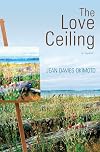
The Love Ceiling is a story of people in transition. Annie Duppstadt is about to turn 64; her mother has just died and her father, a famous painter and a narcissistic tyrant, carries on as though nothing much has changed; Annie's husband, Jack, is about to be forced to retire; and her daughter Cass is in an unfulfilling relationship with a man who can't commit to marriage.
Annie has always wanted to paint, but she was traumatized by her father at an early age (what I call Art Abuse) and grew show more up believing that she'd never make it as an artist. As her mother nears death, she extracts a promise from Annie that she will paint.
"When you see this do you...want to paint it?"
"Always." It was a whisper as much to myself as my mother.
"I thought so." Mom grabbed both my hands, turning her head to look at me. "You must do it."
"Maybe someday. You know how it is, Mom."
"You must do it." Direct, unequivocal, this time almost a command, while she tried pathetically to squeeze my hands. "Promise me, Annie."
"I promise," I whispered. (page 34)
Thus begins Annie's journey to her Self - a struggle to carve out time and create places where she can explore her artistry. Most women with families have obligations that pull them in many directions. When they give their passions a priority and give themselves permission, they can claim their power and explore possibilities. Okimoto did a wonderful job of portraying this struggle in The Love Ceiling. We recognize that Annie's mother was unable to do this herself, thus was so adamant about Annie pursuing her talent.
The story is told from alternating first and third person narratives - Annie in the first person and Cass in the third (though I suspect Okimoto originally had both characters in first person, as there's at least one instance of "I" in the narrative when it should have been "she" - editors, please!). It feels slightly awkward to have the two POVs. I enjoyed Annie's first person narrative - I felt as though I was inside her head and could understand her motives and actions.
I found there were places where there was way too much mundane detail - for example, I'm not sure why it was necessary to list all the bathing suit coverage options available in the Land's End catalog (again, editors!).
I enjoyed reading about Seattle and Puget Sound, since I hail from that area. I could visualize the Vashon Island ferry ride, the Olympic Mountains at sunrise, the seagull suspended against the wind. Okimoto brought those scenes to life for me. There is some lovely prose in this book, for example, as Annie is painting:
Okimoto's publicists refer to The Love Ceiling as a "coming of age novel for women over 50...60...70...80...90...!" I would add 30...40 to that too, as 32 year old Cass is also struggling with the questions, "what comes next? how do I do this?" and has some important insights along the way. Overall, this is an enjoyable read, and I recommend it to readers who like stories about families going through big transitions as well as stories about art and artists. show less
Annie has always wanted to paint, but she was traumatized by her father at an early age (what I call Art Abuse) and grew show more up believing that she'd never make it as an artist. As her mother nears death, she extracts a promise from Annie that she will paint.
"When you see this do you...want to paint it?"
"Always." It was a whisper as much to myself as my mother.
"I thought so." Mom grabbed both my hands, turning her head to look at me. "You must do it."
"Maybe someday. You know how it is, Mom."
"You must do it." Direct, unequivocal, this time almost a command, while she tried pathetically to squeeze my hands. "Promise me, Annie."
"I promise," I whispered. (page 34)
Thus begins Annie's journey to her Self - a struggle to carve out time and create places where she can explore her artistry. Most women with families have obligations that pull them in many directions. When they give their passions a priority and give themselves permission, they can claim their power and explore possibilities. Okimoto did a wonderful job of portraying this struggle in The Love Ceiling. We recognize that Annie's mother was unable to do this herself, thus was so adamant about Annie pursuing her talent.
The story is told from alternating first and third person narratives - Annie in the first person and Cass in the third (though I suspect Okimoto originally had both characters in first person, as there's at least one instance of "I" in the narrative when it should have been "she" - editors, please!). It feels slightly awkward to have the two POVs. I enjoyed Annie's first person narrative - I felt as though I was inside her head and could understand her motives and actions.
I found there were places where there was way too much mundane detail - for example, I'm not sure why it was necessary to list all the bathing suit coverage options available in the Land's End catalog (again, editors!).
I enjoyed reading about Seattle and Puget Sound, since I hail from that area. I could visualize the Vashon Island ferry ride, the Olympic Mountains at sunrise, the seagull suspended against the wind. Okimoto brought those scenes to life for me. There is some lovely prose in this book, for example, as Annie is painting:
"I felt almost disconnected from myself physically, detached from hunger or even thirst, lost in the mystery of the color, the emotions it evoked, and the luminous impasto taking shape before me." (page 151)
Okimoto's publicists refer to The Love Ceiling as a "coming of age novel for women over 50...60...70...80...90...!" I would add 30...40 to that too, as 32 year old Cass is also struggling with the questions, "what comes next? how do I do this?" and has some important insights along the way. Overall, this is an enjoyable read, and I recommend it to readers who like stories about families going through big transitions as well as stories about art and artists. show less
Lists
Awards


You May Also Like


Associated Authors
Statistics
- Works
- 23
- Also by
- 6
- Members
- 687
- Popularity
- #36,815
- Rating
- 3.7
- Reviews
- 47
- ISBNs
- 66
- Languages
- 1
- Favorited
- 1
