
Sarah Miller (1) (1979–)
Author of Miss Spitfire: Reaching Helen Keller
For other authors named Sarah Miller, see the disambiguation page.
About the Author
Sarah Miller writes historical fiction novels for children. Her novels include Miss Spitfire: Reaching Helen Keller, The Lost Crown, and The Borden Murders: Lizzie Borden and the Trial of the Century. (Bowker Author Biography)
Image credit: my photo
Works by Sarah Miller
Tagged
Common Knowledge
- Legal name
- Miller, Sarah Elizabeth
- Birthdate
- 1979
- Gender
- female
- Occupations
- historical fiction writer
non-fiction writer - Short biography
- Sarah Miller began writing her first novel at the age of ten, and has spent the last two decades working in libraries and bookstores. She is the author of both historical fiction and nonfiction. She lives in Michigan.
- Nationality
- USA
- Places of residence
- Michigan, USA
- Associated Place (for map)
- Michigan, USA
Members
Reviews
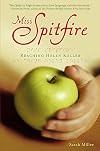
This is well written and absorbing. Ann Sullivan entered Helen Keller's life when she was 20 and Helen was six. Blind, deaf Helen was an exceedingly pampered, spoiled brat, locked in her own world of confusion. Her parents showed pity and allowed Helen to have free reign to punch, push, eat food like a pig and throw horrendous temper tantrums throughout the entire day.
All this changed when Ann Sullivan accepted the challenge of teaching Helen. Using very harsh, stern methods Ann gradually show more was able to reach and teach Helen, but not before Ann received black and blue arms, legs, had her tooth knocked out and her eyes scratched.
This is a book that haunted me long after I finished reading the last page. While the methods used to break through to Helen may be deemed harsh by today's standards, it is wise to remember that Ann loved Helen and was successful in opening a whole new world for her.
Highly recommended show less
All this changed when Ann Sullivan accepted the challenge of teaching Helen. Using very harsh, stern methods Ann gradually show more was able to reach and teach Helen, but not before Ann received black and blue arms, legs, had her tooth knocked out and her eyes scratched.
This is a book that haunted me long after I finished reading the last page. While the methods used to break through to Helen may be deemed harsh by today's standards, it is wise to remember that Ann loved Helen and was successful in opening a whole new world for her.
Highly recommended show less
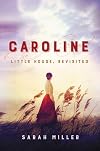
I have been a big fan of the Little House Books and the TV series, when this came out I was very interested in Ma's (Caroline's) point of view. Sarah Miller did an excellent job blending Laura Wilder's series and historical research. It didn't feel totally new, but actually made things more clear and I found myself enjoying Mas's internal dialogue immensely, I think because I didn't have to wonder what was going to happen next, I already knew.
Ma always seemed so perfect in Wilder's version, show more strict and somewhat boring. Laura was a daddy's girl, and it came off in her books, as well as this version. This book shows Ma's internal thought process and struggles to be a good wife and excellent mother, her thoughts stay true to her time period. For example, feeling jealous that Charles got to leave and "explore" or hunt the surrounding area, getting some alone time, while she had to stay back with a three and five year old for the day.
The romance described between her and Charles even had me blushing at parts! The pioneer love story that weaves through this book is wonderful and again, true to the time period.
I truly loved this book, it might even be my most favorite book I've read this year. show less
Ma always seemed so perfect in Wilder's version, show more strict and somewhat boring. Laura was a daddy's girl, and it came off in her books, as well as this version. This book shows Ma's internal thought process and struggles to be a good wife and excellent mother, her thoughts stay true to her time period. For example, feeling jealous that Charles got to leave and "explore" or hunt the surrounding area, getting some alone time, while she had to stay back with a three and five year old for the day.
The romance described between her and Charles even had me blushing at parts! The pioneer love story that weaves through this book is wonderful and again, true to the time period.
I truly loved this book, it might even be my most favorite book I've read this year. show less
Full disclosure: I have always been fascinated by the story of Helen Keller, but even more by her teacher Annie Sullivan. One of my books on a long ago Scholastic Book order back in elementary school was Helen Keller's Teacher. I read about Annie Sullivan's horrendous childhood, years of which were spent at the almshouse Tewksbury in Massachusetts. There her beloved brother Jimmy died of tuberculosis, leaving her alone, angry, and blinded by glaucoma. Miraculously, she found her way to an show more education and, her sight - mostly- restored through surgeries and for lack of any other real career possibilities, she accepted the job offer from the Kellers in Tuscumbia, Alabama. Years later I read the book to my own children and when we were able to stop at Ivy Green in Tuscumbia on our way to Memphis, suffice to say, Nick and Kat were properly impressed. All this by way of saying, I knew I had to read Miss Spitfire and I only hoped that its author would do the story right. Sarah Miller did. The years at Tewksbury are there, the horror of Jimmy's death, the desperation with which Annie threw herself at a visiting delegation to the alsmhouse, begging to go to school. These flashbacks show how Anne Sullivan grew into a twenty-year-old determined to make her own way.The story is told from Annie's point of view, and the reader hears all her anger, frustration, intelligence, and love, as she tries to essentially tame her student so that Helen can be released from her overwhelming isolation. That she was able to do so less than two months after her arrival at Ivy Green is a testament not so much to her natural teaching ability but to her identification with Helen's loneliness. Sarah Miller, if I got a vote on the Newbery, it would be yours. Thanks for a truly lovely read. show less

Caroline, her husband Charles, and her daughters Mary and Laura travel from Pepin, Wisconsin, to Indian Territory in Kansas. Caroline is pregnant during the journey, and gives birth to baby Carrie in their snug little cabin on the Kansas prairie.
This story stays close to the events of Little House on the Prairie, with a few notable digressions to accommodate the historical record of the Ingalls family's travels, which Wilder had streamlined a bit for her stories. This book is as firmly show more rooted in Caroline's perspective as the Little House books are in Laura's. There's a lot about the mystical power of womanhood (not couched in those terms, of course, but Caroline does wax eloquent about it in the privacy of her own mind) -- pregnancy, giving birth, nursing -- and, of course, a lot about all of the hard work a woman's life typically comprised in that period, particularly when traveling by wagon or setting up a homestead. There's relatively little about the girls, which is disconcerting. And, in an attempt to stay close to the source material (I think), Laura does not make a very convincing 3-year-old (because Wilder fudged the timeline, Laura seems slightly older in the Little House books, so it's less surprising for her to be as articulate and self-aware as she is). I had some trouble relating to Caroline, who comes across as rigid and stoic, seeing tears as shameful (I see no shame in crying when you are leaving all of your relations behind, possibly never to see them again -- or, for that matter, in crying when you've just dropped a log on your ankle). But this book does give readers a window into her internal life. I think readers who loved the Little House books are most likely to enjoy this one, though it will also appeal to readers who enjoy historical fiction from a female perspective. Notably, the problematic attitudes towards Native Americans that exist in the original book are present here, as well, though softened and mitigated a bit. The author's note admits that the Ingalls' opinions and attitudes were unjustified, based on their own prejudices -- but if that's an aspect of the original that bothered you, you may want to be aware that it exists here, as well. show less
This story stays close to the events of Little House on the Prairie, with a few notable digressions to accommodate the historical record of the Ingalls family's travels, which Wilder had streamlined a bit for her stories. This book is as firmly show more rooted in Caroline's perspective as the Little House books are in Laura's. There's a lot about the mystical power of womanhood (not couched in those terms, of course, but Caroline does wax eloquent about it in the privacy of her own mind) -- pregnancy, giving birth, nursing -- and, of course, a lot about all of the hard work a woman's life typically comprised in that period, particularly when traveling by wagon or setting up a homestead. There's relatively little about the girls, which is disconcerting. And, in an attempt to stay close to the source material (I think), Laura does not make a very convincing 3-year-old (because Wilder fudged the timeline, Laura seems slightly older in the Little House books, so it's less surprising for her to be as articulate and self-aware as she is). I had some trouble relating to Caroline, who comes across as rigid and stoic, seeing tears as shameful (I see no shame in crying when you are leaving all of your relations behind, possibly never to see them again -- or, for that matter, in crying when you've just dropped a log on your ankle). But this book does give readers a window into her internal life. I think readers who loved the Little House books are most likely to enjoy this one, though it will also appeal to readers who enjoy historical fiction from a female perspective. Notably, the problematic attitudes towards Native Americans that exist in the original book are present here, as well, though softened and mitigated a bit. The author's note admits that the Ingalls' opinions and attitudes were unjustified, based on their own prejudices -- but if that's an aspect of the original that bothered you, you may want to be aware that it exists here, as well. show less
 This review was written for LibraryThing Early Reviewers.
Lists
Awards


You May Also Like


Associated Authors
Statistics
- Works
- 8
- Members
- 2,670
- Popularity
- #9,613
- Rating
- 4.0
- Reviews
- 255
- ISBNs
- 138
- Languages
- 5
- Favorited
- 1

