
Gary Panter
Author of Jimbo
About the Author
Image credit: Gary Panter
Series
Works by Gary Panter
Golden Hell 2 copies
Road Kill 2 copies
Pee Dog 2 copies
A Night at Alamo Courts 1 copy
Crash Pad #01 1 copy
Henry 1 copy
O Babaca 1 copy
Pee Dog 2: The Captain's Final Log — Author — 1 copy
Associated Works
An Anthology of Graphic Fiction, Cartoons, and True Stories (2000) — Contributor — 385 copies, 3 reviews
Raw Vol. 2, No. 1: Open Wounds from the Cutting Edge of Commix (1989) — Cover artist — 207 copies, 2 reviews
An Anthology of Graphic Fiction, Cartoons, and True Stories: v. 2 (2008) — Contributor — 169 copies, 2 reviews
The Art of Mickey Mouse: Artists Interpret The World's Favorite Mouse (Disney Miniature Series) (1991) — Illustrator, some editions — 97 copies, 3 reviews
Significant Objects: 100 Extraordinary Stories about Ordinary Things (2012) — Contributor — 65 copies, 1 review
The Best American Comics 2017 (The Best American Series ®) (2017) — Contributor — 57 copies, 2 reviews
The Best American Comics 2018 (The Best American Series ®) (2018) — Contributor — 54 copies, 2 reviews
Raw No. 6: The Graphix Magazine That Overestimates the Taste of the American Public (1984) — Contributor — 14 copies
Raw No. 4: The Graphix Magazine for Your Bomb Shelter's Coffee Table (1982) — Contributor — 13 copies
CUZ 3 — Illustrator — 1 copy
Tagged
Common Knowledge
- Canonical name
- Panter, Gary
- Other names
- Brainiac 5, Jocko "Levant"
Brainiac 5, Jocko Levant - Birthdate
- 1950-12-01
- Gender
- male
- Education
- East Texas State University
- Occupations
- illustrator
painter
designer
musician
comic book artist - Nationality
- USA
- Birthplace
- Durant, Oklahoma, USA
- Associated Place (for map)
- Oklahoma, USA
Members
Reviews
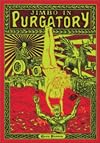
Jimbo’s Inferno charted the journey of Gary Panter’s eponymous hero through the hellscape of the modern mall. Jimbo in Purgatory continues with Jimbo and Valise, his parole robot, this time traveling through a Purgatory re-imagined as an “infotainment testing facility.” Panter opens the volume with a short introduction on the life and times of Dante. He lays out Dante’s literary legacy, since the Divine Comedy directly influenced Geoffrey Chaucer, Giovanni Boccaccio, and James show more Joyce.
The book is a scant thirty-three pages and measures even larger than Jimbo’s Inferno, but the cover retaining Inferno’s faux Klimtian gilt highlights. Jimbo and Valise travel and encounter various pop cultural icons as they quote excerpts from Dante, Boccaccio, Joyce, dirty limericks, and numerous other sources. The sources are referenced at the bottom of each page, but are unnumbered, adding a challenge to interpretation. Dante’s Purgatory begins with Dante and Vergil meeting Cato. Panter has Jimbo and Valise meeting Cato Fong, Inspector Clouseau’s houseboy and martial arts expert. Jimbo and Valise also converse with the disembodied head of the Westworld character played by Yul Brynner. At the end of Dante’s tour of Purgatory, he finally meets his long lost love, the luminous Beatrice, the personification of beauty and innocence, a terrestrial counterpart to the Virgin Mary within Catholic doctrine. Within the subversive grammar of Panter’s vision, Beatrice is portrayed as Twiggy (real name: Lesley Hornby). Twiggy fame and notoriety originated in her thinness as a fashion model.
Throughout the book, Panter maintains a rigid almost mannerist division of panels. On some pages, the narrative moves forward. On others, the panels split up a massive picture. The division of images and architectural design harkens back to another monument of Christian doctrine, the Sistine Chapel, itself an innovative amalgamation of Christian and Greco-Roman classical imagery.
The volume ends like Jimbo’s Inferno: with a list of thirty-three albums that Gary Panter fancied, from the well-known (Electric Ladyland, The Jimi Hendrix Experience) to the rare (Science Fiction, Ornette Coleman) to the just plain odd (Music for Robots, Forrest J. Ackerman). Using the grammar of pop culture and sampling the Western Canon like an encyclopedic DJ, Panter spins an epic journey. A hallucination and a dream that plays like a labyrinthine knock-knock joke.
This review is part of a blog post examining how different artists depict Hell:
http://driftlessareareview.wordpress.com/2010/11/14/critical-appraisal-the-lands... show less
The book is a scant thirty-three pages and measures even larger than Jimbo’s Inferno, but the cover retaining Inferno’s faux Klimtian gilt highlights. Jimbo and Valise travel and encounter various pop cultural icons as they quote excerpts from Dante, Boccaccio, Joyce, dirty limericks, and numerous other sources. The sources are referenced at the bottom of each page, but are unnumbered, adding a challenge to interpretation. Dante’s Purgatory begins with Dante and Vergil meeting Cato. Panter has Jimbo and Valise meeting Cato Fong, Inspector Clouseau’s houseboy and martial arts expert. Jimbo and Valise also converse with the disembodied head of the Westworld character played by Yul Brynner. At the end of Dante’s tour of Purgatory, he finally meets his long lost love, the luminous Beatrice, the personification of beauty and innocence, a terrestrial counterpart to the Virgin Mary within Catholic doctrine. Within the subversive grammar of Panter’s vision, Beatrice is portrayed as Twiggy (real name: Lesley Hornby). Twiggy fame and notoriety originated in her thinness as a fashion model.
Throughout the book, Panter maintains a rigid almost mannerist division of panels. On some pages, the narrative moves forward. On others, the panels split up a massive picture. The division of images and architectural design harkens back to another monument of Christian doctrine, the Sistine Chapel, itself an innovative amalgamation of Christian and Greco-Roman classical imagery.
The volume ends like Jimbo’s Inferno: with a list of thirty-three albums that Gary Panter fancied, from the well-known (Electric Ladyland, The Jimi Hendrix Experience) to the rare (Science Fiction, Ornette Coleman) to the just plain odd (Music for Robots, Forrest J. Ackerman). Using the grammar of pop culture and sampling the Western Canon like an encyclopedic DJ, Panter spins an epic journey. A hallucination and a dream that plays like a labyrinthine knock-knock joke.
This review is part of a blog post examining how different artists depict Hell:
http://driftlessareareview.wordpress.com/2010/11/14/critical-appraisal-the-lands... show less
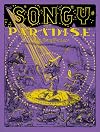
songy's down-to-earth comebacks to satan were funny, and the art work was super detailed and interesting - i liked the giant format of the publication. more physical presence gave more emotional heft to a very short and simple re-imagining of paradise regained. i just felt uncomfortable the whole way through, like watching felix the cat or weird 90's cartoons.
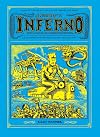
Gary Panter came to prominence in the heyday of the punk movement. His style is dense, jagged, and darkly humorous. In the Eighties Panter created the sets for Pee Wee’s Playhouse (1986 – 1990, CBS), providing a surreal and anarchic take on tacky postwar pop culture. Panter also worked with Art Spiegelman in the seminal comix magazine RAW (1980 – 1991). Under the creative direction of Spiegelman, RAW offered a venue for avant-garde, international, and underground cartoonists and visual show more artists. The decade saw the emergence of comix as legitimate visual art. (The more mainstream comics owned and published in DC, Marvel, Dark Horse, etc. being considered “art” is a separate but interrelated debate.) Gary Panter’s cover for Raw Volume 2, No. 1 (the issue subtitled “Open Wounds from the Cutting Edge of Comix. ”) reduces the Ernie Bushmiller character to a Picasso-esque smudge.
Panter has taken a different track than his fellow artists with Jimbo’s Inferno and Jimbo in Purgatory. While Spiegelman tackled his inner demons and the legacy of the Shoah in the award-winning autobiographical Maus I & II, Chris Ware dealt with the interior life in the austerely drawn Jimmy Corrigan: the Smartest Kid on Earth. Panter goes in the opposite, using the ubiquitous Jimbo to travel to the depths of hell and the terraces of Purgatory. Jimbo resembles Bart Simpson with his spiky hair and snarky naïveté.
True to his punk heritage, Panter chooses a mall as the location of the Inferno. “Don’t try to pass a pop quiz on Dante’s hell based on a reading of this comic: it won’t work,” says Panter in the opening passage. “[C]anto by canto, characters are fused, action inverted, parodied, subject to mutation by my odd memories and obsessions and my odd whims, sentences are clipped.” Instead of Vergil, Jimbo travels with Valise, his parole robot.
During his journey, Jimbo encounters drug addicts, monsters, robots, traffic jams, and space aliens. Instead of the Western Canon that Dante “sampled,” Panter uses the grammar of pop culture. And at the end of the volume, Panter lists “thirty-three best loved vinyl recordings” (the Inferno had thirty-three cantos).
Fantagraphics has produced a lavish volume with huge pages and a gilt cover that oddly reminiscent of Gustav Klimt (if Klimt was in a Los Angeles punk band).
This review is part of a blog post examining how different artists depict Hell:
http://driftlessareareview.wordpress.com/2010/11/14/critical-appraisal-the-lands... show less
Panter has taken a different track than his fellow artists with Jimbo’s Inferno and Jimbo in Purgatory. While Spiegelman tackled his inner demons and the legacy of the Shoah in the award-winning autobiographical Maus I & II, Chris Ware dealt with the interior life in the austerely drawn Jimmy Corrigan: the Smartest Kid on Earth. Panter goes in the opposite, using the ubiquitous Jimbo to travel to the depths of hell and the terraces of Purgatory. Jimbo resembles Bart Simpson with his spiky hair and snarky naïveté.
True to his punk heritage, Panter chooses a mall as the location of the Inferno. “Don’t try to pass a pop quiz on Dante’s hell based on a reading of this comic: it won’t work,” says Panter in the opening passage. “[C]anto by canto, characters are fused, action inverted, parodied, subject to mutation by my odd memories and obsessions and my odd whims, sentences are clipped.” Instead of Vergil, Jimbo travels with Valise, his parole robot.
During his journey, Jimbo encounters drug addicts, monsters, robots, traffic jams, and space aliens. Instead of the Western Canon that Dante “sampled,” Panter uses the grammar of pop culture. And at the end of the volume, Panter lists “thirty-three best loved vinyl recordings” (the Inferno had thirty-three cantos).
Fantagraphics has produced a lavish volume with huge pages and a gilt cover that oddly reminiscent of Gustav Klimt (if Klimt was in a Los Angeles punk band).
This review is part of a blog post examining how different artists depict Hell:
http://driftlessareareview.wordpress.com/2010/11/14/critical-appraisal-the-lands... show less

I already gave Panter a positive review for "Jimbo". I reckon this is the sequel. It wd appear that the RAW publishers (deservedly) had more money by now. This has a little color in it & it's thicker than the earlier one. All in all, I'd say that Panter's graphic sense is even more.. GRAPHIC here. One cd say he outdid himself. Different levels of drawing detail on the same page help keep things lively. If you like drawing (wch most of the time I don't actually care that much about but I make show more an exception here) this is for you. C. Carr of the Village Voice sums it up nicely in a promo blurb on the back:
"If punk America-style was like a baby dropped in a shopping mall at birth and left to grow up as best it could - Jimbo's been there, innocent and outraged." show less
"If punk America-style was like a baby dropped in a shopping mall at birth and left to grow up as best it could - Jimbo's been there, innocent and outraged." show less
Lists
Awards


You May Also Like


Associated Authors
Statistics
- Works
- 37
- Also by
- 29
- Members
- 413
- Popularity
- #58,990
- Rating
- 3.6
- Reviews
- 5
- ISBNs
- 19
- Languages
- 3
- Favorited
- 1