
Barry Stroud
Author of Hume
About the Author
Barry Stroud is Mills Professor of Metaphysics and Epistemology at the University of California, Berkeley.
Works by Barry Stroud
Associated Works
Tagged
Common Knowledge
- Birthdate
- 1935-05-18
- Gender
- male
- Education
- University of Toronto (B.A, Philosophy)
Harvard University (Ph.D, Philosophy) - Occupations
- Professor of Philosophy, University of California, Berkeley (emeritus)
university professor - Organizations
- University of California, Berkeley
- Awards and honors
- Matchette Prize (1979)
Fellow, British Academy
Fellow, American Academy of Arts and Sciences - Relationships
- Stroud, Ronald S. (brother)
- Nationality
- Canada
- Associated Place (for map)
- Canada
Members
Reviews
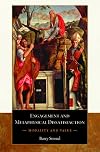
Stroud takes on what we could call the Kantian metaphysical challenge: can we ascribe to reality itself the aspects of our experience that make reality intelligible to us? Does the world itself contain value, necessity, and causality, or are those dependent upon human emotions and perceptions?
Kant famously answered his own challenge with a qualified "yes" -- "transcendental idealism" buys objectivity for those concepts (the "synthetic a priori") but at the cost of abandoning any kind of show more simple, straight-forward realism.
Stroud's own response takes some time to develop. But in the end, he does take a position that is similar in broad approach to Kant's. He withdraws, though, from the strong argument that Kant made for the claim that we can define a set of a elements we can know a priori to be complete and necessary to any understanding of objective reality. And, more to Stroud's main point, he rejects the claim that we can actually provide an answer to the challenge.
Stroud's claim is that the very thing, the indispensable role that these concepts play in our ability to think about and understand reality, that for Kant became the basis for a "science of metaphysics" -- that same indispensability prevents us from making either a positive or negative metaphysical claim about the status of those concepts.
He argues that, in formulating and reasoning about the metaphysical question (the metaphysical status of causality, necessity, and value), we inescapably rely upon those very concepts. Doing so undermines any answer to the metaphysical question, either positive or negative. A negative answer is undermined because it would call into question our ability to rely on those concepts that we employed to reach the negative answer. A positive answer is undermined because it is essentially circular (not Stroud's term) in relying upon what it affirms.
This leaves us in what Stroud calls "metaphysical dissatisfaction". We depend upon these concepts unavoidably in order to make sense of the world. But we cannot establish that those concepts are "real."
I don't think it would be entirely wrong to characterize this dissatisfaction as a dissatisfaction with metaphysical realism. In fact, Stroud rejects idealism as a solution pretty much out of hand. And that's understandable -- although idealism held sway from Kant through much of the nineteenth century in Germany, our own more modern sensibilities are realist. Any claim that the world in itself conforms to or mirrors, or is even in some way created by the way we think about it seems mystical.
Those sensibilities may deserve a little more reflection than Stroud is wiling to give them. And we may find ourselves motivated to revisit the appeal of idealism, not in its Kantian or Hegelian formulations, but in a more contemporary philosophical context.
Dissatisfactions typically arise from expectations -- what expectation is disappointed by the metaphysical indeterminism that Stroud describes? I suspect that our expectation is some version of realism -- an expectation that in fact we do have access to an understanding of the way the world really is. If we cannot establish that the concepts upon which that understanding depends are "real", our expectation is disappointed.
At that point, we might do something that I don't think Stroud is willing to do -- reject the expectation itself. We might conclude that we simply aren't the kind of creatures we thought we were. We would then attempt to resolve the apparent contradiction between our reliance on concepts and our inability to establish the validity of those concepts by rejecting the claim that we even ought to be able to establish that kind of validity.
Such an overturning of our self-image would not be without philosophical consequence, but I'm not sure that we haven't seen exactly that kind of change happening in constructivist accounts of knowledge and reality. Reality, on such accounts, is itself a concept, something produced (usually socially) in our understanding of the world, rather than something against which that understanding is to be measured. It may be that the arguments Stroud presents suggest some such direction. We might want to characterize that direction as "idealist." In fact, I think that we would, in light of its rejection of the realist challenge.
Obviously, there's much more to say. Stroud's argument here does call into question the viability of the realist conception of our understanding of the world. How we respond is another question. show less
Kant famously answered his own challenge with a qualified "yes" -- "transcendental idealism" buys objectivity for those concepts (the "synthetic a priori") but at the cost of abandoning any kind of show more simple, straight-forward realism.
Stroud's own response takes some time to develop. But in the end, he does take a position that is similar in broad approach to Kant's. He withdraws, though, from the strong argument that Kant made for the claim that we can define a set of a elements we can know a priori to be complete and necessary to any understanding of objective reality. And, more to Stroud's main point, he rejects the claim that we can actually provide an answer to the challenge.
Stroud's claim is that the very thing, the indispensable role that these concepts play in our ability to think about and understand reality, that for Kant became the basis for a "science of metaphysics" -- that same indispensability prevents us from making either a positive or negative metaphysical claim about the status of those concepts.
He argues that, in formulating and reasoning about the metaphysical question (the metaphysical status of causality, necessity, and value), we inescapably rely upon those very concepts. Doing so undermines any answer to the metaphysical question, either positive or negative. A negative answer is undermined because it would call into question our ability to rely on those concepts that we employed to reach the negative answer. A positive answer is undermined because it is essentially circular (not Stroud's term) in relying upon what it affirms.
This leaves us in what Stroud calls "metaphysical dissatisfaction". We depend upon these concepts unavoidably in order to make sense of the world. But we cannot establish that those concepts are "real."
I don't think it would be entirely wrong to characterize this dissatisfaction as a dissatisfaction with metaphysical realism. In fact, Stroud rejects idealism as a solution pretty much out of hand. And that's understandable -- although idealism held sway from Kant through much of the nineteenth century in Germany, our own more modern sensibilities are realist. Any claim that the world in itself conforms to or mirrors, or is even in some way created by the way we think about it seems mystical.
Those sensibilities may deserve a little more reflection than Stroud is wiling to give them. And we may find ourselves motivated to revisit the appeal of idealism, not in its Kantian or Hegelian formulations, but in a more contemporary philosophical context.
Dissatisfactions typically arise from expectations -- what expectation is disappointed by the metaphysical indeterminism that Stroud describes? I suspect that our expectation is some version of realism -- an expectation that in fact we do have access to an understanding of the way the world really is. If we cannot establish that the concepts upon which that understanding depends are "real", our expectation is disappointed.
At that point, we might do something that I don't think Stroud is willing to do -- reject the expectation itself. We might conclude that we simply aren't the kind of creatures we thought we were. We would then attempt to resolve the apparent contradiction between our reliance on concepts and our inability to establish the validity of those concepts by rejecting the claim that we even ought to be able to establish that kind of validity.
Such an overturning of our self-image would not be without philosophical consequence, but I'm not sure that we haven't seen exactly that kind of change happening in constructivist accounts of knowledge and reality. Reality, on such accounts, is itself a concept, something produced (usually socially) in our understanding of the world, rather than something against which that understanding is to be measured. It may be that the arguments Stroud presents suggest some such direction. We might want to characterize that direction as "idealist." In fact, I think that we would, in light of its rejection of the realist challenge.
Obviously, there's much more to say. Stroud's argument here does call into question the viability of the realist conception of our understanding of the world. How we respond is another question. show less
You May Also Like


Associated Authors
Statistics
- Works
- 10
- Also by
- 7
- Members
- 406
- Popularity
- #59,888
- Rating
- 3.6
- Reviews
- 1
- ISBNs
- 43
- Languages
- 1